
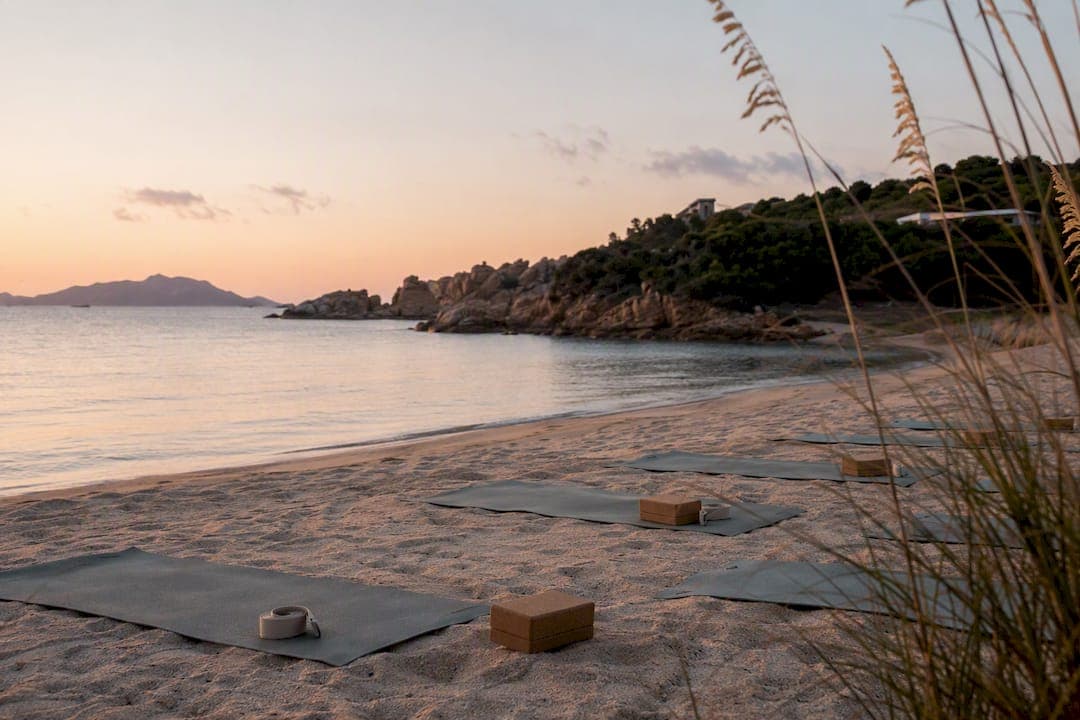
A bookable seaside yoga session is a hotel-hosted, scheduled guided class sold as a guest experience, complete with a named instructor, a confirmed shoreline spot, and a slot in the property's booking system. Arranging one properly means four things working in concert: a permitted, photogenic site; a properly insured instructor; a booking flow that starts before the guest arrives; and a weather plan that stops a grey morning from becoming a refund headache.
Before pricing anything or picking a beach, confirm these essentials:
- Site access is secured in writing, whether that means a private stretch of sand or a landowner agreement.
- Instructor cover includes public liability insurance and a recognised teaching certification.
- Booking channel exists inside your pre-arrival guest platform, not just a paper sign-up sheet at reception.
- Setup kit (mats, shade, towels, sound) is inventoried and stored on-site, ready without a supply run.
A well-run seaside class looks effortless to the guest and runs on a tight operational script behind the scenes. Get the checklist right once, and repeating it becomes routine rather than a scramble.
Porto Rafael has built exactly this kind of turnkey model around its Gallura coastline, and it is worth studying as a working example before you build your own. For hotels wanting a template rather than a trial-and-error rollout, Hotel La Piazza is a sound reference point to contact directly.
How to arrange seaside yoga sessions with the right instructor
Start with credentials, not charisma. Ask for a recognised teaching certification (RYT-200 or equivalent), a current public liability insurance certificate, and at least one hospitality reference, ideally from another hotel or resort setting. Freelance instructors are common in coastal destinations and often excellent, but verification is your job, not theirs.
Contract questions worth asking before you sign anything:
- What is the cancellation and rescheduling policy if weather or low bookings force a change?
- Who provides a qualified substitute if the instructor falls ill?
- Who owns photography and video taken during the session, and can the hotel use it in marketing?
- Who supplies and maintains the equipment: the instructor or the property?
Hospitality partnership guidance suggests instructors who arrive with a concise, operational one-page proposal covering dates, a per-class fee, and clear add-ons tend to convert faster with hotel decision-makers, who rarely have time to weigh vague pitches.
Pro Tip: Keep a vetted roster of two or three instructors rather than relying on one. A single dependable name feels safer until they're unavailable in peak season, and then you have no seaside yoga session at all.
Where should you hold seaside yoga and what permits do you need?
Choosing the spot is as much about logistics as scenery. Walk the site at the exact hour you plan to run the class, since morning light, tide levels, and foot traffic shift dramatically between 06:30 and midday.
Check off before booking any date publicly:
- Privacy from passing beachgoers and unrelated hotel traffic.
- A gentle, even slope with no submerged rocks or steep drop-offs.
- A clear, short walking route for guests in bare feet or sandals.
- Proximity to lifeguard cover, even if the session itself is low-risk.
- Shade options nearby for guests waiting or cooling down afterwards.
- Sightlines that photograph well, since imagery sells the next booking.
Permits and access timelines vary by coastline, but build in lead time regardless:
- Confirm whether the stretch of sand is private, hotel-adjacent, or subject to municipal control.
- Submit any required coastal authority filing at least eight to twelve weeks ahead of your intended launch date.
- Secure a written landowner or concession agreement if the beach sits outside the hotel's own boundary.
- Reconfirm permissions seasonally, since coastal access rules can change year to year.
If permits stall or access proves unreliable, keep a fallback. A private deck offers similar sea views without third-party approval. A hotel rooftop trades sand for a wider horizon. A poolside lawn is the least atmospheric option but the easiest to control. Each keeps the experience bookable while the beach application works through channels.
How do you build seaside yoga into the hotel's booking flow?
Guests should be able to reserve a class the same way they reserve a table or a spa slot, ideally before they've even checked in by following how to book a weekend stay and get the best deal. Guest-experience platforms now let travellers personalise wellness itineraries ahead of arrival, which means staff can prepare mats, adjust class levels, or note dietary requests for a post-class smoothie before the guest sets foot on the property.
A workable booking sequence looks like this:
- The guest discovers seaside yoga through the pre-arrival email or booking-engine add-on screen.
- They select a preferred date, time, and experience level during pre-arrival personalisation.
- The system sends a confirmation with what to bring and where to meet.
- A reminder lands the evening before, with any weather update attached.
- Charges post automatically to the room folio, avoiding a poolside card machine.
Capture small preferences at the same moment: mat firmness, herbal tea afterwards, a request for extra towels, or a private session upgrade. These details, gathered once in the guest profile, make pre-arrival personalisation feel effortless rather than intrusive.
Timing matters operationally as much as aesthetically. Early morning slots between 06:30 and 07:30 avoid breakfast service congestion, while a late-afternoon window around 16:00 to 17:00 catches golden light without clashing with dinner setup. Hospitality partnership guidance recommends proposing fit-for-purpose windows rather than leaving timing open, since a specific slot is far easier for a hotel to approve than a vague "whenever suits."
What does it cost to run and price seaside yoga sessions?
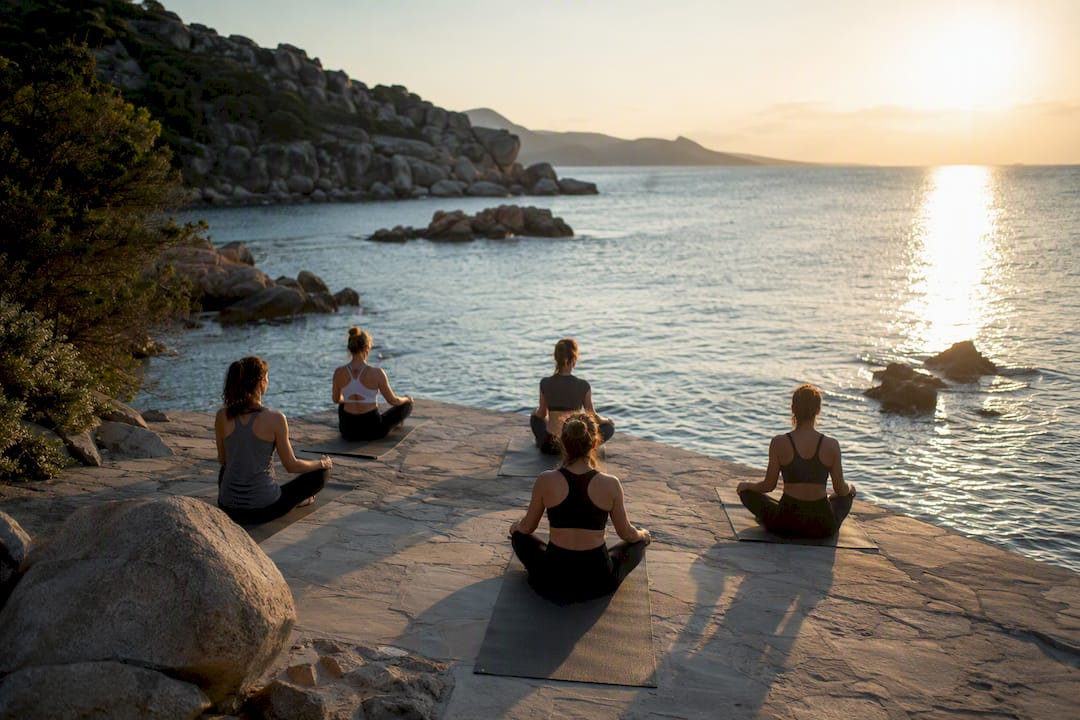
Getting the operational checklist right protects the experience from feeling improvised. Confirm adequate setup time before each beach session, a full equipment inventory, sound arrangements for gentle instruction-only audio, clear signage pointing guests to the meeting point, and a simple registration process at check-in for the class itself.
Typical pricing structures include instructor fees, possible surcharges for premium time slots, equipment hire if needed, staffing and setup labour costs, and separate agreements for photography or marketing rights.
Where the margin actually sits varies by format:
- Single drop-in sessions carry the thinnest margin per class but the lowest barrier to guest uptake.
- Short series (three to five sessions across a stay) improve per-guest revenue and instructor utilisation.
- Premium packaged events, with private setup, photography, and F&B add-ons, carry the highest margin and suit event organisers planning group stays.
Industry guidance on hotel wellness programming points to short, repeatable practices like morning yoga as a low-fixed-cost way to fill quieter demand periods, and a lean freelance-instructor model lets smaller properties test appetite before investing in permanent wellness infrastructure.
How do you manage weather, waivers, and guest safety?
Seaside settings introduce variables a spa studio never faces, so build the paperwork and contingency plan before the first booking goes live.
At booking, capture:
- A brief health disclosure and confirmation the guest is fit to participate.
- Acceptance of photography or video use, if the hotel plans to shoot marketing content.
- An emergency contact, particularly for private or multi-day series bookings.
Weather decisions need a fixed trigger point, not a judgement call made in the moment. Set a threshold (heavy rain, wind above a set level, or a lightning warning) and a decision deadline, ideally two hours before class start, so guests aren't left waiting on the sand. A simple guest-facing policy, offering a same-day reschedule or a full refund for weather cancellations, removes the awkwardness of negotiating on the spot.
On-site safety essentials: a stocked first-aid kit within short reach of the class location, at least one staff member trained in basic first response, a visible emergency contact number, and clear signage for tide changes or any local hazard, such as slippery rocks near the water's edge.
What does the on-day run-sheet actually look like?
A seaside class only feels seamless when the ninety minutes around it are scripted. Here's a workable sequence:
- T-minus 90 minutes: Equipment moved to site, shade and signage placed, sound checked.
- T-minus 30 minutes: Instructor arrives, does a final safety walk of the sand and tide line.
- T-minus 10 minutes: Front desk directs arriving guests; towels and water are laid out.
- Class start: Instructor leads the session; hotel staff step back entirely.
- T-plus 0 to 15 minutes: Teardown begins as guests linger for photos or conversation.
- T-plus 30 minutes: Equipment returned, towels collected for housekeeping.
Roles should be assigned, not assumed:
- Front desk manages late arrivals and directs first-time guests to the meeting point.
- Housekeeping handles towel collection and replenishment.
- Food & beverage delivers any post-class refreshment package to the site or a nearby terrace.
- The instructor owns the class itself and the final safety check of the site.
Afterwards, send a short feedback prompt, confirm photo rights before using any images, and flag guests for a spa or dining cross-sell while the good mood is still fresh.
How can hotels market and package seaside yoga to boost bookings?
Promote the experience everywhere a guest already looks: the pre-arrival email, a booking-engine add-on at checkout, in-room tablets, concierge suggestions on arrival, and a well-photographed social post from a previous session.
Package it in tiers rather than a single option: a standalone drop-in class, a short series bundled into a multi-night stay, and a private VIP session with a photo-ready setup and a post-class breakfast on the terrace. Hospitality guidance on wellness packaging confirms three-tier structures with modular add-ons convert better than a single flat offer, since guests can self-select their spend level without needing a sales conversation.
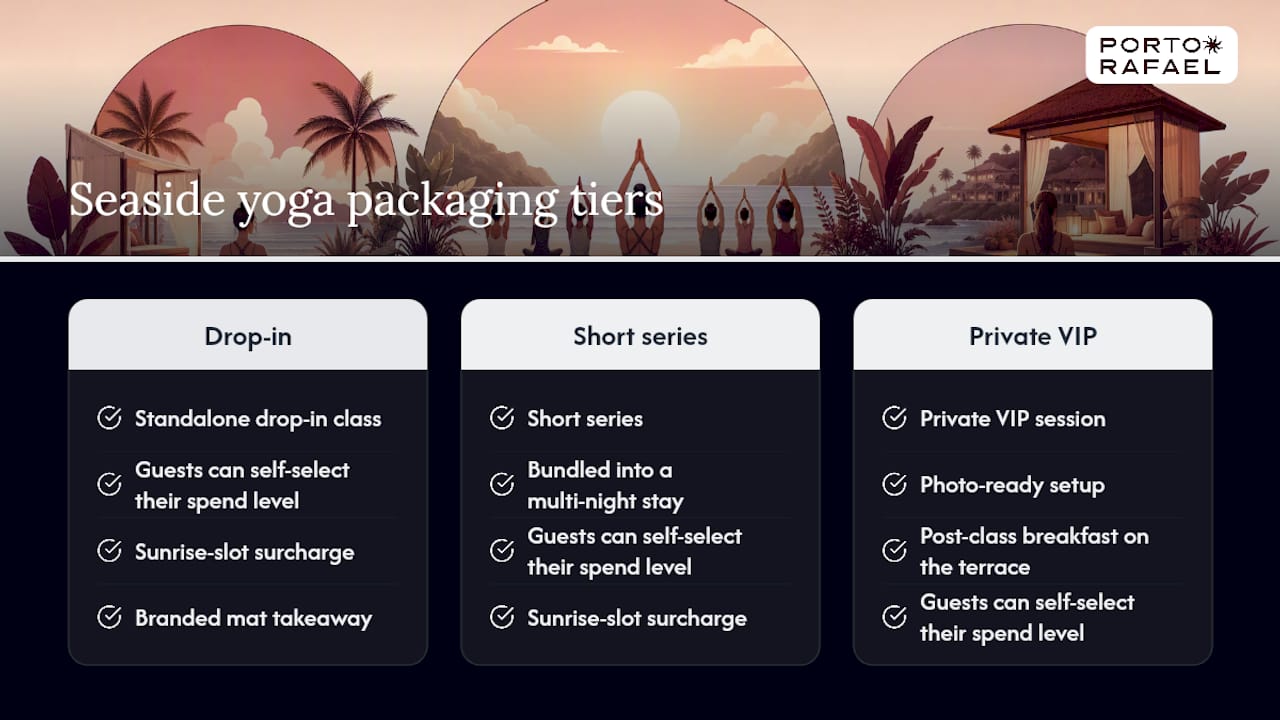
Small upsells add up: a sunrise-slot surcharge, a branded mat as a takeaway, a chilled juice afterwards, or a bundled bike ride around the coastline once the class ends.
A note from Porto Rafael on pre-arrival planning
We've found that guests who select their yoga slot before arrival settle into the rhythm of a stay faster, arriving already knowing where to be and what to bring. One small operational shift, moving mat selection into the pre-arrival questionnaire, cut morning setup delays noticeably and left our instructors more time to greet guests properly.
Book a seaside yoga package with Porto Rafael
Porto Rafael already runs the model this article describes, so if building it from scratch feels like more than your team wants to take on, there's a ready alternative. Sessions are held on a quiet stretch of Gallura coastline, led by certified instructors, and folded directly into the Hotel La Piazza guest experience rather than bolted on as an afterthought.

What's included: a private beach setting chosen for privacy and light, mats and equipment supplied on request, and flexible timing around sunrise or late-afternoon slots. Add-ons stretch the experience further, from a post-class breakfast at Solaz to a sunset cocktail wind-down at Rafael's Lounge Bar.
Event organisers planning a group stay or a bespoke wellness weekend can submit a non-binding request directly, and the team will build a tailored proposal around dates, group size, and any add-ons you have in mind.
Sources
For hotels building this out step by step, a few resources go deeper on individual pieces of the puzzle: