
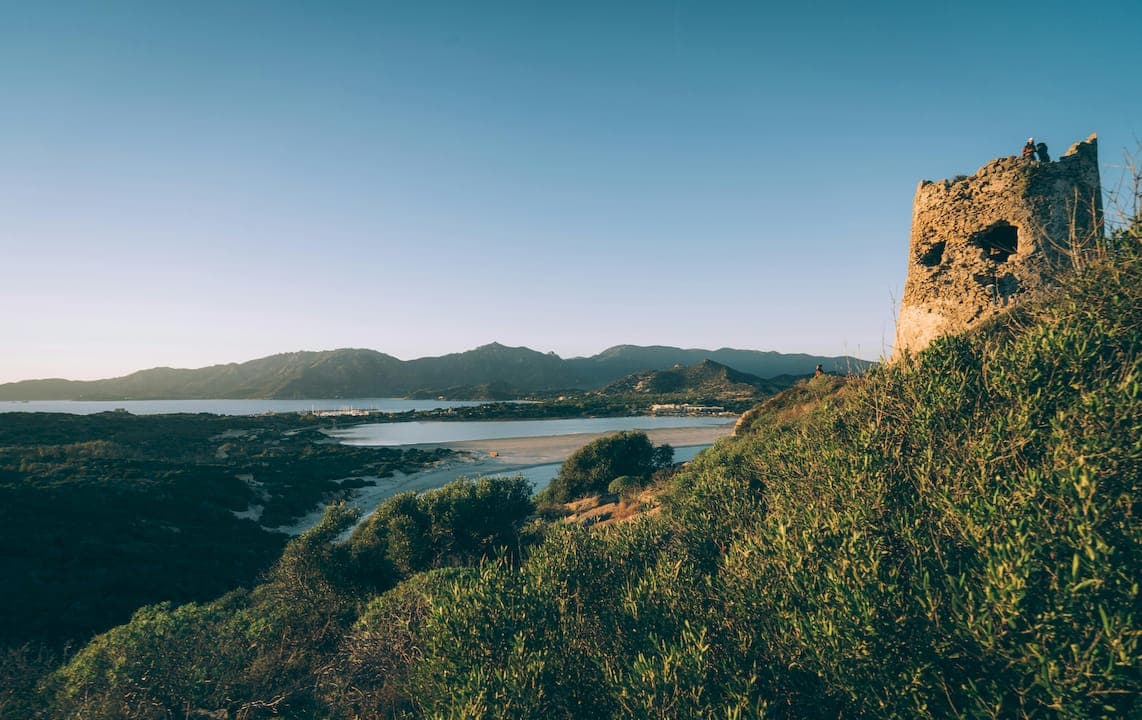
Sardinia’s architectural landscape tells a story spanning millennia, from prehistoric megalithic towers to climate-adapted rural farmhouses. Around 7,000-10,000 Nuraghes dot the island, built between 1800 and 900 BCE using dry-stone methods that still baffle modern engineers. Yet many visitors arrive expecting uniform Mediterranean styles, unaware that Sardinia’s architecture varies dramatically by region. The Gallura area showcases distinctive granite stazzi houses with metre-thick walls designed for passive cooling, whilst coastal zones display Spanish defensive towers and Romanesque basilicas. This guide explores the island’s architectural evolution, construction techniques, and how you can experience these living heritage sites during your visit to northern Sardinia. Photo by Alessio Melis: https://www.pexels.com/photo/green-mountains-under-the-blue-sky-5761989/
Key Takeaways
| Point | Details |
|---|---|
| Nuraghe significance | Bronze Age Nuraghes show advanced dry stone construction and possible roles from defensive fortifications to ritual centres. |
| Dry stone durability | Builders used dry stone techniques with local basalt and granite, delivering durable structures that survive centuries. |
| Stazzi design | Stazzi use granite walls several metres thick that keep interiors cool in hot summers. |
| Regional influences | Sardinia’s buildings reflect Romanesque, Gothic and Spanish influences, creating diverse styles across the island. |
| Heritage and restoration | Many ancient buildings are now heritage sites and subject to eco restoration. |
The prehistoric Nuraghes: Sardinia’s megalithic giants
The Nuraghe towers represent Sardinia’s most iconic architectural achievement. These structures reach heights of 25 to 30 metres, constructed entirely without mortar using massive basalt and granite blocks arranged in horizontal courses. Three primary types emerged during the Bronze Age: proto or corridor Nuraghes featuring simple passage structures, single-tower monotorre designs, and complex polylobed configurations with multiple interconnected towers surrounding central keeps.
Archaeologists continue debating the precise functions of these monuments. Evidence suggests uses ranging from defensive fortifications and elite residences to ritual centres and territorial markers. The intervisibility between neighbouring Nuraghes across valleys indicates possible signalling networks for communication or territorial control. Internal features reveal sophisticated engineering knowledge, particularly the spiral staircases built within wall thickness that allowed access to upper levels whilst maintaining structural integrity.
The corbelled tholos domes crowning many Nuraghes demonstrate advanced architectural understanding. Builders created these rounded ceilings by progressively stepping each stone ring inward until the gap could be capped with a single capstone. This technique distributed weight evenly whilst creating weatherproof interior chambers. The precision required to stack irregular stones without binding agents, ensuring stability for over three millennia, reflects remarkable craftsmanship.
Types of Nuraghe structures:
-
Proto-Nuraghes: earliest corridor-style designs with elongated chambers
-
Monotorre: single-tower configurations dominating local landscapes
-
Polylobed complexes: multi-tower fortifications with defensive curtain walls
-
Village Nuraghes: towers surrounded by circular stone huts forming settlements
Pro Tip: Visit the ancient Nuraghes during early morning hours when lighting enhances the granite textures and tourist crowds remain minimal, allowing better appreciation of architectural details.
The scale of Nuragic construction becomes clear when considering that some complexes required moving stones weighing several tonnes without wheeled vehicles or draft animals. Builders likely used wooden levers, rollers, and earthen ramps to position blocks, then dismantled temporary structures once construction completed. This labour-intensive process created monuments that have survived earthquakes, weathering, and human interference across 38 centuries.
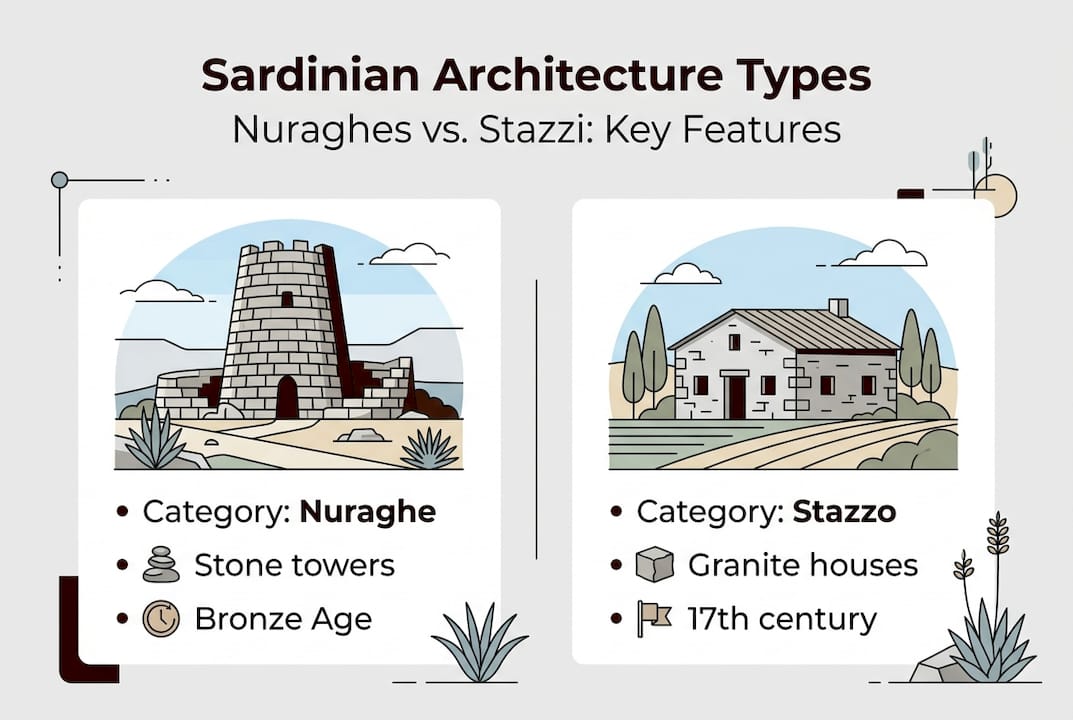
Modern visitors can explore these structures throughout Sardinia, with the Barumini complex offering the most accessible and well-preserved example. The engineering sophistication evident in load distribution, drainage systems, and defensive features challenges assumptions about Bronze Age technological capabilities. After experiencing Nuragic architecture, many guests at charme room hotel accommodations report newfound appreciation for how ancient builders worked with natural materials.
Gallura’s stazzi: granite rural houses shaped by tradition and climate
Stazzi are 17th-18th century rectangular rural houses built with thick local granite walls, oriented for natural ventilation and thermal regulation. These farmhouses formed the backbone of Gallura’s agricultural economy, each serving as the centre of a self-sufficient farmstead community called a cussogghja. Unlike the courtyard houses prevalent in Campidano or the clustered villages elsewhere in Sardinia, stazzi stood isolated across granite hillsides, connected by ancient pathways still visible today.
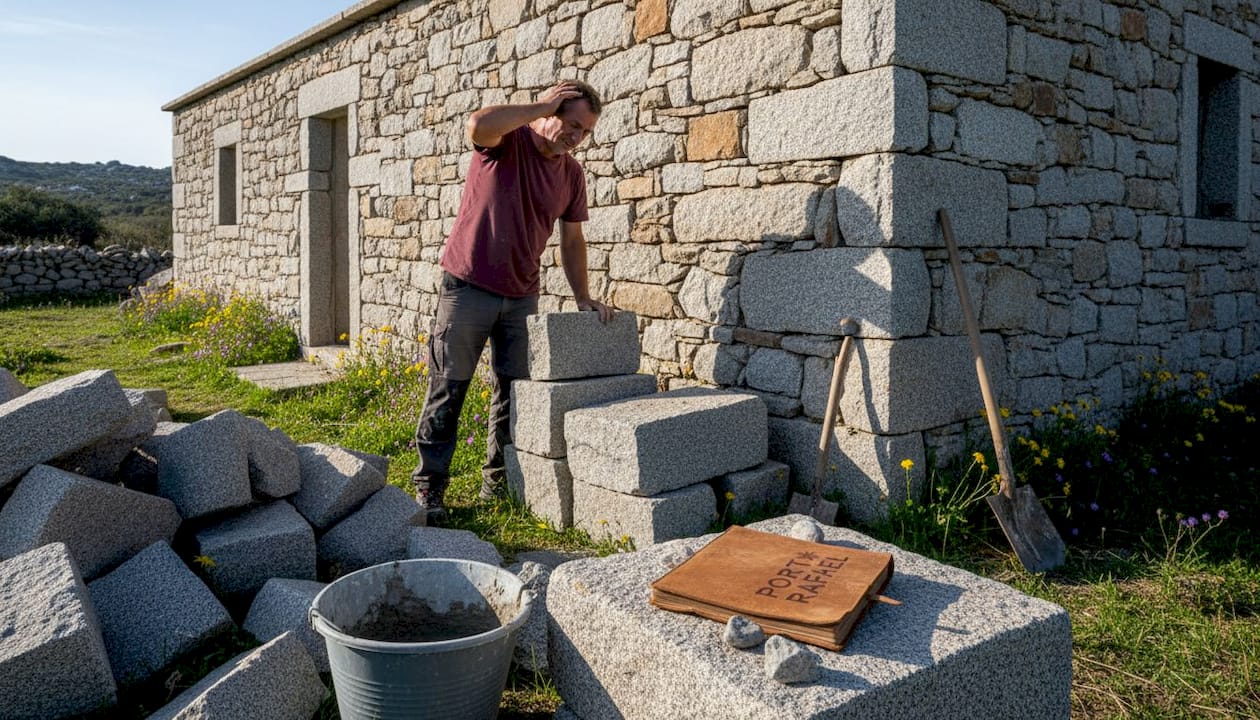
Construction techniques prioritised climate adaptation and material availability. Builders quarried granite blocks locally, shaping them to fit tightly with minimal gaps. Walls exceeded half a metre in thickness, bound together using mud or clay rather than modern mortar. This method allowed walls to breathe whilst providing exceptional thermal mass that kept interiors cool during scorching summers and retained warmth through mild winters. Orientation followed careful planning, with main facades facing away from prevailing winds and small windows positioned to create cross-ventilation.
The rectangular floor plan typically featured a central living area with kitchen hearth, flanked by sleeping quarters and storage rooms. Roofs used timber beams supporting layers of cane, earth, and terracotta tiles, creating additional insulation. External staircases often led to upper levels where families stored grain and preserved foods. Surrounding each stazzo, families cultivated vegetable gardens, orchards, and vineyards, whilst livestock grazed on communal lands.
Stazzo architectural features:
-
Granite walls over 0.5 metres thick for thermal regulation
-
Strategic window placement enabling passive ventilation
-
Minimal openings on windward sides reducing heat loss
-
External staircases preserving interior space efficiency
-
Local materials sourced within walking distance
Pro Tip: The stazzo heritage sites around Porto Rafael offer authentic examples of traditional construction methods, many restored using original techniques that respect historical integrity whilst adding modern comforts.
Modern restoration projects have transformed numerous stazzi into heritage accommodations and agriturismi. Some renovations exceed one million euros, particularly when owners pursue eco-friendly adaptations that maintain passive cooling systems without installing air conditioning. These restorations demonstrate how Sardinian architecture principles remain relevant for sustainable building practices. Architects study traditional ventilation patterns, wall thickness ratios, and material choices to inform contemporary designs throughout Mediterranean climates.
| Feature | Traditional stazzo | Modern adaptation |
|---|---|---|
| Wall material | Local granite blocks | Restored granite with reinforced cores |
| Binding agent | Mud and clay | Lime mortar respecting breathability |
| Insulation | Thermal mass from thickness | Original mass plus eco-friendly additions |
| Cooling | Natural ventilation | Passive systems without mechanical air conditioning |
| Roof | Timber, cane, earth, tiles | Restored traditional layers with waterproofing |
The stazzo represents more than architectural heritage; it embodies a sustainable relationship between humans and landscape. Families selected building sites considering water access, sun exposure, wind patterns, and proximity to grazing lands. This holistic approach created structures that functioned as integrated components of agricultural ecosystems rather than impositions upon them.
Historical influences and construction techniques across Sardinia
Later influences include Romanesque basilicas, Gothic cathedrals, Spanish coastal towers, Baroque and neoclassical styles, plus modern tourism designs, particularly in Costa Smeralda. Each wave of external influence layered new techniques and aesthetics onto existing traditions, creating the architectural diversity visible across contemporary Sardinia. The Romanesque period beginning in the 11th century introduced stone masonry basilicas featuring characteristic rounded arches, thick walls, and minimal ornamentation that emphasised structural clarity.
Gothic influences arrived during the 13th century, primarily affecting ecclesiastical architecture. Cathedrals incorporated pointed arches, ribbed vaults, and decorative elements that contrasted with earlier Romanesque austerity. However, Sardinian builders adapted these styles to local conditions, often creating hybrid forms that merged Gothic verticality with traditional massive construction. This synthesis produced unique monuments that resist easy classification within standard European architectural histories.
Spanish rule brought approximately 500 coastal towers constructed during the 16th century as anti-piracy fortifications. These cylindrical or square structures dotted shorelines, creating a defensive network that protected coastal settlements from North African raiders. The Longonsardo tower in Gallura exemplifies this military architecture, combining strategic positioning with robust construction that has survived centuries of coastal weathering. Many towers now serve as museums or observation points, offering panoramic views across crystalline waters.
Baroque and neoclassical movements added ornamental richness during later centuries. Urban centres like Cagliari and Sassari showcase elaborate facades, decorative cornices, and grand public buildings that reflect continental European fashions. These styles coexisted with vernacular traditions, creating streetscapes where aristocratic palaces neighbour modest artisan dwellings, each expressing different social strata through architectural language.
Evolution of construction techniques:
-
Bronze Age: dry-stone cyclopean masonry without mortar for Nuraghes
-
Medieval period: lime mortar binding for basilicas and defensive structures
-
Spanish era: military engineering principles for coastal fortifications
-
Modern tourism: integration of traditional materials with contemporary comforts
-
Contemporary restoration: eco-adaptive techniques respecting historical methods
Modern architecture in tourism hubs represents the latest chapter. Costa Smeralda developments pioneered luxury resorts that reference traditional forms whilst incorporating international modernist principles. Architects like Jacques Couelle created organic structures that appear to grow from rocky landscapes, using local stone and irregular geometries that echo Nuragic construction. This approach influenced subsequent developments, establishing precedents for contextual design that respects environmental and cultural heritage.
| Period | Dominant style | Key materials | Typical structures |
|---|---|---|---|
| Bronze Age | Nuragic megalithic | Basalt, granite | Towers, village compounds |
| Romanesque | Basilica churches | Limestone, local stone | San Gavino, Santa Giusta |
| Gothic | Cathedral additions | Dressed stone | Cagliari, Alghero cathedrals |
| Spanish | Military defensive | Stone, mortar | Coastal towers, fortifications |
| Contemporary | Tourism-integrated | Mixed traditional and modern | Hotels, resorts, restored stazzi |
Construction materials varied regionally based on geological availability. Gallura’s granite predominated in northern structures, whilst southern builders used limestone, basalt, and trachyte. Wall thickness ranged from half a metre in modest stazzi to five metres in major Nuraghe towers. Nuraghe construction techniques influenced later dry-stone building traditions, establishing craft knowledge transmitted across generations through apprenticeship rather than written documentation.
The atelier labenoi interior design showcases how contemporary designers reinterpret traditional Sardinian aesthetics, blending artisanal craftsmanship with modern functionality. This continuity between ancient and contemporary demonstrates architecture’s role as living tradition rather than museum artefact.
Experiencing Sardinian architecture today: cultural heritage and visitor tips
Visitors can explore Nuraghes such as the Barumini complex, a UNESCO World Heritage site featuring the island’s best-preserved Nuragic structures. The site includes Su Nuraxi tower surrounded by defensive walls and a Bronze Age village with circular stone huts. Guided tours explain construction techniques, archaeological discoveries, and ongoing debates about Nuragic society. Interactive displays help visitors visualise how these monuments appeared during their active use, complete with timber upper floors and defensive features now lost to time.
Gallura offers specialised experiences connecting architecture with landscape. Vespa tours wind through granite countryside, stopping at rural stazzi and traditional towns like Tempio Pausania where granite buildings cluster along narrow streets. These excursions reveal how architecture responds to topography, with structures nestled into hillsides and oriented to capture breezes whilst avoiding harsh winds. Local guides share stories about families who inhabited these houses, connecting architectural features to daily life patterns and seasonal agricultural rhythms.
Many stazzi have been restored as agriturismi and heritage guesthouses combining tradition with modern comforts. Guests sleep in rooms with original granite walls and timber ceilings, dine on regional specialities prepared using traditional methods, and participate in farm activities. Modern eco-restorations of stazzi use passive cooling to avoid air conditioning, reflecting sustainability principles inherent in traditional design. Thick walls moderate temperature swings, cross-ventilation eliminates stuffiness, and shaded outdoor spaces extend living areas during warm months.
Architectural heritage experiences:
-
UNESCO Nuraghe sites with guided archaeological tours
-
Restored stazzo accommodations offering authentic rural stays
-
Vespa tours connecting architectural landmarks across Gallura
-
Granite quarry visits explaining traditional stone working
-
Walking trails linking historical structures through countryside
Local cultural experiences deepen architectural appreciation by connecting buildings to living traditions. Cooking classes held in restored farmhouse kitchens teach recipes that shaped stazzo life, whilst wine tastings explore how architecture supported viticulture. The vermentino experience connects Gallura’s signature wine to the granite terroir and traditional cellars where families aged their vintages. These activities transform architecture from static monuments into frameworks for understanding cultural continuity.
Pro Tip: Book Sardinian cooking class sessions in heritage settings where traditional kitchens demonstrate how architectural features like hearths, storage niches, and ventilation systems supported food preparation and preservation techniques still practised today.
Practical planning enhances architectural exploration. Spring and autumn offer mild weather ideal for outdoor site visits without summer crowds or winter closures. Many Nuraghe sites lack shade, so bring sun protection and water. Heritage accommodations require advance booking, particularly restored stazzi with limited rooms. Respect preservation rules at archaeological sites by staying on marked paths and avoiding climbing on ancient structures. Photography is generally permitted, but some sites restrict tripods or commercial filming.
The hotel la piazza suites incorporate design elements referencing traditional Sardinian architecture whilst providing luxury amenities, offering comfortable bases for architectural exploration. After days visiting Nuraghes and rural stazzi, returning to accommodations that honour local aesthetic traditions whilst delivering contemporary comfort creates cohesive cultural immersion. This balance between authenticity and convenience defines quality heritage tourism.
Sardinian architecture sustainability research examines how traditional building methods inform contemporary green design. Scholars study thermal performance of thick granite walls, natural ventilation patterns in stazzi floor plans, and material sourcing strategies that minimised transportation whilst supporting local economies. These investigations yield insights applicable beyond Sardinia, demonstrating how vernacular architecture embodies environmental wisdom developed through centuries of trial and refinement.
Experience authentic Sardinian architecture and culture
Immerse yourself in Gallura’s architectural heritage by staying where design meets tradition. The hotel la piazza adults-only boutique offers luxury suites and charme rooms inspired by traditional Sardinian aesthetics, blending local materials with contemporary elegance. Explore authentic stazzo heritage site examples through curated tours that reveal construction techniques and rural life patterns preserved across centuries.
Enhance your architectural discovery with cultural activities connecting buildings to living traditions. The vermentino experience Gallura pairs wine tasting with insights into how granite cellars and traditional storage methods shaped regional viticulture. These experiences transform architecture from historical curiosity into living heritage you can taste, touch, and understand through direct engagement with landscapes and communities that created these remarkable structures.
Frequently asked questions
What are the main types of prehistoric Sardinian buildings?
Nuraghes represent the primary prehistoric structures, categorised into three types: proto-Nuraghes with corridor designs, single-tower monotorre configurations, and complex polylobed structures featuring multiple interconnected towers. Built between 1800 and 900 BCE using dry-stone techniques, these megalithic monuments employed corbelled domes created by progressively stepping stone rings inward. Archaeological evidence suggests functions ranging from fortifications to ritual centres, with intervisibility patterns indicating possible communication networks.
What makes Gallura’s stazzi unique?
Stazzi are rectangular granite farmhouses from the 17th and 18th centuries, distinguished by walls exceeding half a metre thick bound with mud or clay rather than mortar. Their design prioritises climate adaptation through strategic orientation, minimal windward openings, and cross-ventilation patterns that maintain comfortable interior temperatures without mechanical systems. Unlike clustered villages elsewhere in Sardinia, stazzi stood isolated across landscapes as centres of self-sufficient farming communities called cussogghja.
How can visitors experience Sardinian architecture firsthand?
Explore UNESCO World Heritage sites like the Barumini Nuraghe complex with guided archaeological tours explaining construction methods and cultural contexts. Gallura offers Vespa tours connecting rural stazzi, granite towns, and heritage sites across countryside landscapes. Stay in restored stazzo accommodations operating as agriturismi, participate in cooking classes held in traditional kitchens, or join wine tastings that connect architecture to regional viticulture and food preservation traditions.
What construction methods define Sardinian traditional buildings?
Nuraghes utilise dry-stone cyclopean masonry, stacking massive basalt or granite blocks without mortar in horizontal courses that support corbelled tholos domes. Builders created rounded ceilings by stepping each stone ring progressively inward until capping with a single capstone. Stazzi construction employed thick granite walls bound by mud or clay, prioritising thermal mass and breathability over modern cement-based methods. Both traditions sourced materials locally, minimising transportation whilst ensuring compatibility with regional geology and climate conditions.