
The villa concierge booking process is the property's end‑to‑end workflow for handling a guest's request, from the first message to the final invoice. It covers how staff receive and record requests, build the booking, take payment, sync availability across the property, and confirm every detail before arrival.
At Porto Rafael, that workflow governs everything from a table at Solaz Restaurant to a suite at Hotel La Piazza or an evening at Rafael's Bar & Lounge.
- Channels for receiving requests
- Guest data captured at booking
- Payment method and timing
- Real‑time availability sync
- Confirmation and itinerary delivery
A well‑run concierge process is invisible to the guest. They notice only that everything they asked for simply appeared, on time, without a second phone call.
What is the step-by-step villa concierge booking process?
A guest's request rarely arrives through one channel. Porto Rafael's team takes bookings in person at the front desk, by phone, through email, via messaging apps, and increasingly through pre‑arrival messages sent before a guest even checks in. Each entry point feeds the same log, so nothing gets missed because it came through the "wrong" door.
- Capture the request. Staff note the guest's name, dates, party size, dietary needs, and who is paying, whether that is the guest themselves or an event organiser settling a group bill.
- Check availability and vendor capacity. The team checks the relevant calendar (a table at Solaz, a boat slot with a local skipper, a spa slot) before promising anything.
- Create the booking. Standard requests slot into existing categories; unusual ones, like a private dinner on the rocks at sunset, become custom, on‑spot bookings built around what the guest actually wants.
- Set terms. Cancellation windows and deposit requirements are confirmed at this stage, not discovered later.
- Take payment. This might be a card swiped on‑site, cash, or a secure payment link sent for remote settlement, with a deposit taken for larger events.
- Send confirmation. An automated message and a personalised itinerary go out by email, SMS, or app, while internal staff get their own notification so the kitchen, the boat captain, or the spa therapist all know what is coming.
- Coordinate the vendor. Anything involving a third party, an excursion operator or a wine estate, gets briefed ahead of the day.
- Execute and follow up. After the service, the team logs feedback and updates the guest's preference history for next time.
Pro Tip: Ask the concierge to confirm your booking in writing, even for something as small as a lounge table. A verbal "yes" during a busy evening service is easy to lose in the shuffle; a written confirmation never is.
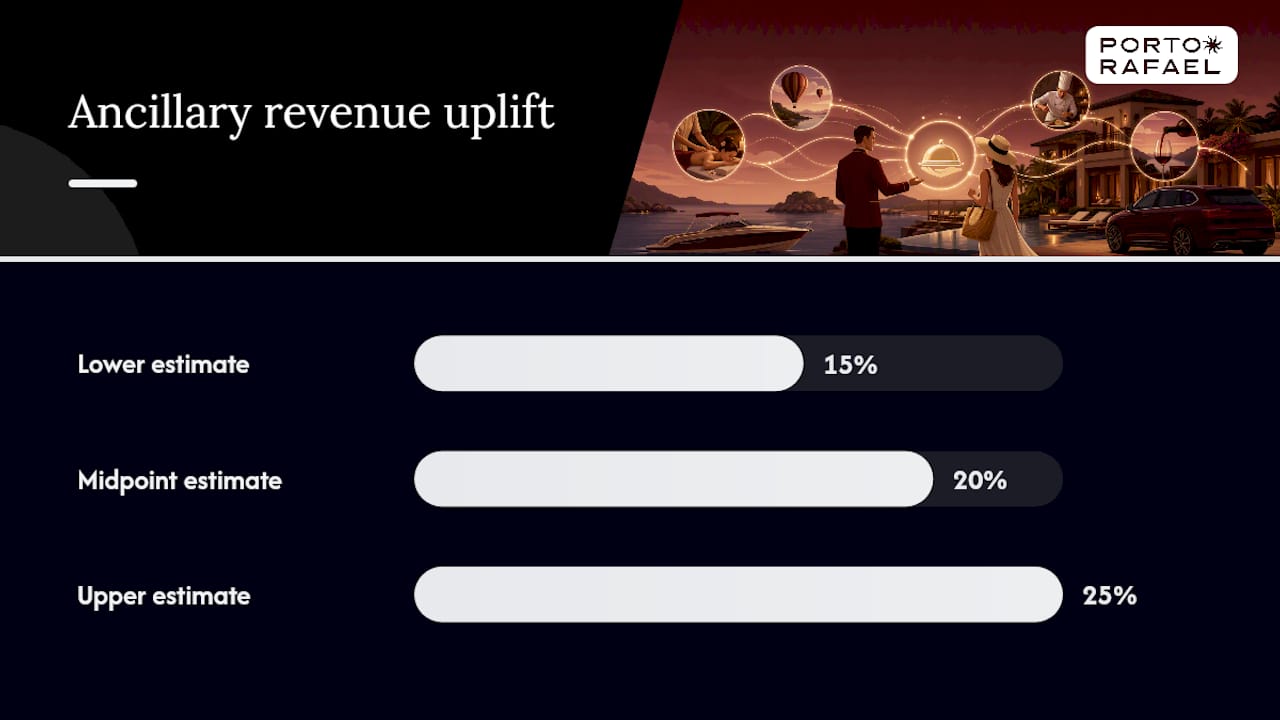
Concierge tools that close this loop automatically, checking availability, making the booking, and notifying vendors in one motion, remove the manual handoffs that cause delays. That matters commercially too: proactive concierge outreach and thoughtful upselling can lift ancillary revenue by roughly 15 to 25% per stay in properties that do it well, which is one reason a boutique hotel invests in getting this workflow right rather than treating it as an afterthought.
Who handles your request: roles and handoffs
A guest rarely deals with one person from start to finish, and knowing who owns what saves time when a request gets complicated.
- Concierge lead validates requests, confirms terms, and owns the guest's preference history.
- Front desk takes initial contact outside concierge hours and passes it along.
- Experience or operations manager briefs vendors and manages day‑of logistics.
- Vendor partner contact (a boat captain, a wine estate host) executes the third‑party portion.
| Situation | Who owns it |
|---|---|
| Room service, minor requests | Front desk |
| Dining or lounge reservation | Concierge lead |
| Private event or excursion | Experience manager |
| Third‑party excursion, tasting | Vendor partner |
| Billing dispute or refund | Concierge lead |
For smaller boutique properties, embedding concierge capability directly into front desk training works better than a separate desk, provided one designated lead maintains vendor relationships and institutional knowledge. If something goes wrong at the last minute, that same lead is the escalation point.
What systems make a smooth concierge booking process?
Behind every effortless request sits a stack of unglamorous but essential tools. A concierge booking platform or experience store lists in‑house and partner activities in one place; a property management system integration keeps room, dining, and event calendars talking to each other; secure payment links let remote guests pay without a phone call; and vendor portals keep outside partners in the loop.
- Custom on‑spot bookings for requests that do not fit a standard category
- Real‑time availability sync so a table or boat slot cannot be double‑booked
- Staff booking logs and volume tracking so the team can see who booked what, and when
- Automated guest notifications confirming details the moment a booking is made
PMS and vendor synchronisation matter because a gap between systems is exactly where double bookings happen. Platforms built for this, including Turneo's concierge booking tool, let staff create bespoke bookings while keeping online availability accurate in real time. A separate command centre approach, such as RealtevoOS, tackles the same problem from the operator side by unifying multi‑channel booking management. On the payment side, secure links paired with on‑site card handling let a property convert both walk‑ins and remote requests without manual invoicing delays, while keeping guest payment data off paper logs.
How long does booking take, from a table to a full event?
Timelines depend entirely on what you are asking for. A table at Solaz, a transfer, or a spa slot can often be confirmed same‑day, sometimes within the hour if capacity allows.
- Routine bookings (dining, transport, spa): same‑day to 48 hours
- Curated experiences (boat excursions, wine tastings, cooking classes): best requested 7 to 14 days ahead
- Private events and weddings: 30 or more days, with staged confirmations and often a site visit
Dining and lounge reservations tend to get an immediate confirmation. Bespoke events move in stages: an initial brief, a proposal, a deposit, then final confirmation once every vendor is locked in. Properties often reach out 48 to 72 hours before arrival to reconfirm arrangements and offer upgrades while the guest is still planning, which is also the best window to lock in anything you have not yet finalised.
How do cancellations, deposits and payments work?
Payment flexibility matters as much as the booking itself. Guests can typically pay on‑site by card or cash, settle remotely via a secure payment link, or arrange a deposit and invoice for a larger event.
- On‑site payment: card or cash at the point of service
- Secure payment link: for remote or advance settlement
- Deposits: standard for private events, held against the final invoice
- Invoicing: issued to organisers managing group bills
Cancellation terms vary by booking type. Standard reservations usually carry a refundable window measured in hours or a day or two; custom, on‑spot bookings and private events tend to be non‑refundable closer to the date, given the vendor commitments already made. Porto Rafael sets out its exact conditions of stay at the point of booking, so there are no surprises later. Every payment generates a receipt or invoice sent directly to the guest or organiser, and policy on refunds and chargebacks is communicated at the same moment the payment is taken, not after a dispute arises.
What should you tell the concierge, and what should you ask?
Give the concierge team a clear picture upfront and the whole process moves faster.
Provide at first contact:
- Dates, party size, and any dietary or accessibility needs
- Who is paying, and how
- For events, a brief covering timings, guest count, and desired atmosphere
Ask the concierge:
- What is the cancellation and refund policy for this specific booking?
- Who is the vendor, and what is their experience with this type of request?
- What is the backup plan if weather or availability changes?
- Who will be on‑site during the event itself?
Watch for warning signs: vague vendor contact details, no written confirmation, or an unclear refund policy. A concierge who cannot answer these questions confidently is one worth pressing further, since strong vendor relationships are usually what separates a smooth booking from a scramble.
How Porto Rafael's concierge team actually works a booking
Our team's priority is always the same: build a personalised itinerary around what a guest actually wants, then lean on supplier relationships to deliver it without friction. A recent example, a last‑minute boat excursion requested the evening before, involved the concierge lead confirming availability with a local skipper within the hour, the front desk handling payment via a secure link, and a written itinerary landing in the guest's inbox before breakfast the next morning. That is the standard we hold ourselves to, whether the request is a sunset table at Solaz or an evening at Rafael's Bar & Lounge.

How to book a room, table or event at Porto Rafael
Porto Rafael's concierge team handles the full spectrum: rooms at Hotel La Piazza, tables at Solaz, evenings at Rafael's Lounge Bar, and bespoke private events built around your dates and guest list.
If you already know what you want, restaurant tables and lounge bookings can usually be confirmed the same day. For anything more layered, a wedding, a private dinner, a multi‑day itinerary, the fastest route is a direct enquiry rather than working through general availability pages. Submit a non‑binding request with your dates and a short brief, and the concierge team will come back with options, vendor availability, and a clear payment schedule before you commit to anything.
Frequently asked questions
What information do I need to give when starting a villa concierge booking process? Your dates, party size, dietary or accessibility needs, and who is paying. For events, add a short brief covering timing and guest count.
Can the concierge create a custom booking that is not a standard package? Yes. On‑spot custom bookings are common for private dinners, tailored excursions, or anything outside a fixed category.
How far ahead should I book a private event? Aim for at least 30 days for weddings or larger private events, and 7 to 14 days for curated experiences like boat excursions or wine tastings.
Is a deposit always required? Deposits are standard for private events and larger group bookings, held against the final invoice. Routine reservations typically do not require one.