
TL;DR:
- Luxury travel today emphasizes authenticity, cultural immersion, privacy, and personalized experiences over superficial opulence. True luxury involves seamless logistics, local connections, and intentional choices, not just expensive amenities or branding. The most meaningful journeys are shaped by deliberate preferences, depth, and a genuine connection to the destination.
Luxury travel is widely misunderstood. Many assume it is simply a matter of thread counts and champagne on arrival, a kind of gilded transaction where enough money buys enough comfort. But what defines luxury travel today is something far more nuanced, and far more personal. The modern affluent traveller is not seeking mere extravagance; they are seeking meaning, privacy, and moments that cannot be replicated or purchased off a brochure page. This guide untangles those distinctions, offering a clear, honest picture of what separates a truly extraordinary journey from an expensive one.
Key Takeaways
| Point | Details |
|---|---|
| Luxury travel evolution | Luxury travel now focuses on meaningful, sensory experiences rather than mere extravagance. |
| Privacy and exclusivity | Privacy remains essential, with tailored, frictionless service a key luxury hallmark. |
| Planning intentionality | Clear goals and personal preferences must guide every choice for authentic luxury journeys. |
| Beyond price tags | True luxury is measured by depth of experience, not cost or overt prestige. |
| Sardinia’s authentic charm | Boutique accommodations in Sardinia exemplify modern luxury through heritage and personalised service. |
How luxury travel has evolved beyond traditional opulence
To appreciate what defines luxury today, it helps to understand how the conception of luxury travel has transformed over recent years. Not long ago, luxury was signalled by visible excess: the largest suite, the most prominent brand, the most elaborate dining room. Those markers still exist, but they no longer tell the full story.
Today's most discerning travellers are drawn toward something richer. They want sensory design that immerses them in a place, rituals that carry local significance, and heritage that cannot be manufactured. Authentic luxury travel concepts reflect this shift, prioritising cultural resonance over conspicuous consumption. A beautifully restored masseria in Sardinia's Gallura region says more about genuine luxury than a generic five-star tower in any city centre.
As luxury travel trends for 2026 confirm, "luxury travel is no longer about excess for its own sake; today's luxury traveller expects seamless execution and personalisation." This is a significant evolution. Anticipatory service, which means having your preferences addressed before you even voice them, has become one of the most valued elements of upscale travel.
The characteristics of luxury travel now include:
- Sensory and cultural immersion over brand recognition
- Frictionless, private service that protects both time and energy
- Ethical eco-luxury, where sustainability is woven into the experience rather than added as an afterthought
- Heritage-rich environments that give a journey genuine narrative depth
- Personalised pace, allowing travellers to move through an experience on their own terms
"The shift from conspicuous to considered luxury is not a trend. It is a permanent recalibration of what discerning travellers value most."
Key features that distinguish true luxury travel experiences
With the evolution of luxury travel in mind, let us explore the defining features that create those exceptional experiences. These are the elements that experienced travellers consistently point to when describing a journey that genuinely exceeded their expectations.
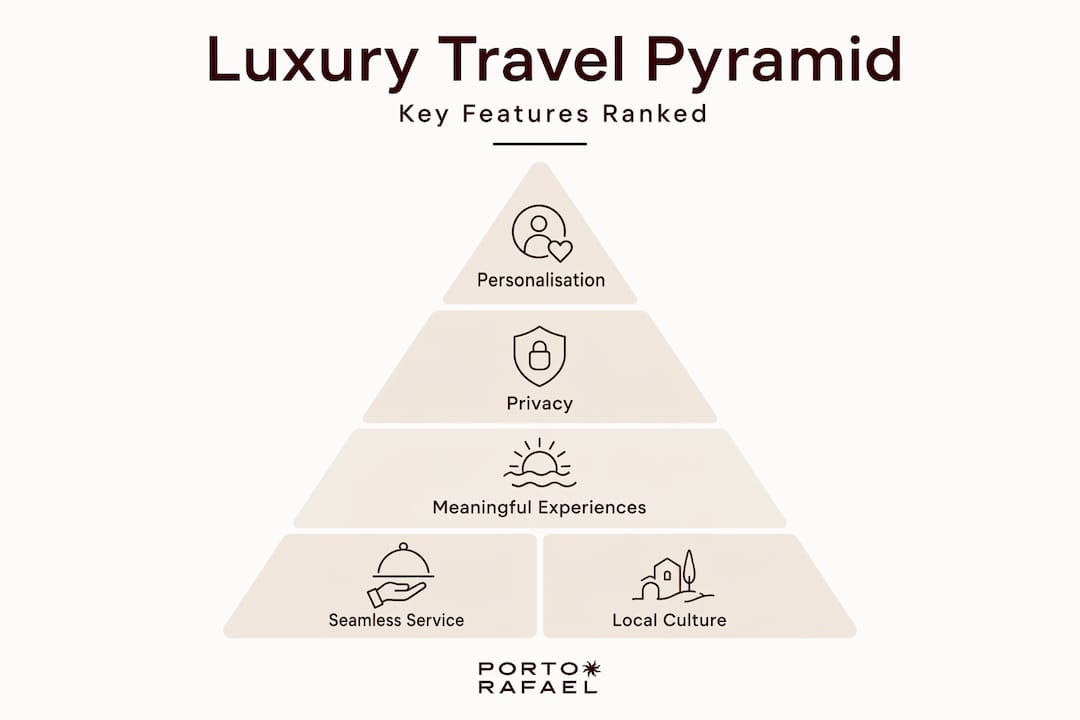
- Seamless logistics. Expedited transfers, flexible itineraries, and discreet coordination remove every unnecessary friction point. The hallmark of true luxury is that nothing feels effortful.
- Privacy as a priority. Whether through a private villa, an exclusive-access excursion, or a reserved section of a restaurant, exclusivity in luxury travel is about protecting the traveller's personal space and peace.
- Anticipatory, unobtrusive service. Staff who notice and act without being asked. Preferences remembered from a previous stay. A table already set the way you like it.
- Depth of access. Not just fine dining, but exclusive dining experiences that offer a genuine window into local culinary culture. Not just sightseeing, but private guided access to places not found in any public itinerary.
- Contingency and timing. The most experienced luxury travellers plan for the unexpected and travel off-peak to preserve the exclusivity of their experience.
Nearly 60% of ultra-high-net-worth travellers favour private or premium travel options specifically for privacy and time savings, which speaks directly to why seamless, uninterrupted experiences have become the new standard.
"Genuine luxury is not about what you see. It is about what you never have to think about."
Pro Tip: When evaluating a luxury property or experience, ask specifically what happens when something goes wrong. A truly luxury operation has a quiet, immediate answer. If they hesitate, that tells you everything.
Common misconceptions and the reality of luxury travel today
Understanding these misconceptions is key to recognising what genuine luxury travel truly entails. Many travellers, even experienced ones, conflate price with quality and branding with exclusivity.
| Common misconception | The reality |
|---|---|
| Higher price means better experience | Price reflects positioning, not always personalisation or privacy |
| Famous brands guarantee quality | Brand recognition does not equal bespoke, anticipatory service |
| More amenities equal more luxury | Fewer, better-curated offerings create more meaningful experiences |
| Lavish upgrades define exclusivity | Crowd control and timing often matter more than room category |
| Luxury is universal | True luxury is deeply personal and varies between every traveller |
The uncomfortable truth, as one expert analysis of VIP travel notes, is that "price and prestige have become increasingly unreliable signals; depth and intentionality matter more." This is particularly evident when travellers arrive at a celebrated resort and find it crowded, impersonal, and indistinguishable from a well-appointed chain hotel.
What separates genuine high-end travel from merely expensive travel is this:
- Access to experiences unavailable through public booking channels
- Local relationships that unlock authentic, intimate encounters
- A journey shaped entirely around the individual rather than a pre-set programme
- Quietude and privacy as a consistent feature, not an occasional upgrade
Premium Sardinia accommodations demonstrate this distinction well. Boutique properties rooted in local culture and guided by genuine hospitality offer something that no amount of lobby grandeur can replicate.
Crafting your personal definition of luxury travel
With clarity on what real luxury means, you can begin crafting a travel experience that matches your unique desires. Defining high-end travel for yourself requires honest reflection, not simply browsing aspirational imagery online.
- Clarify your primary purpose. Are you seeking rest, cultural discovery, celebration, adventure, or reconnection with someone you love? The answer shapes everything else.
- List your non-negotiables. Perhaps it is complete privacy, a specific regional cuisine, or a strict limit on daily activities. These are your anchors.
- Build a realistic budget. A genuine luxury budget includes not just the headline costs but also gratuities, private experiences, contingency funds, and the small enhancements that elevate a good stay to an extraordinary one.
- Define your ideal pace. Some travellers want a full programme of curated experiences; others want long, unhurried mornings and evenings led only by instinct. Neither is wrong.
- Research your timing. Sardinia in June feels entirely different from Sardinia in August. Sardinia luxury travel tips for 2026 can help you navigate the rhythms of each season.
As one trusted guide to VIP travel planning advises, start by clarifying your travel goals, identify non-negotiables, set a real budget including contingencies, and plan your ideal pace for a genuinely elevated experience.
Pro Tip: Write your list of non-negotiables before you begin researching destinations or properties. Doing it the other way around means the marketing shapes your expectations rather than the other way around.
Luxury travel options: comparing accommodation and transport modes
Equipped with personal priorities, you can now evaluate the specific options in accommodation and transport that best serve your journey.
| Type | Privacy level | Flexibility | Best suited for |
|---|---|---|---|
| Boutique villa or private residence | Very high | High | Extended stays, families, complete privacy |
| Boutique hotel | High | Moderate | Cultural immersion with personalised service |
| City luxury hotel | Moderate | Moderate | Urban exploration with curated amenities |
| Overwater bungalow | High | Low | Romantic escapes, wellness retreats |
| Private jet | Very high | Very high | Multi-destination itineraries, time-sensitive travel |
| First-class air | High | Moderate | Long-haul journeys with refined comfort |
| Business class | Moderate | Moderate | Efficient travel with meaningful comfort |
Exclusive resorts in Sardinia illustrate the accommodation spectrum well. A well-chosen boutique property offers architectural character, intimate service, and a genuine sense of place that larger resorts, however polished, rarely achieve. Transport choices follow a similar logic: nearly 60% of ultra-high-net-worth travellers choose private or premium options not for status but for the time and peace of mind they afford.
Key considerations when choosing:
- Private jets offer complete schedule flexibility but carry a significant environmental cost; carbon offsetting is worth building into the budget
- First and business class represent a refined middle ground, particularly for travellers who value comfort without the full logistical overhead of private aviation
- Boutique accommodations beat branded luxury hotels on personalisation in most cases, particularly in destinations with strong local identity
Pro Tip: When booking accommodation in Sardinia, prioritise properties with fewer than 30 rooms. The quality of attention drops noticeably beyond that scale, regardless of how many stars are attached to the name.
Rethinking luxury travel: why depth and intentionality outshine ostentation
Having explored the practical landscape of luxury travel, it is worth pausing on a broader truth. The most memorable journeys are rarely the most expensive ones. They are the most intentional ones.
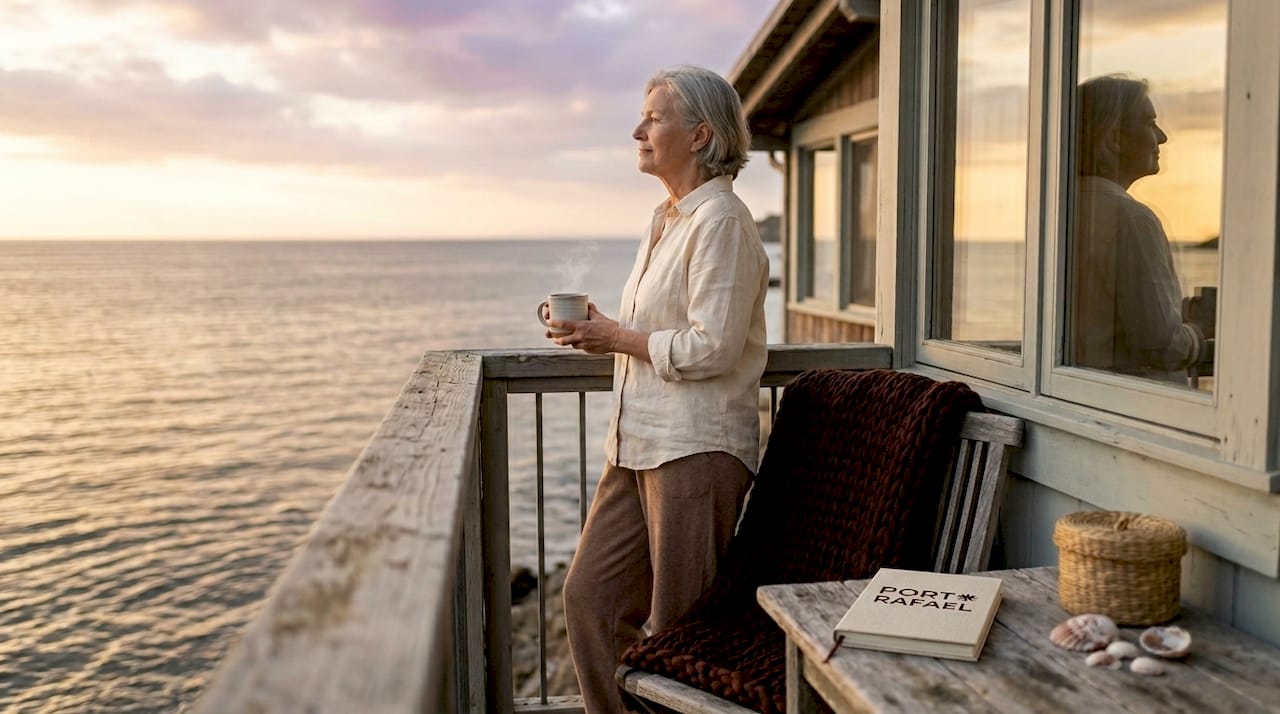
Deep luxury, as described by Forbes, "embraces sensory design, resonant rituals, and heritage for meaningful travel, setting the tone for 2026." This framing is useful because it shifts the question away from what a trip costs and toward what it gives you. Not status. Not photographs. But genuine restoration, curiosity satisfied, and a connection to something larger than a price point.
Sardinia offers this in rare abundance. Along its northern coastline, particularly in Gallura, the landscape carries a timeless quality that resists easy commodification. The granite-hewn interiors, the scent of myrtle on the wind, the light at dusk over the Straits of Bonifacio: these are experiences that luxury branding cannot manufacture and money alone cannot arrange. They require the right setting, the right guides, and the willingness to slow down long enough to receive them.
Exclusive Sardinian coastal travel at its finest is not a performance of wealth. It is a quiet immersion in one of Europe's most captivating, least-hurried corners. The travellers who leave most enriched are those who arrived with curiosity rather than a checklist, who chose a boutique property over a branded landmark, and who trusted local expertise to unlock experiences that no catalogue could list.
True luxury travel, ultimately, is an act of informed intention. It demands clarity about what you value, honesty about what truly restores you, and the courage to prioritise depth over display. When you align those elements with a destination of genuine character, the result is something far beyond opulence. It is, quite simply, unforgettable.
Discover authentic luxury at Porto Rafael's boutique accommodations
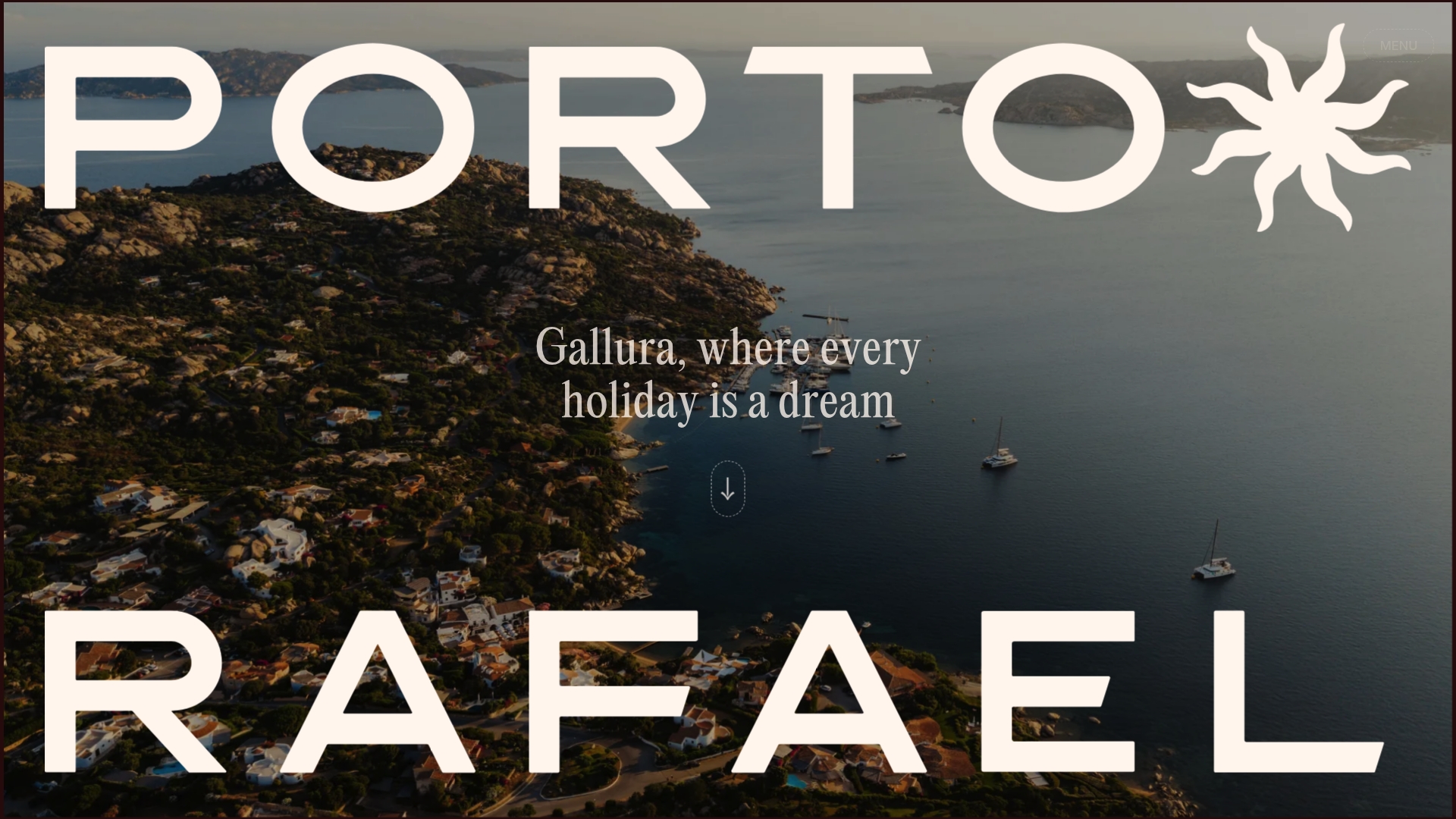
For those drawn to this more considered vision of luxury travel, Porto Rafael is a rare gem on the Sardinian coast, a boutique village in Gallura where every detail is shaped by an appreciation for heritage, beauty, and quiet excellence.
The Atelier Labenoi brings local artistry into the guest experience through interiors that tell the story of Sardinian craft and culture. The prestige rooms at Hotel La Piazza offer an intimate sense of place, combining coastal charm with comfort tailored to the discerning traveller. And at Solaz Restaurant, gourmet Sardinian cuisine is prepared with the kind of reverence for local ingredients that turns a meal into a memory. Curated excursions, wellness journeys, and genuinely anticipatory service complete a picture of luxury travel at its most authentic and most resonant.
Frequently asked questions
What makes luxury travel different from regular premium travel?
Luxury travel prioritises personalisation, privacy, seamless logistics, and meaningful experiences over mere comfort or status symbols. Ultra-high-net-worth travellers consistently rank privacy and time savings above visible upgrades when defining what makes a journey truly extraordinary.
Why is privacy so crucial in luxury travel?
Privacy allows travellers to enjoy exclusivity and genuine comfort without interruptions, making the experience restful and deeply personal. 70% of high-net-worth travellers cite privacy and exclusivity as crucial to their luxury travel experiences.
How can timing affect a luxury travel experience?
Visiting destinations off-peak reduces crowds, enables exclusive access, and significantly enhances the sense of privacy that defines genuine luxury. Crowd control and off-peak timing have become among the most defining considerations in modern luxury travel planning.
What should I consider when choosing luxury accommodation in Sardinia?
Look for boutique properties offering authentic local design, personalised service, privacy, and curated cultural experiences rather than branded scale. True luxury accommodations shape experiences through architectural storytelling and bespoke, attentive service that larger hotels rarely sustain.
Are luxury travellers concerned about sustainability?
Yes, ethical eco-luxury seekers increasingly prioritise sustainability alongside authenticity, expecting properties and operators to demonstrate genuine environmental responsibility rather than surface-level green credentials.