
TL;DR:
- Luxury tourism positively influences local economies by generating significant multiplier effects and creating diverse high-skill jobs. It also supports cultural preservation by funding heritage institutions and encouraging authentic experiences rooted in local traditions. The emerging trend of deep luxury emphasizes sustainability and community impact, redefining high-end travel as responsible and purpose-driven.
Luxury tourism is often dismissed as little more than extravagance for the privileged few. That view misses something profound. The importance of luxury tourism reaches far beyond private villas and Michelin-starred menus. It shapes local economies, preserves cultural heritage, and is quietly leading the travel industry towards more sustainable, responsible practices. The global luxury travel market was valued at $890.8 billion in 2023 and is projected to reach $2.15 trillion by 2035. Understanding why luxury tourism matters means looking at what it actually does, not just what it costs.
Why luxury tourism matters to local economies
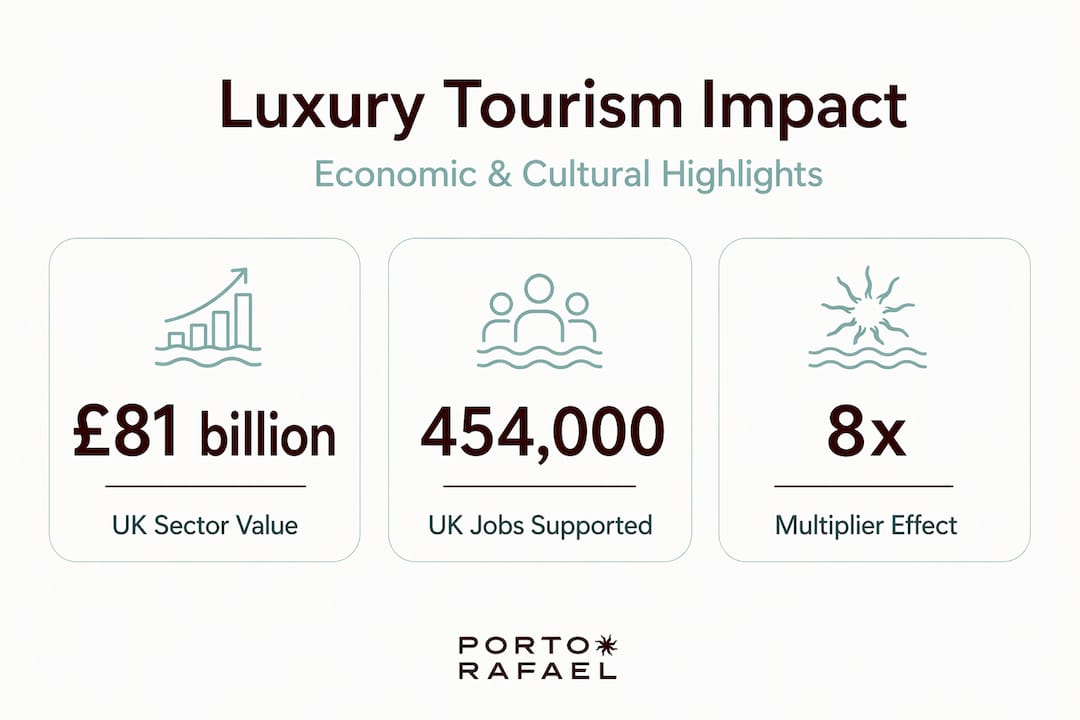
The economic case for luxury tourism is compelling, and the numbers tell a story that goes well beyond ticket prices and room rates. In the United Kingdom, each £1 spent by visitors in five-star accommodation generates £8 for the broader economy. That is not a marginal benefit. It is a multiplier effect that ripples through hospitality, transport, retail, and beyond.
The UK luxury sector as a whole contributes £81 billion annually and supports 454,000 jobs, with projections pointing to £125 billion by 2028. These are not abstract figures. They represent hotel staff, artisan producers, restaurant teams, private guides, and the countless local businesses that benefit when a discerning traveller chooses depth over volume.
What makes this economic impact distinct is its spread. The luxury traveller does not simply spend on accommodation. They seek out private transfers, exclusive dining, bespoke cultural tours, and handcrafted local goods. Luxury tourism boosts high-end retail, private transport sectors such as yachts and jets, and premium concierge services, all of which feed back into the wider economy.
Key economic benefits at a glance
- Higher spending per visitor: A luxury traveller typically spends three to five times more than a standard tourist during the same trip duration.
- Job creation across skill levels: From sommelier to sustainability officer, luxury properties require highly skilled, well-compensated roles.
- Support for SMEs: Local artisans, boutique food producers, and specialist guides depend heavily on the luxury segment for their livelihoods.
- Reduced pressure on infrastructure: Fewer visitors spending more creates less strain on public services, transport networks, and natural sites.
| Economic indicator | Luxury tourism contribution |
|---|---|
| UK sector annual value | £81 billion |
| UK jobs supported | 454,000 |
| Economic multiplier per £1 spent | £8 return |
| Projected UK value by 2028 | £125 billion |
| Global market projection by 2035 | $2.15 trillion |
Pro Tip: When evaluating a destination's tourism strategy, look at revenue per visitor rather than visitor numbers alone. A region welcoming fewer, higher-spending travellers often sustains its character and economy more effectively than one chasing footfall.
Cultural heritage and authentic experience
Luxury travel and cultural preservation share a quietly powerful relationship. The significance of upscale travel is perhaps most visible in the way it funds and sustains the cultural institutions that define a place. Museums, performing arts venues, historical estates, and local artisan traditions all benefit when visitors choose quality over convenience.
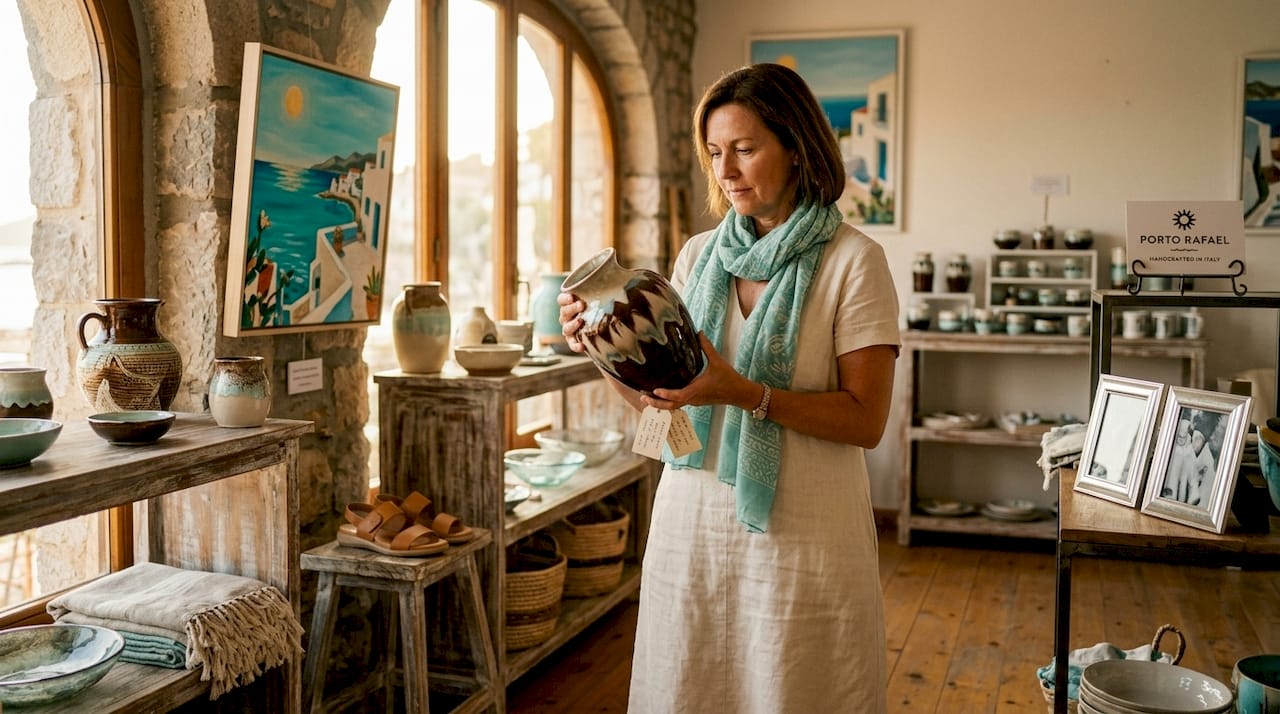
In Britain, luxury tourism supports cultural institutions, performing arts, galleries, and local artisan manufacturing in ways that mass tourism rarely matches. A visitor who books a private evening at a stately home or commissions a piece from a local craftsperson is directly underwriting the continuation of living heritage. This is not incidental. It is structural.
Luxury travellers are drawn to authenticity in a way that shapes what destinations choose to protect and celebrate. When a boutique property in Sardinia invests in traditional Gallura architecture, or a coastal restaurant sources only from local fishermen, it does so in part because its guests value that integrity. The demand for genuine experience creates a market incentive for cultural continuity.
The creative industries benefit enormously from this dynamic:
- Local artisans and craftspeople find a market willing to pay fair prices for handmade, heritage-rooted work.
- Performing arts and festivals gain audiences who travel specifically for cultural immersion, not just good weather.
- Gastronomic traditions survive and flourish when visitors seek regional flavours rather than international chains.
- Architectural preservation becomes economically viable when properties can command premium rates for historic character.
Affluent travellers often book luxury travel for life milestones, which means these journeys carry deep personal significance. A 30th anniversary trip or a once-in-a-generation adventure tends to inspire a traveller to engage more deeply, spend more thoughtfully, and leave a more meaningful imprint on the places they visit. For destinations rich in heritage, like the Gallura coastline of Sardinia, this is a rare and timeless opportunity.
Sustainability and evolving luxury tourism trends
One of the most transformative shifts in travel today is the redefinition of what luxury actually means. The value of high-end tourism is increasingly measured not in thread counts or private pools, but in environmental responsibility and authentic community impact.
This shift has a name. "Deep luxury" integrates environmental integrity and cultural preservation as core features of high-end hospitality, moving the conversation well beyond aesthetics. It is a trend that will define 2026 and the years that follow, and it is being driven as much by traveller demand as by industry leadership.
Sustainability has become a status marker among luxury travellers, many of whom are willing to pay more for verifiable green credentials. This is a profound reversal from even a decade ago, when eco-friendly travel was often associated with budget backpacking rather than premium hospitality.
Here is how the luxury sector is responding:
- Eco-architecture and passive design. Leading luxury properties now invest in buildings designed to minimise energy consumption through natural ventilation, solar integration, and locally sourced materials, without sacrificing beauty or comfort.
- Low-impact excursions. Rather than high-volume coach tours, discerning operators offer small-group or private experiences that protect fragile ecosystems while delivering deeper, more personal encounters. Private excursions in Sardinia illustrate how this approach is growing rapidly in the Mediterranean region.
- Wellness-centred travel. Luxury travellers increasingly demand personalised, wellness-oriented experiences, from therapeutic coastal retreats to mindful culinary programmes rooted in local produce.
- Community investment. The most respected luxury operators direct a portion of revenue towards local conservation, heritage maintenance, and community education, treating the destination as a partner rather than a backdrop.
Pro Tip: When choosing a luxury property, ask specifically about its sustainability certifications and community partnerships. Genuine operators are proud to share this information. Those who are vague about it may be greenwashing.
Luxury vs. mass tourism: a balanced comparison
Understanding the benefits of luxury travel becomes clearer when placed alongside mass tourism. Both models serve genuine needs, but their impacts differ considerably.
| Dimension | Luxury tourism | Mass tourism |
|---|---|---|
| Spending per visitor | High (multiplied economic effect) | Lower per individual |
| Environmental footprint | Smaller per person, often managed | Larger in aggregate |
| Cultural engagement | Deep, often bespoke | Broad, frequently surface-level |
| Infrastructure pressure | Minimal, by design | Significant at peak periods |
| Community benefit | Targeted, high-value | Wide but diluted |
| Risk of overtourism | Low, due to limited capacity | High, particularly at iconic sites |
The most honest observation about why luxury tourism matters is this: the challenge it addresses is not purely about economics. Two-thirds of affluent Americans plan at least one premium element in their main holiday, and 28% book luxury travel for milestone occasions. These travellers are not simply consuming a service. They are seeking meaning, and that motivation leads to more considerate, more engaged travel behaviour overall.
The concern about exclusivity is legitimate and worth naming. Luxury tourism can, if poorly managed, price local communities out of their own cultural spaces or gentrify authentic neighbourhoods beyond recognition. The answer lies not in abandoning high-end tourism but in designing it thoughtfully. How events shape luxury destinations offers a window into how curation and intention can keep communities at the heart of the experience.
My perspective on what this all really means
I have spent years observing the luxury travel industry from the inside, and the argument I find myself making most often is not about price points or prestige. It is about purpose.
What I have learned is that the people who most underestimate luxury tourism tend to conflate it with indulgence for its own sake. The reality I have seen is quite different. When a boutique property in a remote Sardinian village commits to local suppliers, preserves traditional building methods, and limits its guest numbers to protect the surrounding landscape, that is not a marketing strategy. That is stewardship.
The uncomfortable truth is that sustainable, community-centred luxury tourism can achieve what no government grant or conservation charity manages alone: it makes cultural and environmental protection economically self-sustaining. The destination earns enough through quality visitors to maintain what makes it worth visiting in the first place.
What I believe the next decade will reveal is that the distinction between "luxury" and "responsible" travel will dissolve entirely. The deep luxury trend is not a niche correction. It is the future of travel at its most considered, and it is already taking shape in places like the Gallura coast, where the land, the sea, and the people who inhabit them are the luxury.
— Studio
Experience Porto Rafael: where these values live
Porto Rafael in Gallura, Sardinia, is precisely the kind of place this article has been describing. A rare gem on the northern Sardinian coast, it embodies the significance of upscale travel not through grandeur, but through intention.
Portorafael's Hotel La Piazza is an adults-only boutique property designed for those who understand that genuine luxury means fewer guests, deeper connections, and a landscape that remains untouched. The prestige rooms and private suites are crafted with local materials and a quiet reverence for Sardinian character. At Solaz Restaurant, gourmet menus celebrate the flavours of Gallura, sourced with care and prepared with artistry. Every detail at Portorafael reflects the understanding that a destination worth visiting is one worth protecting. For those seeking the kind of travel this article describes, Porto Rafael is an invitation to experience it firsthand.
FAQ
What is the economic impact of luxury tourism?
Luxury tourism acts as a powerful economic multiplier. In the UK, every £1 spent in five-star accommodation generates £8 for the broader economy, supporting hundreds of thousands of jobs across hospitality, retail, and the creative industries.
How does luxury tourism support cultural heritage?
Luxury travellers fund cultural institutions, artisan trades, and performing arts through their spending and their preference for authentic, locally rooted experiences. This creates a direct market incentive for destinations to preserve and celebrate their cultural identity.
What does "deep luxury" mean in travel?
"Deep luxury" refers to a shift in high-end travel towards sustainability, cultural respect, and genuine community impact, moving beyond opulence to encompass environmental integrity as a core feature of premium hospitality.
How does luxury tourism differ from mass tourism?
Luxury tourism generates higher spending per visitor, places less pressure on infrastructure and natural environments, and tends to support more targeted, high-value economic benefits for local communities compared to mass tourism.
Why do travellers choose luxury travel over standard options?
Beyond comfort, 28% of luxury travellers book premium travel for milestone occasions, seeking meaning and deep experience rather than convenience alone. Authenticity, personalisation, and cultural immersion are consistently ranked as leading motivations.