
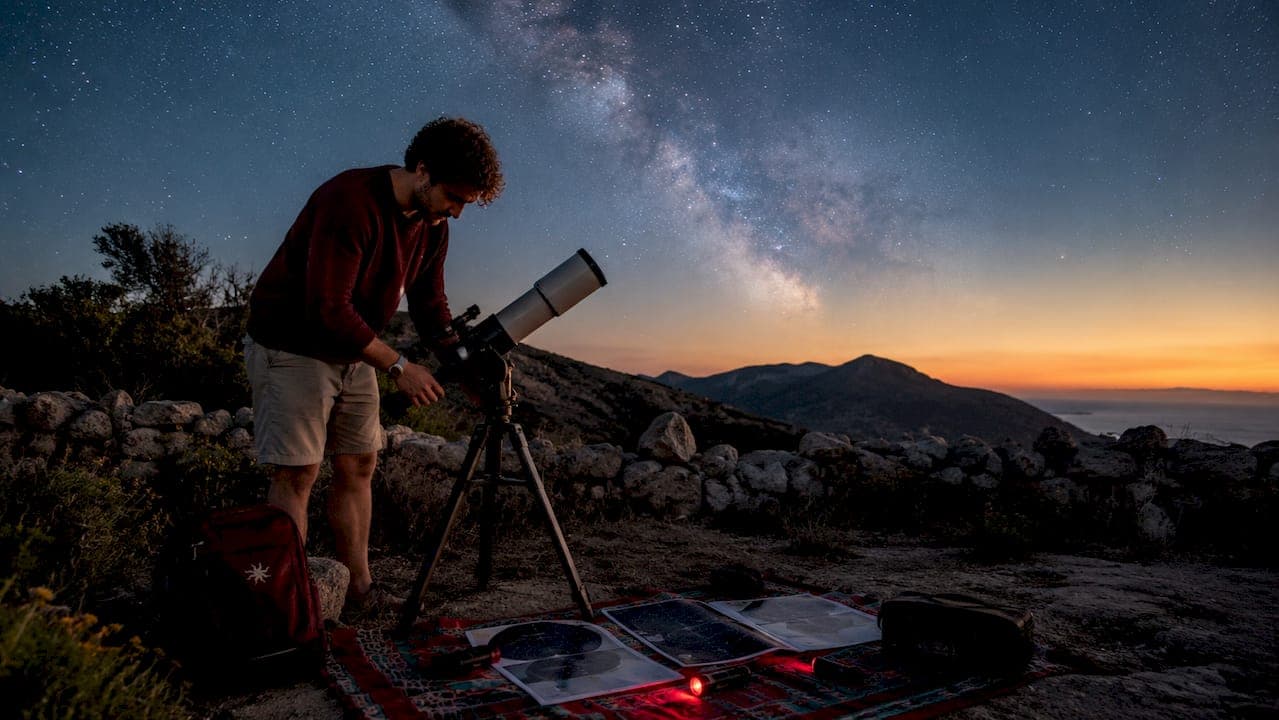
TL;DR:
- Sardinia offers some of Europe's best dark-sky sites, thanks to low light pollution and natural protection. Certified locations like Allai and Monte Armidda provide excellent opportunities for amateur astronomers and photographers to observe the night sky. Combining visits to planetariums with outdoor dark-sky sites enhances the stargazing experience on this island.
Sardinia is one of Europe's finest destinations for astronomical observation, defined by low light pollution, protected natural landscapes, and a growing network of certified dark-sky sites. The best Sardinia stargazing locations range from Allai, Italy's first certified "Village of the Stars," to the F. Caliumi Astronomical Observatory on Monte Armidda, immersive planetariums in Cagliari, and wild coastal panoramas across the island's south. Whether you are an amateur astronomer, a nighttime photographer, or simply someone drawn to the wonder of a truly dark sky, Sardinia rewards you with celestial views that are increasingly rare in mainland Europe.
What makes Sardinia's night skies special?
Sardinia's skies are exceptional because the island combines geographic isolation, minimal industrial development, and a genuine political commitment to preserving natural darkness. Large stretches of the interior remain sparsely populated, keeping artificial light far from the horizon. Coastal zones benefit from clean Atlantic and Mediterranean air currents that reduce atmospheric haze, producing the clarity that serious astronomers prize.
The island's astrotourism certification programmes actively encourage slow, low-impact travel that protects the very darkness visitors come to see. This is not passive conservation. Municipalities redesign public lighting, install shielded downward-directed fixtures, and educate residents and visitors alike on preserving night vision. The result is a measurable reduction in skyglow across certified zones.
Altitude also plays a role. Sardinia's interior plateaux and mountain ranges lift observers above coastal humidity, shortening the atmospheric column between eye and star. The Giara di Gesturi plateau and the Ogliastra mountains both offer this advantage. Combined with the island's southerly latitude, the Milky Way appears with a richness and colour depth that northern European observers rarely encounter at home.
Pro Tip: Plan your visit around the new moon phase. Even in Sardinia's darkest zones, a full moon washes out faint nebulae and star clusters. Apps such as SkySafari or Stellarium show lunar phases months in advance.
## 1. Allai: Italy's first certified "Village of the Stars"
Allai is the single most important dark-sky destination in Italy. The village received certification from the Starlight Foundation, a body recognised by both the International Astronomical Union and UNESCO, making it the country's first official "Village of the Stars." That certification is not ceremonial. It requires ongoing compliance with strict lighting standards, visitor education, and infrastructure that actively supports observation.
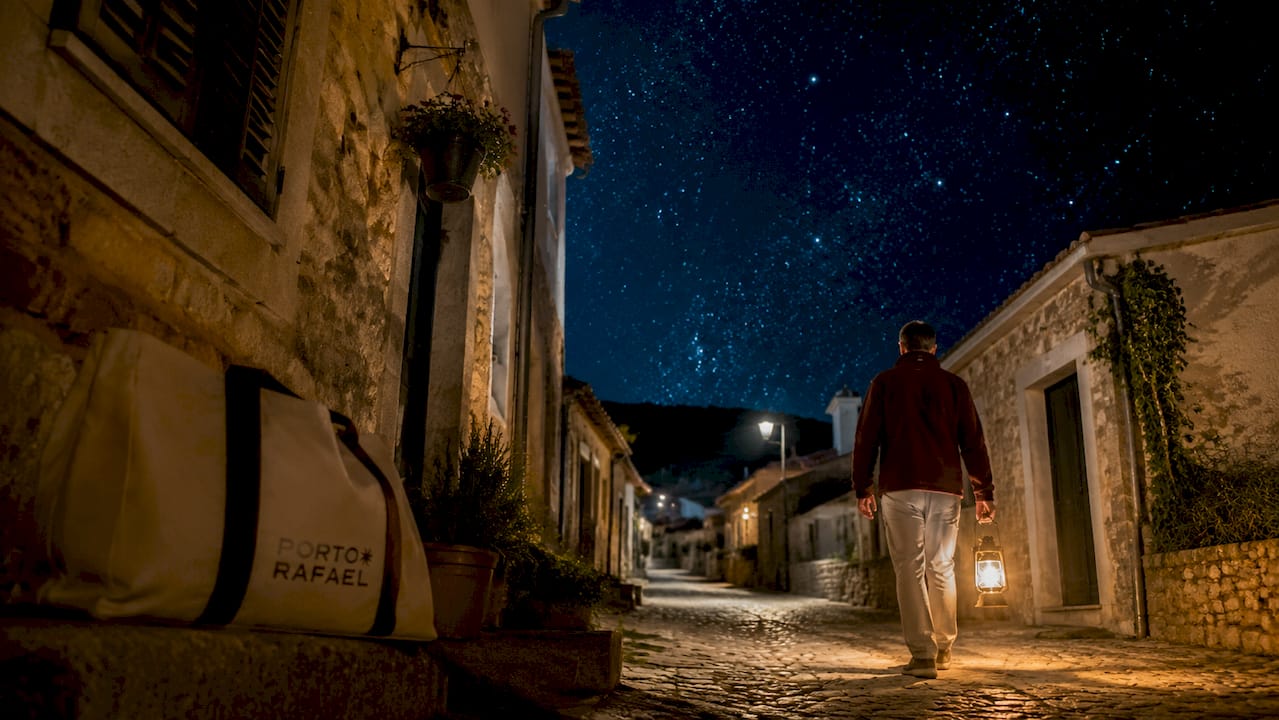
Walking through Allai at night, you notice the difference immediately. Street lamps are shielded and angled downward, casting warm amber light only where it is needed. Star charts and observation benches are positioned throughout the village, turning the streets themselves into an open-air observatory. Signage guides visitors to the best vantage points and explains what is visible on any given night.
The village sits in the Oristano province at an elevation that keeps coastal light pollution well below the horizon. On a clear night, the Milky Way arches directly overhead with extraordinary definition. Allai is the benchmark against which all other Sardinia dark-sky sites are measured.
Pro Tip: Visitors to Allai are asked to use red-filter torches rather than standard white-beam lights. Red light preserves night vision and avoids disrupting other observers. Pack one before you travel.
2. F. Caliumi Astronomical Observatory on Monte Armidda
The F. Caliumi Astronomical Observatory on Monte Armidda is Sardinia's premier dedicated public observatory for serious astronomical work. Located in the Ogliastra region at significant elevation, it offers professional-grade equipment and a position well above the coastal humidity that can soften star images at lower altitudes. For observers who want more than a naked-eye experience, this is the destination.
The observatory hosts organised observation sessions and provides access to telescopes capable of resolving planetary rings, lunar craters, and deep-sky objects such as globular clusters and emission nebulae. The elevated position in Ogliastra places it within one of the island's darkest natural zones, far from the light domes of Cagliari or Sassari.
Planning is essential. Mountain access and weather at Monte Armidda differ sharply from the coast. Summer evenings are generally stable, but spring and autumn can bring rapid cloud cover. Check conditions at least 48 hours in advance and confirm access routes, as mountain terrain requires a reliable vehicle.
3. Planetario e Museo dell'Astronomia at Sardegna in Miniatura
The Planetario e Museo dell'Astronomia, located within the Sardegna in Miniatura complex, offers one of the island's most accessible introductions to the night sky. The facility combines a full-dome projection theatre with a dedicated astronomy museum, making it equally suitable for families, school groups, and adult visitors with no prior knowledge.
Narrated dome shows run for 30–45 minutes and cover topics from the solar system to the deep universe, using high-resolution imagery that rivals the clarity of a real dark sky. The museum section contextualises what you see overhead with exhibits on the history of astronomy, celestial navigation, and the science of light pollution.
The complex is located near Barumini in central Sardinia, placing it within reach of several natural dark-sky zones. Visiting the planetarium in the afternoon and then driving to a natural observation site in the evening is a genuinely rewarding combination. The indoor experience sharpens your ability to identify what you will see outside.
4. Planetario de L'Unione Sarda in Cagliari
The Planetario de L'Unione Sarda in Cagliari is the island's most accessible urban astronomy venue. It offers 360-degree dome projections alongside outdoor telescope observation nights, creating a hybrid experience that suits both first-time visitors and returning enthusiasts. The combination of indoor learning and outdoor viewing is the most effective way to build genuine astronomical knowledge.
During outdoor sessions, visitors can observe lunar craters in fine detail, trace the rings of Saturn, and identify star clusters with guided assistance from resident astronomers. These sessions are scheduled seasonally, with the clearest and longest nights falling between june and september. Booking in advance is strongly recommended, as evening telescope sessions fill quickly in summer.
Cagliari's urban setting means the planetarium itself sits within a light-polluted zone. The outdoor sessions are therefore best treated as an introduction rather than a substitute for a visit to Allai or Monte Armidda. The planetarium's real value lies in the quality of its educational programming and the expertise of its staff.
- Dome shows run for 30–45 minutes with narrated commentary
- Outdoor telescope sessions cover lunar, planetary, and deep-sky targets
- Family-friendly scheduling with sessions designed for younger visitors
- Seasonal programmes align with major astronomical events such as meteor showers and planetary oppositions
5. Torre di Porto Giunco and the southern coast
Torre di Porto Giunco, near Villasimius in southern Sardinia, is one of the island's most captivating natural stargazing sites. The ancient watchtower stands on a narrow promontory between two lagoons, offering an almost 360-degree horizon with no obstructions. On a clear night, the sky reflects in the still water below, doubling the spectacle.
Southern Sardinia's coastal sites combine pristine dark skies with panoramic views that are difficult to match anywhere else in the Mediterranean. The absence of major urban centres nearby keeps light pollution low, and the sea horizon extends the visible sky further than inland sites allow. Nighttime photographers in particular find the combination of foreground water, ancient stone, and star-filled sky irresistible.
Access is straightforward by car, and the site requires no specialist equipment or permits for casual observation. Arriving an hour before astronomical twilight ends gives your eyes time to fully adapt. Bring a blanket and a star map, and the site rewards patience with views of the Milky Way core from june through august.
6. San Pietro Island
San Pietro Island, off Sardinia's south-western coast, offers a rare combination of geographic isolation and natural beauty that makes it one of the best places to stargaze in Sardinia away from the mainland. The island's small resident population and lack of heavy industry keep its skies genuinely dark. The coastline provides dramatic foreground for nighttime photography, with volcanic rock formations silhouetted against the stars.
The island is accessible by ferry from Calasetta or Portovesme, and the crossing itself can offer early evening sky views as the sun sets over the Tyrrhenian Sea. Accommodation on the island is limited, which keeps visitor numbers manageable and preserves the tranquillity that makes the night sky experience so memorable. Booking well in advance for summer visits is advisable.
Pro Tip: San Pietro Island's western cliffs face directly into open sea, eliminating any eastern light pollution from the Sardinian mainland. Position yourself on the western shore for the darkest possible horizon.
7. Giara di Gesturi plateau
The Giara di Gesturi is a basalt plateau rising above the surrounding plains of central Sardinia, famous for its wild horses and cork oak forests. It is also one of the island's finest natural dark-sky areas, combining altitude, distance from urban centres, and a flat open landscape that allows unobstructed views in every direction.
The plateau sits at roughly 550 metres above sea level, enough to lift observers above the worst of the coastal haze. The absence of artificial lighting across the plateau means that on a moonless night, the sky appears almost three-dimensional, with the Milky Way casting a faint shadow. This is the kind of sky that recalibrates your sense of scale.
Access requires a short walk from the plateau's edge, and the terrain is uneven in places. Sturdy footwear and a red-filter torch are both necessary. The site is best visited between april and october, when the weather is stable and the nights are long enough to observe deep-sky objects properly.
8. Carbonara Cape
Carbonara Cape, at Sardinia's south-eastern tip, is the island's most southerly major landmass and one of its most rewarding night sky viewing points. The cape's position means the southern sky opens up with unusual clarity, bringing constellations such as Scorpius and Sagittarius higher above the horizon than they appear from northern Europe. For observers interested in the galactic centre, this matters enormously.
The surrounding Capo Carbonara Marine Protected Area limits development and keeps the coastline free from the commercial lighting that degrades skies elsewhere. The marine reserve's protected status is a practical benefit for stargazers: what protects the sea by day protects the sky by night. The combination of ecological and astronomical value makes this one of Sardinia's most distinctive observation sites.
9. How to choose the right Sardinia stargazing location for your trip
Choosing among Sardinia's night sky locations depends on three factors: your experience level, your group composition, and your logistical constraints.
- Beginners and families benefit most from the planetariums in Cagliari and Barumini. Guided shows and resident astronomers remove the uncertainty of self-directed observation and build the vocabulary needed to appreciate outdoor sites.
- Amateur astronomers with their own equipment should prioritise Allai or Monte Armidda. Both offer certified dark skies, and Allai's infrastructure makes it easy to set up and observe without disturbing other visitors.
- Nighttime photographers find Torre di Porto Giunco, San Pietro Island, and Carbonara Cape most rewarding. The combination of dramatic natural foreground and dark skies produces images that are difficult to achieve anywhere else in the Mediterranean.
- Seasonal timing shapes every choice. The period from june through september offers the longest stable nights and the best Milky Way visibility. Meteor showers such as the Perseids in august add a spectacular bonus.
- Logistics and access matter for remote sites. Mountain observatories like Monte Armidda require advance planning, reliable transport, and weather checks. Coastal sites are more forgiving but may attract more visitors in peak summer.
Why Sardinia's astrotourism movement deserves your attention
The first time I stood in Allai after dark, I was not prepared for the silence. Not just the absence of noise, but the absence of the ambient orange glow that follows most European travellers everywhere they go. The sky above the village was a different thing entirely from what I had seen at other so-called dark-sky sites. The Milky Way was not a suggestion. It was a structure, with lanes of dust and brightness that made the galaxy feel tangible.
What struck me most was how deliberately the village had earned that sky. The certification from the Starlight Foundation is not a marketing badge. It represents a genuine community decision to value darkness as a natural resource. The redesigned street lighting, the observation benches, the star maps on the walls: all of it reflects a place that has chosen a different relationship with the night.
My honest advice is to combine a planetarium visit with at least one night at a certified or natural dark-sky site. The hybrid planetarium experience at Cagliari gives you the vocabulary and the context. Allai or Monte Armidda gives you the sky. Neither is complete without the other. Sardinia's astrotourism offer is still young enough that you can experience it without crowds. That will not last indefinitely.
— Studio
Plan your Sardinia stargazing stay with Portorafael
Sardinia's finest night sky experiences deserve equally fine surroundings. Portorafael, the boutique village of Porto Rafael in Gallura, offers a rare base for travellers who want to combine celestial observation with the warmth of authentic Sardinian hospitality. The Gallura region's coastal position places you within reach of some of the island's most captivating dark-sky areas, while the village itself offers the kind of tranquillity that makes evenings under the stars feel genuinely restorative.
After a night of observation, the gourmet dining at Solaz offers a graceful return to earth, with local flavours and an atmosphere that honours the island's heritage. For a lighter close to the evening, Rafael's Lounge Bar serves cocktails and aperitivi with a view that lingers long after the stars have faded. Explore boutique Sardinian stays to find the accommodation that fits your stargazing itinerary perfectly.
FAQ
What is the best dark-sky location in Sardinia?
Allai is the best certified dark-sky location in Sardinia. It holds Italy's first official "Village of the Stars" certification from the Starlight Foundation, recognised by the IAU and UNESCO.
When is the best time to stargaze in Sardinia?
The period from june through september offers the most stable clear nights and the best visibility of the Milky Way core. The Perseid meteor shower in august adds a particularly spectacular event to the calendar.
Do I need specialist equipment to stargaze in Sardinia?
Naked-eye observation is rewarding at certified sites like Allai and natural sites like Torre di Porto Giunco. Binoculars extend the experience considerably, and the F. Caliumi Observatory on Monte Armidda provides telescope access for those without their own equipment.
Are Sardinia's planetariums suitable for children?
Both the Planetario de L'Unione Sarda in Cagliari and the Planetario e Museo dell'Astronomia at Sardegna in Miniatura offer family-friendly programmes. Narrated dome shows run for 30–45 minutes and are designed to engage visitors of all ages.
What should I bring to a Sardinia dark-sky site?
Bring a red-filter torch to preserve night vision, a star map or astronomy app such as Stellarium, warm layers for elevated or coastal sites after dark, and binoculars to extend what you can see beyond the naked eye.