
TL;DR:
- Effective event planning in Sardinia relies on phased timelines, venue selection aligned with local conditions, and detailed logistics coordination. Building strong relationships with local vendors and understanding the island's unique geography and weather patterns are essential for success. Portorafael offers boutique accommodations and cultural experiences perfect for memorable Sardinian events.
A well-structured event hosting workflow in Sardinia is defined by three non-negotiable pillars: phased timeline management, venue selection aligned with local conditions, and logistical coordination that accounts for the island's geography. Sardinia is not simply a backdrop. It is a destination with its own rhythms, seasonal weather patterns, and transport realities that shape every decision a planner makes. The island's Gallura region, which includes the celebrated Costa Smeralda coastline, demands early commitment and local knowledge. Get those right, and Sardinia rewards you with an event experience that no mainland Italian city can replicate.
What are the essential phases for event planning in Sardinia?
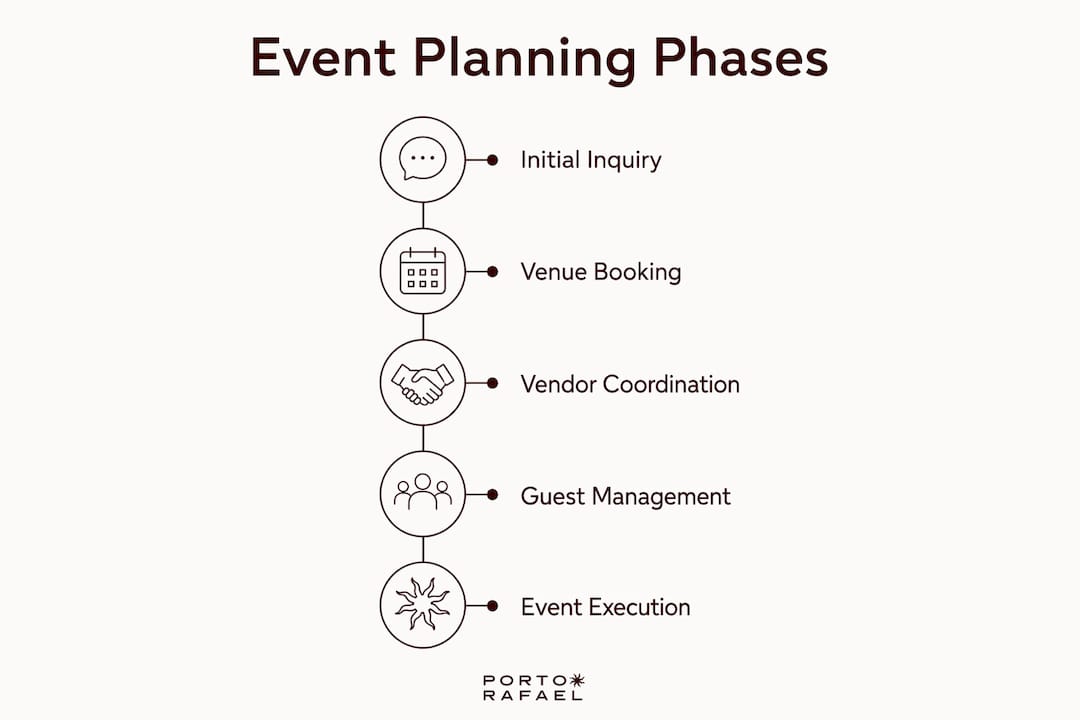
Event management in Sardinia follows a phased structure that mirrors international best practice but adapts to local realities. The planning timeline runs across three defined stages: concept and venue definition at 12–9 months prior, vendor finalisation and logistical layout at 9–6 months prior, and operational run sheets with site inspections at 4–2 months prior. Each phase has a distinct purpose, and skipping one creates compounding problems later.
-
Concept and venue definition (12–9 months out). Lock in the event format, guest count, and preferred venue category before anything else. Sardinia's most sought-after properties, particularly boutique estates and panoramic coastal venues, fill quickly for the peak summer season running from june through september. Committing at this stage also gives you time to assess access routes, accommodation capacity, and whether the location suits your guest profile.
-
Vendor finalisation and logistical layout (9–6 months out). Confirm your catering team, audio-visual suppliers, transport providers, and any specialist services such as multilingual guides or private security. This phase also includes developing your weather contingency plan. Seasonal weather variability means outdoor venues face sudden coastal changes, and relying on expected sunshine alone is a planning error that experienced coordinators never make.
-
Operational confirmation (4–2 months out). Finalise run sheets, conduct site inspections, and confirm all supplier timings. This is the phase where the abstract plan becomes a working document. Every vendor receives a written brief, every transfer is mapped, and every contingency is assigned a named decision-maker.
For smaller private events or culinary gatherings, the minimum booking window is at least two weeks to secure preferred chefs and venues. Larger corporate or multi-day events require 9–12 months of lead time. That gap is not arbitrary. It reflects genuine scarcity in Sardinia's premium venue and vendor market during peak season.
Pro Tip: Book your preferred venue before finalising your guest list. In Sardinia, venue availability drives the event format, not the other way around.
Which venues and local resources work best for Sardinia events?
Sardinia offers a genuinely varied venue portfolio, and the right choice depends on event type, guest count, and the atmosphere you want to create. Each category carries distinct operational implications for your event organisation workflow.
- Boutique hotels and private estates. Properties like those in the Gallura region offer intimate settings with built-in accommodation, catering infrastructure, and staff familiar with hosting private groups. They suit corporate retreats, incentive travel programmes, and wedding weekends equally well.
- Historic masserie and rural estates. These stone farmhouses provide dramatic visual character and often include outdoor terraces, olive groves, and wine cellars. They work particularly well for multi-course dinners and cultural immersion events.
- Outdoor and panoramic coastal locations. Clifftop terraces and private beach settings deliver an unmatched visual impact. They require the most rigorous contingency planning due to wind and weather exposure.
- Conference centres and resort facilities. For larger MICE events requiring breakout rooms, AV infrastructure, and formal catering, resort-based conference facilities in northern Sardinia provide the technical capacity without sacrificing the island's scenic appeal.
Integrating local experiences such as private vineyard dinners, yacht excursions, and artisan workshops transforms a standard corporate programme into something participants genuinely remember. These additions also strengthen the case for Sardinia over a conventional city venue when presenting the event concept to stakeholders.
Working with local vendors who understand Sardinian geography, culture, and venue nuances reduces friction at every stage. A local florist knows which blooms survive the coastal heat. A local caterer knows which suppliers deliver reliably to remote estates. That knowledge is not available in a general vendor directory.
Pro Tip: Ask every venue candidate whether their preferred supplier list is exclusive or advisory. Exclusive lists can limit your catering and AV options significantly.
How to manage logistics and guest flow for events in Sardinia
Logistics coordination is where Sardinia event planning either excels or unravels. The island's geography, with its combination of coastal roads, rural estates, and a primary aviation hub at Cagliari-Elmas airport, creates specific challenges that require deliberate planning rather than improvisation.
Successful MICE logistics in Sardinia depend on 24/7 on-site assistance, multilingual support, airport transfers, liability insurance, and regulatory compliance checks. Each of these is a system, not a task. Treating them as a checklist rather than an integrated flow is the most common mistake planners make on their first Sardinian event.
Key logistical priorities to address:
- Airport transfers. Cagliari-Elmas serves as the island's main aviation gateway, but Olbia Costa Smeralda airport is the preferred entry point for events in the north. Coordinate arrivals in staggered windows to avoid vehicle queues and protect the guest experience from the first moment.
- Staggered arrivals and dedicated access points. For multi-day events, designing guest movement with dedicated arrival corridors and timed transfers prevents bottlenecks and preserves the exclusivity of the venue.
- Multilingual support. International corporate groups and destination weddings routinely include guests from three or more language backgrounds. Assign a multilingual liaison for each guest cluster, not just a single interpreter for the group.
- Weather contingency. Establish a formal backup plan by the 6–4 month mark. This means a named indoor alternative, a confirmed decision timeline, and a communication protocol for guests.
- Regulatory compliance. Permits for outdoor events, noise restrictions, and access to protected coastal areas require advance applications. Missing a permit deadline can force a venue change weeks before the event.
"The most avoidable logistical failures in Sardinia come from treating the island like a mainland European city. It is not. The distances, the permit requirements, and the seasonal rhythms demand a different kind of preparation."
What are best practices for vendor coordination and operational control?
Vendor coordination in Sardinia event management requires a level of specificity that general event planning guides rarely address. Engaging a licensed Destination Management Company with regional authorisation and appropriate insurance is not optional for corporate events. It is the mechanism through which permits are secured, liability is managed, and local supplier relationships are activated.
-
Issue written briefs to every vendor at least eight weeks before the event. The brief should include arrival times, access routes, on-site contact names, and a timeline with fifteen-minute increments for the event day itself. Verbal agreements dissolve under pressure.
-
Assign a single point of contact for each vendor category. Catering, transport, AV, and décor each need one named coordinator who holds authority to make real-time decisions. Fragmented communication chains create delays that cascade through the run sheet.
-
Establish photo and filming permissions in writing. High-profile corporate events and private celebrations in Sardinia frequently involve guests who require discretion. Define which areas are photography-free, communicate this to all vendors and guests in advance, and assign a team member to enforce it on the day.
-
Build thirty-minute buffers into every transition. Sardinian roads, particularly in rural Gallura, do not accommodate last-minute schedule compression. A transfer that takes twenty minutes in ideal conditions can take fifty in summer traffic.
-
Hold a vendor walkthrough at the venue forty-eight hours before the event. This is the moment to identify access conflicts, power supply limitations, and catering flow issues before they become live problems.
Local vendors' understanding of Sardinian geography and customs reduces planning friction and produces naturally authentic event experiences. That authenticity is a genuine competitive advantage when your event is competing for guest attention and memory.
Pro Tip: Create a shared digital run sheet that all lead vendors can view in real time. When one element shifts, every team sees the update simultaneously.
What I have learned from planning events in Sardinia
Sardinia rewards planners who respect its pace. The island's less congested environment compared to mainland Italian destinations is a genuine operational advantage, but only if you build your workflow around local conditions rather than importing a mainland template and hoping it fits.
The planners who struggle here are the ones who underestimate the permit timeline, overestimate road speed, and treat local vendors as interchangeable with their city-based equivalents. The planners who succeed are the ones who arrive in Sardinia before the event, walk the venue, meet the suppliers face to face, and build relationships that carry across multiple events.
Going beyond business meetings to incorporate natural and cultural experiences significantly strengthens event impact and participant retention. A vineyard dinner under the Gallura sky or a morning excursion along the Costa Smeralda coastline does more for team cohesion than any conference session. That is not sentiment. It is a consistent pattern across every well-executed Sardinian event I have observed.
The most underrated element of Sardinia event coordination is the quality of silence. Venues here offer a stillness that urban destinations cannot manufacture. Build that into your programme deliberately, and your guests will remember the event long after the agenda is forgotten.
— Studio
Portorafael's role in your Sardinian event programme
Portorafael, set within the captivating village of Porto Rafael in Gallura, offers event planners a rare combination of boutique hospitality, authentic local experiences, and a setting of timeless natural beauty.
The Hotel La Piazza provides an intimate venue for private gatherings and corporate retreats, while Solaz Restaurant and Rafael's Bar & Lounge offer refined dining and social spaces that elevate any event programme. For planners seeking distinctive guest experiences, Portorafael's Sardinian cooking class and the celebrated Vermentino vineyard experience add genuine cultural depth to any itinerary. Explore exclusive Sardinian dining options to complement your event with locally rooted culinary moments that guests will carry home with them.
FAQ
How far in advance should I book a Sardinian event venue?
Large corporate or multi-day events require 9–12 months of lead time. Smaller private or culinary gatherings need a minimum of two weeks to secure preferred chefs and venues.
What airport serves events in northern Sardinia?
Olbia Costa Smeralda airport is the primary entry point for events in the Gallura and Costa Smeralda region. Cagliari-Elmas airport serves the south and is the island's main aviation hub for MICE event transfers.
Do I need a Destination Management Company for corporate events in Sardinia?
A licensed DMC with regional authorisation is essential for securing outdoor permits, managing liability insurance, and coordinating local suppliers. Without one, access to protected coastal venues and regulatory compliance becomes significantly more difficult.
How should I handle weather contingency for outdoor Sardinian venues?
Develop a formal indoor backup plan and a guest communication protocol by the 6–4 month mark before the event. Sardinia's coastal weather can shift quickly, and outdoor venue dependence without a contingency plan is a significant operational risk.
What local experiences enhance a Sardinian event programme?
Private vineyard dinners, yacht excursions, artisan workshops, and local culinary experiences consistently strengthen participant engagement and create lasting memories beyond the formal event agenda.