
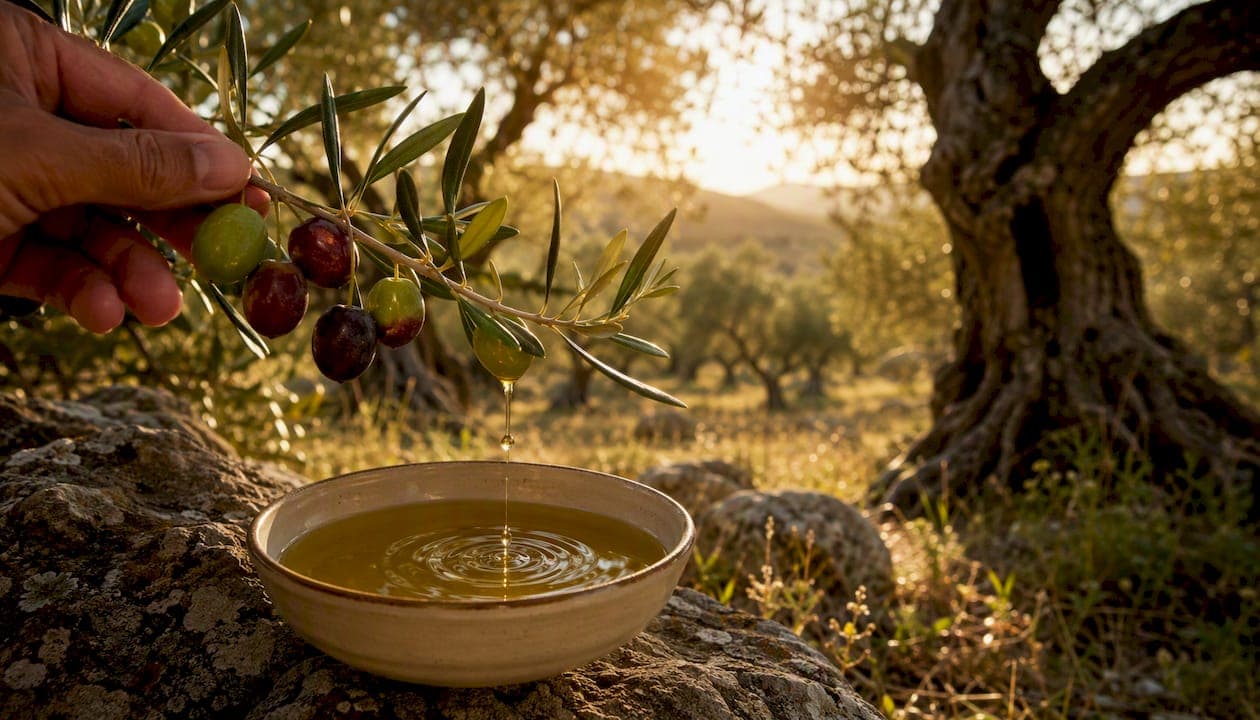
Sardinia's olive groves reward travellers who know where to look. The classic visit means choosing one or two of six key regions, Parteolla and Trexenta, Gallura around Luras, Medio Campidano, Sulcis-Iglesiente, Montiferru or Ottana, and pairing a grove walk with a guided mill tasting. Time it right and you will taste the difference between a green, peppery early-harvest oil and the rounder, mellower pressings that follow later in the season.
Three markers tell you almost everything about an oil's character: fruitiness (fresh-cut grass, artichoke, tomato leaf), bitterness (a clean, appetising sharpness on the tongue) and pungency (that throat-catching peppery finish). Learn to read these three and you can judge quality anywhere in the world, not just here.
- Best season windows: harvest runs roughly October to January; spring and early summer suit grove walks and slower tastings without the harvest bustle
- Three flavour markers: fruitiness, bitterness, pungency, scored in that order during a proper tasting
- Booking tip: reserve mill visits at least a few days ahead during harvest, when family-run frantoi are busiest pressing their own fruit
Pro Tip: If your time in Sardinia is tight, skip the multi-region itinerary and head straight for a combined grove-and-mill tasting near Parteolla or the Olive Oil Museum in Dolianova. Both deliver the full sensory experience in a single, well-organised stop.
What makes Sardinian olive groves worth visiting?
Olive cultivation on this island is not a modern agricultural add-on. It is stitched into the same soil that produced nuraghic settlements, medieval villages and centuries of pastoral life, which is why a grove visit here feels less like a farm tour and more like walking into a living archive.
The trees themselves make the case better than any brochure could. Some Sardinian olive specimens are genuinely ancient, and the millenary olive trees of Luras are managed today as a protected natural and cultural site rather than a working orchard. Among them stands the so-called Patriarca, an olive tree that some estimates place between 3,000 and 4,000 years old, though ages of this scale are always approximate given how olive wood grows and hollows over centuries.
Olive oil in Sardinia works as a cultural touchstone linking archaeology, biodiversity and everyday village life, and slow, family-run visits tend to give travellers the most honest sense of that heritage rather than a polished tour-bus version of it, according to Unica Radio's reporting.
For quality assurance, look for the PDO 'Sardegna' designation on a bottle. It is not a marketing flourish. Producers must use a defined proportion of indigenous cultivars and can trace their oil back to specific groves, giving visitors a genuine benchmark rather than a vague regional promise.
- Millenary trees at Luras function as living monuments, not agricultural relics
- PDO 'Sardegna' status signals traceable origin and cultivar composition, not just geography
- Olive oil culture connects directly to Sardinian festivals, family recipes and rural tourism routes
Where should you go to see olive groves and mills?
Six areas dominate the traveller's map, and each offers a distinct combination of landscape, cultivar and mill accessibility. Parteolla and Trexenta, just inland from Cagliari, hold some of the island's densest concentrations of family-run frantoi and are where much of the PDO 'Sardegna' production is concentrated. Sulcis-Iglesiente, in the southwest, pairs rugged, mining-scarred terrain with pockets of older groves that feel wilder and less curated. Medio Campidano offers gentler, rolling countryside with a strong tradition of smaller cooperative mills.
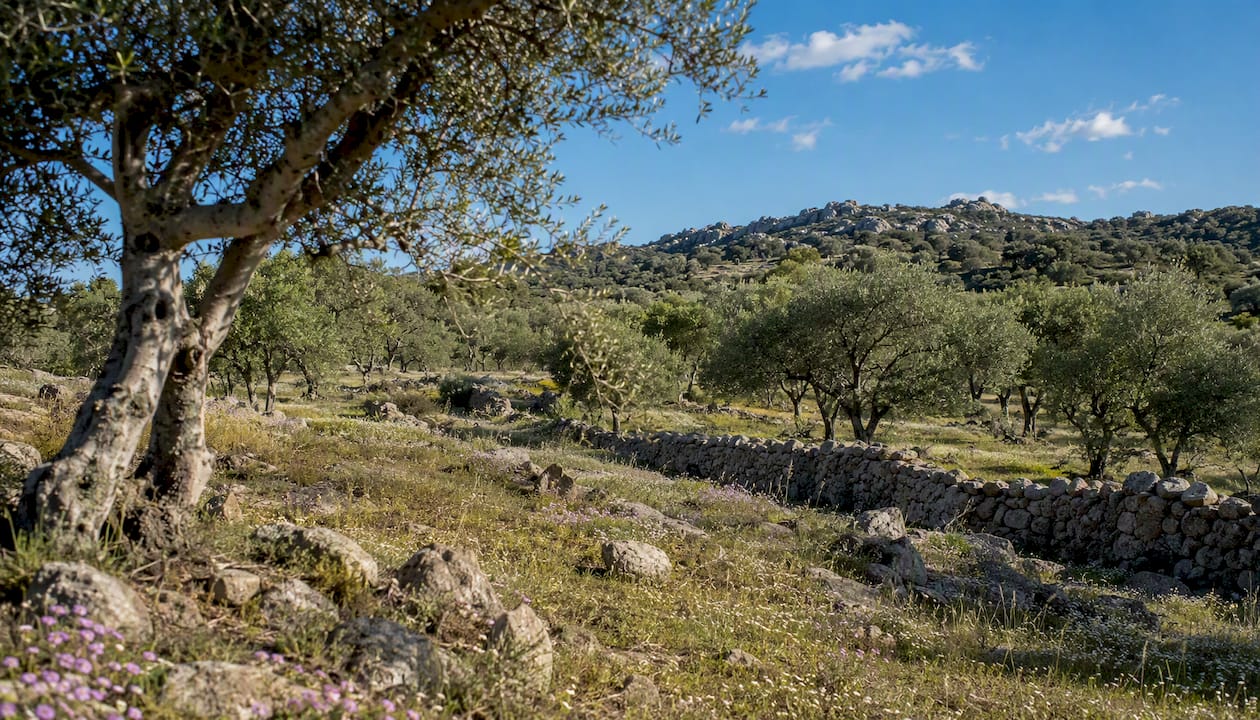
Montiferru, in the west-central highlands, grows Bosana at scale and produces some of the island's most awarded oils, often cited in guides such as Gambero Rosso. Gallura, where Porto Rafael sits, is better known for its granite coastline, but inland around Luras it hosts the ancient olive park alongside working groves worth combining with a coastal stay. Ottana, in the Nuoro province, is home to Su Molinu, a mill and visitor centre built around education as much as production.
| Region | Known for | Nearest towns | Accessibility |
|---|---|---|---|
| Parteolla / Trexenta | Dense frantoi network, PDO production | Dolianova, Serdiana | High, well-suited to day trips from Cagliari |
| Sulcis-Iglesiente | Older, wilder groves | Iglesias, Carbonia | Moderate, best with a hire car |
| Medio Campidano | Cooperative mills | Sanluri, Villacidro | Moderate |
| Montiferru | Bosana at scale, award-winning oils | Seneghe, Cuglieri | Moderate, worth a full day |
| Gallura / Luras | Millenary trees, coastal proximity | Luras, Tempio Pausania | High from Porto Rafael |
| Ottana | Educational mill visits (Su Molinu) | Ottana, Nuoro | Moderate |
Pro Tip: If you are based in Gallura, pair a morning at the Luras ancient olive park with an afternoon mill visit near Tempio Pausania rather than attempting the southern zones in the same trip. The drive south adds hours you would rather spend tasting.
Which Sardinian olive cultivars should you know?
Five cultivars define the island's oil character, and recognising them turns a tasting from pleasant into genuinely instructive. Sardinian oils lean heavily on fresh, herbaceous notes, artichoke and thistle chief among them, and these flavours trace back to specific varieties rather than appearing at random across the region's production.
| Cultivar | Flavour profile | Main growing area | Tasting tip |
|---|---|---|---|
| Bosana | Grassy, almond finish, moderate bitterness | Montiferru, Logudoro | Look for a clean, lingering almond note |
| Semidana | Artichoke and thistle, medium pungency | Central Sardinia | Thistle bitterness signals a textbook Semidana |
| Tonda di Cagliari | Velvety, rounder fruitiness | Parteolla, Trexenta | Softer mouthfeel than Bosana, less peppery |
| Nera di Oliena | Robust, spicy, high polyphenol | Oliena, Barbagia | Expect a stronger peppery kick at the throat |
| Pizz'e Carroga | Delicate, mild, low bitterness | Localised pockets, Sulcis area | Good starting point for less experienced palates |
Under PDO 'Sardegna' rules, producers typically must include a minimum of 80% locally grown varieties in a blend, with traceability checks used to verify origin. That means even a labelled monocultivar bottle usually carries a whisper of a second variety, and blends are common precisely because Bosana's structure and Semidana's bitterness complement each other well.
- Bosana dominates Montiferru and gives many PDO blends their backbone
- Semidana's thistle bitterness is one of the easiest markers to identify blind
- Nera di Oliena rewards travellers who enjoy a stronger, more assertive oil
- Pizz'e Carroga suits anyone new to tasting who wants a gentler introduction
How does the olive harvest shape the oil you taste?
Harvest timing is not a formality. It is the single biggest lever producers pull to control flavour, and it usually runs from early October through to January, sometimes stretching into February depending on the year's weather. Earlier picking, when olives are still green, yields sharper, more bitter and more pungent oil. Later picking, once fruit has ripened and darkened, produces softer, sweeter results with less of that throat-catching kick.
Most groves you visit will still use hand-picking or tree-combing, where workers rake branches so olives drop onto nets spread beneath the canopy. Both methods avoid bruising the fruit, which matters enormously: bruised olives oxidise faster and lose the phenolic compounds responsible for both flavour and much of the oil's health reputation.
Speed to the mill decides quality as much as picking method does. Premium producers aim to press within about 12 hours of harvest, though industry practice generally accepts a window of 12 to 48 hours before quality starts to slip. Cold extraction, meaning the paste never exceeds around 27°C during processing, preserves the aromatic compounds that heat-based extraction destroys. Some smaller Sardinian mills still run older stone or hydraulic presses, which feel wonderfully old-fashioned to watch but can be slower and less consistent than modern centrifugal systems.
- Hand-picking and tree-combing onto nets protect fruit from bruising
- Rapid transport to the mill, ideally same-day, limits oxidation
- Cold extraction under roughly 27°C preserves aroma and phenolic content
- Traditional stone presses still operate at some smaller frantoi, offering a slower but visually memorable process
Phenolic compounds like oleocanthal are what give an early-harvest oil its distinctive peppery scratch at the back of the throat. That sensation is not a flaw. It is one of the clearest signals of freshness you will encounter on any tasting.
What actually happens on a grove and mill visit?
Most Sardinian tastings follow a similar rhythm, though the pacing and setting vary by producer. Expect a short walk through the grove first, where a guide points out cultivars, explains pruning and irrigation choices, and gives you a feel for the terrain, whether that is Montiferru's volcanic soil or Parteolla's gentler hills. Family-run farms tend to lead these walks personally, and visitor experiences commonly combine a grove tour, mill walkthrough and guided tasting, often finishing with a food pairing.
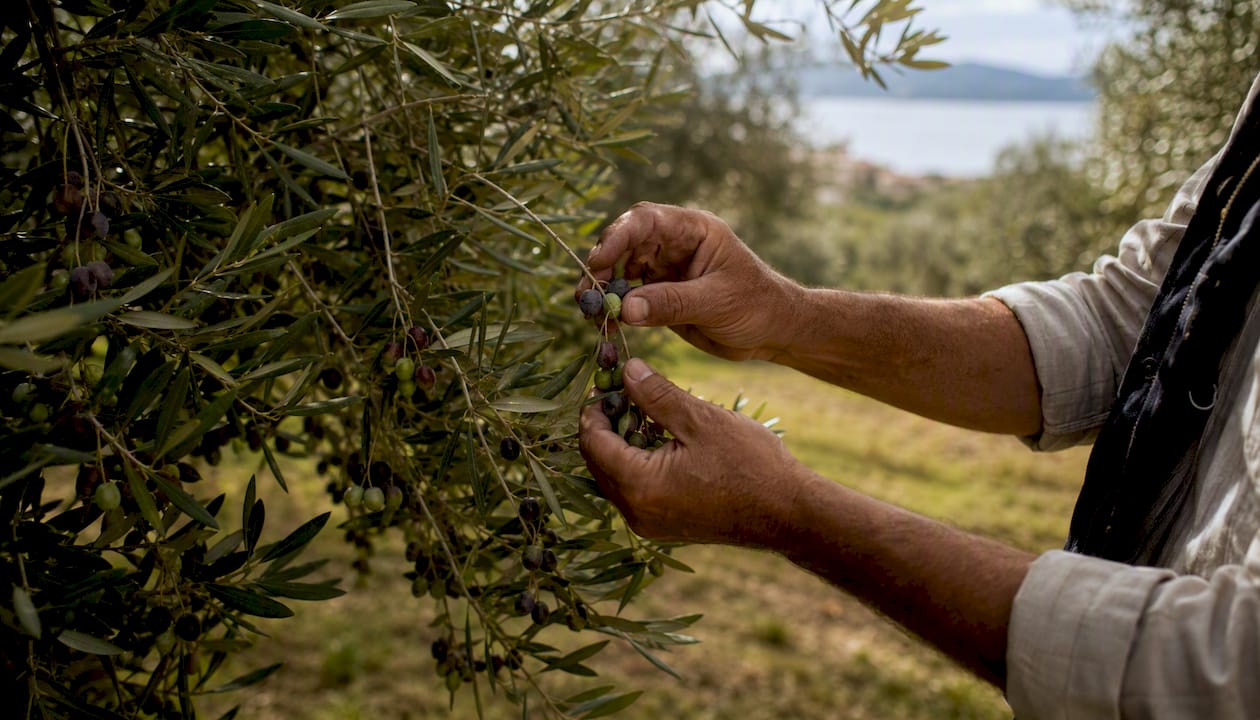
The mill portion follows, where you see presses in action during harvest season or a static demonstration outside it. Then comes the tasting itself, usually seated, with several oils presented side by side so you can compare cultivars directly rather than relying on memory. Many producers close with a light meal or picnic featuring local bread, cheese and vegetables designed specifically to showcase the oil.
Groups typically run small, often under fifteen people, and visits last between ninety minutes and three hours depending on whether a meal is included. Outdoor grove walks are weather-dependent, so bring layers and sturdy shoes regardless of season. Most established operators offer some English-language guidance, but confirming this when booking saves confusion on the day.
- Wear closed, comfortable shoes suited to uneven grove terrain
- Ask before photographing workers or machinery during active harvest
- Enquire respectfully about farming practices rather than assuming organic or traditional status
- Bring a light jacket even in warmer months, as grove terrain can be breezy and shaded
Pro Tip: Ask your host which cultivar they consider most representative of their estate before the tasting begins. It gives the whole session a clearer narrative thread and usually prompts far more generous explanations than a generic question about "the oil" would.
How do you taste Sardinian olive oil like a professional?
The short version: warm it, smell it, sip it, then aspirate. That four-step sequence, drawn from professional sensory evaluation methods, reveals fruitiness, bitterness and pungency in a way that casual sipping never quite manages.
- Pour a small amount into a covered glass or cup, ideally coloured or opaque so appearance does not bias your judgement.
- Cup the glass in your palm and swirl gently for around two minutes to warm the oil to roughly body temperature, releasing aromatic compounds.
- Uncover and smell deeply before tasting, noting whether you catch grass, artichoke, tomato leaf or ripe fruit.
- Take a small sip and let it coat your whole mouth rather than swallowing immediately.
- Aspirate by drawing air sharply through pursed lips over the oil, which pulls volatile aromatics to the back of the palate and reveals pungency.
- Note the finish: does the peppery sensation fade fast, linger at the throat, or barely register at all?
This exact step-by-step routine, covering, warming, smelling, sipping and aspirating, reliably separates fresh, high-quality extra virgin oils from tired or defective ones, and you need no specialist equipment to do it.
- Fruitiness examples: fresh-cut grass, artichoke heart, green tomato, ripe olive
- Common defects to flag: musty, rancid, fusty or vinegary notes all disqualify an oil from extra virgin status
- What pungency tells you: a strong throat-catching finish generally indicates higher phenolic content and an earlier harvest
Where can you book proven olive-grove experiences?
A handful of sites appear consistently across recommendations, and each offers something distinct enough to justify singling out.
Su Molinu, near Ottana, blends an active mill with an educational visitor programme, making it a strong choice for travellers who want the mechanics of pressing explained clearly rather than glossed over. The Olive Oil Museum in Dolianova takes a different approach, offering tiered packages, from a discovery-level museum visit through to signature and private tastings, so you can scale the experience to your budget and time. The Park of the Ancient Olive Trees in Luras is less a tasting venue and more a pilgrimage site for anyone who wants to stand beside trees that predate most of recorded history. Various family-run frantoi across Parteolla and Montiferru round out the list, typically combining a grove walk, mill tour and seated tasting in a single booking.
| Site | Type | What makes it distinctive |
|---|---|---|
| Su Molinu (Ottana) | Working mill and education centre | Hands-on explanation of pressing techniques |
| Olive Oil Museum (Dolianova) | Museum with tiered tasting packages | Scalable experience from casual to private |
| Park of the Ancient Olive Trees (Luras) | Protected natural monument | Home to some of Europe's oldest olive trees |
| Family-run frantoi (Parteolla, Montiferru) | Working farms and mills | Personal, small-group tastings paired with meals |
Booking ahead matters most during harvest months, when family-run mills are stretched between pressing their own fruit and hosting visitors. Outside that window, most sites are more flexible, though the Luras park and Su Molinu are worth confirming opening days regardless of season.
When should you plan your visit, and what should you budget?
Harvest season, October to January, gives you the most dramatic version of a grove visit: active pressing, the smell of fresh oil in the air, and the chance to taste something pressed within hours. Outside harvest, spring and early autumn offer calmer, unhurried grove walks and tastings without the seasonal rush, which suits travellers who prefer conversation over spectacle.
Costs vary by format. Museum-style visits with a guided tasting often sit at the lower end, while private, small-group experiences with a full meal pairing cost considerably more, reflecting the personal attention and food involved. Booking two to three days ahead usually suffices outside peak harvest, though harvest-season slots at popular family-run mills can fill a week or more in advance. If you need English-language guidance, mention it when booking rather than assuming it as standard.
- Choose your season: harvest for atmosphere, spring or autumn for calm
- Decide on format: museum-style tasting, private grove visit, or a combined day trip across two regions
- Book several days ahead, earlier during harvest months
- Confirm language support and any dietary needs for paired meals
- Arrange transport, since most groves sit inland and require a hire car or private transfer
Porto Rafael's coastal position in Gallura works well as a base for exploring the Luras groves and ancient olive park without committing to an inland stay, letting you return to the coast each evening. Pairing an olive-oil day with Sardinia's other food experiences rounds out a fuller picture of how olive oil sits within the island's wider culinary identity, something Kokcha's guide to olive oil in Mediterranean cuisine also explores in a broader regional context.
Why does Porto Rafael take olive-grove visits seriously?
Guests staying at Porto Rafael tend to arrive curious about Gallura's coastline and leave equally taken with what lies inland, and the olive groves around Luras are usually the reason. There is something quietly humbling about standing beside a tree older than most nations, then tasting an oil pressed from groves a few hundred metres away. It reframes the whole idea of a Sardinian holiday from a beach trip with a day excursion attached to something closer to a full sense of place.
What Porto Rafael typically suggests to guests planning this kind of day is straightforward: pair a morning tasting with a cooking class or a meal at Solaz that uses the same regional oils, so the flavours you learned to identify in the grove reappear, deliberately, on the plate that evening. It is less about ticking off an attraction and more about letting one experience deepen the next, which is closer to how food tourism should work, as Wild Foodz's guide to culinary travel also argues.
The conventional travel advice treats olive-oil tasting as a add-on activity, something to slot between beach days almost as an afterthought. That undersells it. A well-run tasting teaches you to read a bottle the way a sommelier reads a wine label, and that skill outlasts the holiday itself.
Book a Sardinian food experience from Porto Rafael
Most olive-grove day trips end the same way: back at a hotel with no easy way to continue what you just tasted. Porto Rafael closes that gap. Rather than a generic tour booking, you get a coastal base in Gallura where the oils you sampled inland can reappear that same evening, matched deliberately with dishes at Solaz or worked into a hands-on cooking class.
If you have spent a morning learning to identify Bosana's almond finish or Nera di Oliena's peppery kick, the natural next step is a meal that puts those same qualities to work. Solaz's kitchen draws on regional oils and produce to build exactly that connection, turning a tasting into a fuller Sardinian meal rather than a standalone activity. Check availability and reserve a table at Solaz to round off your olive-grove day the way it deserves.
Where can you verify these facts before you travel?
- Sardegna DOP EVO oil overview, for PDO composition rules and cultivar details
- Sardinian olive oil production notes from Ittiri, for harvest timing and processing standards
- MuseOlio Dolianova's official listings, for current museum and tasting package pricing
Confirm opening times, seasonal availability and current pricing directly with each site before booking, since harvest-season demand and family-run schedules can shift these details year to year.