
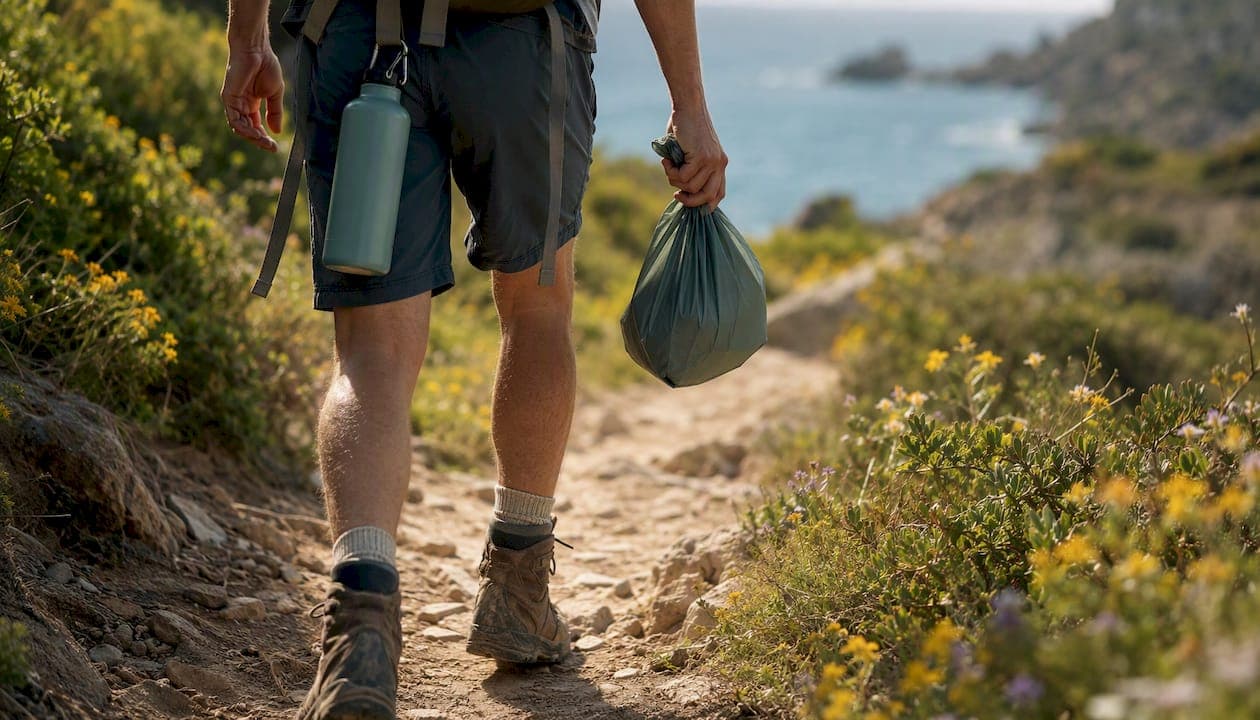
Travel sustainably in Gallura by combining three choices that matter most: when you go, how you arrive, and where you sleep. The following checklist captures the essentials before the sections below expand each one.
- Travel in spring (April–June) or autumn (September–October) to avoid peak crowds and reduce pressure on fragile coastal sites.
- Arrive by ferry where practical, or choose off-peak flights into Olbia; offset what you cannot avoid.
- Stay in landscape-integrated lodging such as an agriturismo, albergo diffuso, or small eco-lodge rather than a large coastal resort.
- Use reef-safe sunscreen every day near the water; conventional formulas harm marine life in protected bays.
- Stay on marked trails, carry out all waste (including tissues and food scraps), and leave no natural souvenirs behind.
- Check official park rules before any specific activity, particularly for La Maddalena Archipelago National Park, where some beaches are viewing-only.
When is the best time to visit Gallura sustainably?
Lonely Planet recommends spring and autumn as the ideal windows for low-impact travel: milder temperatures, fewer visitors, and conditions that suit hiking and wildlife observation without the environmental stress of high summer. Shoulder seasons also mean less competition for ferries and accommodation, which makes planning easier.
| Season | Crowds | Wildlife sensitivity | Fire risk | Practical notes |
|---|---|---|---|---|
| Spring (Apr–Jun) | Low–moderate | Nesting birds; approach carefully | Low | Best for hiking, cycling, wildflowers |
| High summer (Jul–Aug) | Very high | Marine and coastal stress | High | Avoid peak weeks if possible |
| Autumn (Sep–Oct) | Low–moderate | Calmer seas, migrating birds | Moderate | Excellent for kayaking and walking |
| Winter (Nov–Mar) | Very low | Minimal disturbance | Very low | Limited transport; some sites closed |
For trip length, a long weekend suits a single area such as the La Maddalena archipelago or Capo Testa. One week allows a mix of coast and inland Gallura without rushing. A two-week slow itinerary, moving between an agriturismo and a coastal village on foot or by bike, produces the lightest footprint of all: fewer transfers, deeper local spending, and far less logistical pressure on any single site. Explore Gallura's seasonal activities to plan your itinerary by what each season genuinely offers.
How do you get to Gallura and travel around with lower emissions?
The most carbon-considerate arrival combines a ferry crossing with rail travel to the Italian port. From the UK, a direct flight into Olbia takes roughly two to two and a half hours; it remains the most practical option for most British travellers, but choosing an off-peak departure and a smaller aircraft where available reduces per-seat emissions. Ferries from Civitavecchia (near Rome), Genoa, or Livorno reach Olbia in roughly seven to eleven hours overnight, making them a viable low-pressure alternative when time allows.
Choosing your arrival: a practical checklist
- Ferry from mainland Italy if you have flexibility; overnight crossings save a hotel night and produce lower per-kilometre emissions than flying.
- Off-peak flight into Olbia when time is limited; book direct rather than connecting to reduce total fuel burn.
- Rail to an Italian port, then ferry for the lowest-carbon combination from the UK via Eurostar and Italian high-speed rail.
- Avoid renting a large car on arrival; choose a small, hybrid, or electric vehicle when hiring is necessary.
- Book boat excursions with operators who follow marine protected-area guidelines and avoid anchoring on seagrass or reef.
Once in Gallura, local ARST buses connect the main towns, though timetables are seasonal and rural links are reduced in winter. Bike and e-bike rentals are available in Santa Teresa Gallura, Palau, and Olbia, and suit the relatively flat coastal paths well. For remote inland sites, a shared small car is more practical than a solo hire. Early-morning departures to popular trailheads reduce parking pressure and heat exposure simultaneously.
How to choose sustainable accommodation in Gallura
Prefer lodging that sits within the landscape rather than dominating it. Regional research confirms that agriturismi and albergo diffuso (diffused hotels spread across historic village buildings) channel a higher share of spending into local communities than large coastal resorts, while also distributing visitor numbers away from congested shorelines.
Before booking, ask your host four short questions:
- Do you source food and supplies locally or from regional producers?
- How do you manage waste separation and water use on the property?
- Do you use renewable energy or have any recognised eco-certification?
- Can you recommend locally owned guides and experiences rather than large operators?
Honest, specific answers signal genuine commitment. Vague marketing language does not.
What each accommodation type typically offers:
- Agriturismo: Rural farmstays with home-grown food, direct producer relationships, and a quieter pace; ideal for travellers who want to support inland communities and eat seasonally.
- Albergo diffuso: Rooms distributed across a historic village, preserving architecture and keeping spending in the village economy; suits those seeking cultural immersion.
- Small coastal eco-lodge or B&B: Lower-footprint beach access without the infrastructure of a resort; look for visible solar panels, water-saving measures, and local breakfast produce.
- Managed campsites: The lightest physical footprint, provided the site has proper waste facilities; avoid wild camping in protected zones.
Landscape-integrated hospitality has been proposed in architectural research as a way to reduce tourism pressure in Gallura specifically, reinforcing the case for choosing smaller, site-sensitive stays. For practical guidance on what to expect from boutique-scale lodging, the tips for boutique hotel stays guide covers what sustainable features are worth looking for.
What low-impact activities suit Gallura, and what etiquette applies?
Gallura's nature offer centres on birdwatching, trekking, cycling, and kayaking, all of which leave a light mark when done with care. The granite coastline and cork-oak interior reward slow exploration far more than motorised sightseeing.
On-site rules that protect fragile sites:
- Stay on designated trails; granite vegetation recovers slowly from trampling.
- Observe wildlife at a distance; do not feed birds, reptiles, or marine animals.
- Pack out everything, including organic waste and tissues, from sites with no facilities.
- Follow all local signage; some coves in La Maddalena are accessible by boat only for viewing, not landing.
- Avoid motorised watersports in shallow reef areas, particularly during nesting and spawning seasons.
Reef-safe sunscreen matters here. Conventional sunscreens containing oxybenzone and octinoxate are known to harm coral, sea-floor organisms, and the marine life that depends on them. In the crystal waters around La Maddalena and Capo Testa, the concentration effect in sheltered bays is significant. Choose mineral-based formulas (zinc oxide or titanium dioxide) before every swim.
Pro Tip: Before visiting Valle della Luna or remote Capo Testa, read the practical site guide carefully. There are no bins, no toilets, and phone signal is unreliable. Carry a sealed waste bag, a full water bottle, sturdy footwear, and a charged power bank. Everything you bring in, you bring out.
How can you support Gallura's communities and local food systems?
Spending locally is the most direct lever you have. Prioritise markets, small restaurants, and producers over supermarket chains and international brands. Zero-kilometre food, meaning produce grown and consumed within the same area, is a genuine tradition in Gallura rather than a marketing phrase: look for cannonau wine, pecorino sardo, bottarga, and seasonal vegetables from local farms.
Practical dos and don'ts:
- Do buy from weekly markets in Santa Teresa Gallura, Palau, and Tempio Pausania.
- Do book guides who are local residents with knowledge of the terrain and ecology.
- Don't remove shells, stones, sand, or plants as souvenirs; it is illegal in many protected areas and ecologically damaging everywhere.
- Don't book large aggregator platforms when a direct booking with a small operator is available.
- Do tip fairly at small family-run venues; margins are thin and staff are often local.
Community-led initiatives such as cooperative agriturismo networks and guided inland walks run by local associations keep income within the region. Research on visitor loyalty in Gallura found that travellers who engage with conservation-minded destinations are more likely to return and recommend them, which means your choices today shape the destination's future. Discover more about Gallura's cultural influence to understand what you are supporting when you spend locally.
What to pack and how to behave for a low-impact trip
Pack light and pack purposefully. A reusable water bottle with a filter is non-negotiable: tap water quality varies across rural Gallura, and single-use plastic bottles are both wasteful and expensive. Add reef-safe sunscreen, a lightweight sealed waste bag, a basic first-aid kit, and sturdy footwear with ankle support for rocky granite paths.
On-trip habits that reduce your footprint:
- Reuse towels and bed linen; request housekeeping every two or three days rather than daily.
- Respect local waste-separation rules (raccolta differenziata); bins are colour-coded and the system is taken seriously.
- Spot-clean and re-wear clothing rather than laundering daily; water is a scarce resource in dry months.
- Avoid single-use plastics at bars and restaurants; carry a reusable cup or ask for no straw.
- Charge devices during off-peak hours if your accommodation uses solar or battery storage.
Safety note: Open flames are prohibited in dry, windy conditions across much of Gallura, particularly from June through September. Do not light fires or use open-flame cooking equipment outside designated areas. Remote sites have no emergency facilities; always carry water, a charged phone, and a power bank on any walk longer than an hour.
What are the protected-area rules you must follow in Gallura?
The Parco Nazionale dell'Arcipelago di La Maddalena is the principal protected area: a constellation of islands where landing, anchoring, and swimming are regulated by zone. The single rule that covers most situations is this: stay on marked paths, do not remove anything natural, and check which beaches permit landing before you go.
Key restrictions across Gallura's protected sites:
- La Maddalena Archipelago: Some beaches are viewing-only; anchoring on Posidonia seagrass meadows is prohibited and carries fines.
- Sand and stone removal: Illegal across Sardinia; fines apply even for small quantities taken from beaches.
- Wild camping: Prohibited in national park zones and in fire-risk areas during summer.
- Open fires: Banned in dry months across most of Gallura's natural areas; check current seasonal orders before any outdoor cooking.
- Drone use: Restricted in national park airspace; check current permits with the park authority before flying.
Always verify current rules directly with the Parco Nazionale dell'Arcipelago di La Maddalena and local municipal offices before your visit, as seasonal restrictions change annually.
How should you offset carbon emissions from your Gallura trip?
Offsetting is a supplement to reduction, not a substitute for it. Reduce first: choose the ferry where practical, fly direct, travel in shoulder season, and minimise internal transfers. Then offset the remainder through a scheme that funds projects with independently verified carbon accounting, such as those certified under the Gold Standard or Verified Carbon Standard (VCS).
For a return flight from London to Olbia, carbon calculators such as those offered by ICAO or Atmosfair give a working estimate of your per-seat emissions. Ferry crossings from mainland Italy produce meaningfully lower per-kilometre emissions, though the absolute figure depends on the vessel and load. Within Gallura, choosing a bike or e-bike over a hire car for day trips eliminates local transport emissions entirely for those journeys.
Some accommodation providers in Gallura participate in regional sustainability schemes or contribute to local reforestation projects; ask directly whether your stay supports any such initiative, and prefer those that can name the project and its verifier.
Where can you eat sustainably in Gallura?
Gallura's culinary identity is built on ingredients that are inherently low-impact: wild herbs, locally caught fish, sheep's milk cheese, and estate-grown cannonau. Restaurants that source from these traditions are, by default, closer to sustainable dining than those importing ingredients from outside the region.
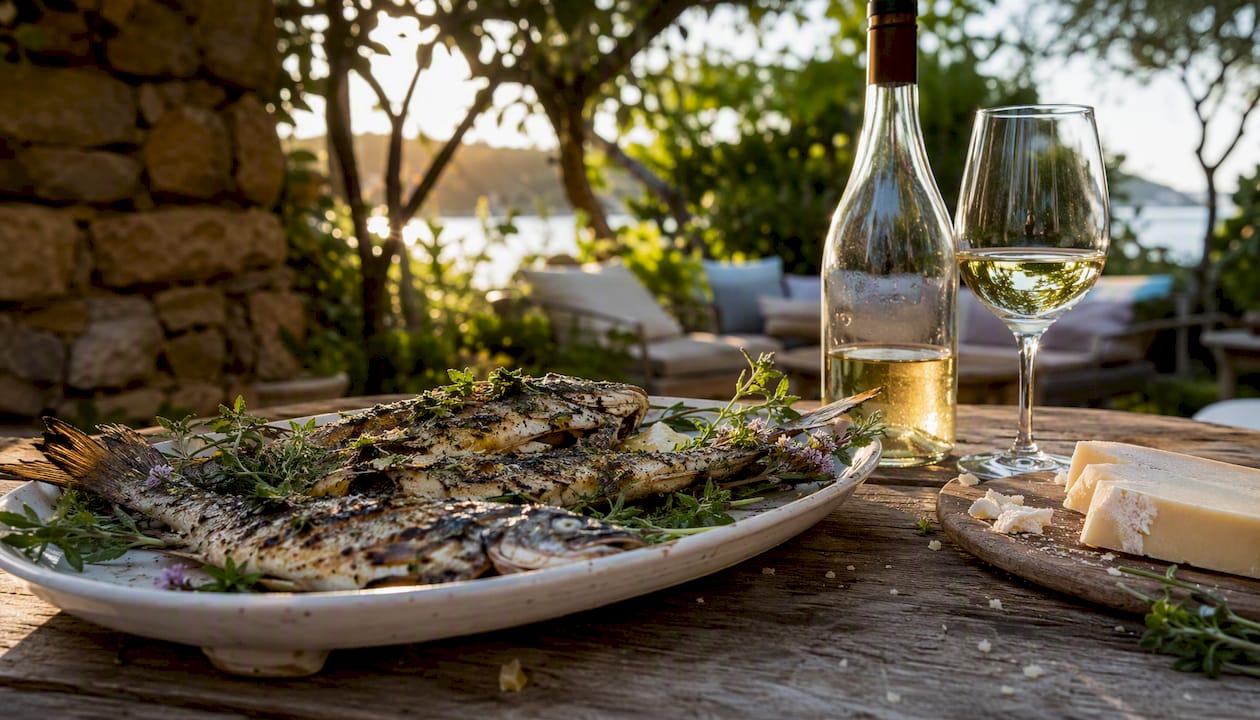
Look for menus that name their producers or specify local provenance. Agriturismi that serve their own produce represent the most direct farm-to-table model available. In coastal towns, fish restaurants that list the catch of the day and name the fishing port are a reliable signal of short supply chains.
Formal eco-certifications for restaurants are not yet widespread in Gallura, but visible indicators carry weight: seasonal menus that change with availability, bread baked in-house, local wine lists featuring Vermentino di Gallura DOCG and Cannonau di Sardegna DOC, and a kitchen that composts or separates waste. These are the markers worth seeking out.
Sustainable shopping and souvenirs beyond the obvious
Gallura's craft tradition runs deeper than the ceramic magnets sold near ferry terminals. Cork products, hand-woven baskets (intreccio sardo), and locally produced honey and preserves all represent genuine regional craft with a traceable origin. Buying directly from the maker at a market or workshop keeps the full margin local and eliminates the packaging and transport of retail distribution.
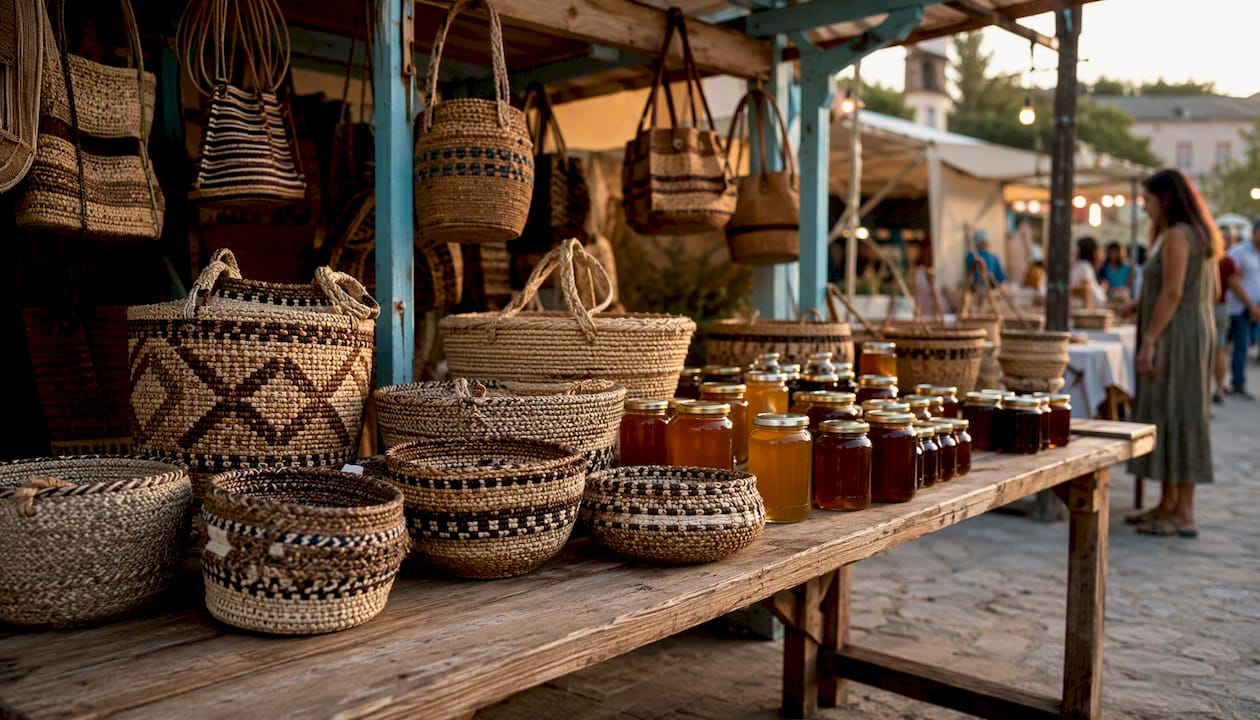
Weekly markets in Tempio Pausania and Olbia stock produce, textiles, and artisan goods alongside food. For clothing and everyday items, look for Sardinian brands that use natural fibres and local production; a growing number of small labels work with organic cotton or reclaimed materials and sell through independent shops rather than chains.
Avoid purchasing coral, shells, or any item made from protected marine species, regardless of where it is sold. These items are often illegal to export and always ecologically damaging to source.
How to engage respectfully with Gallura's cultural heritage
Gallura's cultural sites, from the nuraghi scattered across the interior to the medieval churches of Tempio Pausania, are living parts of a community's identity rather than museum exhibits. Approach them with the same care you would give a fragile natural site.
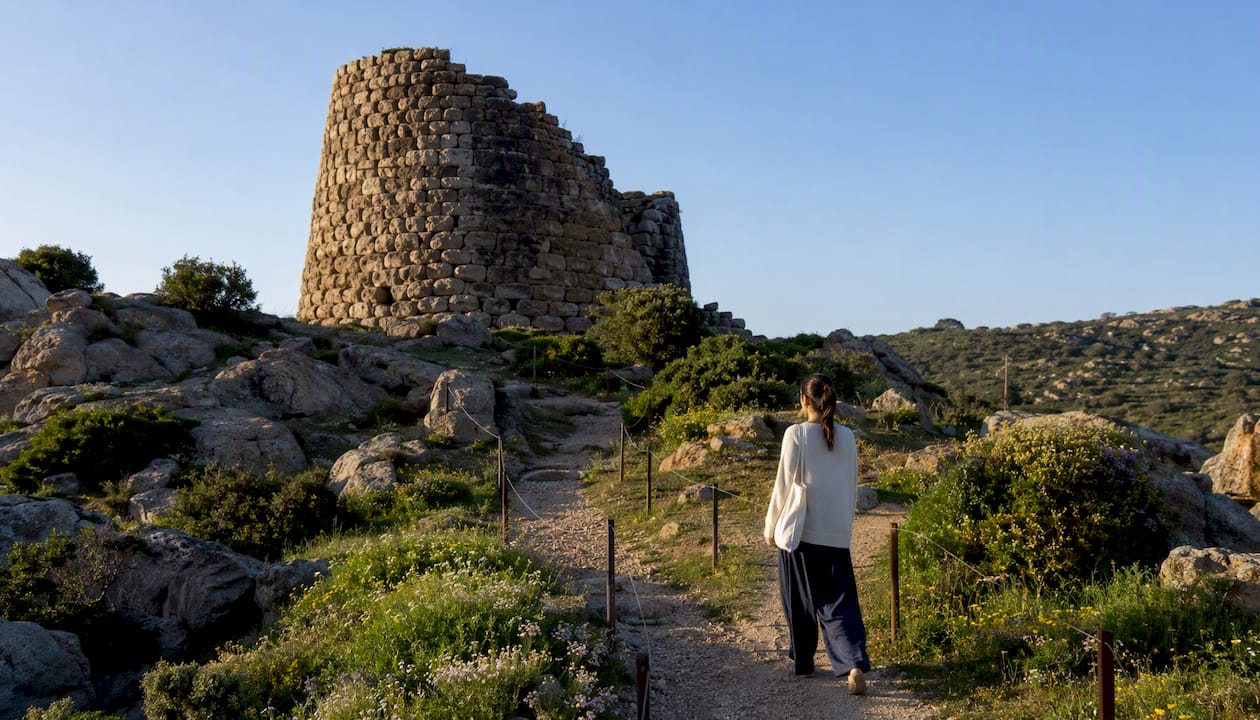
At nuraghi and archaeological sites, stay within marked areas and do not climb structures unless explicitly permitted. Photography is generally welcome, but ask before photographing local festivals, religious ceremonies, or private property. During the Sagra del Redentore in Nuoro or local village festivals, observe rather than participate uninvited; these events are for residents first.
Dress modestly when entering churches, even in warm weather. Learning a few words of Sardinian or Italian is received warmly and signals respect for a culture that is distinct from mainland Italy in language, custom, and history. Gallura's Gallurese dialect is its own linguistic tradition; acknowledging that distinction matters to local people.
Porto Rafael's perspective on what sustainable travel actually demands
The conventional framing of sustainable travel tends to focus on what you avoid: plastic, flights, crowds. That framing is useful but incomplete. What genuinely low-impact travel in Gallura demands is something more active: choosing to spend time in places that are not yet under pressure, supporting the people who maintain them, and leaving with a lighter mark than you arrived with.
The inland villages of Gallura, the cork-oak forests of the Limbara massif, the quiet coves accessible only on foot at dawn: these are not consolation prizes for travellers who missed the famous beaches. They are the more interesting half of the destination, and they remain so precisely because fewer people have found them. Sustainable tourism, at its best, is not a sacrifice. It is a better way to travel.
Research on visitor loyalty in Gallura supports this: travellers who engage with conservation-minded destinations tend to return. The destination rewards the attention.
Stay at Porto Rafael: a low-impact base in the heart of Gallura
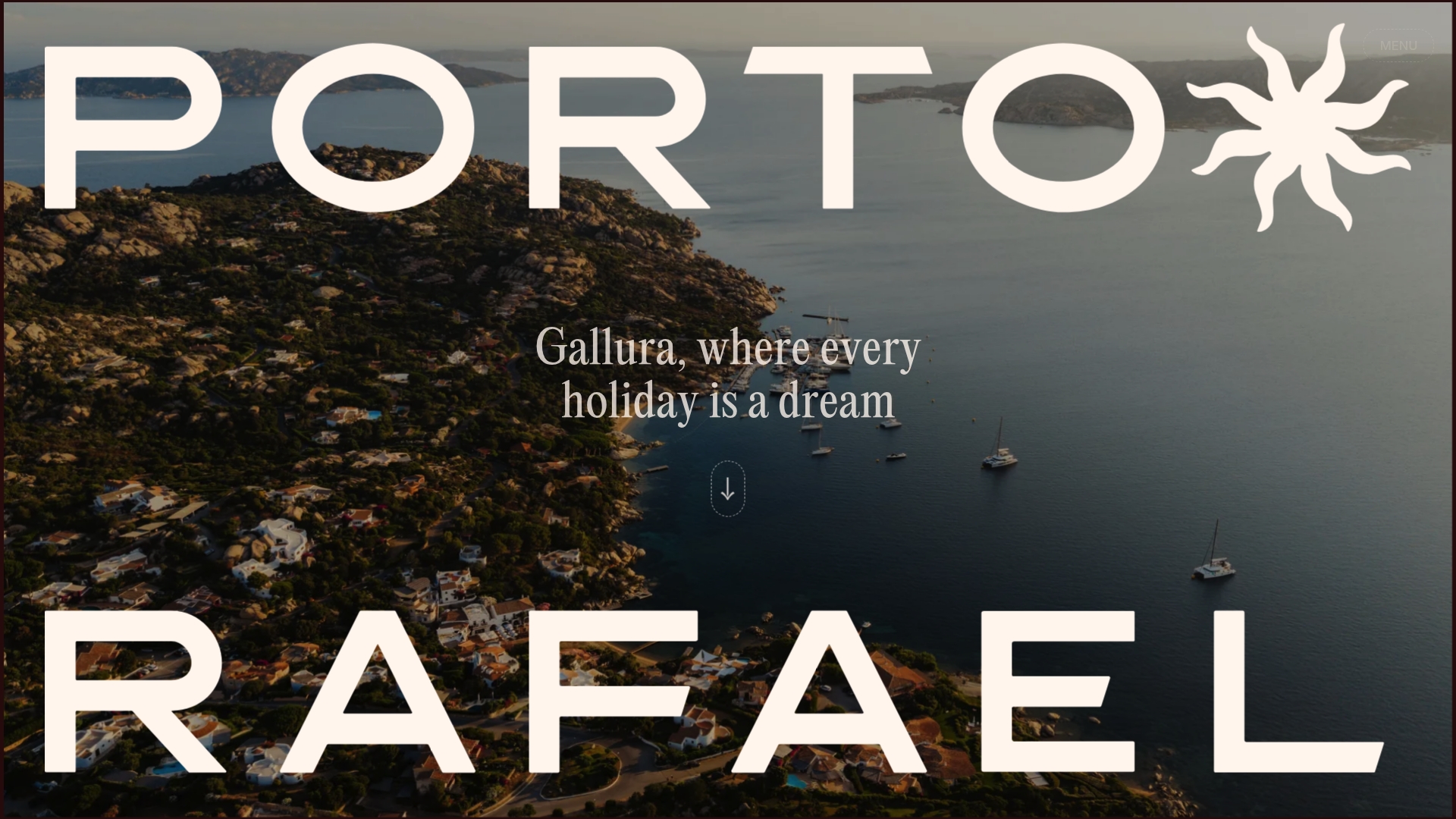
Porto Rafael, a rare gem of a village on Gallura's northern coast, offers a considered alternative to the large resort model. Hotel La Piazza at Portorafael provides boutique accommodation within the village itself, meaning guests walk to the water, the restaurant, and the bar rather than driving. That single fact eliminates a significant share of the daily transport emissions that accumulate at more isolated resort properties.
Portorafael's curated local experiences, including boat excursions, wine tastings, cooking classes, and bike tours, are designed around the region's producers and landscapes rather than imported entertainment. Staying here means your spending supports the village directly. Check availability and book your stay at Hotel La Piazza to secure your place in one of Gallura's most quietly captivating corners.
Sources
The following sources were consulted in preparing this guide. Check official park and municipal websites directly before your visit, as seasonal rules and permit requirements are updated annually.
- Guide to Gallura, Sardinia
- Discover GALLURA | If You Love Nature
- Can Sustainability Influence Loyalty to Island Destinations? The Case of Gallura, Sardinia
- Valley of the Moon, Sardinia: Practical Guide | Sardinia Blog
- The inland Gallura for the affirmation of an alternative and sustainable tourism
For protected-area rules, visit the official Parco Nazionale dell'Arcipelago di La Maddalena website and the Regione Sardegna tourism portal before finalising any itinerary.