
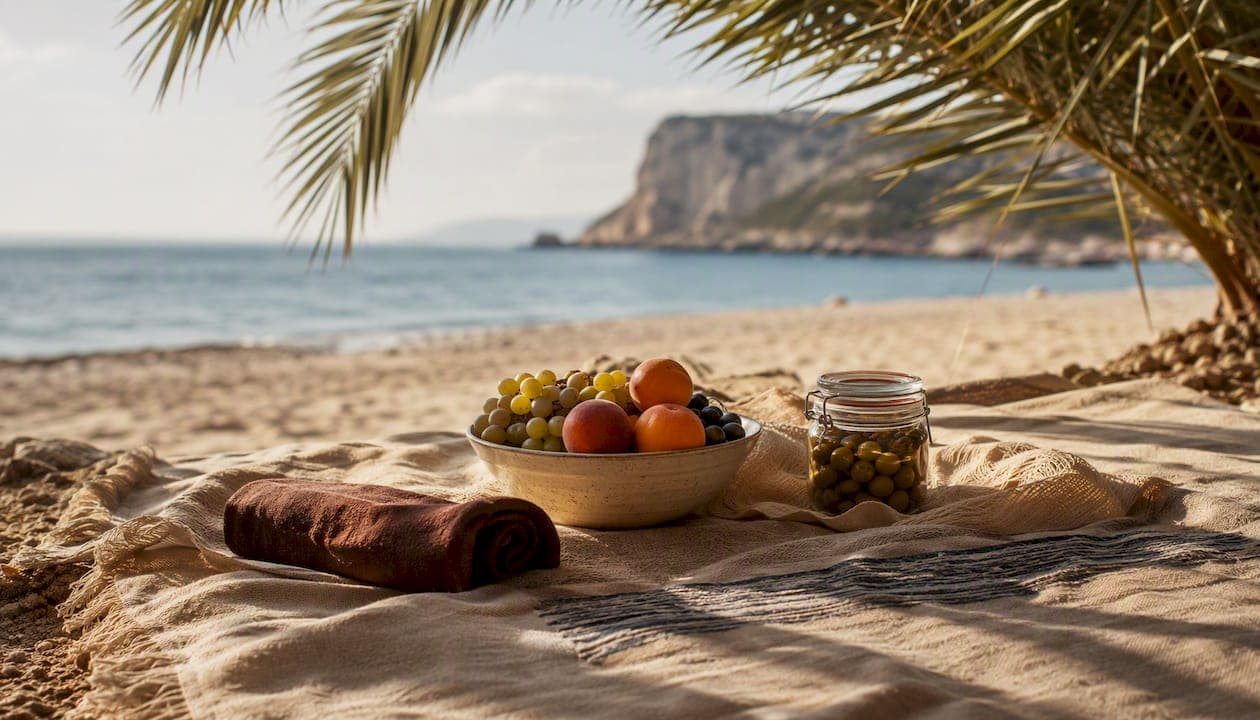
A well-arranged beach picnic comes down to one rule: organise around five essentials — shade, a clean seating surface, cold storage, hydration, and a cleanup plan — then anchor heavy items first so wind and sand work with you, not against you.
Before you read further, here is the core checklist:
- Shade (parasol, beach tent, or natural windbreak)
- Seating surface (sand-proof blanket or mat)
- Cooler with ice packs or frozen bottles
- Reusable plates, napkins, and utensils
- Rubbish bags (at least two: one for recycling, one for general waste)
- First-aid kit (plasters, antiseptic wipes, tweezers)
- Sun protection (SPF 50+ sunscreen, wide-brimmed hats, UV-protective clothing)
Pro Tip: Lay your blanket with one long edge pointing into the wind so the fabric billows away from the food rather than over it. Tuck a handful of smooth pebbles into each corner pocket — or use filled water bottles — before you unpack anything else.
Pro Tip: Keep food in sealed containers until the moment you serve. Sand travels on air currents, not just feet, and an open bowl of salad becomes gritty within minutes on a breezy day.
How do you pick the best beach spot and time?
The single best rule: set up at least ten metres above the high-tide line and position yourself behind a natural windbreak — a dune, a rock formation, or a stand of coastal scrub. Everything else flows from those two decisions.
When scouting a spot, run through this checklist:
- Tide timing: Check a local tide table and mark the high-tide line. Set up well above it.
- Wind direction: Face the windbreak into the prevailing breeze, not the view.
- Shade: Arrive early enough to claim natural shade, or bring your own parasol.
- Facilities: Note the nearest toilets, freshwater rinse, and first-aid post.
- Access: Count the distance from parking to sand — this determines how much gear you can realistically carry.
- Local rules: Alcohol, glass, open flames, and large setups each carry their own restrictions on many beaches. Check the local authority or beach management website before you go.
Timing matters as much as location. Mid-morning arrivals (around 9–10 AM) let you set up before the sun reaches its peak intensity. For a sunset picnic, aim to arrive at least an hour before golden hour so the setup is complete and settled when the light turns beautiful. Gallura's most captivating beaches each have distinct tide patterns and facility levels worth checking in advance.
Pro Tip: Before committing to a spot, stand still for thirty seconds and note where the wind is coming from. Then look for the nearest solid object — a rock, a dune ridge — that could break it. That object becomes the back wall of your picnic.
Permit check (quick list):
- Low tables and floor-seating rigs can fall into event-permit categories on some managed beaches.
- Open flames (candles, portable grills) often require written permission.
- Glass containers are banned on many public beaches outright.
- Alcohol rules vary by municipality — check the local council or beach authority website.
What should you serve at a beach picnic?
The guiding principle for perfect beach picnic food is simple: choose items that are low-mess, structurally sturdy, and can be prepared entirely at home. Anything that requires assembly on a sandy surface, or that wilts in an hour, will disappoint.
Sample menus to copy
Snack and aperitivo spread Olives, marinated artichoke hearts, aged Pecorino wedges, breadsticks, cherry tomatoes, and a thermos of chilled Vermentino.
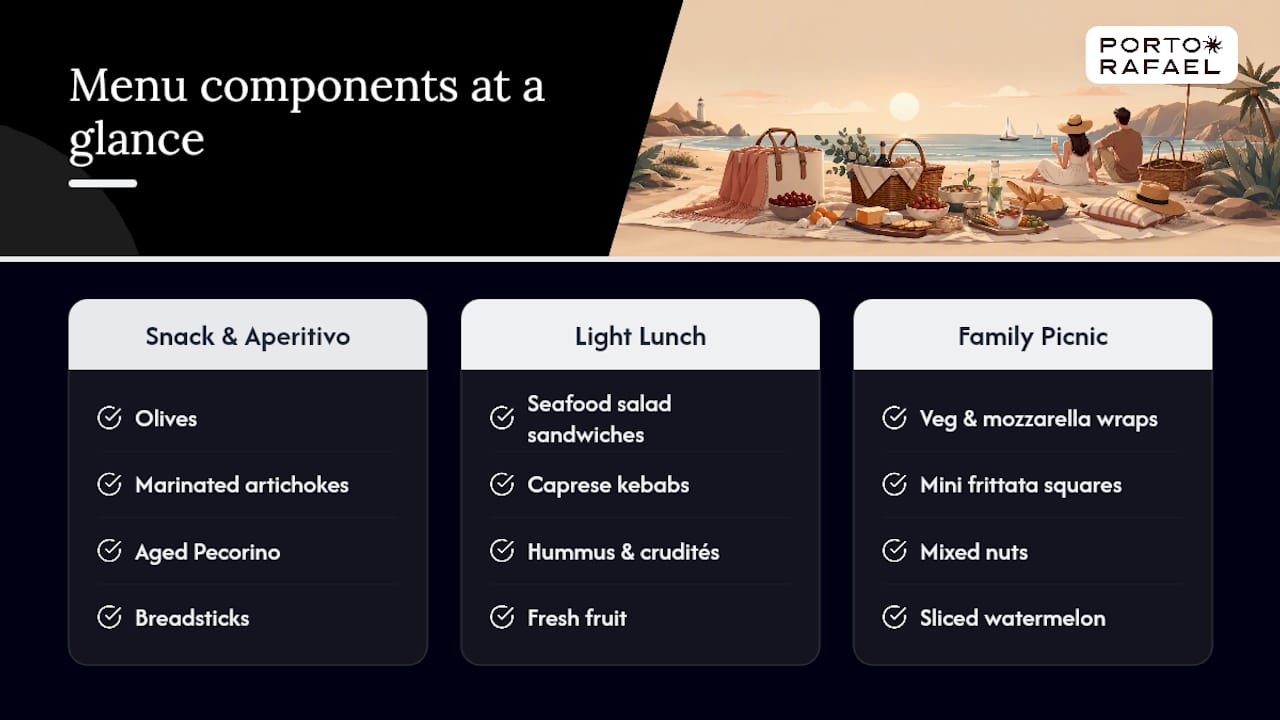
Light lunch Seafood salad sandwiches on ciabatta (dressed at home, wrapped individually), caprese kebabs on short skewers, a small pot of hummus with crudités, and fresh fruit.
Family-friendly picnic Wraps with roasted vegetables and mozzarella, mini frittata squares, a bag of mixed nuts, sliced watermelon, and juice boxes.
Sunset charcuterie board Prosciutto, salami, Grana Padano, honeycomb, dried apricots, walnuts, and crackers — assembled on a heavy wooden board at the beach.
Two easy assemblies that travel well
- Caprese kebabs: Thread cherry tomatoes, small mozzarella balls, and fresh basil onto short wooden skewers at home. Drizzle with olive oil, seal in a lidded container. No assembly needed on the sand.
- Seafood salad sandwiches: Mix cooked prawns or crab with lemon mayo at home. Pack the filling in a sealed jar and the bread separately. Assemble just before eating to keep the bread from going soggy.
Pack sauces in small screw-top jars, not squeeze bottles that can leak. Portion everything individually where possible — shared bowls invite sand.
What gear do you actually need for a beach picnic?
The practical rule: choose items that are dual-use and light enough to carry. Gear that lives in your home between outings is gear worth buying; single-purpose beach novelties rarely survive a second season.
A well-chosen kit covers these priorities:
- Cooler: A soft-sided insulated backpack cooler suits walks longer than five minutes; a hard-sided cooler is worth the weight only for short carries or car-adjacent setups.
- Sand-proof blanket or mat: Tightly woven ripstop nylon sheds sand far better than a standard picnic rug.
- Low table or tray: Keeps food off the sand and doubles as a serving surface. Folding bamboo or lightweight aluminium works well.
- Weighted anchors: Corner pockets filled with sand, or dedicated pegs, keep the blanket flat.
- Reusable tableware: Enamel plates, bamboo cutlery, and cloth napkins are durable, attractive, and produce no single-use waste.
- Storage bags: Zip-lock bags and beeswax wraps for individual portions; a wet bag for damp items on the way home.
- Shade: A beach parasol or a pop-up sun shelter for families.
- First-aid and cleanup: Plasters, antiseptic wipes, hand sanitiser, and two rubbish bags.
Pro Tip: For a long walk across soft sand, distribute weight between a soft cooler backpack and a tote bag. Carry the cooler on your back and the blanket, parasol, and tableware in the tote. Arriving without aching arms means you'll actually enjoy setting up.
For readers planning a more elevated outing, the luxury Sardinia guide offers thoughtful advice on premium, dual-use items that earn their place both on the sand and at home.
How do you keep food cold and safe at the beach?
The strategy is straightforward: a well-insulated cooler, pre-frozen ice packs or frozen water bottles, shade placement, and disciplined lid management. The cooler's internal temperature should stay below 4°C to keep perishables safe.
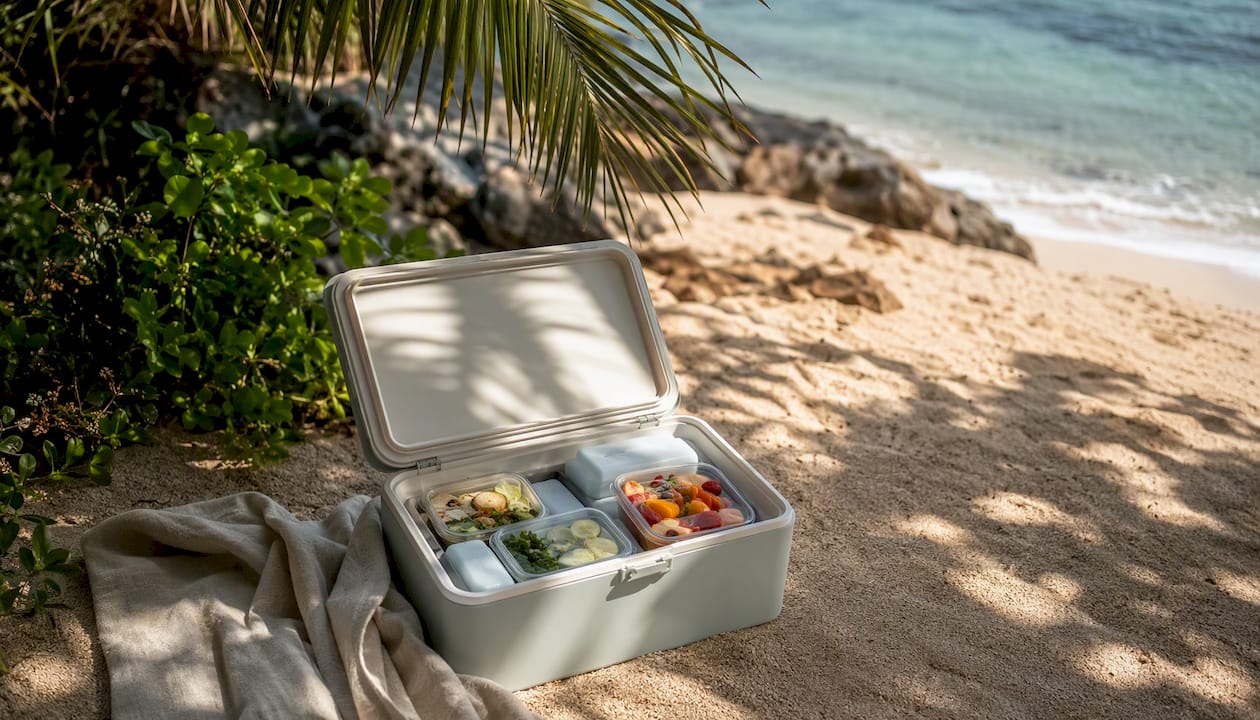
Guidance based on standard food-safety principles for ambient temperatures above 20°C. Shade and cooler quality extend these windows; direct sun shortens them.
Practical cooling tactics:
- Layer the cooler: ice packs on the bottom, perishables in the middle, drinks on top (opened most frequently).
- Freeze water bottles the night before — they double as ice and become cold drinking water as they thaw.
- Place the cooler in shade and cover it with a light-coloured towel to reflect heat.
- Open the lid as infrequently as possible; designate one person to retrieve items.
- If food has been sitting unrefrigerated for more than two hours in warm weather, discard it rather than risk illness.
Signs food may be unsafe: unusual smell, slimy texture, visible mould, or any dairy product that has warmed to room temperature for an extended period.
What is the best step-by-step setup order?
The most important setup rule: anchor heavy items first, and arrange seating so no one walks through the food zone to reach their place. That single decision prevents most sand-in-food complaints.
- Choose and clear the spot. Remove any debris, shells, or sharp objects from the area.
- Lay the blanket and anchor the corners immediately. Use sand-filled corner pockets, pegs, or heavy items before the wind catches the fabric.
- Position the low table in the centre. This anchors the seating arrangement and gives everyone a clear sightline to the food.
- Place the cooler at one end, in shade. Keep it accessible but out of the main foot-traffic path.
- Set the table. Plates, napkins, utensils, and glasses go down now, while hands are clean and the surface is settled.
- Arrange seating around the table. Guests should be able to reach the table without stepping over the blanket's centre.
- Unveil food last. Bring out dishes from the cooler and containers only when everyone is seated and ready to eat.
For a group, assign one person to manage the cooler and one to handle the table. Dividing roles speeds setup and keeps the process calm.
Pro Tip: Experienced hosts at seaside dinners in Porto Rafael recommend arriving early enough that the setup is complete and the wind has settled before guests sit down. A picnic that looks effortless is almost always one that started thirty minutes earlier than necessary.
Which styling choices actually survive wind and sand?
The central claim of any experienced beach host: weight and low profile beat delicate décor every time. A single heavy wooden board with a few well-chosen elements reads as more luxurious than a table scattered with fragile props that tip over in the first gust.
Specific choices that hold up:
- Weighted cloth napkins: Fold them under a plate or tuck a small pebble inside the fold.
- Stemless glasses: Lower centre of gravity, far less likely to tip. Enamel or acrylic alternatives are even more practical.
- Heavy wooden boards: A thick olive-wood or acacia board stays put and looks beautiful against sand.
- Low-profile centrepieces: A small bunch of dried flowers in a squat ceramic pot, or a cluster of smooth stones, rather than tall vases.
- Brass or ceramic candleholders with dripless candles: Use only when the wind has genuinely dropped, typically after sunset.
- Linen or cotton textiles in warm earth tones: Terracotta, sand, sage, and cream hide grit beautifully and photograph well in natural light.
Leave at home: tall glass vases, paper decorations, lightweight bunting, and anything with a large surface area that catches the wind.
Styling that balances aesthetics with durability is the secret of a reliable luxury beach setup. The dual-use principle applies here too: choose a blanket and tableware you would use at home, and the kit pays for itself across seasons.
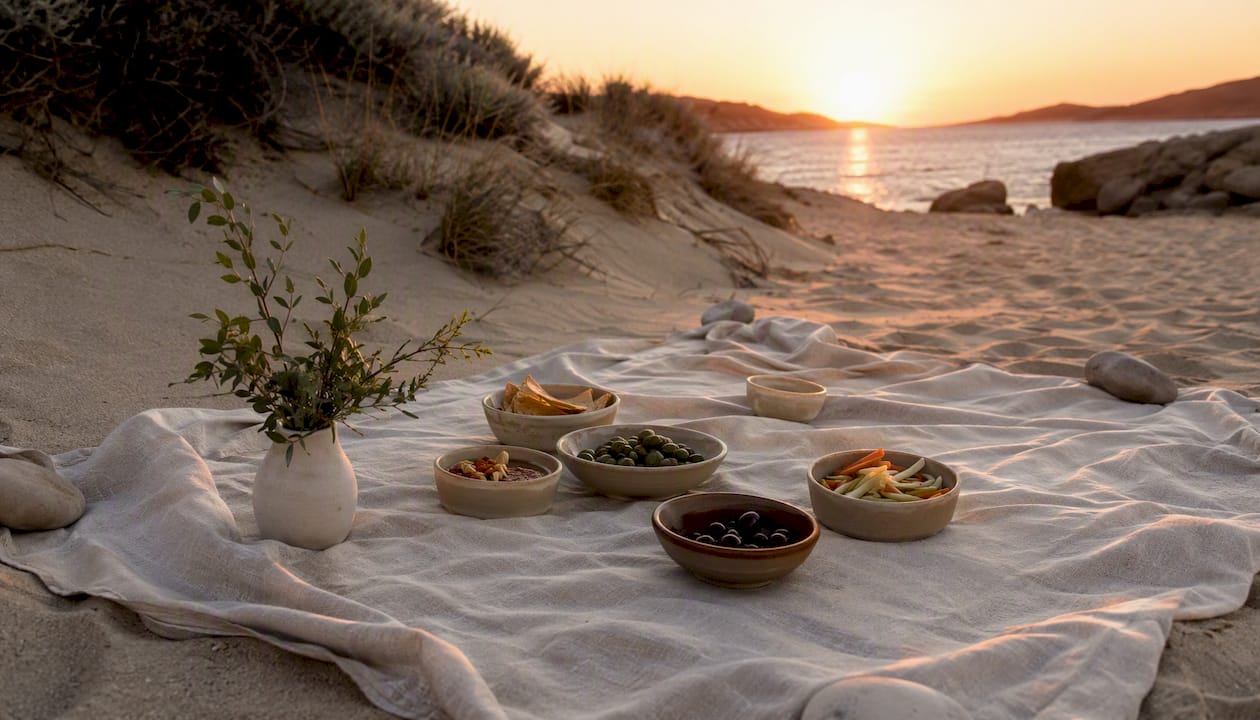
Pro Tip: For a luxury traveller's approach to beach styling, invest in one or two genuinely beautiful pieces — a handmade ceramic bowl, a linen throw — and keep everything else simple and functional. The contrast between one exquisite object and a clean, uncluttered spread is far more striking than a table crowded with props.
How do you leave the beach cleaner than you found it?
The simplest sustainability rule: pack out everything you brought in, and then a little more. Many of the most beautiful beaches in the world are degraded not by large events but by the accumulated effect of small oversights.
Waste and sustainability checklist:
- Bring two rubbish bags: one for recyclables (glass, tins, card), one for general waste.
- Use a wet bag for damp items — wet towels, rinsed containers — to keep the rest of your kit dry.
- Carry a refillable water bottle for each person; avoid single-use plastic bottles.
- Avoid glass on public beaches, both for safety and because many beaches ban it outright.
- Portion food carefully to minimise leftovers that attract wildlife.
- Use beeswax wraps and reusable containers rather than cling film and foil.
Local rules quick-check:
- Permits for low tables or large setups: check the local municipality or beach authority website.
- Alcohol and open-flame rules: vary by beach and season; confirm before you go.
- Facility hours: some managed beaches close facilities in the evening — plan accordingly.
Regarding wildlife and dunes: stay on marked paths to and from the water, never disturb nesting birds or marine life, and keep food sealed when not actively eating. Dune vegetation is fragile; even a single footstep can damage root systems that take years to recover.
What if things go wrong? A timeline and fast pack-up plan
Quick troubleshooting:
- Sudden wind gusts: Immediately cover all open food containers and press the blanket corners down. Move the cooler to the windward side as a barrier.
- Spilled drink: Blot with a cloth napkin, then sprinkle dry sand over the wet patch and brush away — it absorbs liquid quickly.
- Sudden rain: Pack perishables into the cooler first, then textiles into a bag. A lightweight waterproof tarp folded into your kit can serve as emergency shelter for gear.
- Overheating: Move to shade, increase water intake, and apply a cool damp cloth to the neck and wrists.
Realistic picnic timeline:
- Arrive and set up (30–45 minutes before the meal or sunset window).
- Relaxation and food window (2–3 hours for a comfortable, unhurried experience).
- Pack-up begins (allow 20–30 minutes for a thorough, leave-no-trace departure).
Fast pack-up checklist:
- Collect all rubbish and seal the bags.
- Consolidate perishables back into the cooler.
- Shake out textiles over a rubbish bag to capture napkins, wrappers, and micro-trash.
- Fold and bag the blanket.
- Do a final sweep of the entire area, including under the table and around the cooler.
- Carry everything back to the car in the same bags you arrived with.
For family trips, the family travel planning guide offers additional strategies for managing pack-up with children in tow.
What do experienced hosts know that most guides skip?
The single host-level tip that changes outcomes: arrive early, anchor the zone, and staff the moment weather risks rise. A picnic that looks spontaneous is almost always the product of deliberate preparation.
From hospitality practice, the most reliable habits are:
- Check permits before booking any large or low-table setup; local event permit rules can catch even experienced hosts off-guard.
- Coordinate rubbish removal in advance for groups of eight or more — the volume of waste surprises most first-time hosts.
- Select dual-use gear that earns its place at home between outings; this reduces the cost and clutter of a dedicated beach kit.
- For groups larger than ten, or for any occasion with a formal element (a proposal, a birthday, a corporate gathering), consider hiring a caterer or a hosted venue.
When complexity rises — multiple courses, a large guest list, permit requirements, or a desire for genuine elegance without the heavy lifting — a professionally hosted seaside experience is worth considering. The Porto Rafael hospitality team brings seaside event expertise to both intimate gatherings and larger celebrations.
How do you keep sand out of food and belongings?
Sand is the one variable no checklist fully eliminates, but it can be managed with a few deliberate habits. The most effective: keep everything sealed until the moment of serving, and create a clear "no shoes" zone around the blanket.
Specific tactics:
- Place a small doormat or a folded towel at the edge of the blanket as a shoe-removal point.
- Use lidded containers and covered boards; remove lids only when actively serving.
- Keep napkins weighted under plates rather than loose on the table.
- Store bags and shoes at the downwind edge of the blanket so sand blows away from the food zone.
- After eating, brush crumbs and sand off the board before repacking — a small pastry brush is surprisingly useful for this.
For belongings, a large zip-lock bag for phones, keys, and wallets keeps electronics and valuables completely sand-free.
What should you do when the weather changes suddenly?
Weather at the coast shifts faster than inland, and the most experienced beach hosts treat a change in conditions as a normal part of the day rather than a crisis.
For sudden rain, the priority is perishables first, then electronics, then textiles. A lightweight waterproof tarp or a large reusable bag folded into the kit takes up almost no space and can cover the entire table in seconds. If the rain is brief, a well-anchored setup will survive it; if it intensifies, pack up methodically using the fast pack-up checklist above.
For temperature drops, which are common after sunset on Mediterranean and Atlantic coasts, pack a light layer for each person. A linen shirt or a thin merino layer weighs almost nothing and transforms a cold evening into a comfortable one.
For unexpected heat spikes, move the cooler into the deepest available shade and increase the frequency of water breaks. Children and elderly guests are most vulnerable to heat stress and should be monitored closely.
The broader principle: build a small contingency kit into every picnic bag. A tarp, a light layer, and a full water bottle per person cover the vast majority of coastal weather surprises without adding meaningful weight.
Sun protection and hydration: the safety basics
Sun protection at the beach requires more than a single application of sunscreen. UV radiation reflects off water and sand, which means exposure is effectively doubled compared with an inland setting.
- Apply SPF 50+ sunscreen thirty minutes before arriving and reapply every two hours, or immediately after swimming.
- Wear a wide-brimmed hat (at least 7.5 cm brim) and UV-protective clothing for extended stays.
- Seek shade between 11 AM and 3 PM, when UV intensity peaks.
- Drink water consistently throughout the day: thirst is a late indicator of dehydration, particularly in children.
- Pack electrolyte sachets for long stays or active days; plain water alone does not replace minerals lost through sweat.
- Keep water bottles in the cooler or in shade to maintain a palatable temperature.
Sunglasses with UV400 protection matter too, especially for children, whose eyes are more sensitive to UV damage than adults'.
Planning a beach picnic with children and pets
Children and pets introduce two variables that require specific planning: unpredictability and mess. Both are manageable with the right kit and a realistic timeline.
For children:
- Pack individual portions in labelled containers so each child knows what is theirs — this prevents arguments and reduces waste.
- Bring a change of clothes and a small towel per child; wet, sandy clothing is the most common reason a family picnic ends early.
- Choose finger foods over anything requiring cutlery; children eat more happily and with less fuss when they can use their hands.
- Apply sunscreen before leaving home, not on the beach, where the wind makes application difficult.
For pets:
- Bring a collapsible water bowl and fresh water; dogs dehydrate quickly in heat and should not drink seawater.
- Keep pet food sealed and away from human food to avoid cross-contamination.
- Check beach rules before arriving: many managed beaches restrict dogs during peak season, particularly between May and September.
- Provide shade for pets as well as people; a small pop-up shelter or a shaded spot under a parasol is sufficient.
Which games and activities work best at the beach?
The best beach activities share one quality: they require minimal equipment and work on any surface. Over-engineered games with many small pieces are a sand-management problem waiting to happen.
Reliable choices include:
- Boules or pétanque: Heavy metal balls are unaffected by sand and wind, and the game suits all ages.
- Frisbee: Lightweight, compact, and endlessly adaptable to the space available.
- Paddleball (beach bat and ball): No net required; pairs or groups can play at any skill level.
- Snorkelling: For beaches with clear, calm water, a mask and snorkel transform the picnic into a half-day adventure.
- Sandcastle building: For families with children, the beach itself is the activity — a small set of moulds and a bucket is all that is needed.
- Watercolour sketching: For a quieter, more contemplative afternoon, a small travel watercolour set and a pad of paper capture the light in a way a photograph rarely does.
For active groups who want to extend the day, combining a beach picnic with a Gallura by bike excursion creates a full, memorable outing that uses the picnic as a natural midpoint rest.
The detail most beach picnic guides overlook
Most guides tell you what to bring. Fewer tell you the order in which to do things, and almost none address the moment the wind picks up mid-meal and the whole table becomes a liability.
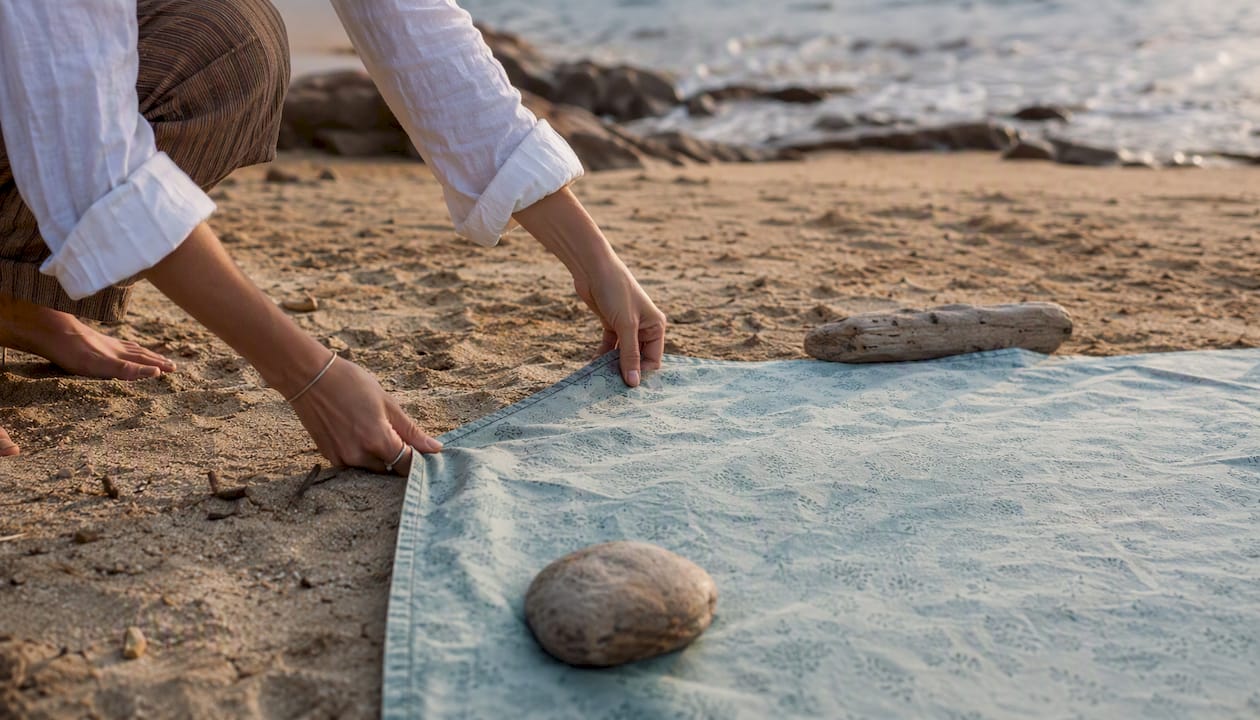
The overlooked truth is this: a beach picnic is not a garden party relocated to the sand. The physics are different. Weight matters more than beauty. Low profile matters more than height. Arrival time matters more than the menu. The hosts who make it look effortless are the ones who have internalised these constraints so thoroughly that they no longer feel like constraints at all — they feel like instinct.
The checklist at the top of this guide is the distillation of that instinct. Use it not as a shopping list but as a decision framework: for every item you consider bringing, ask whether it is low, heavy, sealed, and dual-use. If it fails two of those four criteria, leave it at home.
Seaside dining and hosted events at Portorafael

For those who want the beauty of a seaside meal without the logistics, Portorafael offers something the self-catering approach cannot: a fully hosted experience on one of Sardinia's most captivating coastlines, where setup, catering, and the finer details are handled with the quiet precision of a team that does this every season.
The gastronomy at Porto Rafael spans gourmet dining at Solaz Restaurant, cocktails at Rafael's Bar & Lounge, and artisan gelato — all available as part of a curated seaside experience that removes the permit questions, the cooler logistics, and the pack-up entirely. For larger gatherings, the team at Solaz Restaurant can arrange private seaside dining with menus built around local Sardinian produce.
To enquire about a hosted seaside event or to reserve a table with a view of the Gallura coastline, visit Hotel La Piazza or contact the Portorafael team directly.
Sources
- How to Style a Beach Picnic That Actually Works (My Real Packing List + What I’d Skip) - Lovery
- Beach Picnic Guide: What to Bring and What to Skip
- Plan a Beach Picnic in 12 Easy Steps | The Table by Harry & David
- How to create the perfect, elevated beach picnic - Shore Local Newsmagazine
- 21 Beach Picnic Essentials: Food, Outfit, and Setup Ideas for a Perfect Day - Leap With Grace