
TL;DR:
- Authentic Sardinian products include regionally made foods, jewelry, textiles, and crafts verified by certification marks. To find genuine items, visit local markets, workshops, festivals, and official showrooms rather than tourist shops, and look for authentic hallmarks and labels. Verifying provenance and quality involves examining craftsmanship details, certification seals, and asking artisans about their processes.
Artisanal Sardinian products are defined as goods made by hand using traditional regional techniques, from PDO-certified cheeses and DOCG wines to silver filigree jewellery and hand-woven textiles. Knowing how to discover artisanal Sardinian products means going beyond airport gift shops and tourist-facing boutiques to find the workshops, markets, and festivals where genuine craftsmanship still breathes. Sardinia's artisanal heritage is extraordinary in its range. A single island produces everything from Pecorino Sardo with Protected Designation of Origin status to intricately worked 800-silver filigree that no machine can replicate. This guide gives you the tools to find, evaluate, and bring home the real thing.
How to discover artisanal Sardinian products: what to know first
Before you set foot in a market or workshop, understanding Sardinia's product categories saves you time and protects your money. The island's artisanal output divides into two broad families: food and crafts. Each has its own verification system, and knowing both is the foundation of any serious search.
Key product categories to know:
- Food: Pecorino Sardo, Fiore Sardo, cured meats such as Prosciutto di San Daniele-style salumi, seadas (fried pastry with honey), and bottarga (cured mullet roe)
- Wines and spirits: Cannonau DOC, Vermentino di Gallura DOCG, Mirto liqueur
- Jewellery: Silver filigree in the Campidano tradition, coral pieces from Alghero
- Textiles: Hand-woven rugs and tapestries from Aggius and Nule, using natural dyes
- Knives: The Resolza, a traditional folding knife, hand-forged in towns such as Pattada
- Ceramics: Painted terracotta from Assemini and Oristano
Certification marks are your first line of defence against imitations. PDO and DOCG marks are key authenticity indicators for Sardinian food and wine in 2026. These marks appear on packaging and confirm that production followed regulated, region-specific methods. For crafts, look for maker attribution labels or hallmarks stamped directly onto the item.
Sardinian cuisine also varies markedly between coastal and inland regions. Coastal and inland products differ in character and ingredient, so seeking products by region sharpens the authenticity of what you find. Bottarga and coral come from the coast; aged Fiore Sardo and Resolza knives belong to the interior highlands.
Pro Tip: Plan at least one visit around a local festival or artisan fair. Sardinia's calendar is rich with events such as the Sant'Efisio procession in Cagliari (may) and the Cavalcata Sarda in Sassari (may), where artisans gather in traditional dress and sell directly to the public.
Where to find authentic artisanal goods across Sardinia
Location is everything. The right venue puts you in direct contact with makers rather than middlemen, and that contact is where authenticity becomes verifiable.
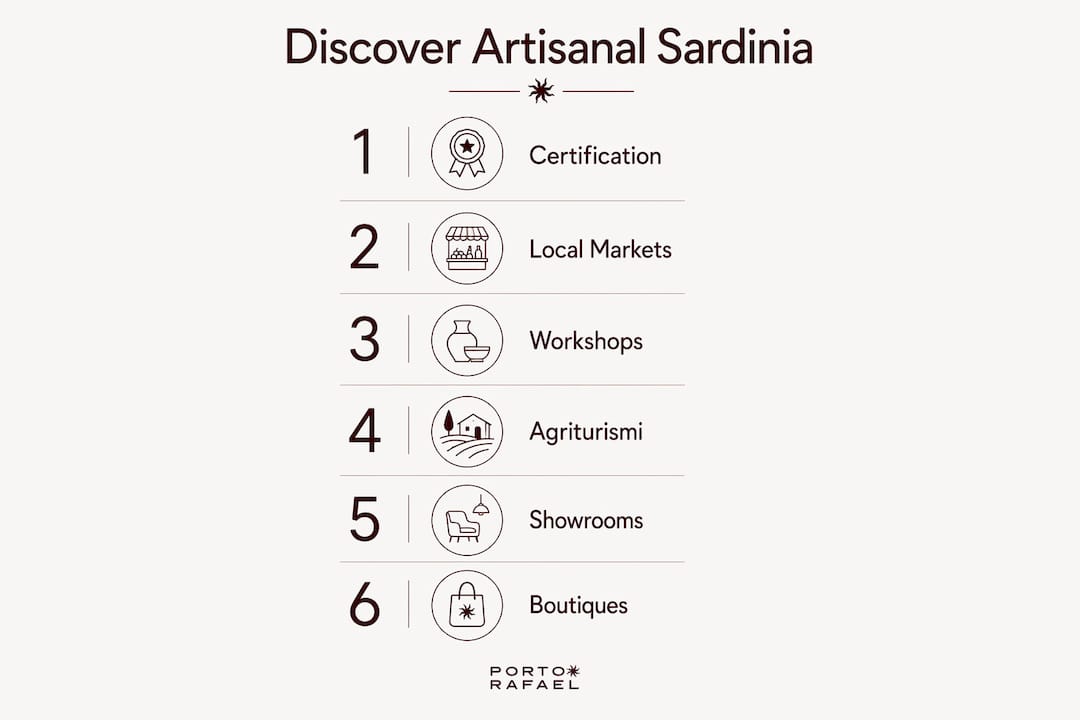
1. Local markets and artisan fairs
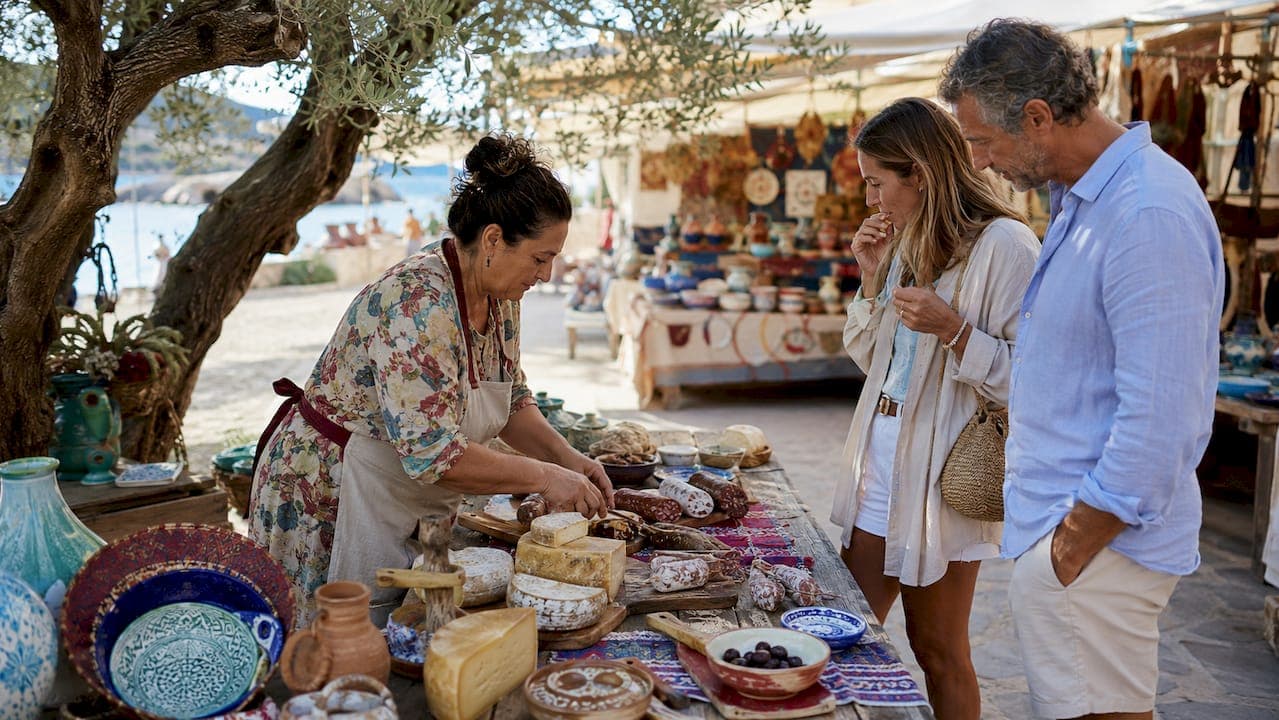
Cagliari's Mercato di San Benedetto is the island's largest covered food market and a reliable source of local cheeses, cured meats, and seasonal produce. Sassari and Alghero both host weekly markets where craft sellers mix with food vendors. Local festivals and cooperative shops are prime locations for genuine artisan interaction, and artisans often demonstrate their techniques during these events. Watching a silversmith work filigree wire or a weaver set up a loom tells you more about authenticity than any label.
2. Small-town workshops and cooperative stores
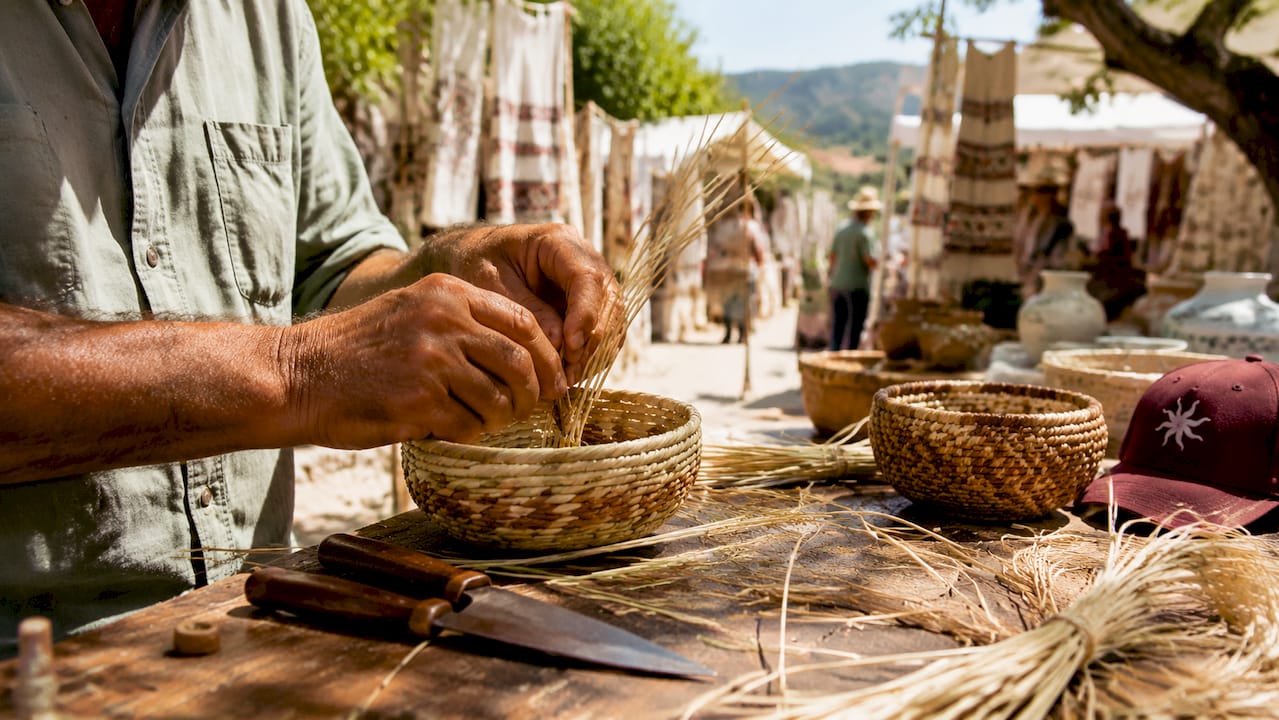
Towns such as Pattada, Aggius, and Assemini are not tourist destinations in the conventional sense. They are working communities where craft production is a livelihood. Visiting a workshop directly means you can ask the maker about materials, tools, and process. Cooperative stores, often called botteghe artigiane, pool the work of several local artisans under one roof and apply collective quality standards.
3. Agriturismi and farm-based restaurants
Agriturismi offer multi-course meals using local ingredients, typically priced between 25–45 EUR per person, and represent one of the most immersive ways to taste Sardinian flavours in their natural context. Many farms sell their own products directly: olive oil, honey, cheese, and wine. Buying from the producer at the table is as close to source as it gets. For a broader view of how local cuisine shapes travel, the connection between food and place is well documented in culinary tourism research.
4. The ISOLA institute showrooms
The ISOLA institute functions as a quality-control gatekeeper for Sardinian crafts. ISOLA showrooms curate authenticated works and guarantee both provenance and artisan support. Shopping here removes the guesswork entirely. ISOLA exhibitions appear in Cagliari and occasionally in other regional centres, and the institute's seal on a piece is a reliable mark of quality.
5. Certified airport and regional boutiques
For sealed, transport-ready food products, certified airport stores in Cagliari Elmas and Olbia Costa Smeralda carry PDO-labelled cheeses, bottarga, and wines. These are not the same as generic souvenir shops. Look for dedicated Sardinian food sections with certification documentation visible on packaging.
How to evaluate and select genuine Sardinian crafts and food
Verification is a skill. Once you know what to look for, distinguishing a handmade piece from an industrial copy takes seconds.
Signs of genuine handmade craftsmanship:
- Slight irregularities in shape, texture, or colour. Authentic handmade crafts show natural imperfections; uniform symmetry signals mass production.
- Maker attribution: a signed label, a stamped hallmark, or a certificate of origin attached to the item.
- For silver filigree, look for the 800 hallmark. Sardinian filigree uses 800-silver alloy, preferred over 925 sterling for its finer micro-textures and durability. This hallmark is stamped on the clasp or reverse of the piece.
- For food, check for PDO or DOC seals on the label, and verify the producer's name and region of origin.
Red flags to avoid:
- Plastic or shrink-wrap packaging with no producer information
- Prices significantly below the known range. Genuine Resolza knives cost 40–120 EUR; filigree jewellery runs 35–300 EUR depending on complexity; ceramics typically fall between 10–80 EUR. Price reflects artisan prestige and craft complexity.
- Perfect symmetry in woven textiles or ceramics, which indicates machine production
- No maker name, no region of origin, no certification mark
For food items, use your senses. Genuine Pecorino Sardo has a sharp, grassy aroma and a slightly granular texture. Real bottarga is firm, amber-coloured, and intensely savoury. If a product smells neutral or looks uniformly pale, it has likely been processed rather than traditionally cured.
Pro Tip: Ask the seller to show you the certification document or the maker's mark before purchasing. A genuine artisan or a reputable shop will produce this without hesitation. Reluctance to show documentation is a clear warning sign.
Common challenges when seeking artisanal Sardinian products
Even well-prepared travellers encounter obstacles. Knowing them in advance turns potential frustrations into manageable moments.
Language and communication:
Most artisans in small towns speak Italian and Sardinian, with limited English. A short list of key Italian phrases goes a long way: "È fatto a mano?" (Is it handmade?), "Ha un certificato?" (Do you have a certificate?), and "Chi l'ha fatto?" (Who made it?). Translation apps work well in these contexts.
Shipping and transport:
Fragile ceramics and heavy textiles present real logistical challenges. International delivery can often be arranged directly with workshops, and some offer bespoke services such as engraving on Resolza knives for orders above 100 EUR. Ask the workshop about their shipping partners and insurance options before committing to a large purchase.
Seasonal availability:
Some products are seasonal. Seadas are made year-round but are freshest in autumn. Certain honeys, such as strawberry-tree honey (corbezzolo), are harvested only in late autumn. Visiting in july or august gives you the widest range of artisan markets, but the most specialised food products appear in september and october.
"The traveller who seeks the market stall over the souvenir shop, and the workshop over the boutique, will always find Sardinia more generous with its secrets."
Avoiding tourist traps:
The most overpriced and least authentic goods cluster around major coastal resorts and cruise-ship ports. Moving even a short distance inland, or visiting towns not featured in mainstream travel guides, changes the quality of what you find entirely. Immersive experiences at local festivals and small cooperative shops consistently outperform mainstream tourist avenues for genuine artisanal discovery.
What genuine artisanal discovery in Sardinia actually teaches you
The conventional wisdom about buying Sardinian crafts tends to focus on what to buy. That framing misses the point. The real reward is the conversation before the purchase.
Every artisan I have encountered in Sardinia, from a silversmith in Quartu Sant'Elena to a knife-maker in Pattada, treats their craft as a form of autobiography. The tools, the materials, the specific techniques passed down through families: these are not selling points. They are the substance of the work. When you ask the right questions, you are not just verifying authenticity. You are being invited into a living tradition.
The diversity of Sardinian regional specialties also defies easy categorisation. Gallura produces Vermentino di Gallura DOCG and a distinct style of hand-woven textile that differs from the patterns of Nule or Aggius. Coastal Alghero has its coral tradition; the Barbagia highlands have their shepherd's cheeses and forged steel. No single market or shop contains all of it. That is precisely why the search is worth making.
My practical advice: prioritise quality over quantity, and resist the impulse to buy everything in one place. One well-chosen piece of 800-silver filigree or a single wheel of certified Fiore Sardo tells a more complete story than a bag full of unverified items. You can explore Sardinian local food experiences to build a more focused itinerary before you travel.
— Studio
Sardinian artisanal flavours at Portorafael
Portorafael, set in the captivating Gallura region of northern Sardinia, offers travellers a refined entry point into the island's artisanal food culture.
The Solaz Restaurant at Portorafael brings together the finest local produce in a gourmet setting, where Vermentino di Gallura DOCG and Gallura's celebrated cheeses appear on a menu shaped by the seasons and the land. Dining at Solaz Porto Rafael Restaurant is one of the most direct ways to taste authentic Sardinian flavours without leaving the village. For travellers who want a broader picture of what the area offers, the full gastronomy programme at Porto Rafael spans gourmet dining, artisanal gelato, and cocktails crafted with local botanicals. Portorafael makes the island's finest flavours genuinely accessible.
FAQ
What certifications confirm a Sardinian product is authentic?
PDO (Protected Designation of Origin) for food and DOC or DOCG for wines are the primary certification marks. These labels confirm that production followed regulated, region-specific methods and are legally protected across the European Union.
How do I identify genuine Sardinian silver filigree?
Look for the 800 hallmark stamped on the clasp or reverse of the piece. Sardinian filigree traditionally uses 800-silver alloy rather than 925 sterling, which produces finer detail and requires less maintenance.
Where are the best places to find artisanal products in Sardinia?
The ISOLA institute showrooms, local cooperative workshops in towns such as Pattada and Aggius, and artisan fairs held during regional festivals offer the most reliable access to authenticated, handmade Sardinian goods.
What should I expect to pay for genuine Sardinian crafts?
Resolza knives typically cost 40–120 EUR, filigree jewellery ranges from 35–300 EUR depending on complexity, and ceramics generally fall between 10–80 EUR. Prices significantly below these ranges are a reliable indicator of mass-produced imitations.
Can I arrange shipping for fragile or heavy artisanal items?
Many workshops offer direct international shipping, and some provide bespoke services such as engraving for orders above 100 EUR. Ask the artisan or shop about their shipping partners and insurance before purchasing large or fragile pieces.