
TL;DR:
- Exploring Sardinian flora involves discovering and identifying endemic and native plants across diverse habitats. The best times for botanical observation are spring and early summer, aligned with flowering seasons and rainfall patterns. Using a combination of morphological knowledge, field guides, and mobile apps enhances accurate identification and supports conservation efforts.
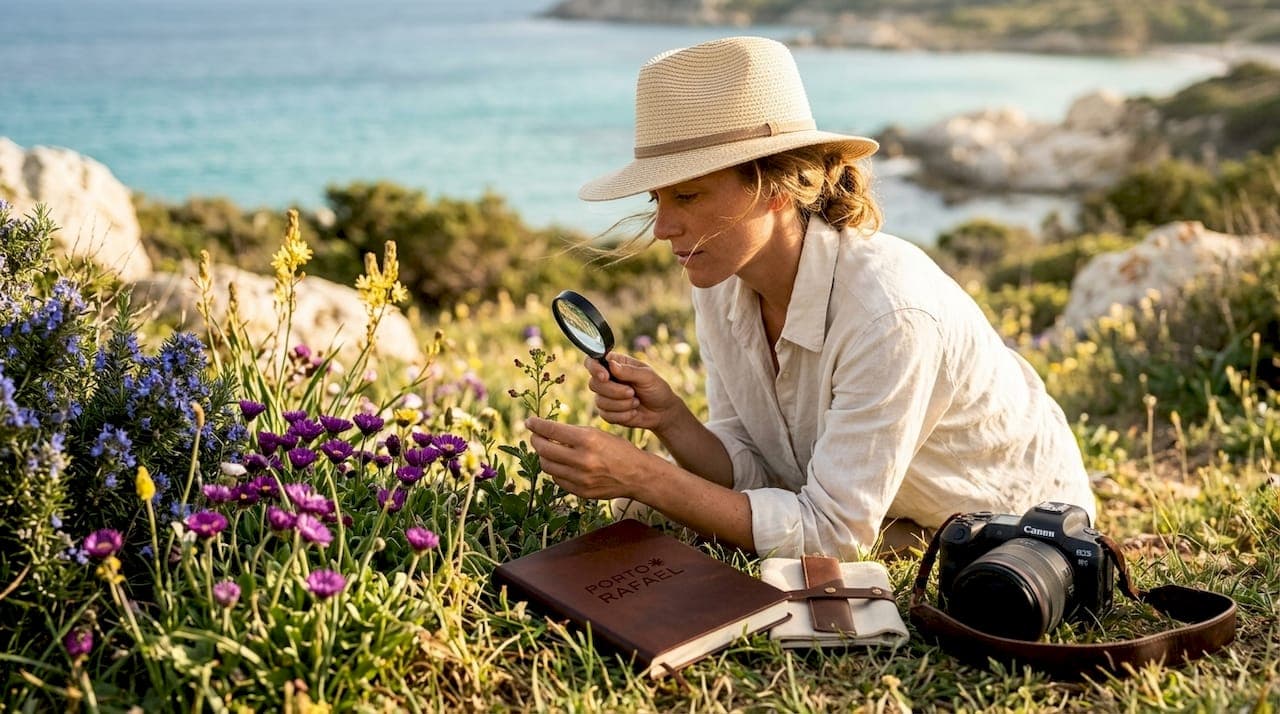
Exploring Sardinian flora is the practice of discovering and identifying the island's remarkable endemic and native plant species across a mosaic of habitats, from sun-scorched limestone cliffs to ephemeral coastal wetlands. Sardinia hosts approximately 341 endemic vascular plant taxa from 53 families, making it one of the Mediterranean's most botanically significant islands. That figure represents roughly 15% of the island's entire native vascular flora, a concentration that rivals far larger landmasses. Successful botanical exploration here demands more than a casual walk. It requires seasonal awareness, habitat knowledge, and a respectful, observational approach that leaves every rare gem undisturbed.
How to explore Sardinian flora: timing and habitats
The single most important variable in any botanical expedition to Sardinia is timing. Optimal flowering periods fall across three distinct windows: spring from March to April, early summer from June to July, and a secondary late-summer to autumn flush that varies by microclimate. Missing these windows by even a fortnight can mean the difference between witnessing a hillside of Sardinian orchids in full bloom and finding only dried seed heads.
Sardinia's habitats are strikingly varied, and each shelters a distinct community of plants. The Mediterranean maquis, that dense, aromatic scrubland of Cistus, Pistacia lentiscus, and Arbutus unedo, covers vast swathes of the island and rewards patient exploration. Rocky limestone outcrops and coastal zones host some of the most specialised endemics, whilst the island's seasonal temporary wetlands, classified under the Isoëto-Nanojuncetea plant communities, support 35 recognised plant associations that appear only after periodic flooding and vanish as the ground dries. Visiting these ephemeral habitats requires aligning your trip with post-rainfall conditions, ideally within two to four weeks of significant seasonal rains.
| Habitat | Key endemic species | Best visiting season |
|---|---|---|
| Mediterranean maquis | Cistus creticus, Arbutus unedo | Spring (March to April) |
| Limestone cliffs and outcrops | Aquilegia nuragica, Dianthus sardous | Late spring (April to May) |
| Coastal dunes and zones | Pancratium illyricum, Limonium spp. | Early summer (June to July) |
| Mountain refugia | Ribes sardoum, Genista corsica | Late spring to early summer |
| Seasonal wetlands | Isoëtes histrix, Damasonium alisma | Winter to early spring (post-rain) |
- Spring is the richest season overall, with the widest range of species in flower simultaneously.
- Coastal zones peak in early summer when Mediterranean light is at its most intense.
- Mountain habitats above 1,000 metres flower later, often not until June.
- Ephemeral wetlands require a visit timed to hydrological conditions, not calendar dates alone.
Pro Tip: Check recent rainfall data for your target region before travelling. Sardinia's seasonal wetlands can be entirely dry and botanically barren if visited after a prolonged dry spell, yet spectacular within weeks of significant rain.
What tools and techniques work best for Sardinian plant identification?
Identifying Sardinian endemics in the field relies on combining three layers of information: the plant's morphological features, its habitat context, and confirmation through a reliable reference. Flower morphology is the most diagnostic starting point. Petal number, colour, and arrangement, combined with leaf texture (whether glossy, hairy, or succulent) and growth form (whether a low shrub, climbing vine, or terrestrial orchid), narrow identification rapidly. Habitat context then confirms or challenges your initial reading. A small, blue-flowered plant on a dry limestone cliff is far more likely to be an endemic than the same plant found in a disturbed roadside verge.
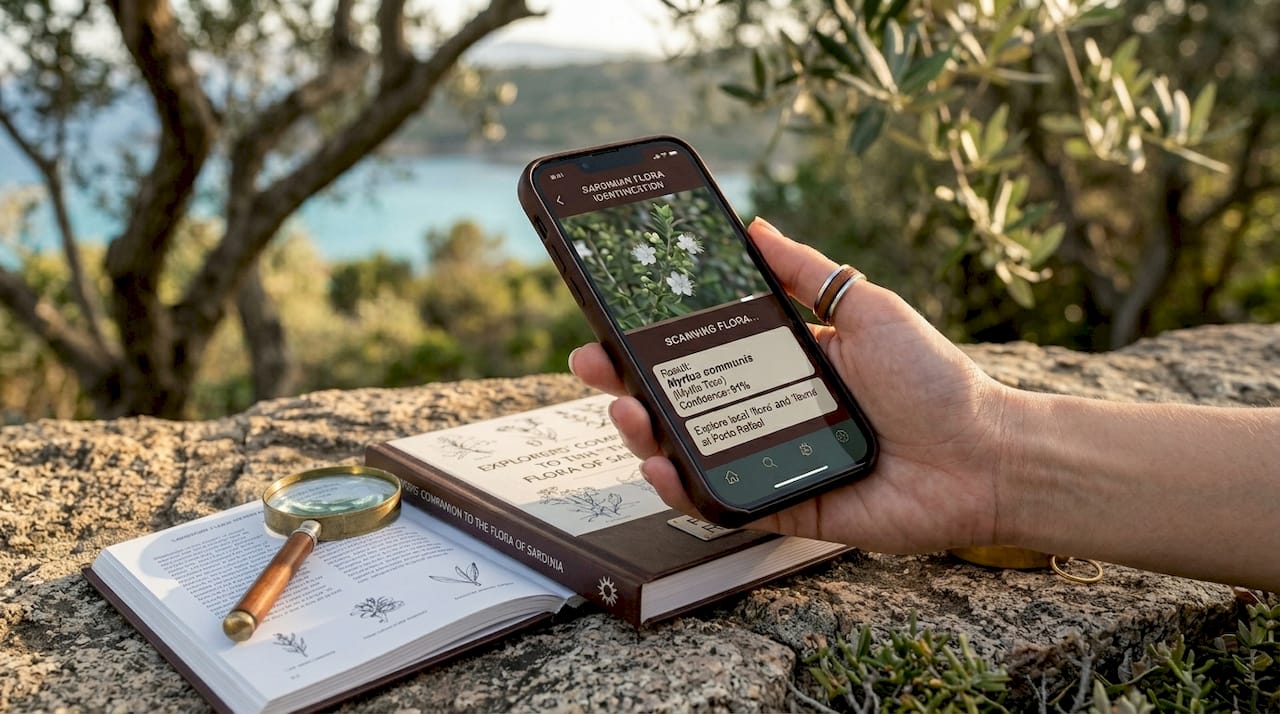
Modern tools have made Sardinian plant identification considerably more accessible. Mobile applications such as iNaturalist and PlantNet allow you to photograph a specimen and receive a suggested identification within seconds, cross-referenced against community observations from Sardinia specifically. These apps are most reliable when you photograph multiple parts of the plant: the flower, a leaf from above and below, the stem, and if visible, the base. Field guides dedicated to the Mediterranean flora, particularly those covering the Tyrrhenian islands, provide the taxonomic depth that apps sometimes lack for micro-endemic species.
| Method | Strengths | Limitations | Best used for |
|---|---|---|---|
| Mobile apps (iNaturalist, PlantNet) | Fast, community-verified, free | Less reliable for micro-endemics | Common to moderately rare species |
| Printed field guides | Taxonomic depth, offline use | Bulky, may lack recent revisions | Specialist and endemic species |
| Photographic documentation | Creates a personal record, shareable | Requires good light and multiple angles | All species, citizen science contribution |
| Structured floristic recording | Scientifically rigorous | Time-intensive, requires training | Serious botanical surveys |
Structured floristic inventories, as demonstrated by the Assemini municipal survey, record life forms, native or exotic status, and spatial distribution systematically. Adopting even a simplified version of this approach, noting the habitat, GPS coordinates, date, and a brief morphological description, transforms a pleasant walk into a meaningful contribution to botanical knowledge.
Pro Tip: The most common misidentification in Sardinian maquis involves confusing native Cistus species with introduced ornamental relatives. Focus on the number and colour of petals alongside the stickiness of the leaves, which is a reliable diagnostic trait for native Cistus creticus.
Where are the best locations for discovering Sardinia's plants?
Sardinia's protected areas offer the richest and most reliably rewarding botanical experiences, precisely because conservation management keeps habitats intact. Asinara National Park covers approximately 53 square kilometres of rugged coastline and Mediterranean scrub on the island's north-western tip. Access is regulated, with visitors encouraged to use eco-friendly transport such as electric vehicles and bicycles, which reduces disturbance to fragile plant communities. The park's isolation has preserved plant communities that have largely disappeared from mainland Sardinia, making it one of the finest locations for exploring plant life in Sardinia in an undisturbed state.
Beyond Asinara, several other sites reward the dedicated botanical explorer:
- Gennargentu massif: Sardinia's highest mountain range shelters montane endemics including Ribes sardoum, known from a single population of approximately 100 individuals, making any sighting genuinely extraordinary.
- Supramonte plateau and Urzulei cliffs: The limestone terrain here is home to Aquilegia nuragica, confined to roughly 50 square metres of cliff face. This is one of the most micro-localised plants in Europe, and observing it requires patience, binoculars, and absolute restraint from approaching the rock face.
- Gallura coastline: The granite-sculpted north-eastern coast, including the area around Porto Rafael, offers coastal maquis, dune flora, and rocky shore communities rich in Limonium species and Pancratium illyricum.
- Molentargius-Saline Regional Park: Near Cagliari, this wetland reserve supports rare aquatic and semi-aquatic flora alongside its famous flamingo populations.
- Monte Limbara: A granite massif in Gallura with endemic ferns, orchids, and high-altitude shrubs accessible via well-marked trails.
The nature in Sardinian travel context matters here. Choosing accommodation close to botanical hotspots reduces travel time and allows early-morning visits, which is when light is best for photography and temperatures are most comfortable for extended observation.
Planning your botanical exploration: preparation, ethics, and challenges
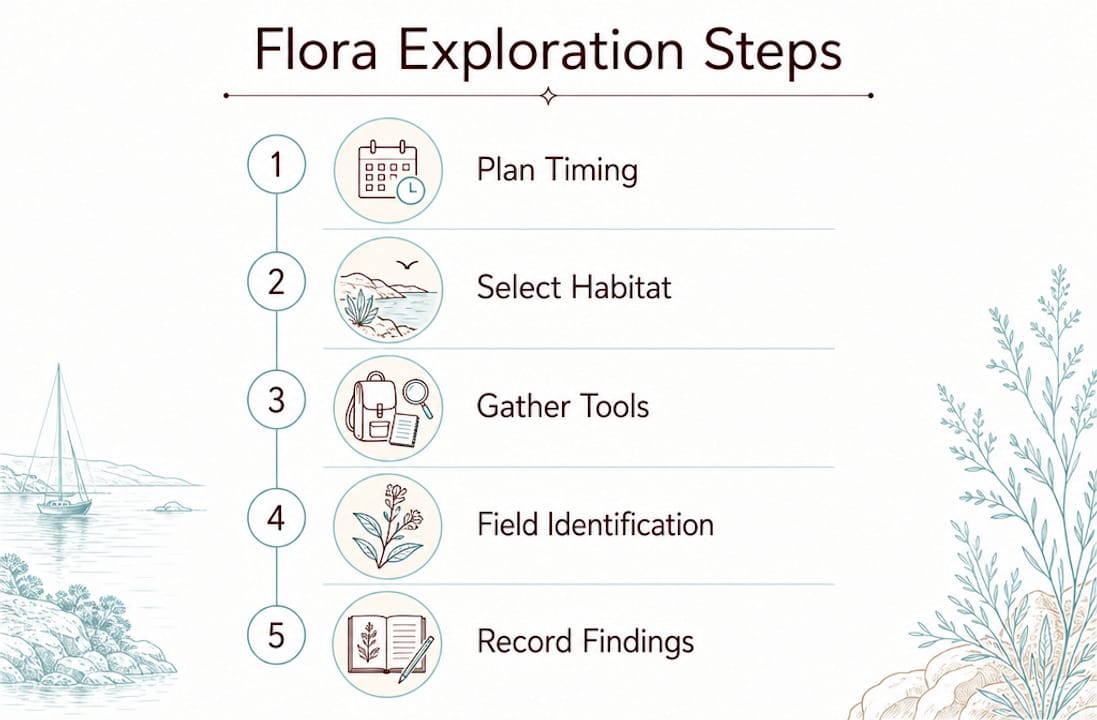
Thorough preparation separates a rewarding botanical expedition from a frustrating one. The following items form the core kit for any serious nature walk in Sardinia:
- Sturdy, ankle-supporting footwear suitable for rocky limestone terrain and uneven maquis paths.
- A printed or downloaded field guide covering Sardinian and Tyrrhenian island flora.
- A GPS device or smartphone with offline maps loaded for the specific region you are visiting.
- A camera with a macro lens or close-up capability for detailed flower and leaf photography.
- A notebook and pencil for recording observations, including habitat type, altitude, and associated species.
- Sufficient water for the duration of the walk, as shade is scarce in many botanical hotspots.
- Sun protection and a hat, particularly for exposed limestone and coastal sites in summer.
Ethical conduct is non-negotiable in Sardinian botanical exploration. Collecting any plant material, including seeds, is prohibited in national parks and most regional reserves. Trampling vegetation to reach a specimen causes damage that can persist for years in slow-growing Mediterranean shrublands. Stay on established paths wherever possible, and use binoculars or a telephoto lens to observe micro-localised species such as Aquilegia nuragica without approaching the fragile substrate they occupy.
"The rarest plants in Sardinia survive precisely because their habitats are difficult to reach. Treat that difficulty as a privilege, not an obstacle."
One of the most common challenges is distinguishing native species from naturalised exotics. Sardinia has a growing number of introduced plants, particularly in disturbed habitats near roads and agricultural land. Recording whether a species appears native or exotic, as systematic floristic surveys do, adds genuine scientific value to your observations. Contributing sightings to iNaturalist or the Global Biodiversity Information Facility (GBIF) places your records in a global database accessible to researchers and conservationists.
Pro Tip: Contact local botanical societies or the Sardinian regional forestry authority before visiting sensitive sites. They can advise on current access conditions, recent sightings, and any temporary restrictions in place to protect nesting or flowering species.
What I have learnt from years of exploring Sardinia's botanical world
The first time I encountered Aquilegia nuragica in the field, I almost missed it entirely. It grows in a shadow on a vertical limestone face, its violet-blue spurs barely distinguishable from the rock at midday. That experience taught me something no field guide can fully convey: Sardinian endemics do not announce themselves. They reward stillness, patience, and the willingness to look at a single square metre of habitat for far longer than feels comfortable.
What strikes me most about Sardinia's flora is how the island's geological and climatic isolation has produced plants that exist nowhere else on Earth, yet remain largely unknown outside specialist circles. Ribes sardoum, confined to a single mountain population, or the extraordinary specificity of the Isoëto-Nanojuncetea wetland communities, these are not curiosities. They are evolutionary stories written in leaf and petal. Approaching them with scientific rigour and genuine delight is not a contradiction. It is the only honest way to explore.
I would encourage every botanical explorer to consider off-season travel to Sardinia. The spring and early-winter windows, outside the peak tourist season, offer quieter trails, more attentive local guides, and flora at its most expressive. The island in March, with the maquis in full flower and the wetlands still holding water, is a different place entirely from the sun-bleached July coastline most visitors know.
— Studio
Experience Sardinian flora from the heart of Gallura
Portorafael, the boutique village of Porto Rafael in Gallura, places you at the centre of one of Sardinia's most botanically captivating coastlines. The granite shores, coastal maquis, and clear waters of the north-east are within easy reach, and the team at Portorafael can connect you with guided nature walks and local excursions that bring the island's plant life into focus.
After a morning spent among the wildflowers of the Gallura hills, the Solaz Porto Rafael Restaurant offers a return to comfort with gourmet local cuisine rooted in Sardinian ingredients and tradition. For those who prefer to explore at their own pace, Gallura by bike provides an eco-friendly way to move through flora-rich landscapes without disturbing the habitats you have come to discover. Portorafael is where botanical curiosity and refined hospitality meet without compromise.
FAQ
What is the best time of year to see Sardinian wildflowers?
Spring, from March to April, is the peak season for Sardinian wildflowers, with the widest range of endemic species in simultaneous bloom. Early summer, from June to July, offers a secondary flowering period, particularly along coastal zones and at higher altitudes.
How many endemic plant species does Sardinia have?
Sardinia hosts approximately 341 endemic vascular plant taxa from 53 families, representing around 15% of the island's native vascular flora. This concentration makes Sardinia one of the most botanically significant islands in the Mediterranean.
Which apps are most useful for Sardinian plant identification?
iNaturalist and PlantNet are the most reliable mobile tools for identifying plants in the field, as both draw on community-verified observations from Sardinia. For micro-endemic species, a printed field guide covering Tyrrhenian island flora provides the taxonomic depth that apps may lack.
Can I collect plant specimens in Sardinian national parks?
Collecting any plant material, including seeds and cuttings, is prohibited in Sardinia's national parks and most regional nature reserves. Observation, photography, and recording are the appropriate methods for botanical exploration in protected areas.
Where is the best place to see rare endemic plants in Sardinia?
Asinara National Park, the Supramonte plateau near Urzulei, and the Gennargentu massif are the three most rewarding locations for rare endemics. The regulated access at Asinara protects fragile habitats that support plant communities found nowhere else on the island.