
TL;DR:
- A Sardinian spa day combines mineral-rich therapies, botanical treatments, and coastal settings into a restorative experience. Choosing the right location and timing enhances the wellness gains, with options from luxury resorts to rural farms offering unique atmospheres. Proper planning, sequencing treatments, and packing thoughtfully ensure a relaxing, culturally authentic day on the island.
A Sardinian spa day is a structured wellness experience that combines the island's mineral-rich marine therapies, endemic botanical treatments, and serene coastal settings into a single, deeply restorative day. Knowing how to organise a Sardinian spa day well means choosing the right location, booking at the right time, and sequencing your treatments with care. Sardinia's finest wellness destinations, from the Costa Smeralda to Chia Laguna, offer far more than a standard spa menu. They draw on centuries of local healing tradition, thalassotherapy circuits, and a pace of life that actively encourages stillness. Plan thoughtfully, and the island rewards you generously.
How to organise a Sardinian spa day: choosing your location
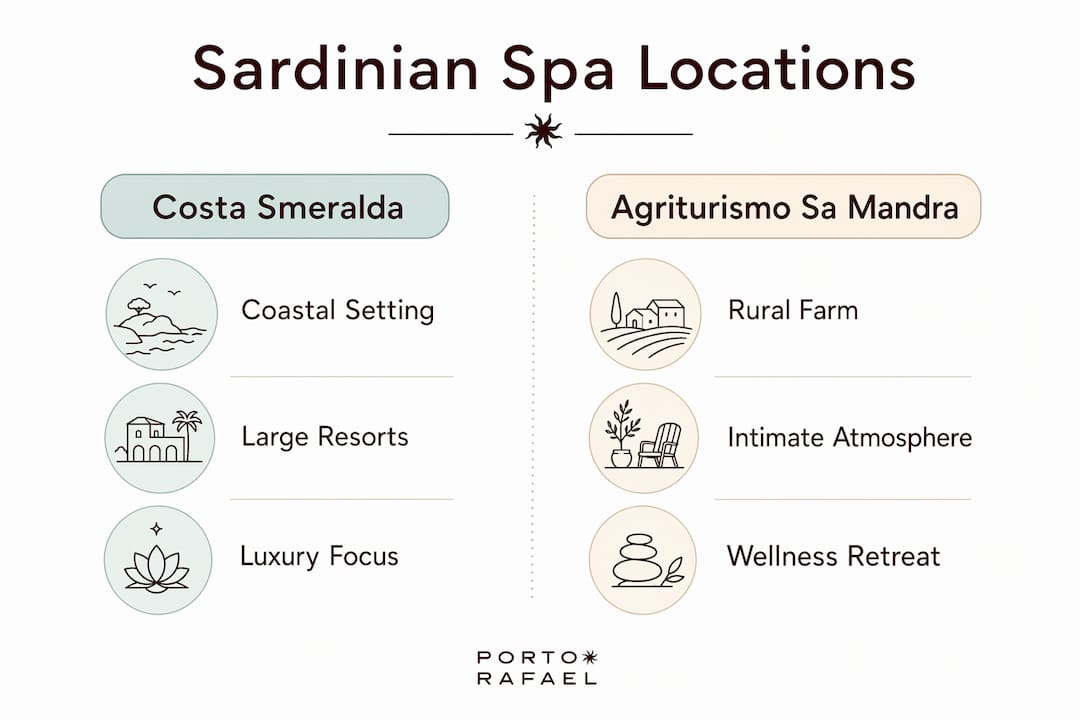
The location you choose shapes everything. Sardinia's premier spa resorts sit across dramatically different settings, and each offers a distinct wellness character.
Costa Smeralda in the north is the island's most celebrated luxury corridor. Resorts here tend to be large, polished, and well-equipped with full thalassotherapy circuits, heated seawater pools, and extensive treatment menus. The scale brings variety but also crowds, particularly from june through august.
Chia Laguna in the south offers a more contained, resort-village atmosphere. Its spa facilities are integrated into a broader natural environment of dunes and lagoons, which adds a genuine sense of escape. The setting suits guests who want wellness woven into the landscape rather than confined to a treatment room.
Agriturismo Sa Mandra, near Alghero, represents a third path entirely. It is a working farm turned wellness retreat, where treatments draw on local herbs, organic produce, and rural Sardinian tradition. The experience is quieter, more personal, and markedly different from the coastal luxury model.
Luxury beachfront spa features vary considerably between these settings. The table below summarises the key differences.
| Resort / Location | Setting | Signature Offering | Best For |
|---|---|---|---|
| Costa Smeralda resorts | Coastal, north | Thalassotherapy, heated pools | Luxury seekers, couples |
| Chia Laguna | Dunes and lagoon, south | Nature-integrated spa circuits | Relaxation, families |
| Agriturismo Sa Mandra | Rural farm, Alghero | Botanical and herbal therapies | Authenticity, quiet stays |
| Hotel Felix, Olbia | Town hotel, north-east | Spa facilities, accessible location | Short stays, solo travellers |
Smaller resorts and agriturismi generally offer more attentive service and a quieter atmosphere. Larger luxury hotels provide more treatment options but require earlier booking and can feel less personal during peak season.
When is the best time to plan your Sardinian wellness retreat?
Timing your visit correctly is one of the most consequential decisions in planning a Sardinian spa experience. The primary seasons for Sardinian wellness travel are spring (april to june), late summer (september to october), and winter (november to march). Each season offers a genuinely different experience.
Spring brings mild temperatures, open landscapes, and spa facilities that are not yet at capacity. Late summer retains the warmth of the season while shedding the peak-season crowds. Winter suits guests who want a private, customised escape with near-empty facilities and attentive, unhurried service.
Shoulder season bookings consistently yield better value, quieter pools, and more flexible minimum stay policies at Sardinian luxury resorts. That flexibility matters when you are building a day around multiple treatments.
Booking timeline and seasonal highlights
- Spring (april to june): Ideal for outdoor thermal circuits and botanical treatments. Book spa treatments 1–3 weeks in advance.
- Late summer (september to october): Warm sea temperatures enhance thalassotherapy. Book accommodation 6–9 months ahead for peak-adjacent dates.
- Winter (november to march): Best for private wellness packages. Fewer crowds, more personalised attention, and lower rates.
- Group bookings: Book 1–3 weeks ahead; some spas, including Inghirios, limit group sizes to 12 for specialist services.
- Non-resident access: Advance booking is mandatory at many luxury hotels; policies vary by season, so confirm directly with the spa.
Pro Tip: Book a mid-afternoon slot, typically between 2pm and 4pm. This window is consistently the quietest period in most Sardinian spas, giving you calmer pools, shorter waits between treatments, and a more unhurried atmosphere.
How to build your spa day itinerary
A well-sequenced spa day itinerary makes the difference between a genuinely restorative experience and a rushed series of appointments. The framework below reflects the timing principles used by experienced spa guests across Sardinia.
Arrive 15–20 minutes before your first appointment. This is not merely courtesy. It gives you time to change, acclimatise to the environment, and begin unwinding before any treatment starts. Arriving flustered undoes the first thirty minutes of relaxation.
Begin with hydrotherapy or a thalassotherapy circuit before any hands-on treatment. Warm seawater and mineral pools prepare the muscles and open the skin, making subsequent massages and wraps significantly more effective. Follow each treatment with a 20–30 minute rest period before moving to the next. This buffer is not optional. It allows the body to integrate the treatment and prevents the fatigue that comes from back-to-back sessions.
Eat lightly before your spa day. A heavy meal before a massage or body wrap causes discomfort and reduces the treatment's effectiveness. Avoid alcohol entirely before sessions. Keep a water bottle with you throughout the day.
Transport to spa resorts can take up to 3 hours from Sardinia's main airports. Build that transfer time into your schedule well in advance. A missed appointment due to a delayed transfer is a frustrating and avoidable loss.
| Time | Activity | Duration |
|---|---|---|
| 10:00 | Arrival and check-in | 15–20 minutes |
| 10:20 | Thalassotherapy or hydrotherapy circuit | 45–60 minutes |
| 11:20 | Rest and hydration | 20–30 minutes |
| 11:50 | Signature massage or body treatment | 60–90 minutes |
| 13:20 | Light lunch at spa café | 45–60 minutes |
| 14:30 | Facial or botanical treatment | 45–60 minutes |
| 15:30 | Sauna, steam room, or relaxation pool | 30–45 minutes |
| 16:15 | Final rest and departure preparation | 20 minutes |
Pro Tip: Design your spa day itinerary so that the most physically intensive treatment, such as a deep tissue massage or seaweed wrap, comes before the lightest one. Ending with a gentle facial or scalp treatment leaves you in the calmest possible state for the journey home.
What to pack for your Sardinian spa day
Packing correctly removes friction from the day and lets you focus entirely on rest. Most Sardinian spas provide robes, towels, and slippers, but not all supply every personal hygiene item. Arriving prepared avoids small but distracting inconveniences.
A standard spa kit goes beyond a swimsuit. The essentials are a spare hair tie, flip-flops, and a refillable water bottle. Many treatment rooms require hair to be tied back, and flip-flops protect your feet in wet areas while keeping you comfortable between sessions.
Travel insurance covering pre-booked wellness therapies is often requested by providers before confirming participation. Check your policy before you book, particularly for multi-treatment packages or specialist therapies.
Must-pack checklist
- Swimsuit (and a spare if you plan to use multiple water facilities)
- Hair tie and waterproof hair clip
- Flip-flops or spa sandals
- Refillable water bottle
- Personal hygiene items: deodorant, moisturiser, lip balm
- Loose, comfortable clothing for post-treatment relaxation
- Proof of travel insurance if required by the spa
- Pre-booking confirmation on your phone or printed
Pro Tip: Wear or pack a loose linen shirt or light wrap for after your treatments. Sardinian spa environments, particularly those near the coast, can feel cool once you leave the heated facilities. Staying warm immediately after a treatment preserves the benefits for longer.
Which authentic Sardinian treatments are worth prioritising?
Sardinia's spa culture is rooted in the island's natural environment. The most distinctive local therapies feature massages with endemic botanical ingredients, marine-based treatments using seaweed and mineral mud, and healing rituals drawn from centuries of local tradition. These are not generic spa offerings rebranded for a Mediterranean setting. They reflect a genuine connection between the island's ecology and its approach to wellbeing.
Thalassotherapy, the therapeutic use of seawater, sea air, and marine products, is the treatment most closely associated with Sardinian spas. Circuits typically combine heated seawater pools, hydrojets, and mineral mud applications. The results are tangible: reduced muscle tension, improved circulation, and a quality of relaxation that standard freshwater spa facilities rarely match.
Botanical treatments using plants endemic to Sardinia, such as myrtle, cistus, and helichrysum, appear across the island's more artisan wellness offerings. These plants carry genuine therapeutic properties recognised in traditional Sardinian medicine. A myrtle-infused body wrap or a helichrysum facial oil treatment offers something you will not find at a city spa.
- Thalassotherapy circuits: Seawater pools, hydrojets, and mineral mud. Best for muscle recovery and deep relaxation.
- Endemic botanical massages: Myrtle, cistus, and helichrysum oils. Best for skin nourishment and stress relief.
- Marine mineral wraps: Seaweed and mineral-rich mud applied to the body. Best for detoxification and skin renewal.
- Traditional healing rituals: Locally inspired sequences combining heat, botanical oils, and manual therapy. Best for a culturally immersive experience.
- Holistic sessions: Yoga, breathwork, and meditation aligned with the island's natural rhythm. Best for mental restoration.
Tailor your treatment selection to your personal wellness goals. If physical recovery is the priority, lead with thalassotherapy. If mental restoration matters more, begin with a botanical massage and end with a guided relaxation session.
What I have learnt from planning Sardinian spa days repeatedly
The single most common mistake I see is treating a Sardinian spa day like a city spa appointment. You book your treatments, arrive on time, and expect to feel restored by early evening. Sardinia does not work that way. The island has its own tempo, and the wellness experience only deepens when you stop resisting it.
Slowing the pace and allowing buffer days at the start and end of a stay genuinely enhances the experience. That advice sounds obvious until you realise how many people arrive on the morning of their spa day, rush through three treatments, and leave before the island has had any effect on them at all.
The most rewarding spa days I have experienced in Sardinia have combined a morning treatment with an afternoon cultural excursion, perhaps a walk through a Gallura stazzo or a quiet hour at a local market, before returning for an evening soak. That rhythm, active then restorative, mirrors how the island itself moves through the day.
Off-peak visits, particularly in october and november, reveal a version of Sardinian wellness that peak-season visitors never encounter. The facilities are quieter, the staff have more time for you, and the landscape carries a golden, unhurried quality that amplifies everything the spa is trying to do. If you can visit outside july and august, do so without hesitation.
— Studio
Plan your Sardinian spa day with Portorafael
Portorafael sits at the heart of the Gallura region, one of Sardinia's most captivating corners, and offers a considered range of experiences that complement a wellness day beautifully. A Sardinian cooking class with Portorafael pairs the restorative calm of a spa morning with the warmth of local culinary culture in the afternoon. It is the kind of pairing that turns a single day into a memory. The team at Portorafael understands the rhythm of the island and can help you build a stay that balances relaxation, culture, and genuine Sardinian character. Explore the full range of boutique hotel stays and curated experiences at Portorafael to begin planning your perfect day.
FAQ
What is the best time of year for a Sardinian spa day?
Spring (april to june), late summer (september to october), and winter (november to march) are the optimal seasons for Sardinian wellness travel. Shoulder seasons offer quieter facilities, better value, and more attentive service.
How far in advance should I book spa treatments in Sardinia?
Book individual or group treatments 1–3 weeks in advance. For peak-season accommodation at luxury resorts, book 6–9 months ahead. Always confirm non-resident spa access directly with the facility.
What should I bring to a Sardinian spa?
Pack a swimsuit, hair tie, flip-flops, and a refillable water bottle as a minimum. Bring personal hygiene items and proof of travel insurance covering treatments if the spa requires it.
What makes Sardinian spa treatments different from standard spa offerings?
Sardinian treatments use endemic plants such as myrtle and helichrysum, marine mineral mud, and seaweed in thalassotherapy circuits. These local botanical and marine therapies reflect centuries of island healing tradition rather than generic spa menus.
Can non-residents access spa facilities at Sardinian luxury hotels?
Access policies vary widely by hotel and season. Many luxury properties require advance booking for non-resident spa use. Contact the spa directly to confirm availability and any access conditions before your visit.