

TL;DR:
- A luxury travel concierge manages the complete guest journey using deep local knowledge, emotional intelligence, and strategic relationships. They provide exclusive access, anticipate guest needs, and build long-term relationships, elevating the travel experience beyond standard services. Technology enhances efficiency but cannot replace the human touch essential for interpreting nuanced preferences and managing emotionally charged situations.
A luxury travel concierge is defined as a personalised travel architect who manages the complete guest journey, from the first preference conversation through to post-trip follow-up. In the industry, the formal term is chef de concierge for the senior role, though "luxury travel concierge" now describes the broader category of specialists who deliver end-to-end travel experience management. The role of concierge in luxury travel sits at the intersection of deep local knowledge, emotional intelligence, and strategic relationships that no app or algorithm can replicate. Where standard travel services react to requests, a great concierge anticipates them, reading subtle cues and shaping each journey around the individual rather than the itinerary.
What does a luxury travel concierge do?
The scope of concierge duties in travel is far wider than most guests realise. A skilled concierge operates as a single point of contact across every phase of a trip, rather than a reactive assistant who answers calls when things go wrong. This distinction separates genuine luxury travel concierge services from the front-desk help available at any hotel.
The full service arc typically unfolds in four stages:
- Preference interviews and itinerary crafting. Before any booking is made, the concierge conducts a detailed conversation to understand the guest's pace, interests, dietary requirements, and unstated expectations. The resulting day-by-day schedule reflects the individual, not a template.
- Logistics management. Flights, private transfers, yacht charters, accommodation upgrades, and document checks all fall within the concierge's remit. A single oversight in this chain can unravel an entire trip, which is why precision here is non-negotiable.
- 24/7 on-trip support. Weather changes, cancelled reservations, medical needs, and spontaneous requests all arrive without warning. The concierge resolves each in real time, preserving the guest's experience without visible effort.
- Post-trip relationship building. After departure, notes on preferences, complaints, and highlights are recorded for future visits. This institutional memory is what transforms a one-time guest into a long-term patron.
Pro Tip: Brief your concierge on what you dislike as much as what you love. Knowing that you find crowded restaurants stressful or prefer morning excursions allows them to filter options before they ever reach you, eliminating friction before it forms.
How do concierges provide exclusive access through their networks?
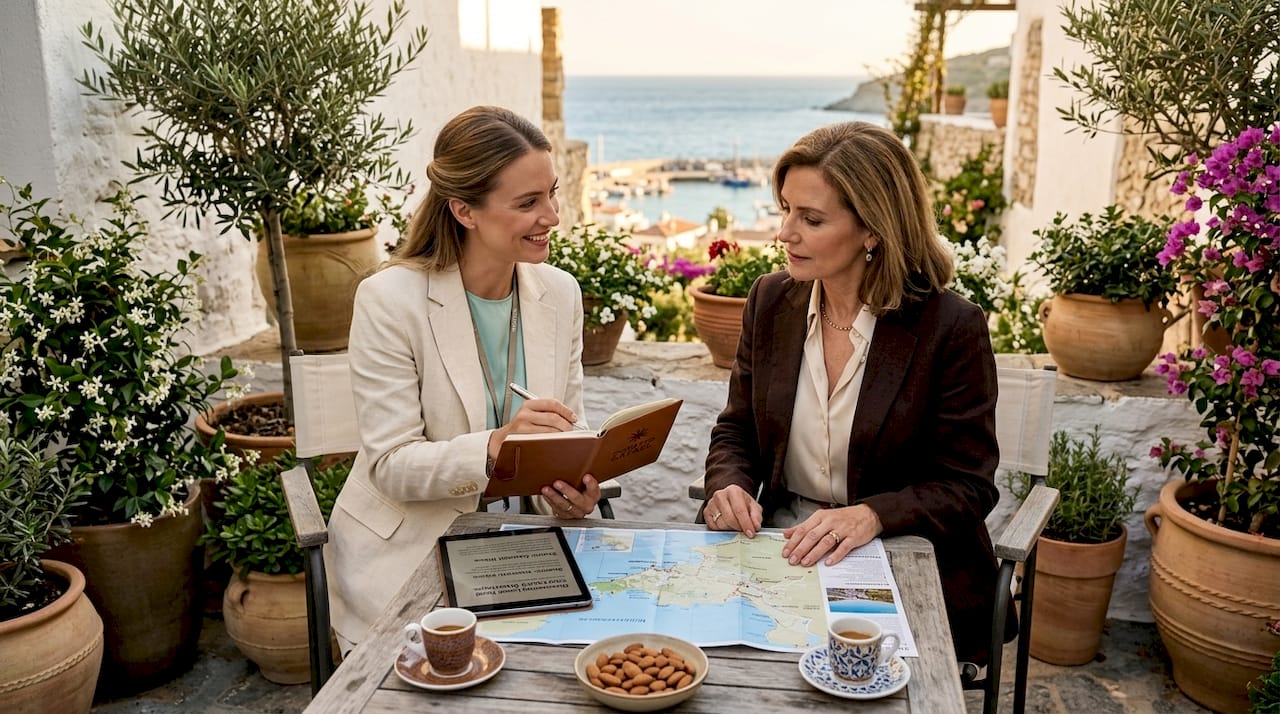
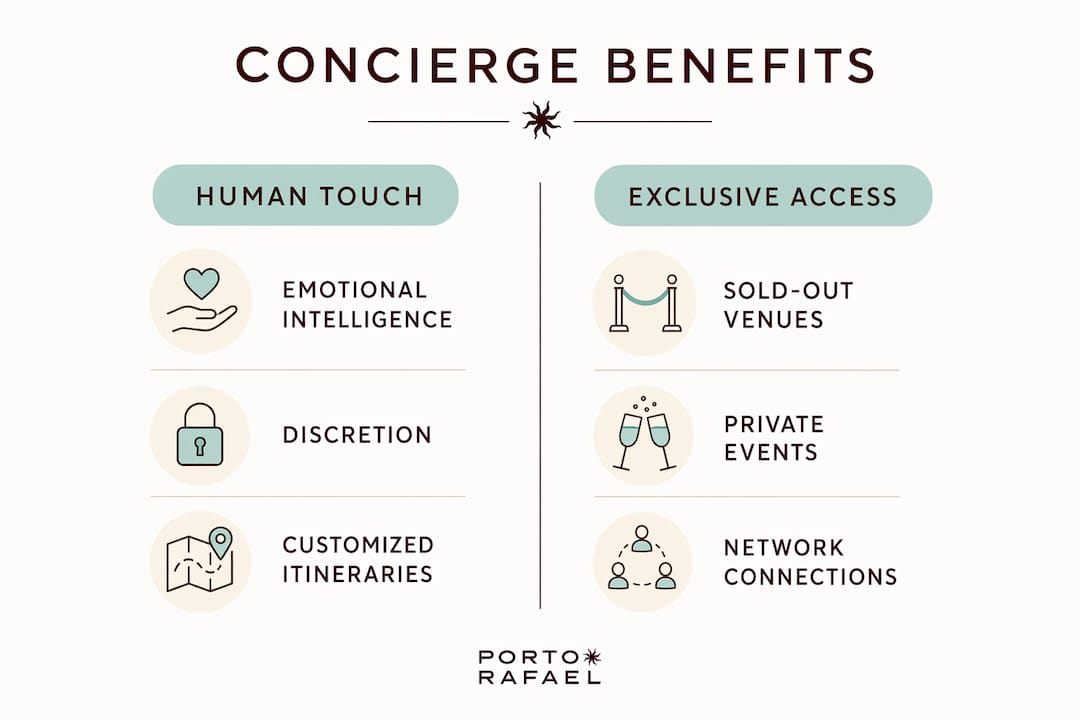
The most tangible benefit of a concierge is access. Securing exclusive access to sold-out restaurants, private events, and priority reservations is something standard booking channels simply cannot offer. This advantage is entirely relationship-driven, built over years of reciprocal trust between the concierge and the city's most sought-after venues, guides, and operators.
Consider what this means in practice. A guest arriving in Gallura, Sardinia, during peak summer might find every celebrated restaurant fully booked through public channels. A well-connected concierge, however, holds relationships with proprietors who reserve tables for trusted partners. The same logic applies to private boat excursions, after-hours museum access, and VIP event entry.
| What you can access | Standard booking channel | Luxury concierge |
|---|---|---|
| Popular restaurant reservation | Available if tables remain | Priority access, often off-menu |
| Sold-out cultural event | Waitlist only | Direct contact with organisers |
| Private villa or yacht charter | Listed inventory only | Unlisted properties via network |
| Bespoke guided tour | Generic group options | Private, expert-led experiences |
| Last-minute itinerary change | Limited flexibility | Immediate rerouting with alternatives |
The table above illustrates why exclusive Sardinian dining and similar experiences are best approached through a concierge rather than a booking platform. The network is the product.
Pro Tip: When choosing a concierge service, ask directly which specific restaurants, operators, or venues they have active relationships with in your destination. Vague answers suggest a thin network. Named relationships suggest genuine access.
Why do emotional intelligence and discretion define great concierge service?
Concierge excellence relies less on executing requests and more on emotional intelligence and discretion to make guests feel truly understood. This is the dimension of the role that is hardest to train and impossible to automate.
The most accomplished concierges read guests before guests articulate their needs. According to research on elite concierge practice, professionals use subtle behavioural cues such as the questions a guest asks, the speed of their decisions, and the pace at which they move through a space to build an internal model of preferences. This "data-light but context-heavy" approach produces suggestions that feel uncannily well-matched, because they are.
The human qualities that define this level of service include:
- Anticipatory awareness. Reviewing prior-visit notes, special occasions, and arrival details before a guest sets foot in the property, so that personalised touches are already in place.
- Confidentiality as a foundation. Guests share sensitive information, from health considerations to relationship dynamics, trusting that it will never leave the concierge's knowledge. This discretion is what allows the relationship to deepen over time.
- Long-term relationship cultivation. Many concierges remain in their roles for decades, building guest relationships that span generations. This continuity is itself a luxury, because it means the service improves with every visit.
- Psychological attunement. The balance between hospitality and psychology is subtle. A guest who says "whatever you recommend" may actually want to feel involved in decisions. A guest who asks detailed questions may prefer to be left to choose independently. Reading this distinction correctly is the mark of a truly skilled practitioner.
For guests exploring boutique hospitality for the first time, this emotional attentiveness is often the quality that surprises them most. It is not service. It is understanding.
Does technology replace the concierge role in luxury travel?
Technology does not replace the concierge. It changes what the concierge focuses on. The concierge function is evolving from providing information to interpreting guest needs and adapting experiences in real time, preserving the human and emotional layer that technology cannot replicate. This shift actually increases the strategic importance of the role.
Consider what artificial intelligence does well in travel: it aggregates data, surfaces options, and processes bookings at speed. What it cannot do is sense that a guest is exhausted and quietly reroute the afternoon's plans without being asked. It cannot read the hesitation in a guest's voice when presented with an itinerary and understand that the real preference is something entirely different.
The tasks that remain irreducibly human include:
- Interpreting ambiguous or contradictory guest preferences in real time.
- Negotiating with venues and operators on the guest's behalf using personal relationships.
- Managing emotionally charged situations, such as a missed anniversary dinner or a medical concern, with both efficiency and warmth.
- Curating experiences that have no digital footprint, including private gatherings and unlisted properties.
AI and digital concierge platforms handle routine logistics well, freeing human concierges to focus entirely on the interpretive and relational work that defines white-glove service. The future of luxury travel concierge services is not human versus machine. It is human, supported by machine, focused on what only humans can do.
For those considering exclusive resorts in Sardinia, this distinction matters. The destination's most captivating experiences, its hidden coves, its family-run vineyards, its private boat routes through the Maddalena Archipelago, exist outside any algorithm's reach.
Why a concierge is the most underused luxury in travel
There is a persistent misconception among even experienced travellers that a concierge is for emergencies or restaurant bookings. In my view, this misunderstands the role entirely. A concierge is most valuable not when things go wrong, but when everything is going right and you want it to go further.
The guests who extract the most from a concierge relationship are those who treat it as a genuine partnership. They share context freely, they communicate preferences early, and they trust the concierge's judgement rather than second-guessing every suggestion. Travel advisors and concierges act as trusted collaborators with access to exclusive knowledge and contacts, optimising client time and experiences beyond what solo travel planning can achieve. That framing is exactly right.
What I find most compelling about the role is its quiet power. The best concierge work is invisible. You simply find that everything is better than you expected, that the table is perfect, that the guide knows exactly what you care about, that the afternoon has unfolded as though someone read your mind. That is not luck. It is craft, applied with discretion. For anyone planning a stay in a destination as layered and rewarding as Sardinia, forming a productive relationship with a skilled concierge before arrival is the single highest-return investment you can make in the quality of your trip. Explore the insider's guide for luxury travellers to understand how this preparation translates into a genuinely different experience on the ground.
— Studio
Discover concierge-level hospitality at Portorafael

Portorafael, set within the timeless beauty of Porto Rafael in Gallura, Sardinia, offers guests the kind of attentive, personalised hospitality that defines true luxury travel. From the moment you arrive, the team at Hotel La Piazza anticipates your preferences, curates your days, and connects you with the region's most captivating experiences. Whether you are drawn to the crystal-clear waters of the Maddalena Archipelago or the refined pleasures of gourmet Sardinian cuisine, every detail is considered. Reserve your table at Solaz Restaurant for an evening of exceptional local flavours, or explore the artisanal elegance of Labenoi Atelier for a truly bespoke Sardinian encounter.
FAQ
What is the role of a concierge in luxury travel?
A luxury travel concierge manages the complete guest journey, from preference interviews and itinerary crafting through to 24/7 on-trip support and post-trip relationship building. The role combines deep local knowledge, strategic industry relationships, and emotional intelligence to deliver personalised, stress-free experiences.
What are the main benefits of a concierge for travellers?
The primary benefits include exclusive access to sold-out venues and private experiences, real-time problem resolution, and a level of personalisation that standard booking platforms cannot provide. Concierges also save significant time by managing all logistics as a single point of contact.
How do concierges secure access that standard bookings cannot?
Concierges secure access through long-standing personal relationships with restaurant proprietors, event organisers, and private operators, relationships built over years of reciprocal trust. These connections allow them to obtain priority reservations and unlisted experiences that are invisible to public booking channels.
How does a concierge use emotional intelligence in their work?
Skilled concierges read behavioural cues such as a guest's questions, decision pace, and communication style to anticipate needs before they are expressed. This context-sensitive approach, rather than formal preference lists, underpins the white-glove service that defines luxury hospitality.
Will AI and technology replace luxury travel concierges?
Technology improves concierge efficiency by handling routine logistics, but it cannot replicate the human judgement, empathy, and real-time adaptability that define the role. The concierge's function is shifting from information provider to experience interpreter, a task that remains irreducibly human.