
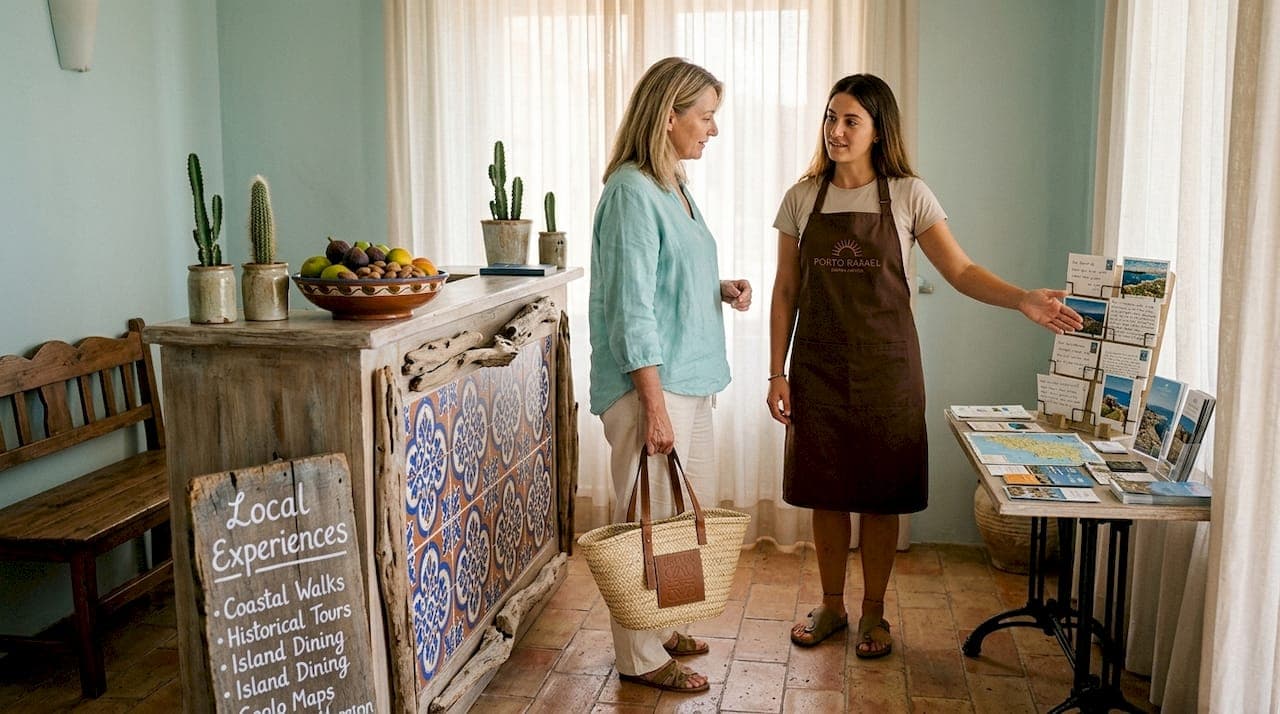
TL;DR:
- Boutique hospitality offers immersive, personalized experiences that reflect local culture and a sense of place.
- Unlike larger luxury chains, boutique hotels are small, independent, and prioritize authenticity, design, and genuine service.
- Choosing boutique accommodations enriches travel with meaningful connections, memorable moments, and a strong sense of discovery.
Most people assume boutique hospitality is simply about small, stylishly decorated hotels. It is a reasonable assumption, but it misses the essence of what is boutique hospitality in its truest sense. Boutique hospitality is an immersive, deeply personal form of accommodation where the guest experience is shaped by local culture, attentive service, and a coherent sense of place. Understanding this distinction helps you choose stays that do not merely house you for the night, but genuinely enrich your journey and leave you with something worth remembering long after you return home.
What is boutique hospitality: defining its core elements
The phrase gets used freely in travel marketing, which has blurred its meaning considerably. Yet the defining characteristics of boutique hotels are specific, and recognising them will transform how you assess any property before booking.
Boutique hotels are typically defined as small, independent properties with fewer than 100 rooms, placing intimacy at the heart of the experience. That size threshold is not arbitrary. With fewer guests to serve, staff can learn your preferences, adapt to your rhythms, and respond to what you need before you articulate it. This is the foundation of everything boutique hospitality promises.
Beyond scale, several qualities set the boutique hotel experience apart:
- Personalised service: Lower guest-to-staff ratios allow staff to attend to individual needs with genuine care rather than scripted efficiency.
- Distinctive design: Interiors reflect the local culture, history, and architecture of the destination rather than a globally standardised aesthetic.
- Independence: Most boutique properties are not part of large chains, giving owners creative freedom to define their own vision.
- Authenticity: Authenticity is the primary appeal for travellers choosing boutique properties over conventional hotels, according to EHL Hospitality Business School.
- Sense of place: Every detail, from the artwork on the walls to the ingredients on the breakfast table, should tell you something true about where you are.
Pro Tip: When evaluating a property that claims to be boutique, look at the menu. If the dishes could appear at any hotel on any continent, the commitment to local authenticity may be superficial.
How boutique hospitality evolved in 2026
The boutique hotel of ten years ago was celebrated for its design. Unusual furniture, curated art collections, and non-standard room layouts were the hallmarks of what defined boutique hospitality for much of the 2010s. That era has passed.
The shift in boutique hospitality today moves decisively towards what industry experts now call behavioural precision. This means staff do not wait for a guest to request something. They observe, learn, and anticipate. A guest who takes a slow breakfast with a book receives quiet, unhurried attention. A guest who arrives late with luggage and a distracted expression is checked in with brisk warmth and no unnecessary theatre. These are not coincidences. They are the result of deliberate, trained attentiveness.
"Cohesion, not investment volume, determines long-term boutique hotel success."
That insight, drawn from the latest analysis of boutique hotel discipline, captures something that many owners still underestimate. A property where the architecture, service philosophy, lighting, menu, and cultural narrative all speak the same language creates an experience that no single investment in decor can replicate. It is the coherence of the vision that moves guests most deeply.
Technology now plays a quiet but meaningful role in this. Technology in boutique hotels is most effective when invisible, reducing friction and making personal interactions feel more natural rather than replacing them. A well-designed booking system, seamlessly integrated room preferences, or a well-timed message from a concierge create space for genuine human connection. Sustainability has followed the same logic, with the strongest boutique properties embedding responsible practices into daily operations rather than advertising them as features.
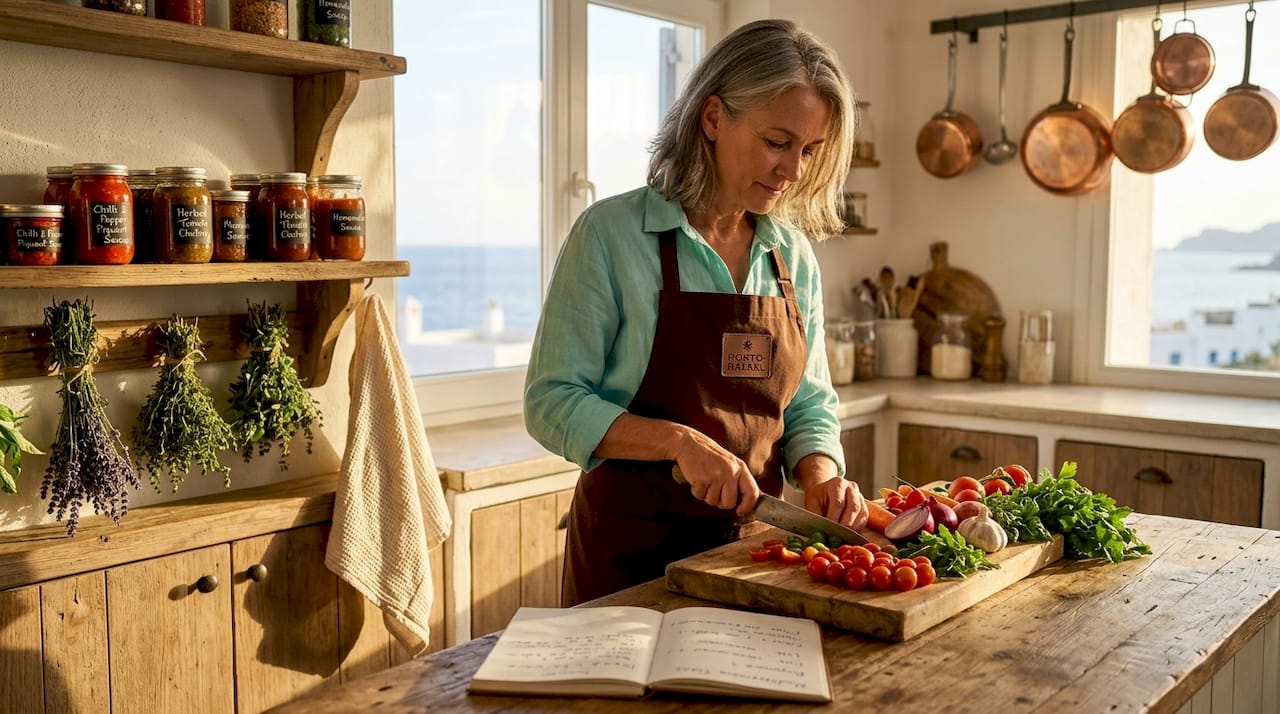
Pro Tip: Ask a property how it sources its ingredients or which local artisans contributed to its interiors. A boutique hotel with genuine roots in its community will answer with enthusiasm and specificity.
Boutique vs mainstream luxury hotels
The boutique hotel market is growing at a compelling pace, with projections showing an increase from $28 billion in 2025 to over $50 billion by 2033. That growth is driven primarily by travellers seeking cultural immersion rather than generic luxury at scale. To understand why, it helps to compare the two experiences directly.
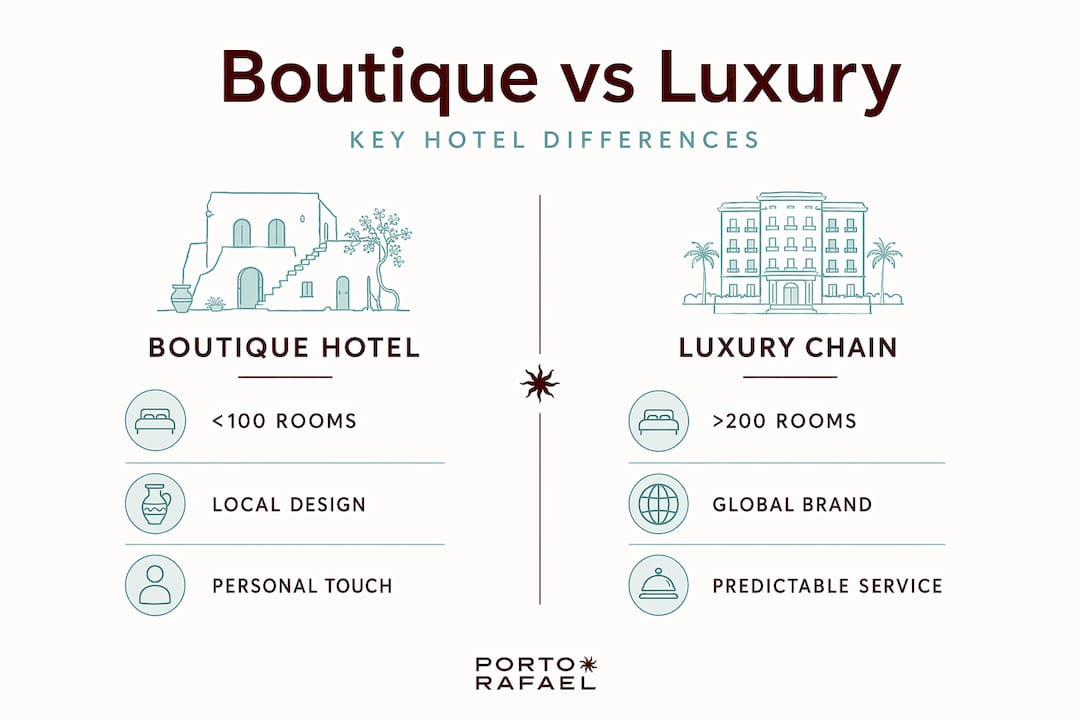
| Feature | Boutique hotel | Large luxury chain |
|---|---|---|
| Room count | Typically fewer than 100 | Often 200 to 1,000+ |
| Service style | Personalised, intuitive | Standardised, scripted |
| Design philosophy | Reflects local culture and history | Globally consistent brand aesthetic |
| Guest relationship | Staff know your name and habits | Transactional, role-based |
| Food and drink | Rooted in local produce and tradition | International menus, broad appeal |
| Sense of place | Strong and distinctive | Minimal or manufactured |
The contrast is instructive. A large luxury chain delivers predictability, which has its own value if you travel frequently on business and need consistency. But if you choose boutique accommodation because you want your surroundings to teach you something about where you are, the chain model works against you.
Exceptional boutique properties are curated to feel discovered and lived-in, with history made visible rather than polished away. Some of the most memorable boutique stays in Italy and elsewhere include cultural rituals woven into the stay, with ceremonial experiences, access to heritage sites, and locally prepared breakfasts included as part of the daily rhythm. You are not visiting a place. You are, briefly, living in it. Explore more on why boutique stays resonate so deeply with discerning travellers.
The real challenges of boutique hospitality
Boutique hospitality is not without its complications. Understanding these will help you set appropriate expectations and recognise the genuine craft involved in getting it right.
-
Scaling is deeply difficult. Scaling boutique hospitality resists standardisation almost by definition. The qualities that make a boutique property special are often specific to a particular place, owner, and team. Expand too quickly and you dilute those qualities into something ordinary.
-
Technology demands are high. Independent boutique hotels face challenges integrating modern technology without the support structures that large brands provide. Owners must develop considerable fluency in digital tools while preserving the experiential warmth that guests seek.
-
Operational risk is real. Without the safety net of a major brand, boutique properties are more exposed to seasonal variation, staffing challenges, and reputational sensitivity. One difficult season can reshape a property's trajectory.
-
Exclusivity has limits. The intimacy that makes boutique hospitality precious also restricts availability. Rooms sell quickly in peak season, and last-minute options are rare. Planning ahead matters considerably.
-
Authenticity requires constant vigilance. Attempts to standardise boutique hotels risk diluting the very distinctiveness that guests are seeking. The most successful properties guard their identity deliberately, resisting the temptation to broaden their appeal in ways that erode their character.
These challenges are real, but they are also what makes a well-run boutique property so remarkable. When owners and staff navigate them with skill, the result is something a chain hotel simply cannot manufacture.
How to choose genuine boutique accommodation
Knowing what defines boutique hospitality is useful. Knowing how to find properties that genuinely deliver it is more useful still. Here is how to approach your search with a discerning eye.
- Look past the marketing language. The word "boutique" has no regulated definition. Read guest reviews carefully, paying particular attention to comments about staff attentiveness, local knowledge, and the feeling of the place rather than just the aesthetics.
- Research the local narrative. A genuine boutique property is connected to its location. Look for menus that name local suppliers, interiors that reference regional history, and programming that involves local artists or producers.
- Ask specific questions before you book. Contact the property directly and ask what distinguishes their service from a standard hotel. A team genuinely invested in the boutique experience will answer with detail and pride.
- Use your concierge as a cultural guide. The most valuable resource in a boutique property is often the staff member who knows which cove is deserted on a Tuesday morning, which local family produces the finest olive oil, or which seasonal event you should not miss.
- Trust your instincts on arrival. A boutique property that has earned its reputation will feel immediately distinctive: in the welcome, the scent, the quality of light, and the ease with which the first conversation unfolds.
Pro Tip: Look for properties that publish a "philosophy" or "story" page on their website. The best boutique hotels articulate their values with conviction. If the page reads like a generic marketing template, look elsewhere.
For a deeper exploration of what to seek in a boutique stay, the practical tips for Sardinia compiled from direct experience offer a useful companion to this guide.
My perspective on boutique hospitality in 2026
I have observed enough hotels across enough years to say this with confidence: the ones that stay with you are almost never the ones that dazzled you with design. They are the ones where something small and precisely observed happened. A member of staff who remembered how you take your coffee on the second morning without being told. A room that smelled faintly of the herbs growing outside. A view that made you sit still for longer than you intended.
What I have learnt is that boutique hospitality succeeds through restraint, not extravagance. The temptation for owners is always to add: more services, more technology, more rooms, more brand partnerships. But the discipline of intimacy that defines the best boutique properties comes from knowing what to leave out.
The tension I find most interesting right now is between growth ambition and preservation of identity. Some properties manage it brilliantly through profit-sharing models, membership-driven bookings, and deeply selective expansion. Most who try to scale too fast lose the thread. As a traveller, your best protection is your own attention. When a property feels curated rather than assembled, discovered rather than marketed, that is usually the real thing.
— Studio
Experience boutique hospitality at Portorafael
Porto Rafael, a rare gem set along the northern Sardinian coastline of Gallura, is precisely the kind of place that makes the boutique philosophy feel not just real, but irreplaceable. Hotel La Piazza sits at its heart, offering accommodations that honour the surroundings with quiet elegance. The Prestige rooms and suites are crafted for travellers who understand that luxury is not volume, it is attentiveness.

Dining at Solaz Restaurant brings the flavours of Sardinia to the table with genuine culinary artistry, while the surrounding landscape offers private excursions, crystalline waters, and moments of stillness that no chain hotel could place within reach. If you are ready to discover a boutique hospitality experience rooted in place and delivered with care, send a non-binding enquiry and let Portorafael show you what a stay shaped by authentic Sardinian character truly feels like.
FAQ
What is boutique hospitality in simple terms?
Boutique hospitality refers to small, independent accommodation that prioritises personalised service, authentic local character, and distinctive design over standardisation. Properties typically have fewer than 100 rooms and are deeply connected to their location.
How does a boutique hotel differ from a luxury chain hotel?
A boutique hotel offers an experience shaped by its specific location and culture, with staff who know guests personally and menus rooted in local tradition. Luxury chain hotels prioritise consistency and scale, which suits frequent business travellers but rarely creates a sense of genuine place.
Why choose boutique accommodation over a standard hotel?
You choose boutique accommodation when you want your stay to feel like an act of discovery rather than a transaction. Travellers seeking cultural immersion consistently favour boutique properties for their authenticity, attentive service, and the way they connect guests to the stories of a destination.
What are the key characteristics of boutique hotels?
The core characteristics of boutique hotels include fewer than 100 rooms, a high staff-to-guest ratio, locally inspired design, independent ownership, and a clearly defined sense of place. These qualities combine to create an intimate and memorable experience distinct from mainstream hospitality.
Is boutique hospitality worth the cost?
For travellers who value personalised attention, cultural authenticity, and stays that feel meaningful rather than merely comfortable, boutique hospitality consistently delivers returns that justify the investment. The experiences, and the memories they produce, are rarely replicated at any price point in a conventional hotel.