
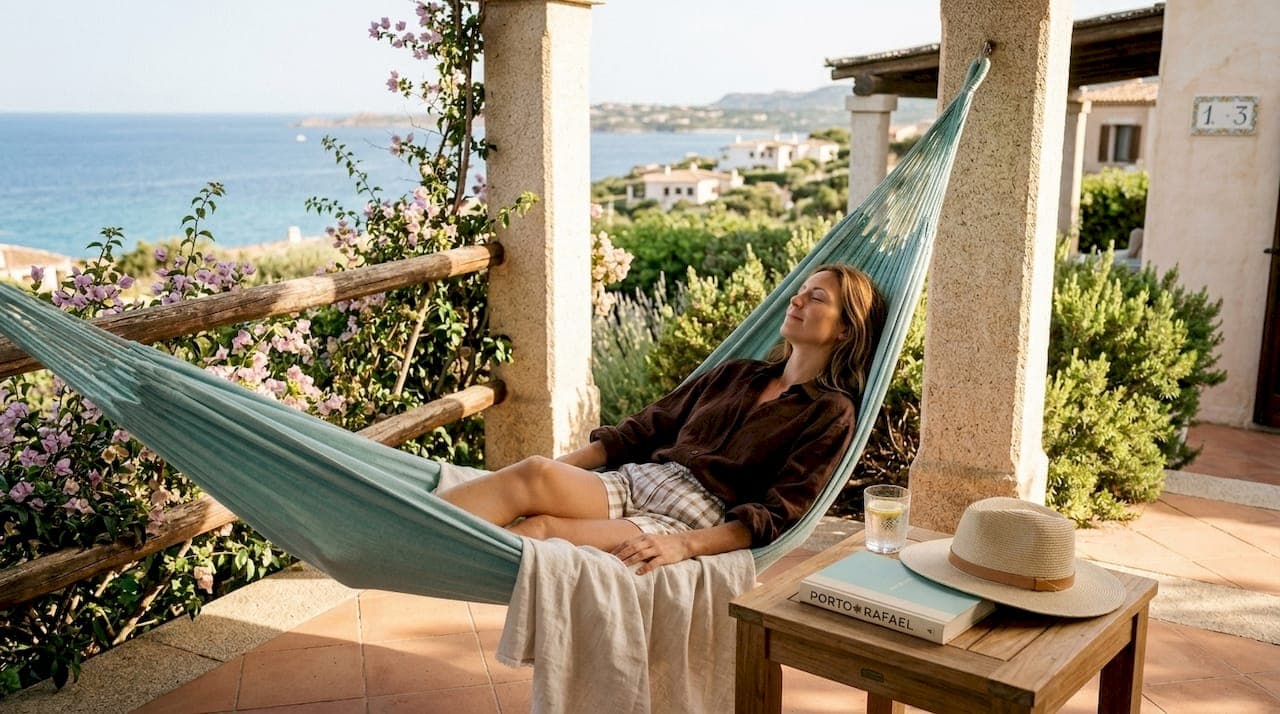
TL;DR:
- Natural immersion in luxury travel produces profound mental and physical restorative benefits confirmed by neuroscience research.
- Designing retreats with seamless indoor-outdoor flow, uninterrupted views, and outdoor wellness spaces enhances these effects significantly.
- Sustainable practices and authentic local experiences further deepen guests' emotional connection, shaping the future of luxury travel.
There is a quiet revolution taking place in how the world's most discerning travellers define an exceptional escape. The role of nature in luxury escapes has moved far beyond a scenic backdrop or a pleasant view from the terrace. Neuroscience now confirms what those who seek restorative travel have long sensed: immersion in natural environments produces measurable, profound changes in how the mind and body recover. For travellers drawn to places where wild beauty and refined comfort coexist, understanding this connection transforms a holiday from pleasant to genuinely life-changing.
Why nature is central to great luxury escapes
When you step into a landscape shaped by wind, salt, and silence, something shifts. The brain, which spends most of modern life in a state of effortful, directed attention, begins to release its grip. Studies measuring brain activity confirm that alpha and theta waves increase in natural settings, replacing the beta wave dominance associated with cognitive strain. This is not relaxation in a passive sense. It is the mind shifting into what researchers describe as a gentler, less effortful mode of attention. The distinction matters enormously for luxury travel design.
A review of more than 100 neuroimaging studies found that the amygdala and prefrontal cortex show reduced activity after time spent in nature, lowering the kind of negative rumination that many guests arrive carrying without even realising it. Urban environments and over-designed interiors, however beautiful, do not produce the same effect. The brain still registers them as spaces requiring vigilance and processing.
Duration matters, too. Extended immersion of 15 minutes or more produces noticeably stronger shifts in EEG patterns linked to restoration. This finding has direct implications for how luxury resorts should structure a guest's day, moving away from scheduled activity-to-activity formats and towards longer, uninterrupted periods of natural exposure.
What this means for you as a traveller is specific:
- A room with an uninterrupted view of water or wild greenery is not an aesthetic preference. It is a neurological necessity for genuine rest.
- Extended walks, kayaking, or simply sitting in an open landscape do more restorative work than an hour in an artificially lit spa room.
- Resorts that blur the threshold between interior and exterior, through open terraces, natural materials, and garden sightlines, are working with your brain rather than against it.
Pro Tip: When choosing a nature-inspired luxury retreat, prioritise rooms with direct sightlines to vegetation or water rather than simply 'sea view' marketing language. The quality and continuity of the natural view shapes how deeply your mind restores.
"Nature's effect on the brain is measurable, shifting the mind into a gentler, less effortful mode of attention rather than simple relaxation."
Sustainability and storytelling in luxury hospitality
Sustainability has become one of the most quietly powerful differentiators in luxury travel, and it is no longer perceived as a trade-off with indulgence. Research from Cornell University confirms that sustainability creates a halo effect for luxury brands, attracting affluent guests who are not only willing to pay premiums but who return with stronger loyalty. The relationship between nature and luxury is, therefore, both experiential and commercial.
What distinguishes genuine eco-luxury travel experiences from greenwashing is specificity. Affluent travellers increasingly demand proof. They want to know whether their dinner was sourced from a local farmer's harvest or whether activities they participated in funded marine conservation efforts. Vague commitments to "sustainability" no longer satisfy. Travellers want the story told to them with evidence and emotion.
Effective sustainability in luxury hospitality operates across several dimensions:
- Local sourcing. Menus built around the immediate region, from small producers and seasonal harvests, connect guests to the land they are visiting. A glass of wine made from grapes grown within sight of the dining table carries a narrative no imported label can match.
- Renewable energy and conservation. Resorts integrating solar design, water stewardship, and land preservation position these as features, not footnotes, of the guest experience.
- Community partnerships. Collaborations with local artisans, farmers, and cultural custodians give guests access to authentic encounters that cannot be replicated anywhere else. This is exclusivity redefined.
- Conservation-linked activities. Reef restoration funding, wildlife protection partnerships, and guided foraging experiences transform participation into purpose.
Pro Tip: Before booking, ask the property directly what specific conservation or community project your stay supports. The quality of their answer tells you everything about whether nature integration is genuine or merely decorative.
This shift in values is partly generational. Millennial and Gen Z affluent travellers, growing in purchasing power, see sustainable luxury vacations as the baseline expectation rather than the exception. For those planning a Sardinian luxury escape, this means the connection between wild landscape and responsible hospitality is not a separate conversation. It is the same one.
Nature-led design and the art of immersive retreats
The most sophisticated nature-inspired luxury retreats share a design philosophy that goes well beyond placing a lounge chair beside a view. The feeling of cognitive ease that characterises truly restorative environments depends on specific architectural choices: uninterrupted sightlines to vegetation, abundant natural light, and the seamless passage between inside and outside.
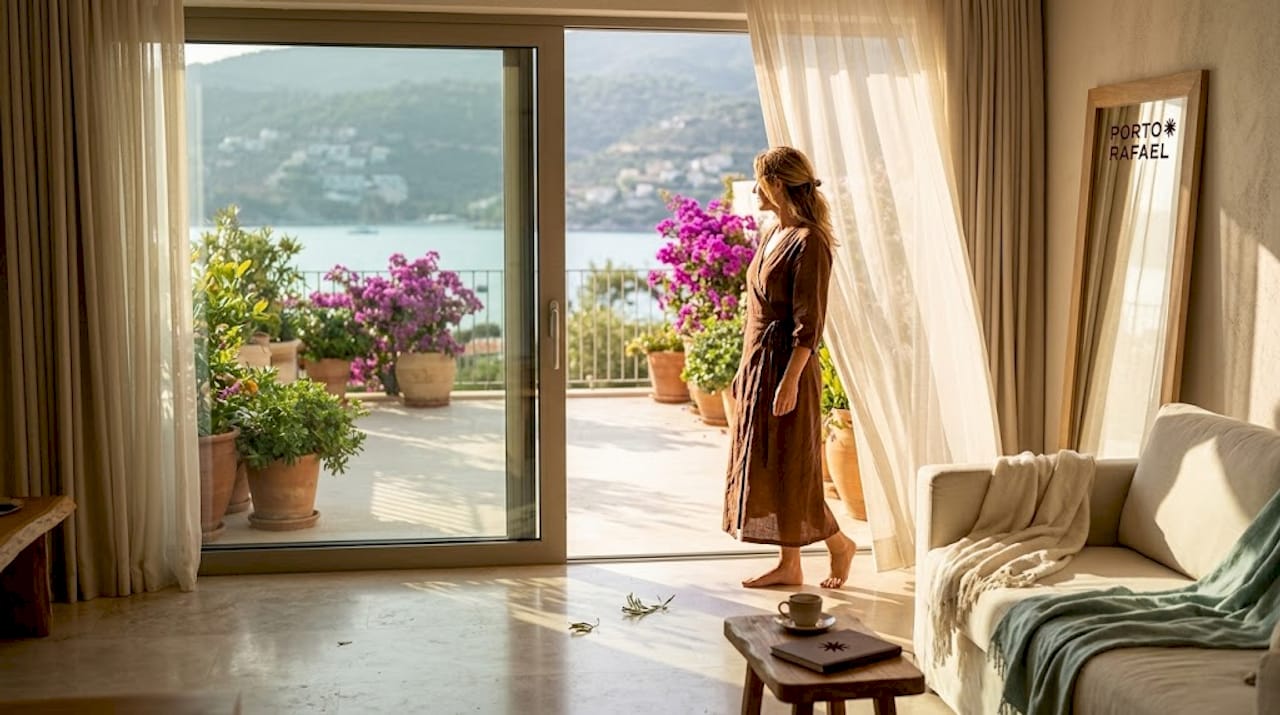
Outdoor wellness treatments exemplify this thinking. When exterior massage spaces are designed to integrate natural sounds, living fragrances, and open-air sensation, the result goes beyond sensory pleasure. Guests report a quality of presence that enclosed spa rooms rarely achieve. The boundary between treatment and environment dissolves, and what remains is something rarer than most spa menus can articulate.
Experiences that build on this principle include guided wildlife safaris at sunrise, slow kayaking through coastal passages, plantation walks with scent and texture as the guide, and evening rituals held outdoors as the temperature softens. Luxury is increasingly defined not by what a property adds but by what it connects you to.
The following table compares design features across nature-led luxury approaches:
| Design feature | Standard luxury resort | Nature-led luxury retreat |
|---|---|---|
| Views | Scenic, may include nature | Uninterrupted sightlines to vegetation or water |
| Indoor-outdoor flow | Balcony or terrace access | Fluid transitions, open architecture |
| Wellness spaces | Indoor spa, gym | Outdoor treatment areas, garden or coastal setting |
| Materials | Marble, synthetic finishes | Natural stone, timber, local materials |
| Activities | Pool, curated entertainment | Wildlife immersion, guided nature experiences |
| Lighting | Artificial, controlled | Maximised natural light throughout |
- The absence of walls between a guest and the natural world is itself a luxury statement.
- Acoustic design matters: the sound of water, wind through trees, or birdsong functions as an active restorative element, not mere atmosphere.
- Scent, texture, and the temperature of natural air contribute to the multisensory richness that exclusive Sardinian experiences offer in abundance.
Luxury travel trends in 2026: the turn toward nature
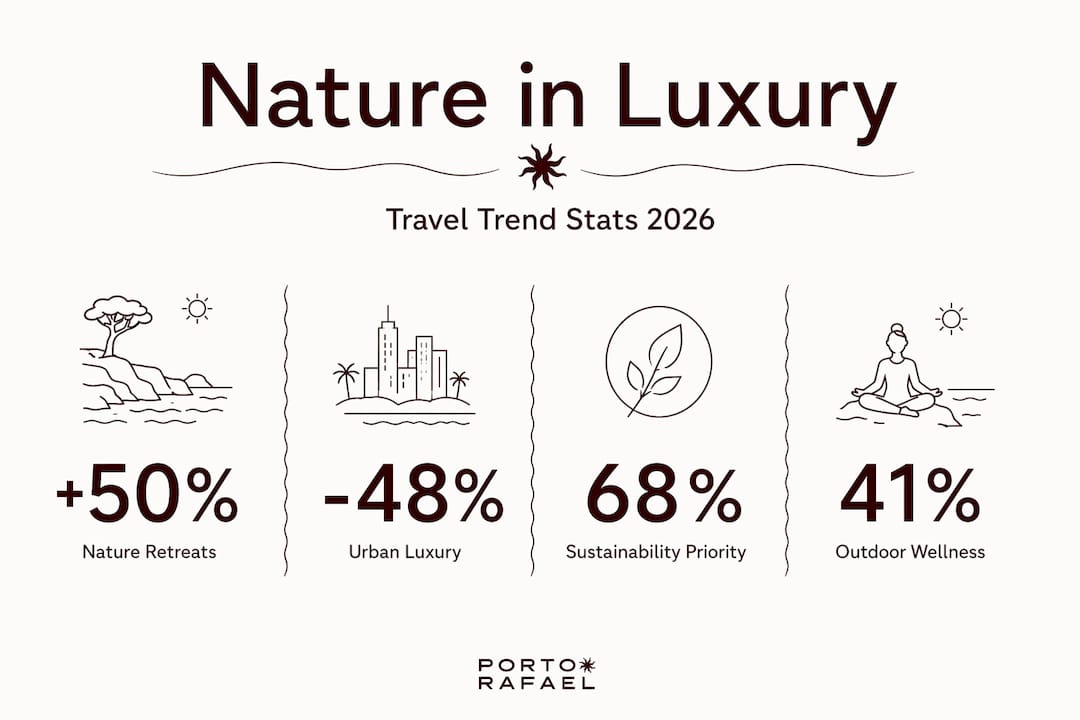
The data from 2026 confirms what perceptive travellers already sense. Bookings for NYC fell nearly 50% year-over-year among affluent travellers, while beach, mountain, and ranch escapes surged. The shift is not simply about geography. It reflects a fundamental reorientation of what luxury travel is for.
Resorts that understand this are designing their offerings accordingly. Properties like The Serai in India bring guided safaris, riverside retreats, and plantation walks within reach of urban guests, demonstrating that proximity to nature need not mean remoteness from comfort.
The priorities of today's affluent traveller, considered through booking trends and hospitality research, reveal a consistent pattern:
- Privacy above spectacle. Secluded landscapes offer the absence of crowds as a form of luxury. The rarer the setting, the greater its perceived value.
- Discovery over repetition. Travellers want experiences particular to the place: local flavours, indigenous ecology, and seasonal rhythms that cannot be replicated elsewhere.
- Wellness as the foundation. Rest, restoration, and physical wellbeing have become the primary motivation for high-value travel, displacing status-driven consumption.
- Responsibility as expectation. As the halo effect of sustainability strengthens brand loyalty, guests expect resorts to demonstrate environmental stewardship without being asked.
Places that combine these qualities, where wild beauty, refined hospitality, and genuine cultural rootedness meet, are drawing the most discerning travellers away from predictable luxury circuits. For those who know the northern coast of Sardinia, this comes as no surprise. The Gallura region has always offered this convergence, quietly and without fanfare.
My perspective on nature and the future of luxury travel
I have spent considerable time studying and experiencing how nature integrates into high-end travel, and the pattern I keep returning to is this: conventional luxury has consistently underestimated the cognitive and emotional depth that natural immersion delivers. A property can offer every material excellence and still leave guests feeling subtly unrested if the relationship to the surrounding landscape is incidental rather than intentional.
What I've learned is that the most memorable luxury escapes are not those with the most amenities. They are the ones where the setting itself does most of the work. A morning light moving across granite boulders, a meal whose ingredients arrived from within a kilometre, a swim in water cold and clear enough to feel like a reset. These experiences are impossible to manufacture and infinitely harder to forget than any interior upgrade.
In my view, the role of nature in luxury escapes is not a trend that will plateau. It is a reawakening to something that was always true about what genuine rest requires. The resorts and destinations that understand this at an architectural, culinary, and philosophical level will define luxury travel for the next decade. Those that treat nature as decoration will find their guests looking elsewhere, towards places where the wild world is not a backdrop but the whole point.
— Studio
Discover Sardinia's natural luxury at Portorafael
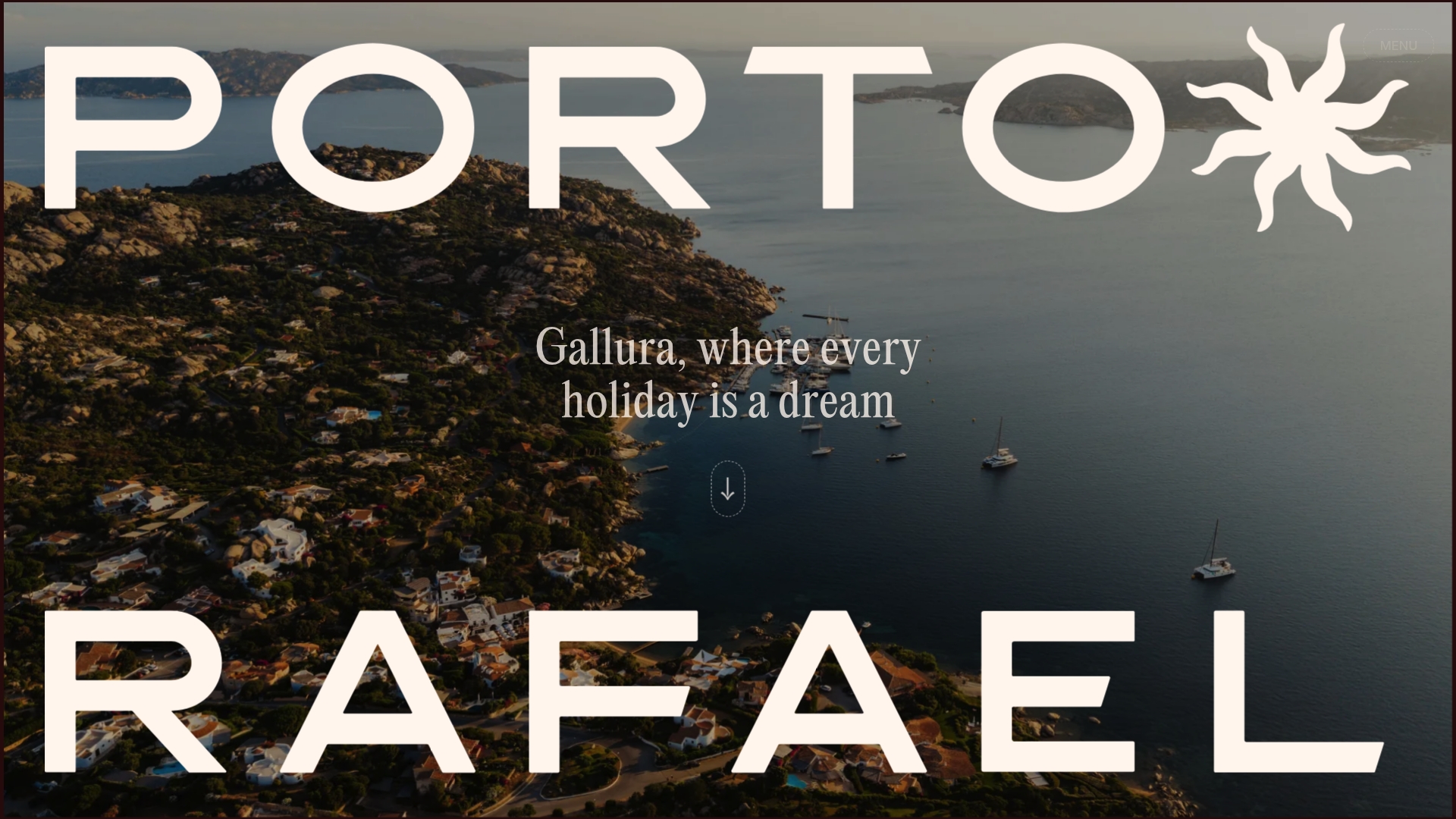
Porto Rafael, set along the crystalline northern coast of Sardinia in the heart of Gallura, offers precisely the kind of nature-connected luxury that today's most thoughtful travellers seek. The boutique village's wild granite coastline, translucent waters, and unhurried pace do the restorative work that no spa menu alone can replicate. Two experiences at Portorafael speak directly to this connection: the Vermentino tasting experience, where the landscape literally lives in the glass, and the Sardinian cooking class, a hands-on encounter with local ingredients harvested from the island's extraordinary natural heritage. Both offer what eco-luxury travel promises at its finest: beauty, authenticity, and the kind of pleasure that feels genuinely earned.
FAQ
What is the role of nature in luxury escapes?
Nature provides measurable restorative benefits in luxury travel, reducing stress-related brain activity and encouraging deep mental recovery. The most sought-after luxury escapes now treat natural immersion as a core offering rather than a visual feature.
Why does nature matter for luxury travel wellbeing?
Exposure to natural settings increases alpha and theta brain waves while reducing the cognitive load associated with urban and artificial environments, producing deeper rest than most conventional spa treatments can achieve alone.
How do eco-luxury experiences differ from standard luxury travel?
Eco-luxury travel experiences integrate local sourcing, conservation partnerships, and nature-led design as central elements of the guest experience rather than optional additions, creating both a stronger sense of place and a more restorative stay.
What design features define a nature-inspired luxury retreat?
Uninterrupted sightlines to vegetation or water, fluid indoor-outdoor architecture, natural materials, and outdoor wellness spaces are the hallmarks of resorts that use design to maximise the neurological and emotional benefits of the natural environment.
Are sustainable luxury vacations worth the premium?
Research confirms that sustainability creates a halo effect strengthening guest loyalty and brand trust, while travellers who choose nature-led, sustainable properties consistently report higher satisfaction and more meaningful travel experiences.