

TL;DR:
- Eco-friendly accommodation incorporates environmental, social, and economic responsibility into daily operations through measurable practices like renewable energy use, water conservation, and community investment. Verified certifications such as Green Key or EarthCheck ensure genuine sustainability beyond marketing claims, while guests play a role by engaging in responsible behaviors. Choosing certified properties supports long-term ecological health, local economies, and enriching guest experiences rooted in authenticity.
Eco-friendly accommodation is defined as lodging that integrates environmental stewardship, social responsibility, and economic equity into its core operations, going far beyond token gestures such as asking guests to reuse towels. The industry term you will encounter most often is sustainable lodging, and it encompasses everything from solar-powered boutique hotels in Sardinia to certified eco-lodges in Costa Rica. Recognised verification bodies such as the Global Sustainable Tourism Council (GSTC), Green Key, and EarthCheck provide the credible benchmarks that separate genuine commitment from polished marketing copy. Understanding what these standards actually require is the first step towards making travel choices that honour both the places you visit and the communities that call them home.
What are the core features of eco-friendly accommodation?
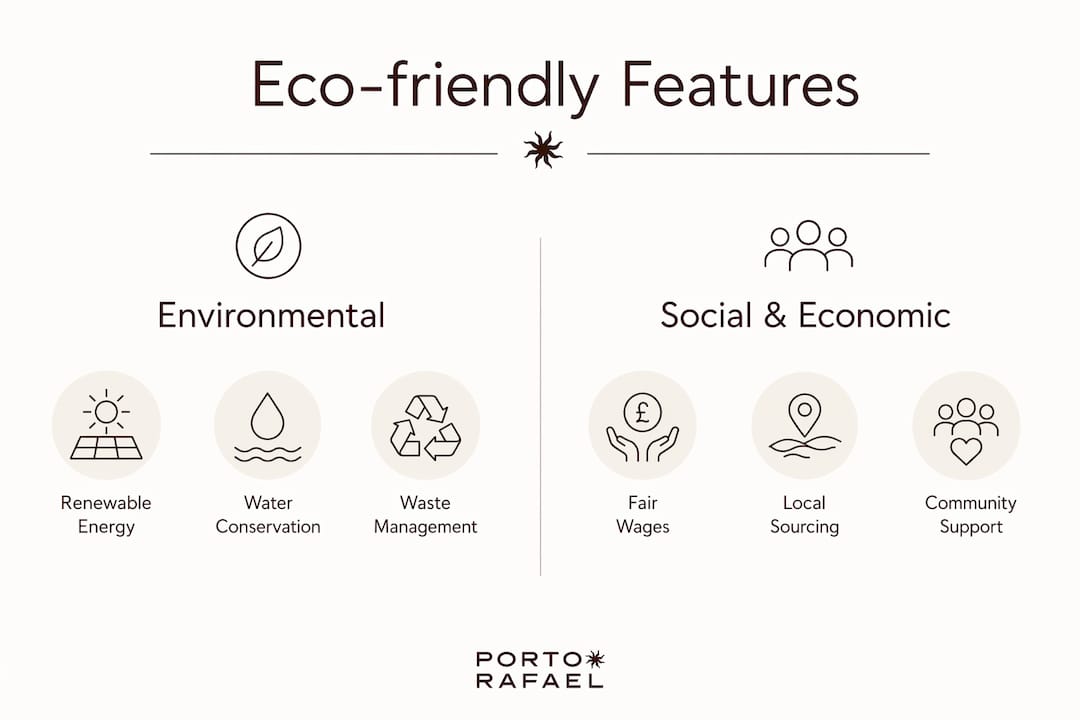
Eco-friendly accommodation integrates environmental stewardship, social responsibility, and economic equity through measurable operational practices rather than aspirational slogans. Three pillars define the category: energy efficiency, water conservation, and waste reduction, each supported by specific technologies and policies.
Energy efficiency
Properties that qualify as genuinely sustainable typically source power from renewable installations such as rooftop solar photovoltaic panels, and they supplement this with LED lighting throughout and smart thermostats that adjust room temperature only when occupied. These are not cosmetic choices. Solar PV and advanced energy management systems reduce operational costs substantially, which is why eco-conscious guests are increasingly willing to pay a premium for verified stays. The financial logic aligns with the environmental one.

Water conservation and waste management
Low-flow toilets, aerated taps, and rainwater harvesting systems are standard features in accredited properties. More sophisticated operations add greywater recycling, routing water from showers and basins back into irrigation systems. On the waste side, authentic eco-friendly properties eliminate single-use plastics from rooms and dining areas, operate centralised composting, and provide clearly labelled recycling stations. Back-of-house technologies such as heat recovery ventilation and wastewater filtration are common in eco-luxury resorts, though guests rarely see them directly.
Social responsibility
The social dimension is often overlooked, yet it is equally defining. Fair wages, local sourcing, and respect for cultural heritage are not optional extras in a credible sustainable property. A hotel that imports all its produce and employs no local staff cannot claim genuine sustainability, regardless of how many solar panels sit on its roof. High-quality eco-friendly properties invest in the communities surrounding them, creating a cycle of economic equity that benefits the destination long after each guest departs.
Pro Tip: When evaluating a property's sustainability credentials, look specifically for its community investment policy. A property that names its local suppliers and publishes staff wage transparency is demonstrating accountability, not just aspiration.
How can travellers identify genuine eco-friendly accommodation?
The proliferation of green marketing has made it genuinely difficult to distinguish authentic sustainable stays from properties that have simply added a bamboo toothbrush to the bathroom. Third-party verified certifications are the most reliable markers, requiring audits and ongoing monitoring rather than self-declaration.
Here is a practical process for vetting any property before you book:
- Check for recognised certification. Look for Green Key, EarthCheck, EU Ecolabel, Travelife Gold, or LEED Certification on the property's website. These schemes require independent audits and transparent sustainability reporting, not just a fee.
- Read the sustainability page critically. A credible property publishes measurable targets and progress reports. Vague language such as "we care about the planet" without data is a warning sign.
- Examine refillable amenity policies. Properties that have eliminated single-use plastic bottles in favour of refillable dispensers have made an operational commitment that costs money and requires supplier relationships.
- Search guest reviews for sustainability evidence. Travellers notice and comment on composting bins, solar water heating, and locally sourced menus. Authentic practices leave traces in reviews even when guests are not specifically looking for them.
- Ask the property directly. Email the property manager and ask which certification body audits their sustainability claims and when the last audit took place. A genuine operation will answer promptly and specifically.
Sustainability narratives differ markedly between luxury and mid-market hospitality. Luxury resorts tend to frame sustainability as a brand identity, while mid-range properties focus on operational efficiency. Neither approach is inherently more authentic, but travellers should recognise that aspirational language is not the same as verified practice.
Pro Tip: The GSTC website maintains a list of certification bodies that meet its global baseline criteria. Cross-referencing a property's claimed certification against this list takes under two minutes and removes all ambiguity.
Eco-friendly accommodation vs sustainable tourism vs ecotourism
These three terms are frequently used interchangeably, yet they describe distinct concepts with different scopes. Understanding the distinctions helps you make more informed choices and ask better questions.
| Concept | Scope | Primary focus | Example |
|---|---|---|---|
| Eco-friendly accommodation | Property level | Operations and physical impact | A solar-powered boutique hotel with zero single-use plastics |
| Sustainable tourism | Sector-wide aspiration | Balancing environmental, social, and economic factors across all travel | A destination's transport, accommodation, and activity policies combined |
| Ecotourism | Experience level | Low-impact travel to natural areas with education and conservation | A guided wildlife tour in a protected forest with conservation funding |
GSTC clarifies that sustainable tourism is a broad aspiration covering all travel types, while ecotourism targets low-impact travel to natural areas with an explicit education and conservation emphasis. Eco-friendly accommodation sits within both frameworks but operates at the property level. You can stay in eco-friendly accommodation while participating in conventional tourism, and you can practise ecotourism while staying in a property with no formal sustainability certification.
The practical implication is that choosing a certified sustainable property is a meaningful act, but it does not automatically make your entire trip sustainable. Transport choices, activity selection, and spending habits all contribute to the wider picture of what is sustainable tourism in practice.
What are the advantages of choosing eco-friendly accommodation?
The benefits of sustainable lodging extend well beyond a reduced carbon footprint, touching the quality of the guest experience, the vitality of local economies, and the long-term health of the destinations travellers love most.
- Reduced environmental impact. Properties using renewable energy, water recycling, and composting systems measurably reduce resource consumption. Guests staying in such properties contribute to these reductions simply by being there.
- Support for local economies. Properties that source food locally and employ community members create economic multiplier effects that keep tourism revenue within the destination rather than exporting it to international supply chains.
- Higher quality guest experience. Eco-friendly properties frequently offer locally sourced menus, guided nature experiences, and cultural programming that generic chain hotels cannot replicate. The connection to place is deeper and more memorable.
- Cultural preservation. Properties that respect and celebrate local heritage actively contribute to its survival. This is particularly significant in regions where rapid tourism development has historically eroded cultural identity.
- Financial return on green investment. Solar PV and advanced water treatment save operational costs over time, enabling properties to maintain quality while managing expenses. Guests benefit from this stability through consistent standards.
The advantages of eco-friendly resorts are not abstract. They translate into tangible differences in the quality of food on your plate, the warmth of staff interactions, and the condition of the natural environment surrounding the property. These are experiences that reward the traveller who chooses carefully.
How to find and book eco-friendly accommodation effectively
A thoughtful approach to booking sustainable stays requires more than filtering by a "green" badge on a travel platform. The following steps form a reliable guide to eco-friendly accommodation booking that produces genuinely responsible results.
- Start with certified booking platforms. Platforms that filter by verified certification schemes save considerable research time. Look for filters referencing Green Key or EarthCheck rather than self-reported "eco" labels.
- Prioritise location relative to transport. Accommodation near public transport options reduces overall travel emissions significantly. A certified eco-lodge that requires a two-hour private transfer from the nearest airport carries a transport footprint that may outweigh its operational savings.
- Read the property's sustainability report before booking. Credible properties publish annual or seasonal reports with measurable data. If no such document exists on the website, request one.
- Book directly where possible. Direct bookings reduce commission costs for the property, freeing resources for sustainability investment. Many eco-friendly properties offer direct booking incentives for this reason.
- Align your stay with the property's ethos. Guest behaviour matters. Conserving water and energy, reusing towels, and disposing of waste mindfully amplify the property's environmental efforts. Small actions by many guests produce measurable results.
- Consider the broader destination context. A property's sustainability is partly determined by the health of its surrounding environment. Choosing destinations with strong conservation governance supports the conditions that make eco-friendly travel meaningful.
Pro Tip: Pack a reusable water bottle, a solid shampoo bar, and a tote bag before any trip. These three items eliminate the most common sources of single-use plastic waste during a stay, regardless of how well the property manages its own supplies.
Exploring nature-integrated luxury escapes offers a useful lens for understanding how the best properties weave environmental responsibility into the guest experience without sacrificing comfort.
Why authenticity matters more than aesthetics in sustainable travel
There is a version of eco-friendly travel that is really just aesthetics. The reclaimed wood headboard, the hessian slippers, the handwritten note about towel reuse. These details are pleasant, but they are not sustainability. After spending considerable time researching and visiting properties across the Mediterranean and beyond, the clearest lesson is this: the most genuinely sustainable properties are often the least theatrical about it.
The properties that invest in wastewater filtration, pay above-market wages to local staff, and publish transparent impact reports rarely lead their marketing with those facts. They lead with the quality of the experience, the beauty of the location, the depth of the food. Sustainability is the operating system, not the branding. Travellers who understand this distinction stop being impressed by bamboo straws and start asking about energy audits.
There is also a mindset shift required on the guest side. Many travellers mistakenly equate eco-friendly with convenience, expecting sustainability to be invisible and effortless. Authentic sustainable accommodation asks something of you. It asks you to engage, to be curious, to treat the place with the same care its stewards do. That engagement is not a burden. It is what transforms a holiday into a genuinely meaningful experience.
Understanding boutique hospitality as a concept helps clarify why smaller, independently operated properties so often lead on authentic sustainability. Scale matters, and so does ownership.
— Studio
Discover sustainable hospitality at Hotel La Piazza, Porto Rafael
For travellers seeking eco-conscious hospitality without surrendering the pleasures of a refined stay, Portorafael offers a rare and captivating example. Hotel La Piazza sits at the heart of Porto Rafael in Gallura, Sardinia, a destination celebrated for its crystalline waters, timeless natural beauty, and deep cultural heritage.

Portorafael's commitment to responsible hospitality is woven into the fabric of the property: locally sourced ingredients at Solaz Restaurant, a reverence for the surrounding Gallura landscape, and an ethos that places the wellbeing of place and people alongside the comfort of guests. For those ready to experience what thoughtful, place-rooted hospitality truly feels like, Hotel La Piazza invites you to discover Sardinia at its most authentic and unhurried.
FAQ
What is eco-friendly accommodation?
Eco-friendly accommodation is lodging that integrates environmental stewardship, social responsibility, and economic equity into its operations, prioritising renewable energy, water conservation, waste reduction, and community support beyond simple green gestures.
How do I know if a hotel is genuinely eco-friendly?
Look for third-party verified certifications such as Green Key, EarthCheck, EU Ecolabel, or LEED Certification, which require independent audits and transparent sustainability reporting rather than self-declaration.
What is the difference between eco-friendly tourism and ecotourism?
Eco-friendly tourism refers broadly to travel practices that minimise environmental impact, while ecotourism specifically targets low-impact travel to natural areas with an explicit focus on education, conservation, and community benefit, as defined by the GSTC.
Do eco-friendly hotels cost more?
Eco-conscious travellers are increasingly willing to pay a premium for verified sustainable stays, and properties that invest in solar PV and advanced water treatment often recoup those costs through operational savings, maintaining competitive pricing over time.
What can guests do to support eco-friendly accommodation?
Guests amplify a property's sustainability efforts by conserving water and energy during their stay, reusing towels, disposing of waste mindfully, and choosing accommodation accessible by public transport to reduce overall travel emissions.