Why do exclusive harbours define luxury?
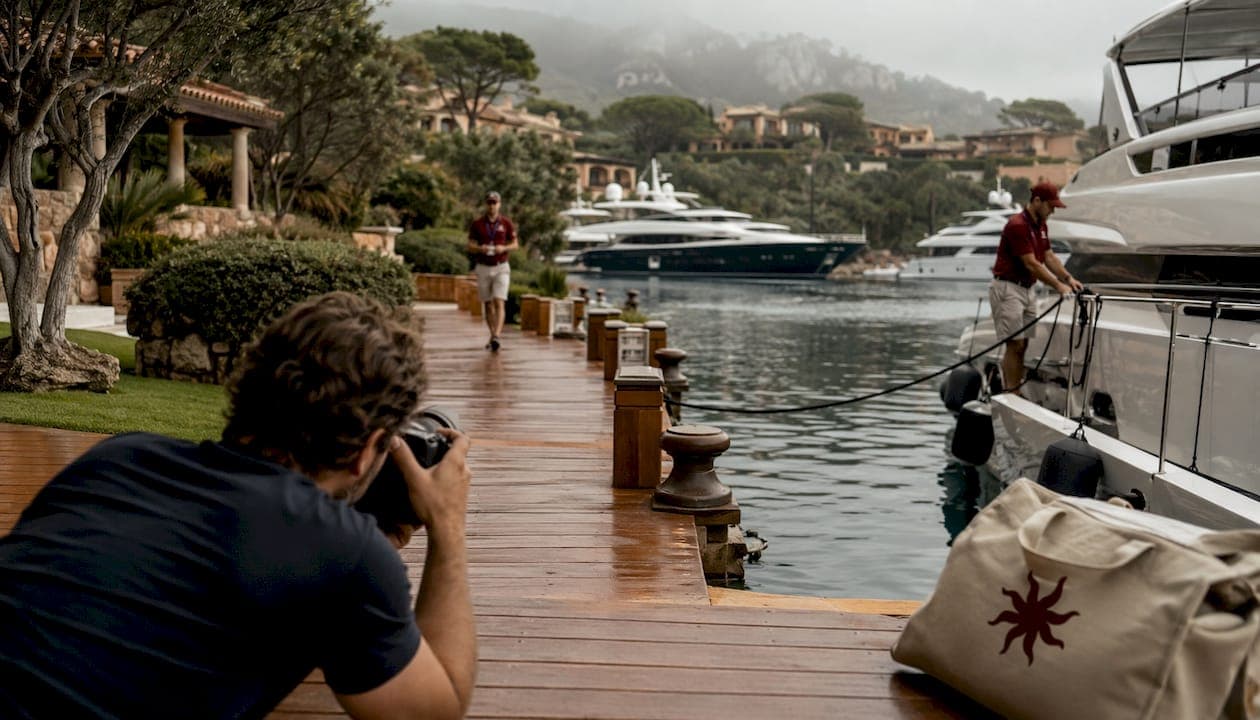
Exclusive harbours define luxury not through size or spectacle, but through something far more coveted: scarcity. When a berth cannot be bought simply by offering more money, when access is controlled and privacy is woven into the very layout of a marina, the harbour transcends amenity and becomes a prestige asset in its own right.
- Operational scarcity of berths creates genuine barriers to entry, elevating the harbour's status beyond any surface opulence
- Controlled access and security signal prestige through discretion rather than display
- Integrated premium services — concierge, provisioning, maintenance — remove friction for time-sensitive ultra-high-net-worth individuals
- Real estate synergy means that branded marina residences command measurable premiums over comparable non-waterfront properties
- Lifestyle differentiation positions the harbour as a curated world apart, where belonging itself is the luxury
The berth, not the villa, is often the primary purchase driver. As Thierry Voisin, Director at Y.CO, puts it: "The serious yacht owner doesn't choose a house and then find a berth. They secure the berth, which may take years, and then buy or build near it. Everything else is lifestyle aspiration. The berth is the operational anchor."
What features make a harbour genuinely exclusive?
The attributes that convert a harbour into a luxury destination are specific and deliberate. They do not happen by accident.
- Berth scarcity and depth capacity: Port Hercule in Monaco holds roughly 700 berths, of which approximately 15 can accommodate vessels above 60 metres. Those positions are held on annual contracts, often for decades, and effectively closed to new entrants without existing relationships.
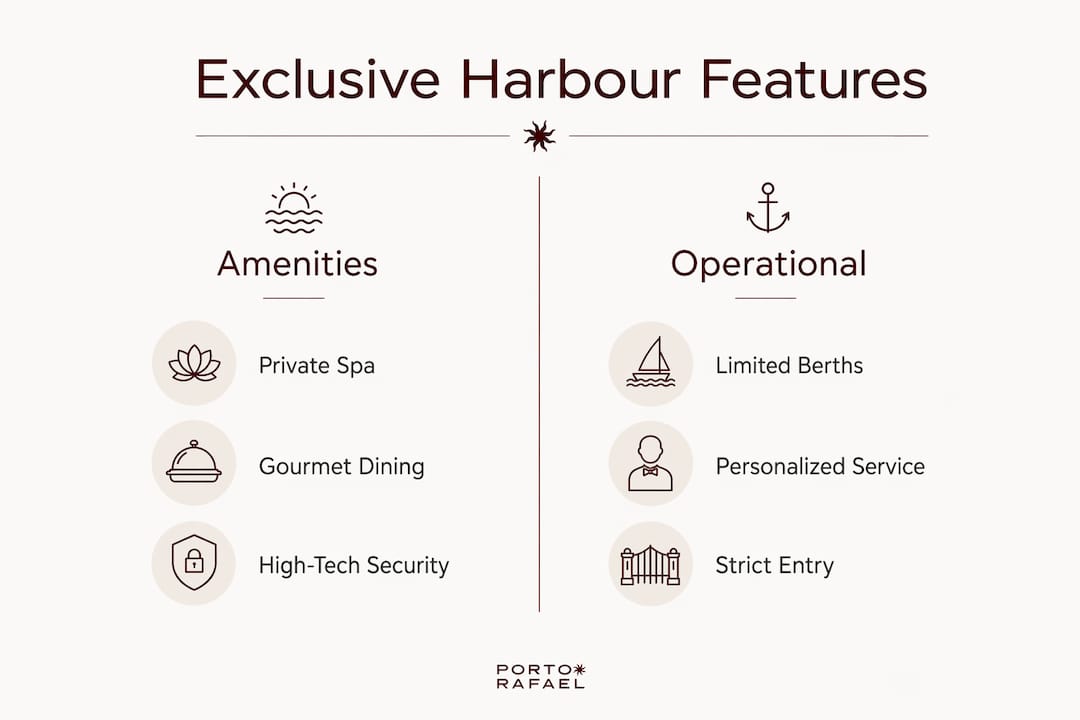
- High-security protocols: Gated perimeters, biometric access, and dedicated marina security staff create an environment where privacy is structural, not incidental.
- Integrated concierge and provisioning: The most coveted developments bundle yacht management, crew coordination, and provisioning through a single point of contact, eliminating the logistical overhead that erodes the luxury experience.
- Branded residential integration: Developments that pair guaranteed berth access with premium residences create what the market calls a turnkey solution. Branded residences command measurable premiums over non-branded properties in the same market, according to Knight Frank data.
- Low-density layout: Boutique enclaves deliberately limit berth numbers and residential density, accepting lower throughput in exchange for a more rarefied atmosphere.
- Scale versus privacy trade-offs: Larger marinas offer operational resilience and service depth, but peak-season congestion can dilute the very exclusivity that ultra-high-net-worth owners seek.
Pro Tip: When evaluating a luxury harbour, ask about berth waiting lists before anything else. A marina with no waiting list is, by definition, not yet exclusive.
What do industry experts say about exclusivity and luxury harbours?
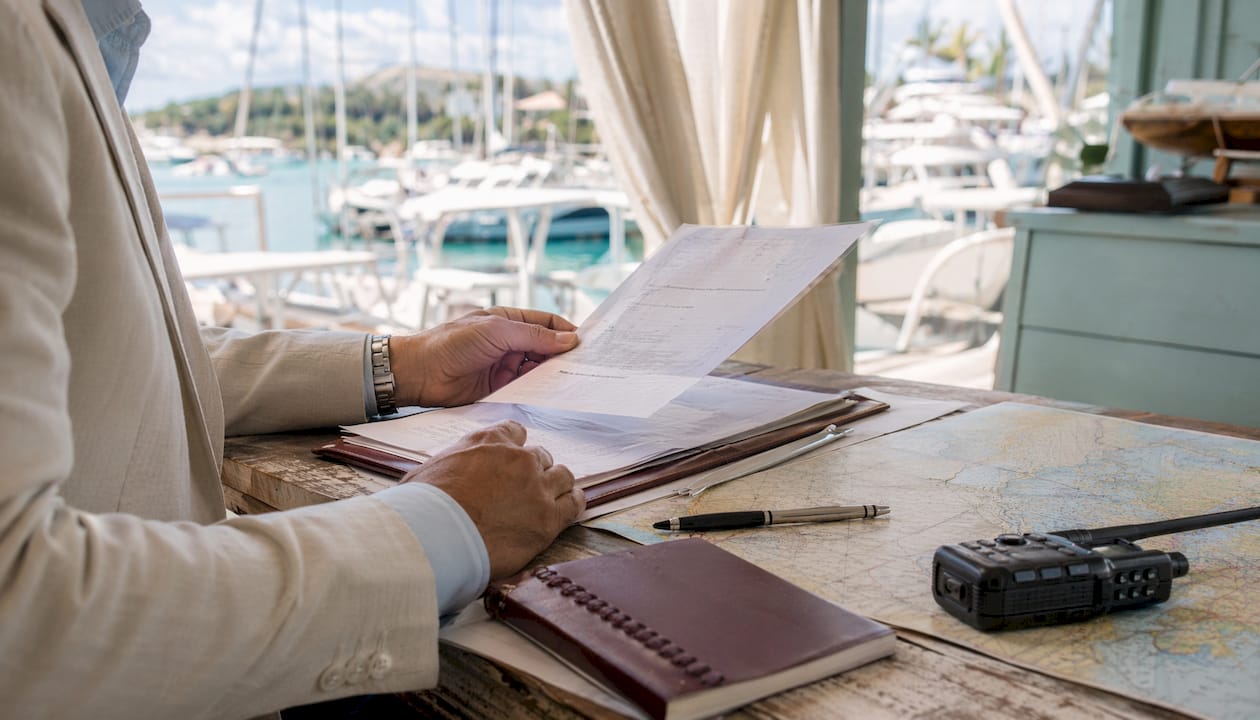
The most authoritative voices in superyacht real estate converge on a single insight: exclusivity is crafted, not inherited.
Beyond the berth-first principle, the concept of service density shapes how exclusivity is experienced day to day. A marina that controls access, curates its user base, and minimises external footfall creates a private ecosystem where prestige is felt rather than announced. This is fundamentally different from a marina that competes on throughput.
Scarcity of high-quality berths translates directly into lifestyle value and market price premiums. Where luxury yachts gather, premium brands and services follow, reinforcing a self-sustaining loop that elevates property values across the surrounding area.
How Porto Rafael embodies exclusivity in a luxury harbour
Porto Rafael, the captivating boutique village on Sardinia's Gallura coast, offers one of the Mediterranean's most compelling illustrations of how exclusivity shapes a luxury coastal experience.
| Feature | Porto Rafael's approach |
|---|---|
| Scale | Boutique, low-density village model |
| Access | Controlled, privacy-focused environment |
| Residences | Integrated marina-adjacent properties |
| Heritage | Gallura cultural and natural heritage woven throughout |
| Dining and lifestyle | Curated gastronomy, bars, and leisure within the village |
| Coastal setting | Crystal-clear waters, panoramic Sardinian seascape |
The village does not compete on volume. Its character lies precisely in what it withholds from the mass market: the noise, the crowds, the anonymity of a commercial port. Residents and guests share the same unhurried rhythm, the same aquamarine horizon, the same sense that the world beyond the headland is a distant concern.
- Cultural heritage, including the ancient Stazzo farmstead tradition of Gallura, enriches the sense of place beyond mere waterfront aesthetics
- The integration of Hotel La Piazza, Solaz Restaurant, and Rafael's Bar & Lounge creates a self-contained world of refined leisure
- Privacy and controlled access reinforce the feeling that Porto Rafael belongs to those who truly appreciate it
Pro Tip: The most enduring luxury harbour experiences combine natural beauty with cultural depth. A setting that tells a story holds its value long after the novelty of the marina infrastructure fades.
What does exclusivity actually mean in a luxury context?
Exclusivity, in the context of luxury beach lifestyle, is not simply about high prices or restricted membership. It is the deliberate management of access, scarcity, and experience to create a world that feels genuinely apart. Luxury theorists distinguish between positional goods — things whose value derives from others not having them — and mere premium goods, which are simply expensive. A berth at Port Hercule is a positional good. An overpriced hotel room is not.
In harbour contexts, exclusivity manifests as operational certainty: the knowledge that your vessel is secure, your privacy protected, and your time respected. That certainty is the rarest commodity of all.
How has exclusivity in luxury harbours evolved over time?
The notion of the exclusive harbour has ancient roots. Roman emperors maintained private anchorages along the Campanian coast; Venetian merchants controlled access to the lagoon with extraordinary precision. The modern iteration emerged in the late twentieth century, when developers recognised that the wealthiest yacht owners were not merely seeking a place to moor but a complete lifestyle proposition.
The shift accelerated after 2000, as branded marina residences fused hospitality management with nautical infrastructure. What had once been a functional necessity became a curated identity. Today, the most coveted harbours are those that have successfully translated historical prestige into contemporary operational certainty.
How do exclusive harbours compare to non-exclusive ones?
The contrast is felt before you see a single vessel. A non-exclusive harbour prioritises throughput: maximum berths, maximum turnover, maximum commercial activity along the waterfront. The atmosphere is vibrant, occasionally chaotic, and entirely public.
An exclusive harbour operates on the opposite logic. Boutique enclaves prioritising privacy accept lower berth numbers and thinner secondary markets in exchange for higher per-unit value and a more rarefied social environment. The trade-off is deliberate. For ultra-high-net-worth owners, the absence of external footfall is not a limitation. It is the point.
What economic and social impact does exclusivity have on harbour communities?
Exclusive harbours generate a distinctive economic pattern. Rather than broad, diffuse spending across many visitors, they concentrate high-value expenditure among a small, solvent clientele. Crew spending, provisioning contracts, and yacht maintenance create skilled local employment. The luxury tourism economics of exclusive waterfront destinations tend to support higher wages and longer-season activity than mass-market alternatives.
Socially, the effect is more nuanced. Exclusive developments can preserve natural coastlines by limiting construction density, yet they also restrict public access to prime waterfront areas. The most thoughtful developments, Porto Rafael among them, integrate local cultural heritage and artisan traditions into the visitor experience, creating a reciprocal relationship between the enclave and its surrounding community.
What criteria establish exclusivity in a harbour development?
Developers and buyers apply a consistent set of tests when assessing whether a harbour merits the designation of truly exclusive.
- Berth scarcity: Is demand structurally greater than supply, with waiting lists that cannot be resolved simply by paying more?
- Depth and capacity for large vessels: Can the marina accommodate superyachts above 50 metres? Technical capability is a prerequisite for the highest tier.
- Security and access control: Are perimeter security, biometric entry, and dedicated marina staff standard rather than optional?
- Service integration: Does the development offer a single point of contact for yacht management, provisioning, and residential services?
- Residential quality: Are adjacent properties of a calibre that attracts and retains ultra-high-net-worth buyers?
- Natural and cultural setting: Does the location offer something irreplaceable — a panoramic coastline, a heritage landscape, a protected bay — that cannot be replicated elsewhere?
What trends will shape exclusivity in luxury harbours going forward?
Several forces are reshaping what exclusivity means in the marina world of 2026 and beyond. Environmental credentials are becoming a genuine differentiator: harbours that offer shore power, waste management infrastructure, and low-emission provisioning attract owners who face increasing regulatory scrutiny on superyacht emissions. A marina that cannot support cleaner operations will lose relevance among the most forward-thinking owners.
Digital privacy is another emerging criterion. High-net-worth individuals increasingly expect that their movements, vessel positions, and guest lists remain beyond public tracking. Harbours that invest in communications security and data discretion will command a premium that was barely considered a decade ago. Meanwhile, the appetite for choosing private harbours in culturally rich, naturally protected settings continues to grow, as owners seek destinations that offer depth of experience alongside operational certainty.
Portorafael invites you to discover a world where the Mediterranean's timeless beauty meets the quiet confidence of true exclusivity. From the Hotel La Piazza to the gourmet pleasures of Solaz Restaurant, every detail of Porto Rafael is crafted for those who understand that the finest luxury is, above all, a sense of belonging.