
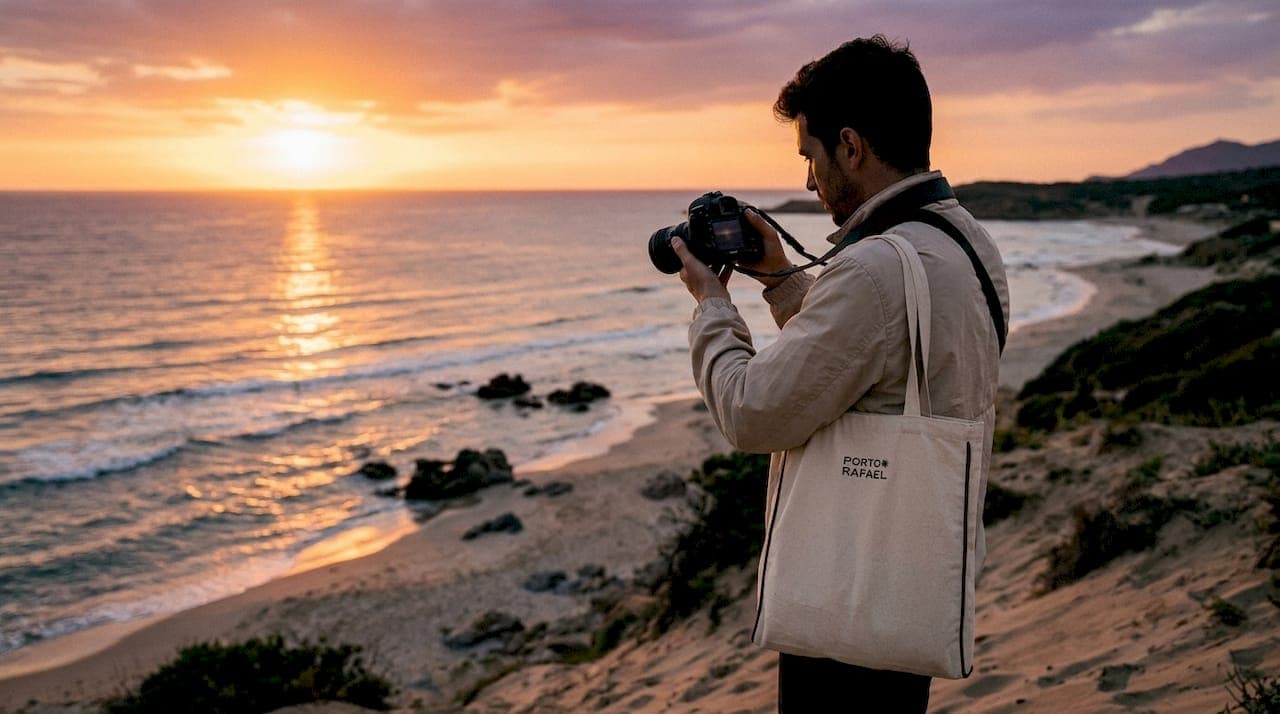
TL;DR:
- Sardinian sunsets are exceptional due to clear maritime air and dramatic geological features that enhance colors. The best viewing seasons are late September through October, with the low sun angle creating vivid, long-lasting sunsets. Many secluded spots and cultural traditions deepen the emotional and sensory experience of watching the sun set over the island.
Sardinian sunsets are defined by a rare convergence of Mediterranean light, ancient geology, and unspoiled coastline that produces colours no filter can replicate. The island sits at a latitude where the sun descends slowly into the Tyrrhenian and Mediterranean seas, stretching the golden hour far beyond what most European destinations offer. From the S'Archittu natural arch in Cuglieri to the granite headlands of the La Maddalena archipelago, Sardinia frames the setting sun with a geological theatre that is genuinely without equal. For travel enthusiasts and photographers asking why visit Sardinia, the answer begins at dusk.
Why Sardinian sunsets are exceptional: the atmospheric science
The quality of a sunset depends almost entirely on what the atmosphere does to light as the sun approaches the horizon. Sardinia's position in the central Mediterranean means the air above the island is consistently clear, low in industrial pollution, and washed by sea breezes that remove the haze found over continental coastlines. That clarity allows light to travel further through the atmosphere before it reaches your eye, intensifying the amber, rose, and violet tones that define Sardinian sunset beauty.
Shoulder seasons amplify this effect considerably. The best period for magical sunsets in Sardinia falls between late september and october, when seasonal light conditions are at their most dramatic. The reason is geometry: a lower sun angle means light passes through more atmosphere, scattering shorter blue wavelengths and leaving the warm reds and oranges dominant. The result is a palette that mid-summer, with its higher sun angle and harsher glare, simply cannot match.
The shoulder seasons of april to june and september to november also bring more variable skies. A few high clouds at the right altitude catch the last light and hold it, turning the horizon into something that resembles a slow-burning fire. Photographers who have shot sunsets across the Mediterranean consistently rate these months as superior to the peak summer period for this reason.
Pro Tip: Arrive at your chosen viewpoint at least 45 minutes before the published sunset time. The pre-sunset light, known as the blue hour in reverse, often produces the richest colours in the sky before the sun even touches the horizon.
The key atmospheric factors that create unique Sardinian sunsets include:
- Clean maritime air: sea breezes from the west and north-west push continental dust away, keeping the sky transparent.
- Low humidity in autumn: drier air in september and october reduces the milky haze that softens colours in summer.
- Stable anticyclonic conditions: high-pressure systems common in shoulder seasons deliver the clear skies that allow vivid colour contrasts between sea and cliffs.
- Extended golden hour: the lower sun angle in pre-autumn months lengthens the period of soft, directional light, giving photographers more time to compose and shoot.
What geographical features make Sardinian sunsets so distinctive?
Geography is the second reason why Sardinian sunsets stand apart. The island's western and northern coastlines face directly into the setting sun, and the terrain that frames the light is unlike anything else in the Mediterranean.
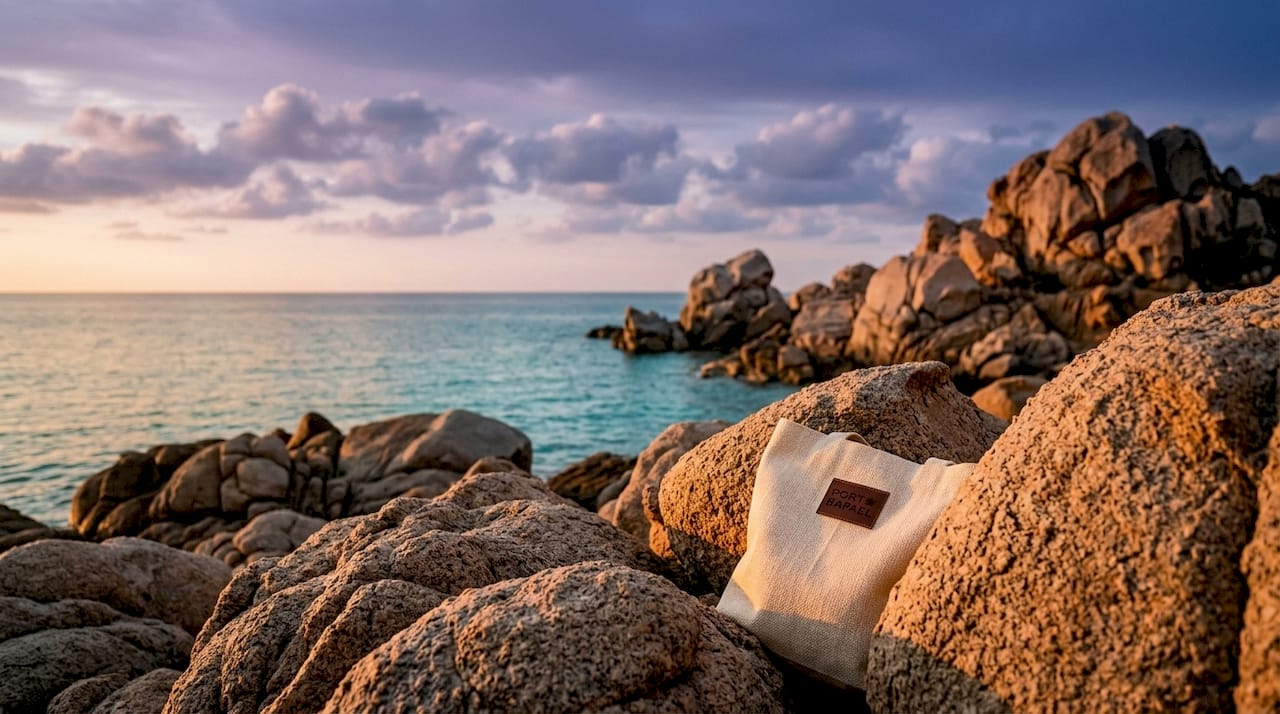
The most celebrated single event is the S'Archittu solar alignment near Cuglieri. Around the summer solstice and continuing into early july, the setting sun passes precisely through the natural limestone arch, creating a phenomenon that draws photographers from across Europe and beyond. The arch frames the sun like a lens, and the images produced have circulated internationally. This is not a casual coincidence of light and stone. It is a narrowly timed astronomical event that rewards careful planning.
Further north, the Gallura region offers a different kind of drama. The granite formations at Capo Testa and Capo d'Orso sculpt the light in ways that softer limestone cannot. As the sun descends, granite formations create evolving shadows and warm reflections across the rock faces, producing a visual depth that changes minute by minute. The La Maddalena archipelago, visible from the headlands around Punta Sardegna and Capo Ferro, adds layers of silhouetted islands to the horizon, giving the scene a painterly quality that flat coastlines cannot achieve.
Pro Tip: For Sardinia sunset photography at Capo Testa, position yourself with the granite boulders in the foreground. The warm orange light reflecting off the rock surfaces creates natural fill light that eliminates the harsh shadows common in sunset compositions.
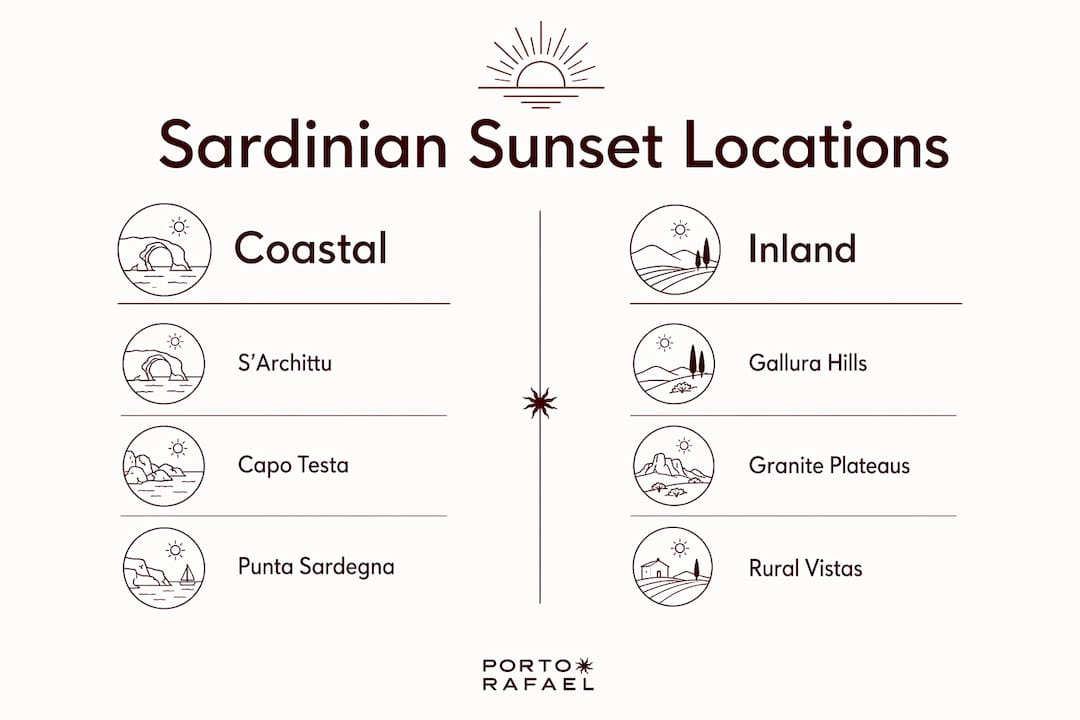
The table below compares the island's most celebrated sunset locations by their distinctive character and practical accessibility.
| Location | Distinctive quality | Best season | Accessibility |
|---|---|---|---|
| S'Archittu natural arch | Solar alignment through the arch | June to early july | Moderate walk from car park |
| Capo Testa | Dramatic granite formations | September to october | Easy, roadside access |
| Punta Sardegna | Panoramic archipelago views | April to june | Short walk from village |
| Capo Ferro | Open sea horizon, lighthouse | Year-round | Easy, road access |
| Cala del Faro | Secluded cove, intimate scale | Off-season | Moderate coastal path |
Inland locations deserve equal attention. The granite hills of the Gallura interior catch the last light at a different angle to the coast, and the absence of sea glare produces a softer, more contemplative atmosphere. These spots are rarely mentioned in mainstream travel guides, which makes them all the more rewarding for travellers who seek solitude alongside beauty.
How does Sardinia's culture shape the sunset experience?
The emotional quality of a sunset is inseparable from the context in which you watch it. Sardinia's splendid isolation from mass tourism infrastructure means that even well-known viewpoints retain an intimacy that crowded Mediterranean resorts have long since lost. Standing at a clifftop above the Tyrrhenian Sea with only a handful of other visitors changes the experience entirely. The silence, the smell of maquis scrubland, and the absence of amplified music allow the event to feel genuinely significant.
This authenticity is not accidental. Sardinia's undisturbed coastal terrain attracts visitors who value emotional engagement over commercialised spectacle. The island has resisted the kind of development that has transformed parts of the Spanish and Greek coastlines, and that restraint pays dividends at sunset. Boutique hospitality providers in the Gallura region actively encourage guests to seek out the quieter viewpoints, treating the sunset as a cultural event rather than a backdrop for social media.
The cultural dimensions that deepen the Sardinian sunset experience include:
- Local traditions: villages along the western coast have long gathered at elevated points to watch the sun set over the sea, a practice that continues informally in summer.
- Summer solstice gatherings: the S'Archittu alignment draws organised groups of visitors who treat the event with a reverence usually reserved for cultural festivals.
- Boutique hospitality: smaller hotels and guesthouses in the Gallura region orient terraces and dining spaces to face west, making the sunset a deliberate part of the guest experience.
- Earned access: many of the finest viewpoints require a short walk or a boat trip. That effort creates an emotional investment that transforms a beautiful view into a memorable experience.
Local gastronomy deepens this connection further. Sharing a plate of Sardinian charcuterie and a glass of Vermentino as the light fades is a ritual that local cuisine and travel writers consistently identify as one of the most satisfying combinations in Mediterranean travel.
What practical tips should travellers and photographers follow?
Planning is the difference between a good sunset and an extraordinary one. The following steps give travellers and photographers the best possible chance of experiencing Sardinia's finest light.
-
Choose the right months. The shoulder seasons of april to june and september to october deliver the most vivid colours and the longest golden hour. October in particular offers superior photographic light quality compared to the harsh mid-summer sun.
-
Plan the S'Archittu visit carefully. The solar alignment through the arch occurs around the summer solstice and runs into early july. Arrive early and book seating in advance, as the event draws significant crowds and the best positions fill quickly.
-
Explore the Sardinian coastal stops beyond the famous names. Cala del Faro and the inland granite hills of Gallura offer secluded sunset perspectives that the popular headlands cannot match for solitude.
-
Arrive at least 45 minutes early. Popular spots such as Capo Testa and Punta Sardegna fill up in the final 20 minutes before sunset. Earlier arrival secures the best position and allows time to compose shots without pressure.
-
Use a wide-angle lens with a polarising filter. The combination reduces sea glare and deepens the blue of the water, creating stronger contrast against the warm tones of the sky. A tripod is worth carrying for the post-sunset blue hour, when light levels drop quickly.
-
Consider off-season travel benefits for the quietest experiences. September and october bring fewer visitors, cooler temperatures, and the richest light of the year. The combination makes these months the single best time for both photography and contemplative sunset viewing.
Pro Tip: Shoot in RAW format rather than JPEG. The dynamic range between a bright sky and a dark foreground at sunset exceeds what JPEG compression can handle. RAW files preserve the shadow detail in the rocks and cliffs that makes Sardinian sunset images so three-dimensional.
What I have learned watching the sun set over Sardinia
The first time I watched the sun drop behind the Tyrrhenian Sea from a granite headland in Gallura, I understood immediately that this was a different category of experience from other Mediterranean sunsets I had witnessed. The light did not simply fade. It transformed, moving through amber, copper, and finally a deep rose that held the sky for longer than seemed physically possible.
What separates Sardinian sunsets from those I have seen along the French Riviera or the Aegean coast is not just the colours. It is the silence. The absence of resort noise, the smell of the maquis in the cooling air, and the sense that the landscape itself is participating in the event create an emotional register that is genuinely rare. Other coastlines offer beautiful light. Sardinia offers a complete sensory experience.
My honest view is that most travel writing undersells the shoulder seasons. September and october in Gallura are not a consolation prize for travellers who missed the summer. They are the main event. The light is softer, the crowds are thinner, and the colours are richer. Photographers who visit in july and return in october consistently say the october images are the ones they print and frame.
The hidden spots matter as much as the famous ones. Capo Testa is magnificent, but the unnamed granite outcrops a ten-minute walk from the road offer something the popular viewpoints cannot: the feeling that you have found something yourself. That sense of discovery is what makes Sardinian sunsets feel personal rather than performative.
— Studio
Porto Rafael: where the sunset is part of the stay
Porto Rafael sits in the Gallura region of northern Sardinia, within easy reach of Capo Testa, Punta Sardegna, and the La Maddalena archipelago viewpoints. The boutique village is built around the idea that beauty should be unhurried, and the west-facing terraces of Hotel La Piazza reflect that philosophy directly.
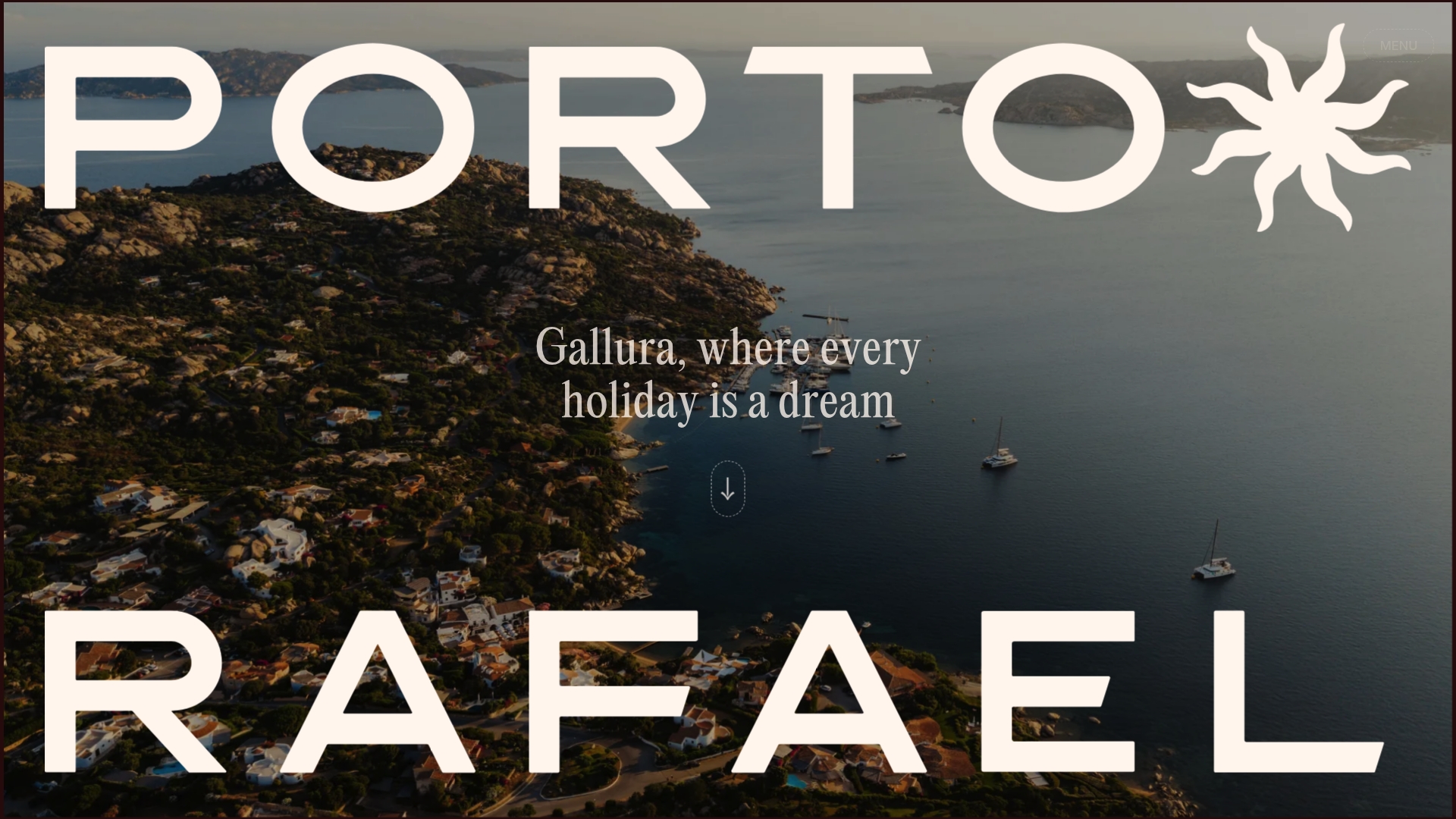
Guests at Portorafael watch the sun descend over the archipelago from their rooms or from the terrace of the Solaz Restaurant, where the kitchen draws on Gallura's finest seasonal produce. The full gastronomy offering at Portorafael, from gourmet dining to cocktails at Rafael's Bar & Lounge, is designed to complement the natural spectacle rather than compete with it. For travellers who want the finest sunsets in Sardinia paired with genuine comfort and local flavour, Porto Rafael is the natural choice.
FAQ
Why are Sardinian sunsets considered exceptional?
Sardinian sunsets combine clean maritime air, a western-facing coastline, and dramatic geological formations to produce colours and light quality that are rare in the Mediterranean. The shoulder seasons of september and october extend the golden hour and intensify warm tones significantly.
What is the best time of year for Sardinian sunset photography?
The best period for vivid, photogenic sunsets falls between late september and october, when lower sun angles produce softer light and richer colour contrasts between sea and cliffs.
What is the S'Archittu sunset phenomenon?
S'Archittu is a natural limestone arch near Cuglieri that aligns precisely with the setting sun around the summer solstice, creating a rare astronomical event where the sun appears to set inside the arch. Early arrival and advance seating reservations are strongly advised.
Which locations offer the best sunset views in Sardinia?
Capo Testa, Punta Sardegna, Capo Ferro, and the La Maddalena archipelago viewpoints are among the finest. S'Archittu offers the most dramatic single event, while secluded spots such as Cala del Faro provide quieter, more contemplative experiences.
Does Sardinia's low tourism development affect the sunset experience?
Sardinia's limited mass tourism infrastructure means popular sunset viewpoints remain intimate and uncrowded compared to other Mediterranean destinations. That tranquility transforms a beautiful view into a genuinely emotional experience.