
TL;DR:
- Organising Sardinian art workshops involves selecting authentic crafts, engaging participants with meaningful storytelling, and choosing well-equipped venues.
- Effective marketing emphasizes cultural depth and collaborates with local artisans, while careful planning ensures participant engagement and comfort.
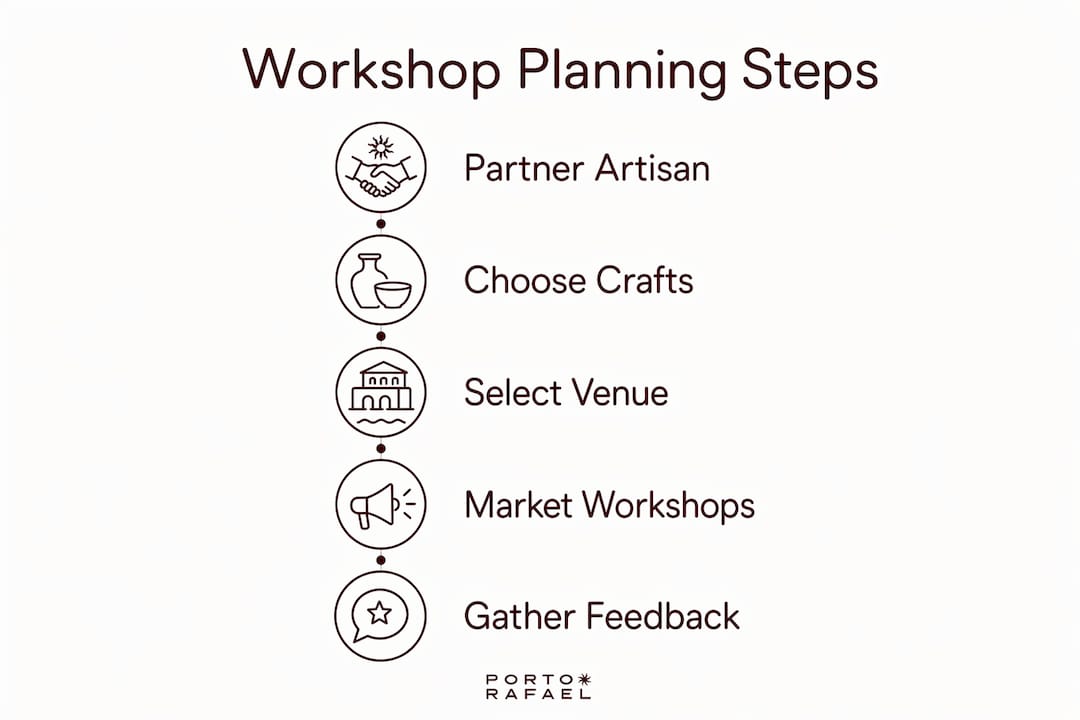
Organising Sardinian art workshops successfully means selecting crafts rooted in genuine island tradition, structuring sessions that hold attention from start to finish, and choosing venues that feel worthy of the culture you are celebrating. The steps below form the practical spine of any well-run event, whether you are planning a single afternoon in a rented studio or a multi-day creative retreat in Gallura.
- Define your workshop's core craft and cultural theme before booking anything
- Identify your audience: beginners seeking cultural discovery, or practised makers wanting depth?
- Secure a venue with natural light, sturdy tables, and climate control
- Source materials in advance and prepare tiered purchasing options for participants
- Build your marketing around cultural authenticity, not just the activity itself
- Plan a structured session with clear segments: introduction, demonstration, practice, reflection, and close
Pro Tip: Partner with a local Sardinian artisan from the outset. Their presence transforms a themed class into a genuine cultural encounter, and participants consistently leave with a richer sense of what they have made and why it matters.
Which Sardinian crafts work best for a workshop setting?
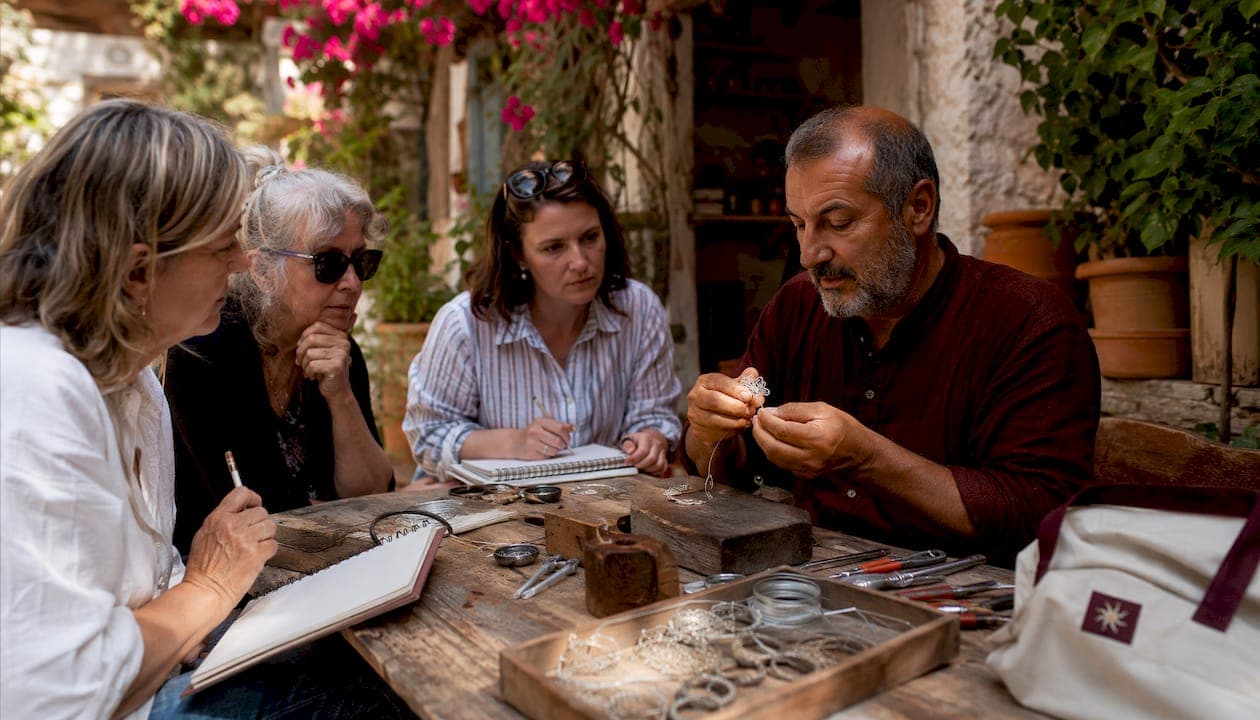
Sardinia's craft heritage is among the most layered in the Mediterranean, and choosing the right tradition shapes everything from your materials list to your marketing copy. The island's key traditional crafts include ceramics from Assemini and Oristano, carpet and textile weaving from Nule, Mogoro, and Samugheo, basketry centred on Castelsardo, and filigree gold and silver smithing found across Cagliari, Dorgali, and Ozieri.
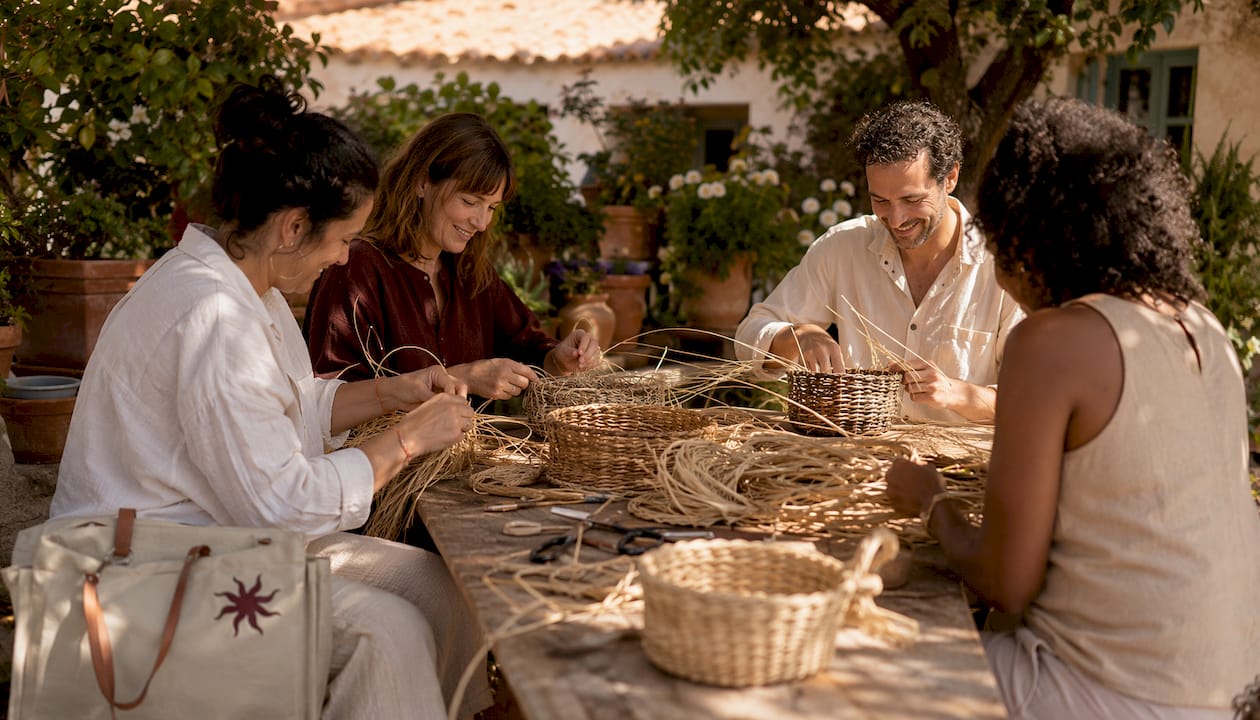
For a UK audience new to Sardinian arts and crafts, basket-making and ceramics tend to be the most accessible entry points. Both produce a finished object within a single session, which matters enormously for participant satisfaction. Weaving and filigree reward longer formats, such as a weekend retreat, where the complexity of the technique becomes part of the appeal rather than a barrier.
- Pottery and ceramics: tactile, forgiving for beginners, and deeply tied to Sardinian domestic life
- Basketry: the Castelsardo tradition uses dwarf palm leaves and produces striking, portable souvenirs
- Textile weaving: vertical and horizontal loom techniques from the Barbagia region carry centuries of pattern language
- Filigree goldsmithing: demanding but captivating; best suited to small groups with prior craft experience
Cultural storytelling is what separates a good workshop from a memorable one. Weave the history of each craft into your demonstration: why certain colours appear in Nule carpets, what the geometric motifs on Oristano ceramics signify, how the farm-to-art tradition connects land, material, and maker. That context gives participants something to carry home beyond the object itself.
Pro Tip: Encourage participants to purchase a finished piece directly from the artisan at the close of the session. It supports the maker's livelihood, preserves heritage, and gives the buyer a keepsake with genuine provenance.
How do you structure a Sardinian art workshop for real engagement?
A well-structured workshop follows a rhythm that participants feel even if they cannot name it. The sequence below is proven across creative disciplines and adapts naturally to Sardinian craft formats:
- Introduction (10–15 minutes): welcome the group, set the cultural context, outline what everyone will make
- Demonstration (15–20 minutes): the artisan or facilitator shows the full technique, narrating each step clearly
- Hands-on practice (30–45 minutes): participants work at their own pace while you circulate and offer individual guidance
- Break and reflection (10 minutes): rest, refreshments, and informal conversation about the process
- Closing (10 minutes): share finished or in-progress work, celebrate effort, explain next steps or where to find the craft locally
Group size shapes how well this structure holds. Around ten participants is the sweet spot for intricate crafts like weaving or filigree, where hands-on correction is part of the learning. For ceramics or basketry, groups of up to twelve remain manageable. Beyond that, individual attention thins and the experience loses its intimacy.
Flexible planning is not a fallback position; it is the plan. If participants move faster than expected, have an extension activity ready. If energy dips mid-afternoon, take a proper break rather than pushing through. The best facilitators adapt to what is actually happening in the room, not what the schedule says should be happening.
What makes a venue right for art workshop activities?
Venue choice is one of the decisions that most organisers underestimate until something goes wrong. Natural light is the single most important factor for craft work: it reveals colour accurately, reduces eye strain, and lifts the atmosphere of the room. If natural light is limited, supplement with adjustable task lighting rather than relying on overhead fluorescents alone.
Beyond light, the practical checklist for a Sardinian art workshop venue looks like this:
- Sturdy tables at a comfortable working height, with enough surface area per person to spread materials without crowding
- Accessible, clean restrooms within the same building
- Climate control, particularly for summer workshops in Sardinia where afternoon heat can be intense
- A designated area for wet or messy materials, away from bags and personal belongings
- On-site refreshments, or the ability to bring them in; participants who leave to find food disrupt the session's rhythm
For UK organisers planning workshops in Sardinia itself, the event hosting logistics of the island reward careful advance planning. Supply chains can be slower than in the UK, and certain specialist materials may need ordering weeks ahead.
Pro Tip: Schedule workshops to avoid the afternoon siesta window and local religious holidays, particularly Ferragosto in august. Both affect supplier availability and participant energy in ways that are easy to overlook from a UK planning desk.
How do you market Sardinian art workshops to a UK audience?
UK audiences drawn to cultural enrichment respond to specificity, not generality. "Learn traditional Sardinian basket-weaving with a Castelsardo artisan" will always outperform "Sardinian craft experience." The craft, the place, and the human expert are the story; your marketing strategy should lead with all three.
- Use Instagram and Pinterest for visual storytelling: photographs of finished pieces, artisan hands at work, and the workshop setting itself
- Reach art communities through local networks, craft guilds, and cultural societies with existing interest in Mediterranean heritage
- Collaborate with cultural institutions, Italian cultural institutes, and tourism bodies to reach audiences already primed for the subject
- Share photographs and genuine participant reflections from previous workshops; real images of real people making things carry more weight than polished promotional copy
- Highlight the community aspect explicitly: many participants attend as much for the social experience as the craft itself
Promoting local craft markets in Sardinia alongside your workshop adds context and gives participants a reason to extend their visit. That combination of making and buying is a powerful draw for culturally motivated travellers.
Is running Sardinian art workshops financially worthwhile?
The short answer is yes, provided you cost everything honestly before setting your price. The main expense categories are materials, venue hire, artisan or facilitator fees, marketing, and any travel or accommodation costs if the workshop is held in Sardinia. Materials for craft workshops vary considerably by discipline: ceramics require clay, glazes, and kiln access, while basketry needs relatively little beyond the raw plant fibres.
Pricing should reflect the full cost of delivery plus your time, not just the materials you hand out. Tiered pricing, where participants can choose a basic or premium materials package, broadens your audience without diluting the experience. Early-bird rates help with cash flow and give you a clearer picture of demand before the event date.
- Factor in preparation time, communication with participants, and post-workshop administration when calculating your hourly return
- Offer materials for sale at the end of the session for participants who want to continue at home
- Refreshments provided on-site can be priced into the ticket or offered as a light add-on
Pro Tip: Bundling two workshop sessions on the same day, as experienced facilitators often recommend, makes the most of your preparation time and venue costs without doubling your workload.
How do you measure workshop success and improve over time?
Feedback gathered immediately after a session is more honest than feedback collected days later. A short written survey of three to five questions, completed before participants leave, captures impressions while they are still vivid. Ask specific questions: "What was the most useful part?" and "What would you change?" yield far more usable answers than "Did you enjoy it?"
Observation during the session itself is equally telling. Note where energy dropped, which part of the demonstration prompted the most questions, and whether anyone seemed lost or unsupported. These in-room observations often reveal structural issues that post-event surveys miss entirely.
A follow-up email sent within a week serves two purposes: it thanks participants and invites them to share what they have done with their new skills since attending. That second touchpoint builds the kind of ongoing relationship that turns a one-time attendee into a returning participant, and a returning participant into someone who recommends the workshop to others.
Why cultural immersion matters more than technique alone
The workshops that endure in participants' memories are rarely the ones where they learned the most technically. They are the ones where they felt genuinely connected to something larger than themselves. Building community within a workshop is central to its success, and that community does not form by accident. It forms when the facilitator creates space for conversation, when the artisan shares something personal about their practice, and when participants feel that their presence in the room has meaning beyond completing a project.
Flexibility in planning is not a concession to chaos; it is a mark of confidence. A facilitator who can read the room and adjust the pace, extend a demonstration that has sparked genuine curiosity, or shorten a segment that has run its course, creates an experience that feels alive rather than scripted. That responsiveness is what participants describe when they recommend a workshop to someone else.
The Sardinian artisan community carries knowledge that cannot be found in any manual. Partnering with generational experts, people who learned their craft from a parent or grandparent, transforms a themed class into something that genuinely honours the culture it draws from. That distinction is felt by participants, and it shows in the quality of the work they take home.
Porto Rafael: where Sardinian culture meets considered hospitality
For workshop organisers and participants seeking a base that embodies the spirit of Sardinia, Porto Rafael in Gallura offers something rare: a boutique village where artisan heritage, crystalline waters, and unhurried Mediterranean life exist in genuine harmony. The Hotel La Piazza provides adults-only accommodation of quiet elegance, ideal for facilitators who need a restorative retreat between sessions, or for participants who wish to extend their cultural immersion beyond the workshop itself.
Portorafael sits at the heart of a region where the Sardinian artisan tradition is still very much alive, from the filigree workshops of nearby towns to the weavers of the Gallura interior. Guests can move between a morning of craft-making and an evening at Solaz Restaurant, where the kitchen draws on the same local producers and seasonal rhythms that inspire the island's artists. For organisers planning art workshop ideas in Sardinia with a genuine cultural foundation, Porto Rafael is a natural and captivating starting point.