
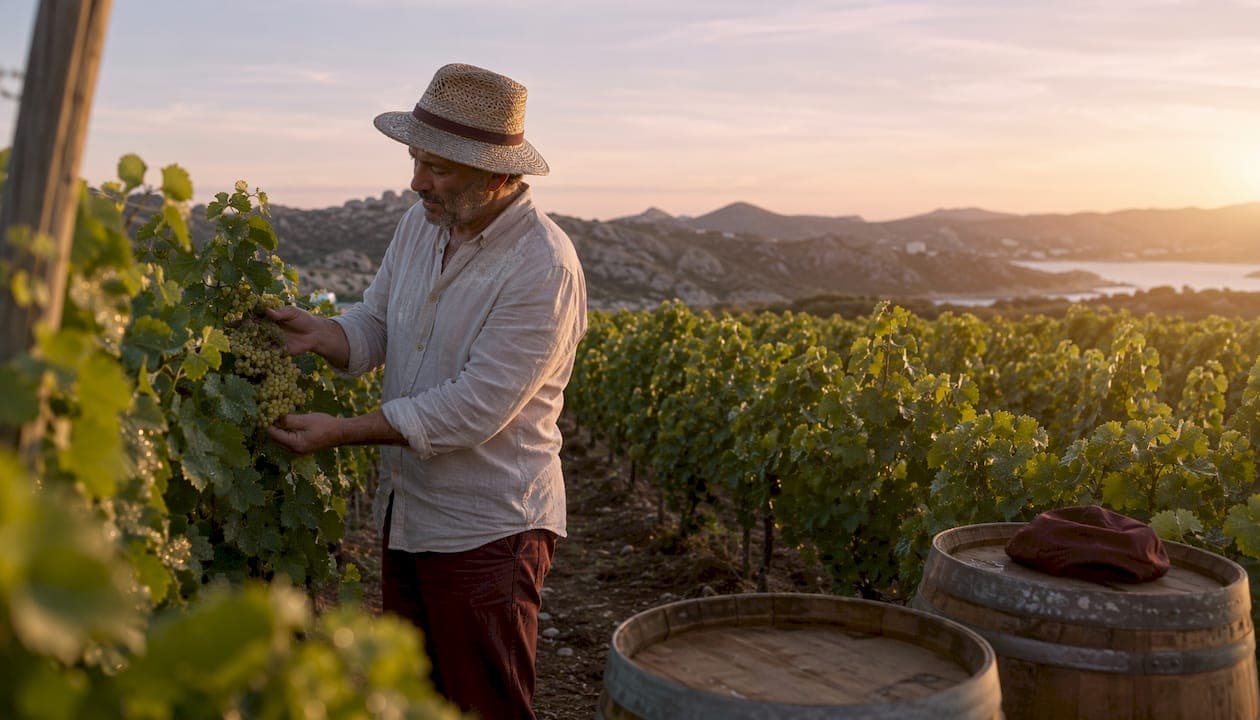
Vermentino is Sardinia's signature white grape and the island's most eloquent ambassador to the wider wine world. For any visitor arriving in Gallura, it is the wine to seek first: fresh, saline, mineral, and unmistakably of this place. Look for bottles labelled Vermentino di Gallura DOCG, which restricts production to 23 municipalities in north-eastern Sardinia and demands at least 95% Vermentino in the blend, or the broader Vermentino di Sardegna DOC, which covers the entire island at a minimum of 85% Vermentino. By late 2025, Vermentino had become Sardinia's most planted white grape, accounting for a significant portion of the island's vineyard area, around one-fifth approximately, even as total plantings declined.
- Vermentino di Gallura DOCG: Sardinia's sole DOCG; granite soils, sea breezes, intense minerality.
- Vermentino di Sardegna DOC: island-wide category; more stylistic variety, accessible entry point.
- Practical takeaway: prioritise boutique producers and DOCG-labelled bottlings for the most authentic, site-expressive experience.
Why Vermentino matters to Sardinia's culture and your visit
The grape's rise is striking. Vermentino plantings almost doubled across Sardinia between 1990 and 2022, even as the island's overall vineyard area contracted, a clear signal of where producers and the market place their confidence. Two-thirds of Sardinian Vermentino production concentrates in the northern province of Sassari, making Gallura the most relevant subregion for anyone staying in Porto Rafael.
The grape thrives here for reasons rooted in geology and climate. Gallura's decomposed granite soils carry naturally low pH, preserving acidity and transferring a saline-mineral signal to the wine that mass-market versions rarely replicate. The near-constant Maestrale wind dries the vines nightly, reducing disease pressure and concentrating aromatic precursors. Day-to-night temperature swings, particularly at elevations below 500 metres, sharpen the wine's characteristic freshness. Vermentino buds early and ripens in mid-season, completing its phenological cycle quickly and intensely under Gallura's vivid light.
Culturally, Vermentino shapes the table in ways that feel inseparable from Sardinian identity. It appears on virtually every seaside restaurant list, poured alongside bottarga, grilled fish, and fresh pecorino. Local festivals celebrate the harvest each autumn, and the wine has become a point of regional pride that Gallura's unique character has long nurtured. For a visiting traveller, tasting a well-made Gallura DOCG is less a wine experience than a geography lesson in a glass.
Pro Tip: Ask specifically for a 'Superiore' bottling when dining in Gallura. The higher minimum alcohol (13% ABV) signals riper fruit, lower yields, and a winemaker who has taken the grape seriously.
Vermentino di Gallura DOCG versus Vermentino di Sardegna DOC
Understanding the two official categories helps you order with confidence at any enoteca or restaurant table.
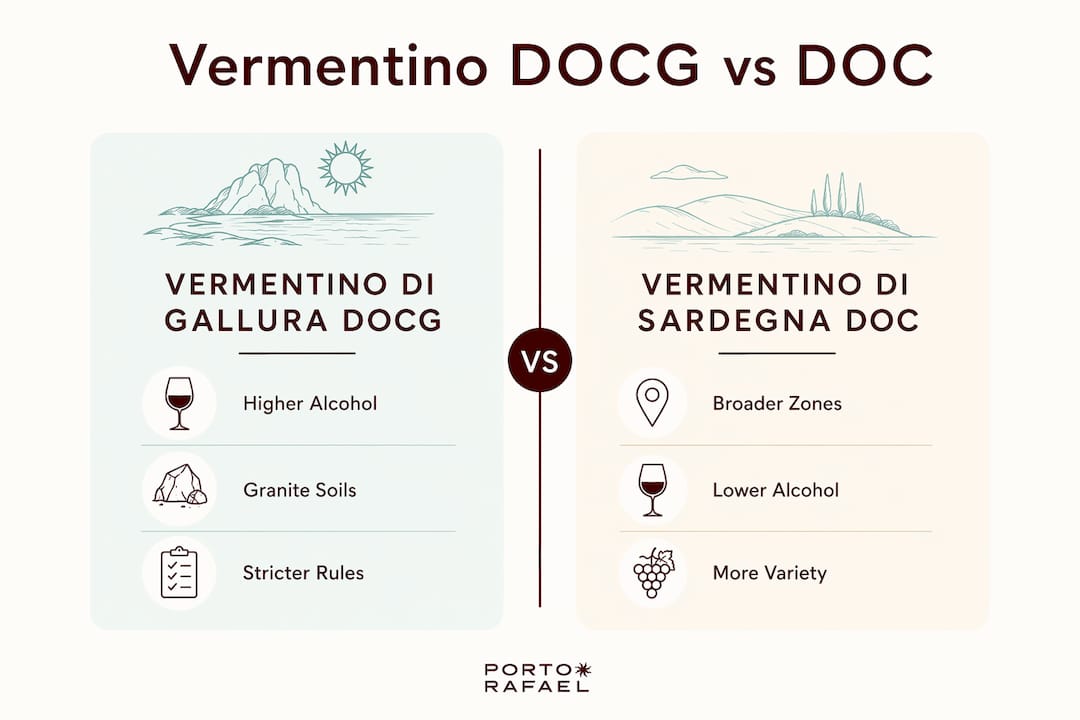
| Regulated dimension | Vermentino di Gallura DOCG | Vermentino di Sardegna DOC |
|---|---|---|
| Geographic scope | 23 municipalities, north-east Sardinia | Entire island of Sardinia |
| Minimum Vermentino | 95% | 85% |
| ABV minimum (still) | 12% (Superiore: 13%) | — |
| Yield cap | 10 t/ha standard; 9 t/ha Superiore | Not specified at DOCG level |
| Permitted styles | Still, Frizzante, Spumante, Superiore, Passito, Vendemmia Tardiva | Still, Frizzante, Spumante |
The DOCG's granite-driven terroir produces wines of greater structural tension and sharper acidity than the broader DOC category, where calcareous clay soils in the south yield softer, more fruit-forward expressions. Both are worth knowing.
- DOCG on a label means north-eastern Gallura, granite soils, and tighter production rules.
- DOC signals island-wide origin; quality varies considerably by producer and subzone.
- Superiore within the DOCG indicates lower yields and higher minimum alcohol, a reliable quality marker.
- Frizzante or Spumante styles exist under both appellations and pair beautifully with aperitivo.
How Vermentino shapes Sardinian dining and what to order
Vermentino's aromatic profile centres on white stone fruit, citrus peel, white flowers, and a distinctive almond-bitter finish, with a saline, mineral thread running through the mid-palate. That combination makes it a natural companion for coastal Sardinian cuisine in a way few other white grapes can match.
- Bottarga: the grape's salinity mirrors the cured mullet roe's oceanic depth.
- Grilled fish and crustacea: citrus brightness cuts through richness without overwhelming delicate flesh.
- Fregula with clams: the herbal, mineral notes echo the briny broth.
- Fresh pecorino and herb-led vegetable dishes: floral aromatics and lively acidity keep the pairing light.
- Superiore or amphora-aged expressions: serve these with more substantial dishes; the added texture and weight hold their own against richer sauces.
Serve standard Vermentino di Gallura at 10–12°C to preserve its aromatic lift. A Superiore or lees-aged bottling benefits from a degree or two warmer, allowing its textural complexity to open. Some producers use amphorae or lees contact to create ageworthy, structured expressions well beyond the young, stainless-steel style most visitors encounter first.
Pro Tip: When asking a sommelier for a recommendation, say "un Vermentino di Gallura DOCG di un produttore artigianale" — a DOCG from an artisanal producer. That phrase signals you want a boutique label, not a supermarket bottling.
Where to taste Vermentino in Gallura and around Porto Rafael
Two-thirds of Sardinian Vermentino production concentrates in the north, placing Porto Rafael at the heart of the finest tasting territory on the island. The experiences worth seeking range from intimate cellar visits to seaside flights.
- Boutique cellar tours: small Gallura producers welcome visitors for guided tastings that walk through DOCG regulations, soil samples, and barrel or amphora demonstrations.
- Seated vineyard pairings: a table among the vines with a paired seafood lunch is the most immersive way to understand how granite soils translate into the glass.
- Enoteca flights: local wine shops in Olbia and Arzachena offer curated flights comparing DOCG, Superiore, and amphora-aged expressions side by side.
- Boat and winery combinations: pairing a morning on the water with an afternoon cellar visit is a natural Gallura itinerary; exploring Sardinia by boat before a winery stop makes for an effortlessly memorable day.
Book boutique cellar visits at least two to three weeks ahead during July and August; many small producers limit group sizes to preserve the quality of the experience. May, June, and September offer cooler mornings, quieter roads, and winemakers with more time to talk.
"Gallura's granite soils are central to the area's identity; local winemakers cite the granite–sea interplay as the key to Vermentino di Gallura's minerality and ageing potential." — Great Italian Food Trade
At Portorafael, the Solaz Restaurant features locally sourced Gallura produce alongside a wine list that celebrates the region's DOCG bottlings. Rafael's Lounge Bar offers a more relaxed setting for an aperitivo flight. Both venues are natural starting or ending points for any Vermentino-focused day, with the team at Hotel La Piazza well placed to arrange private transfers to nearby producers.
How to spot a high-quality Vermentino and avoid mass-market bottles
As Vermentino's global profile rises, the commercial risk grows alongside it. Higher demand can push yields upward, diluting the very minerality and concentration that make the grape worth seeking.
Use this checklist before ordering or buying a bottle:
- Check the appellation: DOCG over DOC when quality is the priority; look for 'Superiore' for the highest tier.
- Read the label for producer detail: estate-bottled, single-vineyard ('vigna'), or named-plot mentions indicate a producer invested in site expression.
- Look for winemaking notes: amphora ageing, lees contact, or restrained oak signals a producer working beyond the commodity style.
- Assess the price point: very cheap Vermentino without estate information is almost always a high-yield, low-concentration bottling.
- Taste for acidity and finish: lively acidity, a saline mineral thread, and that characteristic almond-bitter finish are the hallmarks of genuine Gallura character. A flat, short finish suggests over-cropped fruit.
- Ask the vintage: Vermentino is generally best young and fresh, though Superiore and amphora-aged expressions can reward two to four years of cellaring.
A half-day Vermentino itinerary from Porto Rafael
This sequence works beautifully from late May through September, with mornings cool enough for vineyard walks and afternoons warm enough for a seaside return.
- 8:30 AM — Breakfast at Hotel La Piazza. Begin at Portorafael's boutique hotel, where the team can arrange a private transfer to a boutique Gallura producer.
- 9:30 AM — Vineyard walk and cellar visit. Arrive at a small DOCG estate for a guided walk through granite-soil vineyards, followed by a cellar tour covering fermentation, lees ageing, and amphora techniques.
- 11:00 AM — Seated tasting. A structured flight comparing standard DOCG, Superiore, and an amphora or oak-aged expression, with the winemaker present to explain each style.
- 12:30 PM — Paired seafood lunch. Many boutique producers offer a simple, locally sourced lunch on-site; alternatively, a short transfer brings you to a coastal trattoria for grilled fish and bottarga alongside your chosen bottle.
- 2:30 PM — Seaside stop or boat return. A brief stop at a granite-fringed cove before your private transfer back to Porto Rafael, or combine with a Mediterranean sailing experience for a full coastal day.
- Evening — Aperitivo at Rafael's Lounge Bar. Close the day with a Vermentino Frizzante or a DOCG flight at Portorafael's lounge, paired with local charcuterie and the last of the Gallura light.
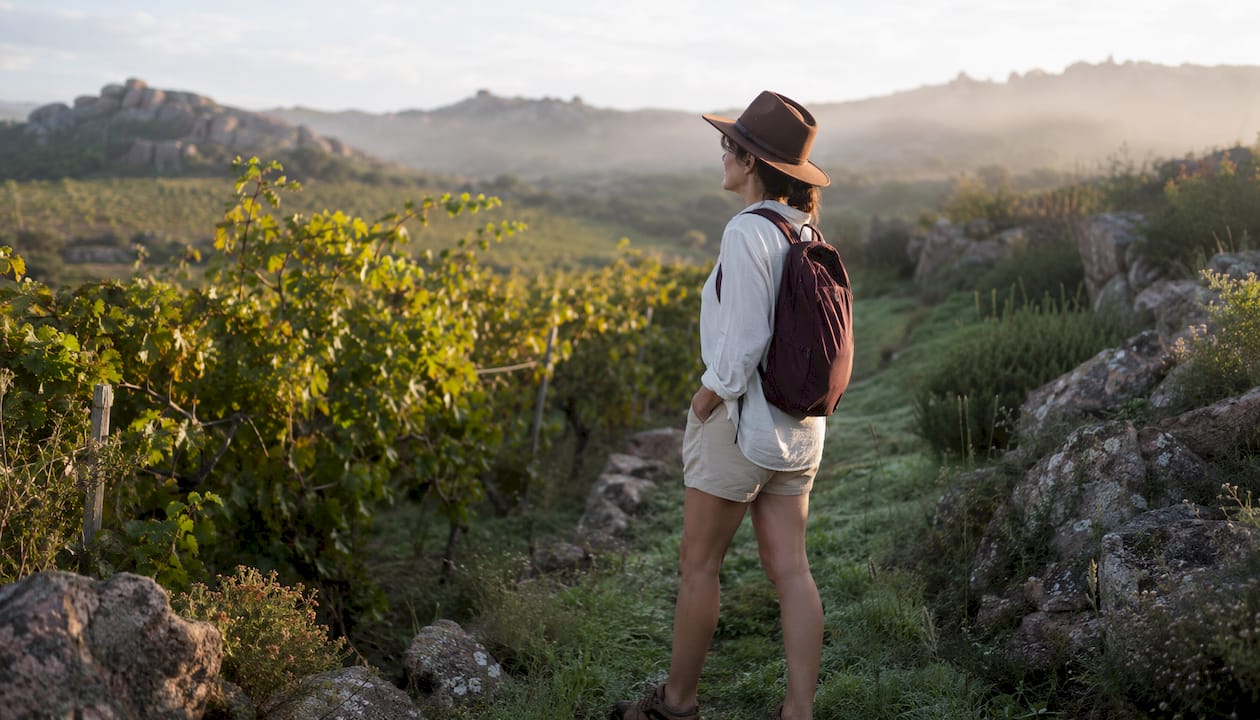
Pro Tip: Morning vineyard walks, before 10 AM, offer the clearest views across the granite hills and the coolest conditions for tasting. Wines show their aromatics most vividly when both the air and the glass are fresh.
A note from Portorafael on welcoming guests to Gallura's wines
At Portorafael, the connection between place and glass is something the team holds close. Gallura's Vermentino is not simply a wine on a list; it is a living expression of the granite, wind, and light that define this corner of Sardinia. Guests staying at Hotel La Piazza are welcomed with local knowledge: which producers are pouring exceptional DOCG this season, which enoteca has the most thoughtful Superiore selection, and how to arrange a private vineyard transfer that feels unhurried and genuinely personal.
The Sardinian food experiences curated through Portorafael extend naturally into wine: cooking classes pair Vermentino with regional dishes, and the Solaz Restaurant team can guide guests through a pairing menu that moves from Frizzante aperitivo to a structured Superiore alongside the main course.
Reserve your Vermentino experience at Portorafael
Portorafael offers something the independent traveller rarely finds: a single, trusted point of contact for every element of a Gallura wine day. From a gourmet dinner at Solaz Restaurant paired with DOCG bottlings, to a relaxed Vermentino flight at Rafael's Lounge Bar, to a bespoke vineyard transfer arranged through the hotel concierge, the full experience is available in one place. Browse Porto Rafael's gastronomy offerings and reserve your table, tasting, or stay directly with the team.