
TL;DR:
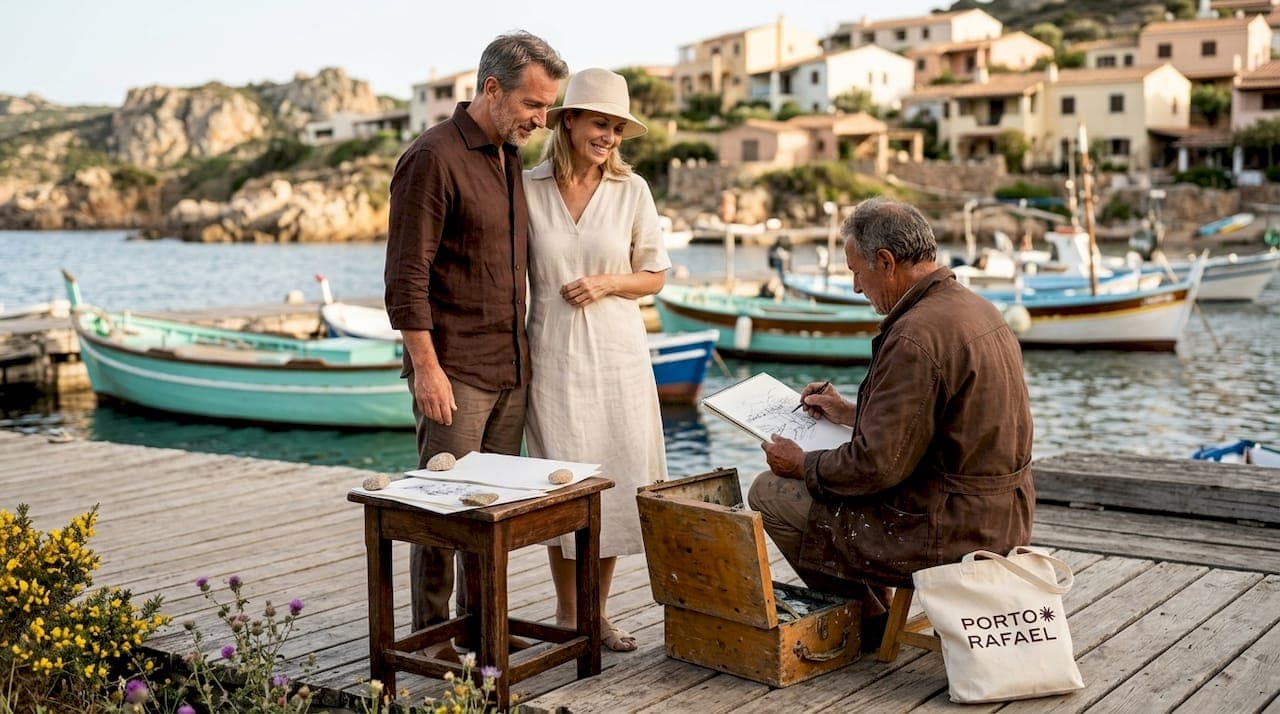
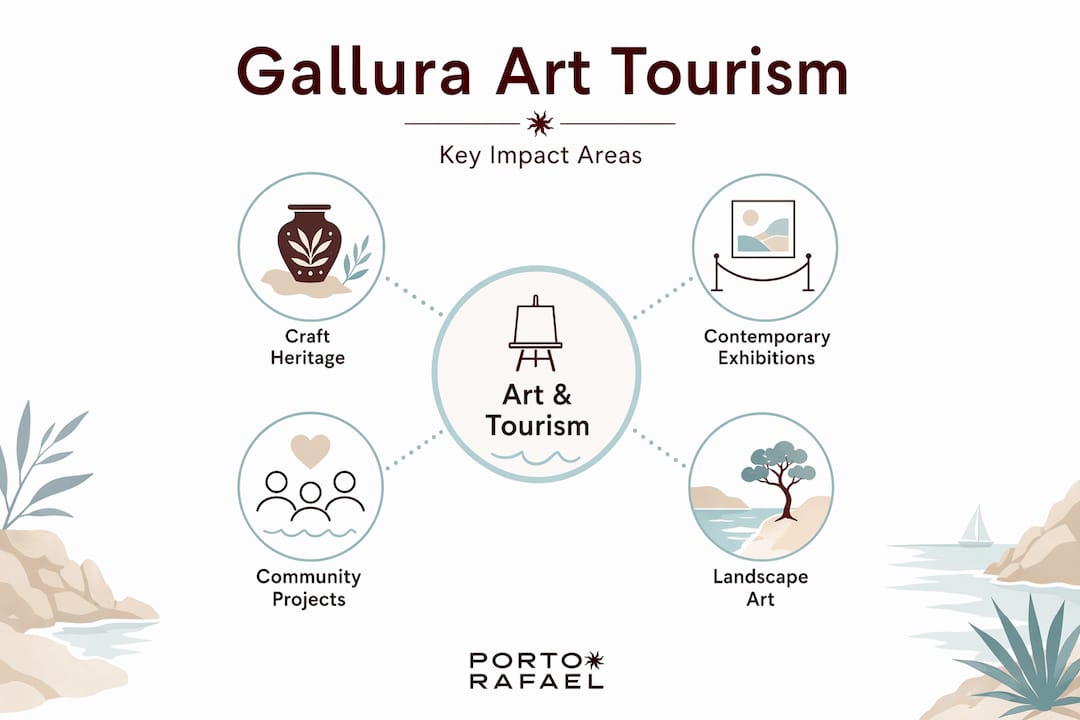
- Art in Gallura deeply influences tourism by intertwining cultural heritage with contemporary practices and community projects. Visitors can engage in participatory workshops, explore exhibitions, and witness art integrated into landscapes, fostering meaningful connections with the region. This approach promotes sustainable tourism and highlights Gallura's unique blend of tradition, innovation, and environmental consciousness.
Gallura is a region that most visitors first encounter through images of turquoise coves, granite boulders tumbling into a luminous sea, and the wild fragrance of maquis in the summer heat. Yet the role of art in Gallura tourism runs far deeper than these first impressions suggest, shaping everything from the economic fabric of small hill towns to the emotional resonance a traveller carries home. Art here is not an accessory arranged alongside the beaches. It is a living presence woven into the cork forests, the regenerated mine sites, the community squares, and the contemporary galleries of Sassari. For the culturally curious visitor, understanding this dimension transforms Gallura from a beautiful destination into a genuinely unforgettable one.
Cork craft and Gallura's artisanal heritage
Calangianus, a quiet hill town in the heart of Gallura, holds a distinction that surprises many first-time visitors. It is the Italian capital of cork, an artisanal heritage that has shaped the region's identity and economy since 1851. The cork oak forests surrounding the town are not merely scenic. They are the raw material for a centuries-old craft tradition that connects ecology, labour, and artistic expression in a way few industries manage.
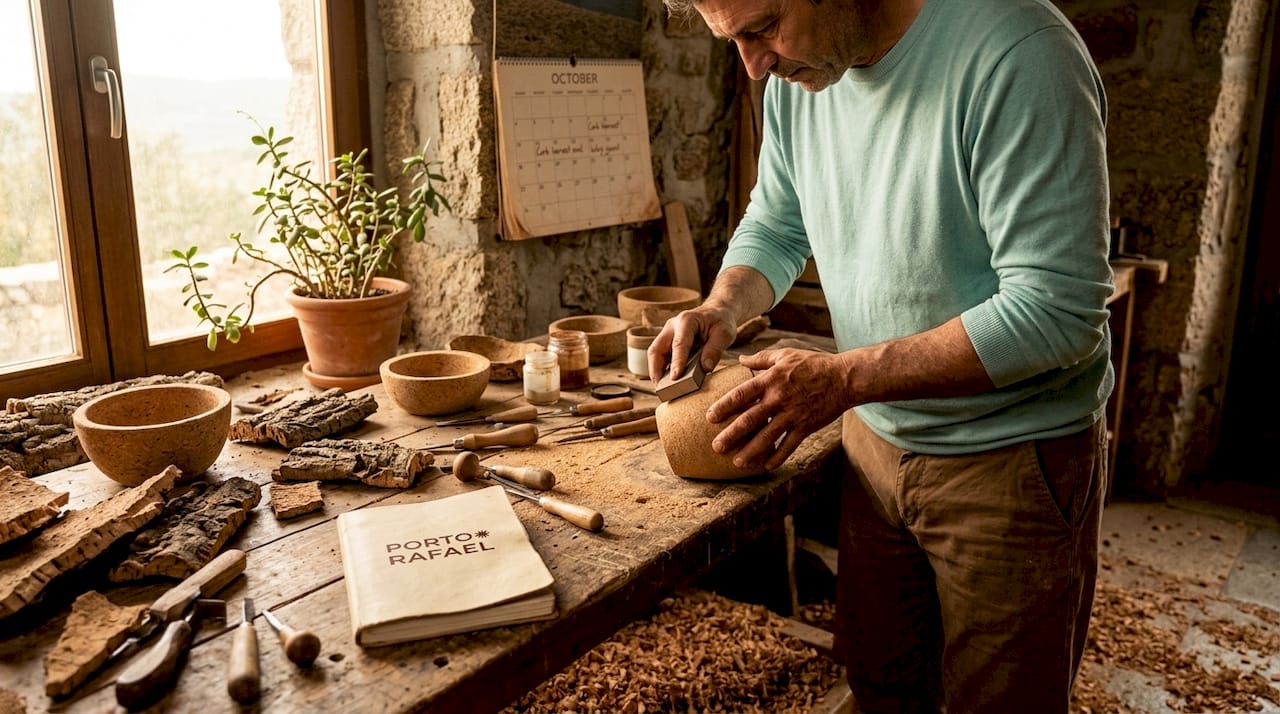
The Cork Museum in Calangianus tells this story with genuine depth, guiding visitors through the evolution of cork from humble bottle stopper to fashion accessory and architectural material. What makes this experience compelling for the cultural tourist is not just the historical narrative but the sensory texture of the place: the smell of cured bark, the sight of craftspeople shaping material with tools unchanged for generations, and the growing awareness that this is sustainable craft at its most authentic.
The Gallura art tourism impact of the cork industry is considerable:
- The cork sector's cultural assets attract thousands of visitors annually who combine museum visits with guided forest walks during the decortication season.
- The International Cork Fair in Calangianus draws buyers, designers, and artists from across Europe, positioning the town as a creative destination rather than merely an agricultural one.
- Contemporary designers have expanded cork's applications into jewellery, textiles, and interior furnishings, making the material a living example of tradition meeting contemporary art.
- The museum's educational programmes engage school groups and adult learners, fostering intergenerational cultural literacy.
Pro Tip: If you wish to witness the cork oak decortication process in person, plan your visit between June and August, when skilled workers harvest the bark by hand. Many local producers welcome small guided groups, offering an immersive encounter that no exhibition can fully replicate.
Contemporary exhibitions and Gallura's evolving identity
The Fondazione di Sardegna has invested significantly in the region's contemporary art infrastructure, and its AR/S platform stands as perhaps the most telling example of how art and culture in Gallura are being deliberately repositioned for a national and international audience.
The platform curates exhibitions that place Sardinian artists in conversation with the broader currents of Italian and European art history. One recent landmark is the Sardegna, Novecento di confine exhibition, which presented 75 works exploring Sardinian participation in Italy's 20th-century art scene. For visitors, this is the kind of exhibition that reframes what they thought they knew about an island often characterised as peripheral.
Several qualities distinguish Gallura's contemporary cultural institutions from more generic regional galleries:
- Curatorial ambition. The Fondazione's exhibitions do not simply document local artists. They argue for a specific cultural thesis, positioning Sardinian art as central rather than marginal to national conversations.
- Community engagement. Educational programming runs alongside major shows, inviting local schools, craftspeople, and civic groups into the gallery space. This transforms exhibitions into living cultural events rather than static displays.
- Shared memory as a creative framework. Exhibitions and cultural projects consistently emphasise common heritage, inviting visitors and locals to discover overlapping narratives that bind a community to its landscape.
- Photography as civil art. Luca Tamagnini's Sardegna. Paesaggio Costiero project, supported by the Fondazione, uses photography to document coastal fragility and shapes how visitors understand their own relationship to the environment they are exploring.
Community art and territorial regeneration
Perhaps the most striking example of art's transformative power in the Gallura region is found at Argentiera, a coastal mining settlement that fell silent after industrial closure and faced the gradual fate of many marginal territories: demographic decline, crumbling infrastructure, and fading memory.
"Art is social infrastructure. It is not decoration applied after the hard problems are solved. It is the means by which communities recognise themselves, attract new energy, and write the next chapter of their story." — LandWorks association, Argentiera
The MAR project, led by the LandWorks association, has transformed Argentiera into a cultural laboratory that functions as something between a museum, a residency space, and a living community. The approach is deliberately interdisciplinary, drawing on performance, visual art, land art, and participatory design to address both the physical and social legacies of the mining era.
What makes this model particularly relevant to the Gallura creative tourism conversation is the breadth of activities it sustains:
- International artist residencies that bring new creative energy into the territory while generating exchange with local residents.
- Public art installations that use the mine's industrial ruins as both backdrop and material, creating works of genuine aesthetic power.
- Community workshops where locals develop skills in ceramics, textile art, and performative practices alongside visiting artists.
- Seasonal festivals and performances that draw audiences from across Sardinia and beyond, creating a reliable cultural calendar.
The participatory processes and creative residencies at Argentiera demonstrate that art-led territorial regeneration can produce measurable social capital. Depopulation slows when people feel a sense of purpose and collective identity, and art, in this model, is the primary instrument of that renewal.
Pro Tip: The Argentiera festival season typically peaks in late summer. Booking accommodation in advance is advisable, as the site draws growing numbers of culturally engaged visitors each year who combine the art programme with the extraordinary coastal landscape nearby.
Maria Lai and the art embedded in landscape
No account of art's cultural significance in Sardinia is complete without Maria Lai, the artist from Ulassai whose work reshaped how the island understood the relationship between creative practice and communal life. Though Ulassai sits in the Ogliastra region to the south of Gallura, Maria Lai's legacy has influenced the entire island's approach to cultural tourism and remains deeply relevant to any visitor seeking to understand the philosophy behind Sardinian art.
Her most celebrated work, Legarsi alla montagna (Binding to the Mountain), performed in 1981, united an entire village by connecting every house with a blue ribbon threaded through the streets and tied to the mountain above. The gesture was at once poetic and political. It proposed art not as an object to be contemplated from a distance but as a social act, a weaving together of people and place.
The following table summarises the key elements of the Art Station museum in Ulassai and the open-air artworks that make it a model for immersive cultural tourism:
| Feature | Detail |
|---|---|
| Location | Ulassai, Ogliastra, Sardinia |
| Key work | Legarsi alla montagna (1981) |
| Museum type | Open-air and indoor hybrid |
| Art form | Relational, land, and installation art |
| Visitor experience | Walking routes through landscape-integrated works |
| Cultural impact | Influenced international relational art movements |
The Art Station model illustrates a principle that the most thoughtful Gallura tourism experiences increasingly reflect: that art woven into landscape and daily life creates a bond between visitor and territory that a conventional gallery visit rarely achieves.
Practical guide for cultural tourists in Gallura
Planning a culturally rich visit to Gallura rewards a little forethought. The region's art scene is not concentrated in a single urban centre but distributed across villages, coastlines, and transformed industrial sites, each with its own rhythm and season.
- Time your cork visit carefully. The most vivid engagement with Calangianus's artisanal heritage comes between June and August, when live cork decortication can be observed. The Cork Museum is open year-round, but pairing it with a workshop visit gives the experience genuine depth.
- Follow the Fondazione di Sardegna's exhibition calendar. The AR/S platform announces its programme several months in advance. Major exhibitions in Sassari and Cagliari often run for three to four months, making them accessible across different travel windows.
- Register early for Argentiera residencies and workshops. Participation in LandWorks programmes requires advance registration, and spaces are limited. Check the association's programme in spring for summer and autumn opportunities.
- Build a composite itinerary. The most rewarding cultural visits combine art sites with local gastronomy and natural excursions. A morning at the Cork Museum pairs naturally with an afternoon tasting in a local winery; an evening at an Argentiera performance leads seamlessly into a walk along the coast at dusk.
- Approach local art with genuine curiosity. Many artisans and artists in the region welcome informed conversation. Asking about process, material, and meaning, rather than simply photographing the finished work, opens doors that would otherwise remain closed.
Pro Tip: The how events shape Sardinian tourism article on the Portorafael blog maps the cultural calendar across Gallura for 2026. Cross-referencing your travel dates with the events listed there will help you build an itinerary that genuinely rewards the art-conscious traveller.
My perspective on art's place in Gallura's future
I've spent considerable time thinking about what separates a region that uses art as a marketing flourish from one that allows art to do something genuinely structural. Gallura, at its best, belongs in the second category.
What strikes me most is the coherence between tradition and contemporary practice here. The cork craftspeople in Calangianus and the artists in residence at Argentiera are not working in opposition. They are engaged in the same fundamental act: finding meaning in material, in place, and in the labour of the hands. That continuity is rare, and culturally sophisticated visitors feel it immediately.
I've also noticed that the most memorable art tourism experiences I've encountered in Gallura are participatory rather than passive. The Argentiera model, where visitors can attend workshops and engage with artists in progress, produces a depth of connection that no beautifully curated permanent collection can match. This is where Gallura's cultural heritage is quietly ahead of many better-publicised Italian destinations.
The uncomfortable truth about cultural tourism is that most of it is superficial. People attend. They photograph. They leave. The Sardinian model, particularly in the work coming out of the Argentiera and in the legacy of Maria Lai, argues for something more demanding and more rewarding: art as an encounter that changes you in some small way. That, to my mind, is what makes Gallura's art scene not just culturally significant but genuinely worth building a journey around.
— Studio
Discover art and culture at Porto Rafael
Porto Rafael, Portorafael's cherished boutique village on the northern Gallura coast, offers the rare combination of extraordinary natural beauty and genuine cultural immersion. For visitors wishing to bring the region's artistic spirit into their daily holiday rhythm, the village provides a setting where art is present not as an afterthought but as a defining characteristic of the experience.
The Labenoi Atelier, designed by Susanna Colleoni, is a boutique and interior design space within Porto Rafael that embodies the refined dialogue between local craft tradition and contemporary creative vision. Browsing its curated collection of objects, textiles, and artisan pieces is an education in the aesthetic values of Gallura distilled into wearable and liveable form. Pair an afternoon at the atelier with a meal at Solaz restaurant, where local ingredients are treated with the same care and intentionality that the region's best artists bring to their materials, and the cultural coherence of Porto Rafael becomes unmistakably clear.
FAQ
What is the role of art in Gallura tourism?
Art shapes Gallura's tourism identity by connecting visitors to centuries of craft heritage, contemporary exhibitions, and community-led regeneration projects, creating experiences that go well beyond beaches and natural scenery.
Which art festivals should I visit in Gallura?
The International Cork Fair in Calangianus and the seasonal arts programme at the Argentiera cultural laboratory are two of the most distinctive events, drawing creative visitors from across Europe each year.
Where can I find local art galleries in Gallura?
The Fondazione di Sardegna's AR/S platform runs exhibitions in Sassari, while Porto Rafael's Labenoi Atelier offers an intimate encounter with locally inspired design and artisan craft in the heart of the Gallura coast.
How does art contribute to sustainable tourism in Gallura?
Participatory art projects such as the MAR initiative at Argentiera treat art as social infrastructure, countering depopulation, preserving collective memory, and creating a cultural economy that supports long-term sustainable tourism development.
Can visitors participate in art workshops during their stay?
Yes. Both the Argentiera residency programme and cork artisan workshops in Calangianus offer hands-on participation. Early registration is advised, particularly for summer and autumn programmes when demand is highest.