
TL;DR:
- Gallura is a premier European yachting destination with vibrant coastal culture.
- Sailing unlocks access to hidden coves, marine reserves, and authentic Sardinian life.
- Sustainable practices are essential to preserve Gallura’s natural and cultural treasures.
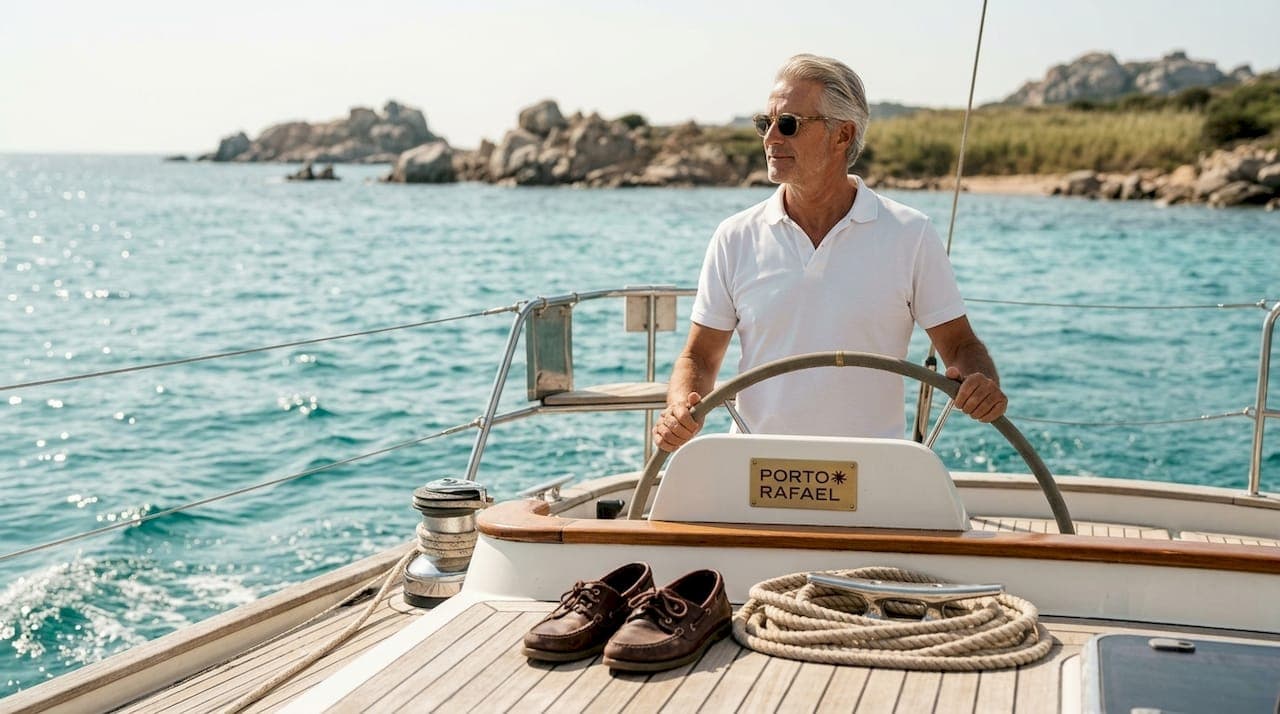
Gallura is not merely a corner of Sardinia that happens to overlook the sea. It is one of Europe's most captivating yachting destinations, and the numbers speak with remarkable clarity: in the summer season of 2024, 4,619 unique yachts transited Gallura's coasts, with 204 superyachts valued collectively at $16.3 billion gliding through its crystalline waters. Yet behind these extraordinary figures lies something far more layered than a showcase of wealth: a living, breathing coastal culture that sailing alone can truly unlock, from hidden granite coves and marine reserves to time-honoured traditions woven into the fabric of every harbour village.
Key Takeaways
| Point | Details |
|---|---|
| Gallura’s luxury yachting scene | Thousands of superyachts visit each year, making Gallura a global hub for luxury sailing. |
| Economic impact of sailing | Superyacht activity generates millions daily and sustains thousands of local jobs and businesses. |
| Exclusive coastal access | Sailing allows you to reach remote coves and marine reserves, blending opulence with authentic culture. |
| Sustainability in focus | Innovative tech and coordinated port strategies help Gallura balance luxury tourism with environmental care. |
| Cultural immersion | Luxury sailing in Gallura unlocks a deeper connection to Sardinian traditions and coastal lifestyle. |
How sailing transformed Gallura: Historical foundations
To understand Gallura's magnetic pull on the global sailing community, one must trace the story back to a single, audacious vision. In the early 1960s, Aga Khan IV surveyed the wild, largely untouched Costa Smeralda coastline and saw not just beauty but extraordinary potential. By 1964, Porto Cervo marina had begun taking shape, and by 1976 the Yacht Club Costa Smeralda was firmly established as one of the most prestigious sailing institutions in the world.
This transformation was genuinely radical. Gallura had been predominantly rural, its economy shaped by sheep farming, cork production, and modest fishing communities. The Aga Khan's intervention shifted the region's cultural identity almost entirely, drawing an international clientele that brought sophisticated tastes, architectural elegance, and an enduring appetite for refined coastal living. The ripple effects spread far beyond Porto Cervo itself, reshaping villages, hospitality standards, and the ambitions of an entire generation of Sardinian mariners and entrepreneurs.
Key milestones in Gallura's sailing evolution include:
- 1961: Aga Khan IV first visits Costa Smeralda and begins acquiring land along the coastline
- 1964: Porto Cervo marina opens, signalling the birth of Gallura as a global yachting destination
- 1967: Yacht Club Costa Smeralda is officially founded, attracting international racing events
- 1976: Marina infrastructure reaches its formative maturity, accommodating ever-larger superyachts
- 1980s onwards: Surrounding villages including Porto Rafael develop their own distinctive identities within the luxury coastal ecosystem
"The Costa Smeralda model did not simply create a resort. It created a new way of understanding the Sardinian coastline — as a stage for both natural wonder and refined human endeavour."
Exploring this heritage through a luxury itinerary guide reveals just how seamlessly that founding vision has matured into the present day. The fusion of culture and luxury in Sardinia that Gallura now embodies was not accidental; it was architected with deliberate care and sustained by generations of passionate custodians.
Sailing as an engine of economic and cultural vitality
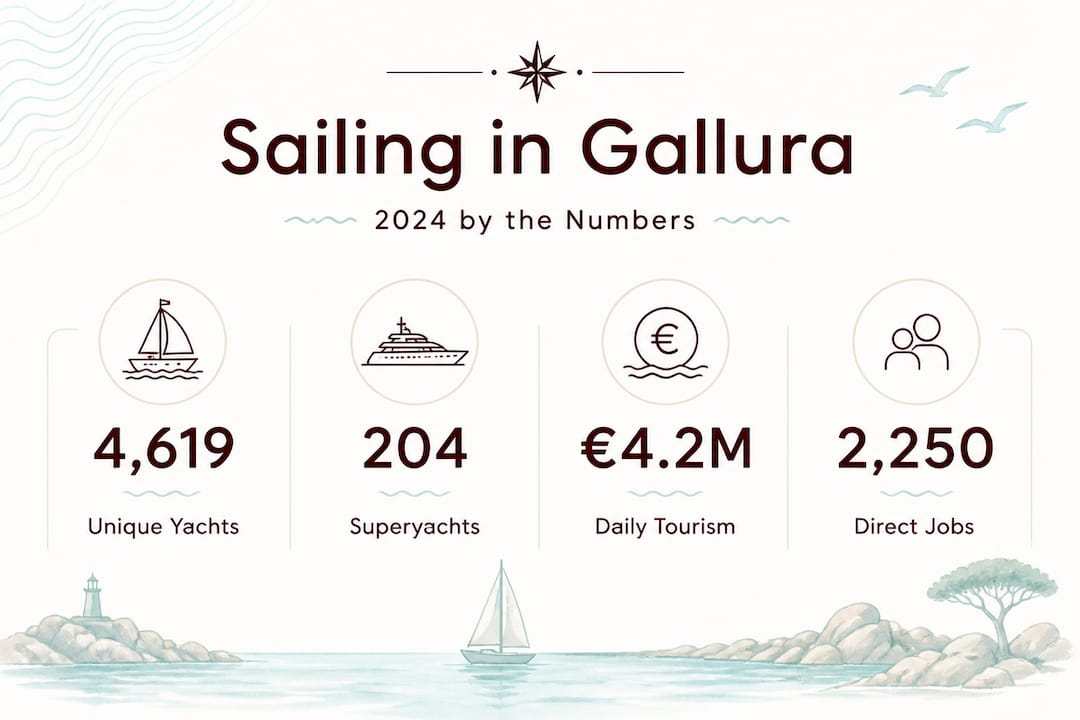
The economic dimension of Gallura's sailing culture is, in a word, staggering. Superyacht tourism alone generates an estimated €4.2 million daily across the region, whilst the Cipnes district supports over 1,860 nautical firms and provides 2,250 direct employment positions. These are not abstract figures; they represent boat builders, riggers, provisioners, marine engineers, chefs, guides, and countless other craftspeople whose livelihoods are interwoven with the rhythms of the sailing season.
Gallura's position within Sardinia's broader maritime economy is equally striking. The region holds 37% of Sardinia's 15,671 boat berths, and an impressive 60% of those berths are designated for superyachts. Sardinia's nautical sector as a whole generated €1.21 billion in turnover in 2025, representing 14% of the national total. Gallura sits at the heart of that achievement.
| Indicator | Gallura / Sardinia figure |
|---|---|
| Unique yachts visiting (summer 2024) | 4,619 |
| Superyachts recorded | 204 (valued at $16.3B) |
| Daily superyacht economic impact | €4.2 million |
| Gallura's share of Sardinian berths | 37% (approx. 5,798 berths) |
| Berths serving superyachts | 60% of total |
| Sardinia nautical sector turnover (2025) | €1.21 billion |
| National share of turnover | 14% |
| Nautical firms in Cipnes district | 1,860+ |
| Direct jobs in Cipnes district | 2,250 |
Beyond the raw numbers, the cultural ripple effect of sailing on Gallura is profound. Marinas generate footfall that sustains local restaurants, artisan markets, and historic village squares. Visiting sailors seek out authentic produce, regional wines, and handcrafted goods, circulating wealth in ways that mainstream mass tourism rarely achieves with such precision and depth. Gallura's identity as a luxury coastal destination is inseparable from this maritime dynamism.
Pro Tip: If you are planning to arrive by yacht during peak season (July and August), reserve your berth at least four to six months in advance. Gallura's most sought-after marinas fill rapidly, and securing your position early is the single most effective way to guarantee a seamless arrival into this extraordinary coastline. The Porto Rafael exclusive borgo also offers invaluable local guidance on seasonal planning and mooring proximity.
The employment figures deserve further attention. Those 2,250 direct jobs in the Cipnes district alone tell a story of genuine livelihoods, not merely seasonal work. Gallura's nautical ecosystem encompasses everything from advanced marine engineering workshops to bespoke yacht provisioning services, reflecting a community that has grown genuinely skilled in the art of hosting the world's most discerning sailors.
Coastal exclusivity: Sailing experiences and cultural immersion
Sailing in Gallura is not simply a means of transport. It is the definitive key to the region's most guarded secrets. Many of Gallura's finest beaches and coves are accessible only by sea, their granite-framed beauty preserved precisely because road access does not exist. Marine reserves further protect these places, ensuring that their luminous waters and untouched sea floors remain extraordinary for generations to come.
Comparison: sailing access versus land-based access in Gallura
| Experience | By sailing | By land |
|---|---|---|
| Hidden coves and beaches | Fully accessible | Often impossible or severely restricted |
| Marine reserve snorkelling | Direct anchoring at reserve edges | Very limited or prohibited |
| Sunset anchorage experiences | At your own pace, in solitude | Fixed viewpoints, crowded in season |
| Coastal village arrival | Harbour arrivals with local character | Car parks and tourist queues |
| Flexibility of itinerary | Total freedom day by day | Dependent on road networks |
The most iconic coastal experiences available to sailors in Gallura include:
- Archipelago of La Maddalena: A national park of forty-two islands and islets, with translucent water in hues ranging from pale jade to deep sapphire. Sailing between these islands at dawn, when the light turns the granite pink and gold, is one of those rare experiences that stays with you permanently.
- Cala di Volpe: An intimate bay fringed by macchia scrubland and shallow, impossibly clear water. Arriving by sail rather than road preserves the sense of discovery entirely.
- Capo d'Orso and its surroundings: The dramatic rock formations of this headland, accessible by boat, offer a geological theatre unlike anything else on the Mediterranean coast.
- Cala Corsara, Spargi Island: A near-perfect crescent of white sand within La Maddalena Archipelago, reachable in comfortable sailing time from Porto Rafael.
- The granite coast near Porto Rafael itself: This serene coastal getaway offers shallow, glass-clear bays perfect for swimming and snorkelling, with the distinctive pale granite boulders of Gallura forming the most extraordinary natural backdrop.
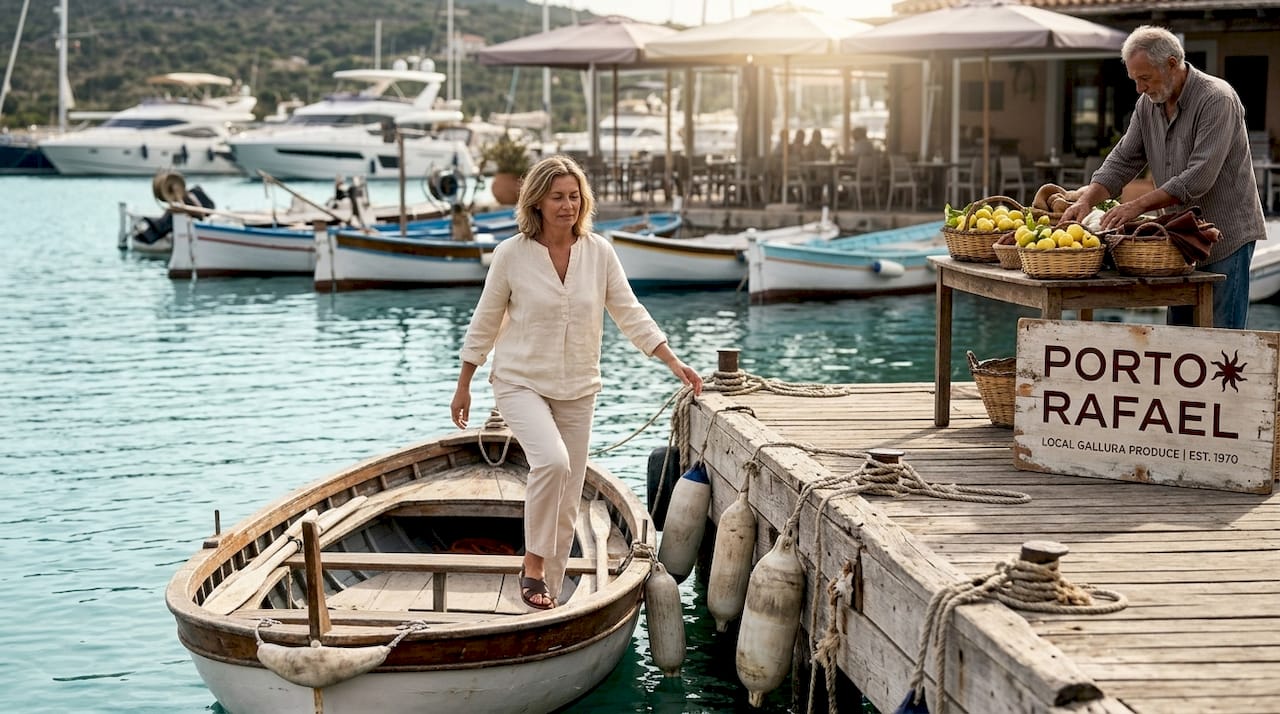
Cultural immersion deepens further when you consider what awaits onshore. Arriving by sail into a small Gallura harbour means stepping into a rhythm of life that tourism has touched but not overwhelmed. Local fishermen still set nets at dawn. Village restaurants serve the day's catch alongside bottles of Vermentino di Gallura, the region's celebrated white wine, sharp and aromatic in the evening air. Exploring the Sardinian wine experience through this lens, sat at a harbourside table after a day's sailing, is one of Gallura's most quietly perfect pleasures.
Pro Tip: Within La Maddalena National Park, strict rules govern anchoring and approach distances. Always consult the park authority's latest regulations before entering the reserve, and use designated mooring buoys where provided. Respecting these boundaries is both a legal requirement and a mark of the conscientious sailor that Gallura's fragile marine ecosystems deserve.
Sustainable sailing: Balancing luxury and environmental stewardship
Gallura's success as a sailing destination brings significant responsibility. The same crystalline waters and pristine granite coastlines that draw thousands of yachts each summer are also fragile ecosystems, and the pressures of high season are increasingly visible. Congestion in popular anchorages, berth shortages at peak periods, and occasional accidents (the grounding of the superyacht Athina in nearby waters remains a cautionary tale for the industry) highlight the tension between Gallura's appeal and its carrying capacity.
Yet the region is responding with intelligence and ambition. Integrated strategies for sustainable yachting now form part of Gallura's longer-term maritime planning, recognising that economic vitality and environmental health are not competing interests but mutually dependent goals. The dialogue between luxury operators, environmental authorities, and local communities is ongoing, sophisticated, and increasingly productive.
Key sustainability efforts currently shaping Gallura's sailing future include:
- Smart mooring buoys: Intelligent buoy systems in sensitive anchorages allow boats to moor without dropping anchor, eliminating damage to seagrass beds and reef structures that took centuries to form
- Green port technologies: Several marinas are investing in shore power connections for yachts (reducing idling engine use), grey water treatment facilities, and solar energy infrastructure across harbour buildings
- Port coordination programmes: Regional authorities are developing real-time berth availability systems to reduce congestion and prevent the clustering of vessels in already sensitive zones
- Training and certification initiatives: The Cipnes Gallura district supports training programmes for marine professionals, covering both technical skills and environmental responsibility
- Seasonal visitor dispersal: Efforts to encourage sailing visitors to explore lesser-known parts of the Gallura coastline reduce the concentration of traffic around a handful of famous hotspots
The balance matters enormously. A Gallura that sacrifices its natural integrity for short-term economic gain would eventually lose the very qualities that make it irreplaceable. Conversely, excessive restriction would deprive the region of the cultural exchange and economic dynamism that sailing brings. The most thoughtful voices in Gallura's maritime community understand that sustainable growth, not volume growth, is the only intelligent path forward.
Why the real value of sailing in Gallura is cultural richness
There is a temptation, when confronted with Gallura's superyacht statistics and its gleaming marina infrastructure, to reduce this place to a playground for the wealthy. That reading is not only incomplete; it is misleading. The genuine value of sailing in Gallura lies not in the prestige of the vessels or the exclusivity of the berths. It lies in what sailing makes possible: authentic, unhurried encounter with one of the Mediterranean's most richly layered coastal cultures.
From our perspective, rooted in years of observing Gallura's seasons and its visitors, the guests who leave most deeply moved are rarely those who stayed longest on their yachts. They are the ones who tied up in a small harbour at dusk, walked into the village, and found themselves sharing a table with a Sardinian family. They are the ones who asked the fisherman what he caught that morning and ended up hearing stories about the coastline that no guidebook could contain. The boat was the beginning, not the destination.
Sailing also cultivates a particular quality of attention. Moving slowly along a coastline, reading the wind and the water, you notice things that speed obscures: the colour gradient of the sea over a sandbar, the way a village positions itself just above the tideline, the granite formations that ancient shepherds named after animals and saints. This kind of noticing is, in its way, a form of Sardinian hospitality extended by the landscape itself.
The contrarian insight worth holding is this: the luxury of sailing in Gallura is not the yacht. It is the time, the perspective, and the access to a culture that remains genuinely alive beneath the glamour. That is worth more than any superyacht valuation.
Next steps: Experience Gallura's sailing lifestyle
Gallura rewards those who seek it with intention. Whether you are planning to arrive under sail or are searching for a base from which to explore this extraordinary coastline by land and sea, the village of Porto Rafael offers something rare: a haven of authentic Sardinian character wrapped in quiet elegance.
The Hotel La Piazza sits at the heart of Porto Rafael's boutique borgo, offering beautifully appointed rooms and an atmosphere that feels genuinely rooted in the place rather than imposed upon it. From here, the points of interest of the wider Gallura coastline are within easy reach, by boat, by road, or simply on foot through the village. And after a day spent at sea or exploring the granite headlands, the Solaz Restaurant awaits with a menu that honours the finest Sardinian produce and the flavours of the surrounding sea. Porto Rafael is not simply a place to stay. It is a place to belong, even briefly.
Frequently asked questions
How many superyachts visit Gallura each season?
In the June to September period of 2024, Gallura welcomed 204 superyachts valued collectively at $16.3 billion, among a total of 4,619 unique yachts visiting across seven coastal zones.
Why is sailing so integral to Gallura's economic growth?
Superyacht tourism generates an estimated €4.2M daily across the region and supports over 2,250 direct jobs, making it one of the most significant economic forces in northern Sardinia.
Can non-yacht guests experience Gallura's sailing culture?
Yes, day charters, guided boat excursions, and coastal hospitality experiences are all widely available, allowing visitors without their own vessels to access the same hidden coves and maritime rhythms that define the sailing lifestyle.
What are the main sustainability challenges for Gallura's sailing industry?
High summer congestion, berth shortages, and environmental risks to marine ecosystems are the primary concerns, with ongoing green tech initiatives and port coordination programmes actively addressing each of these pressures.
Is Gallura only about luxury yachting or does it also offer authentic culture?
Gallura blends high-end sailing with genuine coastal traditions, including local cuisine, regional wine, artisan crafts, and untouched landscapes that sailing alone makes fully accessible.