
Sardinia carries a reputation that precedes it, and rightly so. Sardinians treat guests like family, going out of their way to ensure every visitor feels genuinely at home rather than merely accommodated. Yet most travellers who arrive expecting warmth encounter something quite different: polished resort smiles, scripted welcomes, and curated experiences designed for the tourist gaze. The real Sardinian welcome lives elsewhere, tucked inside family kitchens, village festivals, and sun-warmed agriturismi where the bread is homemade and the conversation flows freely. This guide reveals the roots, rituals, and practical pathways to experiencing hospitality as Sardinians have always known it.
Key Takeaways
| Point | Details |
|---|---|
| Authenticity is central | Genuine hospitality in Sardinia comes from local traditions, family, and community involvement. |
| Seek inland villages | For real immersion, travellers should choose agriturismi and village stays over luxury resorts. |
| Hospitality shapes wellbeing | Shared meals and communal warmth contribute to Sardinia’s renowned longevity. |
| Practical engagement matters | Learning a few Italian words and participating in local customs unlock deeper connections. |
The roots of Sardinian hospitality
To understand Sardinian hospitality, you must first understand the island’s soul. This is a place shaped by centuries of relative isolation, where communities depended on one another for survival and where the arrival of a stranger was met not with suspicion but with generosity. That instinct has never faded.
“Hospitality is rooted in family traditions, simplicity, and authenticity, often exemplified in agriturismi and family-run establishments where meals are home-cooked with local ingredients.”
The agriturismo, a working farm that opens its doors to guests, remains one of the purest expressions of this tradition. Hosts share their table, their land, and their stories without ceremony or pretence. This spirit is also woven into the fabric of Sardinian village heritage, where communal identity and pride in local customs shape every interaction.
Typical features of authentic Sardinian hospitality include:
-
Homemade food prepared with seasonal, locally sourced ingredients
-
Open-hearted hosts who treat guests as extended family
-
Personal recommendations for hidden beaches, local artisans, and village events
-
Communal gatherings where visitors are invited to join, not merely observe
-
Local ingredients such as pecorino, mirto, and hand-rolled pasta that tell the story of the land
This is hospitality as a living tradition, not a service transaction.
How Sardinians welcome their guests
With roots this deep, the expressions of welcome are both instinctive and layered. A Sardinian host does not simply offer a room; they offer a relationship. Coffee arrives before you have asked for it. A plate of something homemade appears on the table. An invitation to a cousin’s birthday gathering follows naturally from a single afternoon’s conversation.
Sardinians are renowned for this quality of warmth, and it is most visible in the small, unrehearsed gestures: the neighbour who stops to give directions and ends up walking you there, the shopkeeper who closes the till to share a story about the village’s history.
Pro Tip: A few words of Italian open doors that English alone cannot. Sardinians appreciate the effort enormously, and even a simple buongiorno or grazie signals respect for their culture, softening any initial reserve and inviting a far warmer exchange.
To be genuinely welcomed, follow these steps:
-
Greet with respect — a warm buongiorno and eye contact go a long way
-
Share a meal — accept every invitation to eat together; the table is sacred here
-
Participate in local activities — join a festival procession, a market morning, or a farm task
-
Ask about traditions — genuine curiosity is always received with pride and pleasure
-
Express sincere interest — Sardinians can sense when admiration is authentic, and they respond in kind
For those seeking unique Sardinian stays that honour this spirit, boutique properties rooted in local character offer a far richer experience than anonymous resort blocks. You can also explore Sardinian villages to understand the community values that shape every welcome.
Hospitality in everyday life: Food, festivals, and community
Beyond the private home, Sardinian hospitality pulses through the island’s public life. Shared meals are not merely social occasions; they are rituals of belonging. A Sunday lunch can stretch for four hours, with multiple courses, local wine poured generously, and stories exchanged across generations.
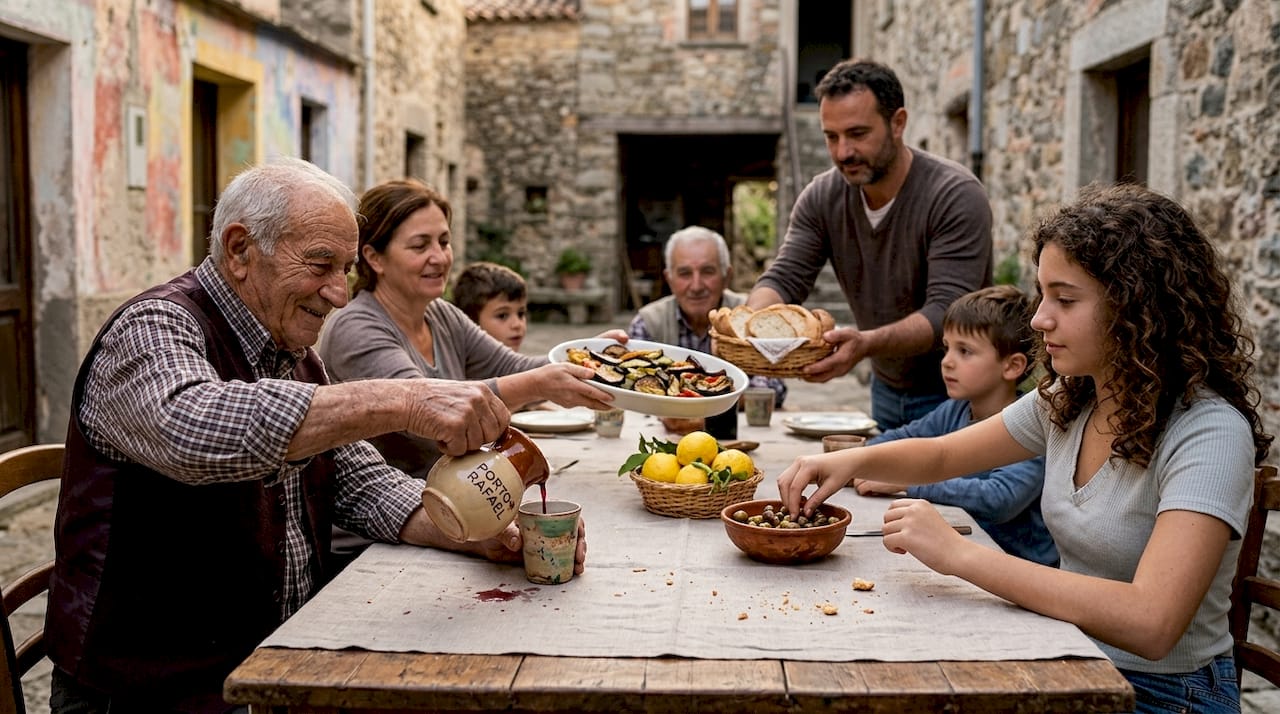
Festivals offer perhaps the most vivid window into this communal spirit. From the masked processions of Sartiglia in Oristano to the vibrant Sardinian festivals scattered across the calendar, these events welcome outsiders with music, dancing, and an abundance of food. Attendance is not passive; you are expected to participate, and that participation is the warmest invitation of all.
Researchers studying Sardinian communal life have noted that these social bonds, reinforced daily through shared meals and collective celebration, contribute directly to the island’s status as a Blue Zone, one of the few places on earth where people routinely live past one hundred. Hospitality, it turns out, is not just good manners; it may be the secret to a long life.
Top immersive experiences to seek out:
-
Festival participation — join local processions, music, and communal feasting
-
Cooking classes — learn to prepare traditional dishes such as culurgiones and seadas in a hands-on cooking class
-
Market visits — browse weekly village markets where producers sell directly and conversation is free
-
Village feasts — attend a sagra, a local food festival celebrating a single ingredient or dish
-
Artisanal demonstrations — watch weavers, potters, and cork craftspeople at work and ask questions freely
Luxury and local: Commercial vs. authentic hospitality
Not all hospitality in Sardinia is equal, and discerning travellers benefit from understanding the difference. Coastal resorts, particularly in areas such as Costa Smeralda, deliver polished service and undeniable luxury, but the experience can feel more commercial than communal. Staff are professional; warmth is curated. This is not a criticism, simply a distinction worth making.
Authentic immersion, by contrast, tends to occur inland, in agriturismi, small village trattorie, and family-run guesthouses where the host’s grandmother may well be cooking your dinner. Some travellers note initial reserve or a preference for cash and Italian, but experienced visitors recognise these as markers of genuine local culture rather than unfriendliness.
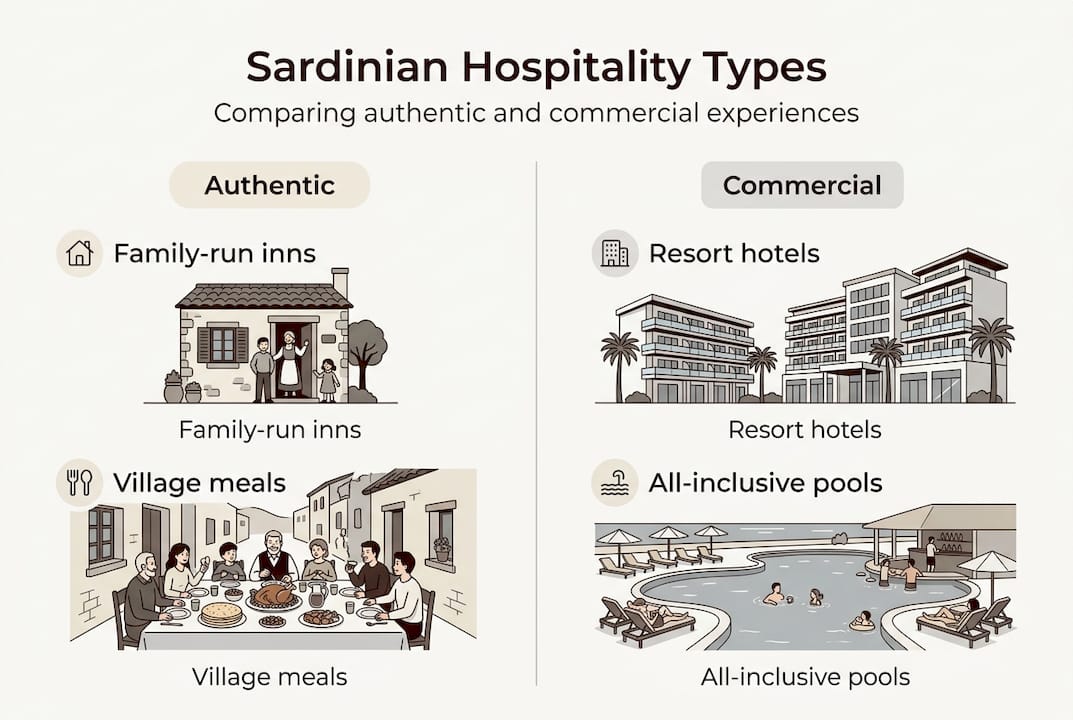
| Feature | Commercial hospitality | Authentic hospitality |
|---|---|---|
| Setting | Coastal resort or hotel chain | Agriturismo, village inn, family home |
| Atmosphere | Polished, curated, professional | Warm, personal, unhurried |
| Food | International menu, restaurant service | Home-cooked, seasonal, locally sourced |
| Guest treatment | Efficient and courteous | Familial, generous, story-rich |
| Cultural depth | Surface-level local touches | Genuine immersion in tradition |
| Language | English widely spoken | Italian and Sardinian preferred |
For those who want to understand why Sardinia commands such reverence among discerning travellers, the exclusive Sardinia guide offers valuable context. Those planning a visit in 2026 will also find the chic travel culture guide and exclusive accommodation tips useful for balancing luxury with local authenticity.
How travellers can seek authentic Sardinian hospitality
Knowing the difference between commercial and authentic is one thing; finding the real thing is another. The good news is that genuine Sardinian hospitality is not hidden. It simply requires a willingness to step away from the well-worn tourist path.
Start by choosing accommodation wisely. Boutique Sardinian rooms in smaller properties, particularly those with local ownership and character, place you closer to the community from the outset. Agriturismi remain the gold standard for immersion, but even a well-chosen village guesthouse can open remarkable doors. For those planning ahead, the villa booking tips guide offers practical advice for 2026 travellers.
Pro Tip: Resist the temptation to spend every day at the beach or resort pool. Even a single afternoon wandering an inland village, stopping for coffee at a local bar, and chatting with whoever is there will reveal more of Sardinia’s true character than a week of curated excursions.
Some travellers note a preference for Italian among local hosts, and this is worth taking seriously. A pocket phrasebook or a language app used for even thirty minutes before arrival will transform your interactions.
Signs of genuine welcome to look for:
-
An unsolicited offer of food or drink — this is the clearest signal of authentic hospitality
-
Personal stories shared freely — hosts who speak about their family, land, or village history are inviting you in
-
Introductions to other locals — being passed from one person to another is a mark of trust
-
Invitations to return — a genuine arrivederci with a specific suggestion to come back for a festival or harvest
-
Advice that steers you away from tourist traps — a host who recommends the quiet beach over the famous one has your interests at heart
Discover Sardinian hospitality for yourself
Porto Rafael, nestled along the luminous coastline of Gallura, offers a rare meeting point between refined comfort and the timeless warmth of Sardinian tradition. Here, the spirit of genuine welcome is not performed; it is lived.
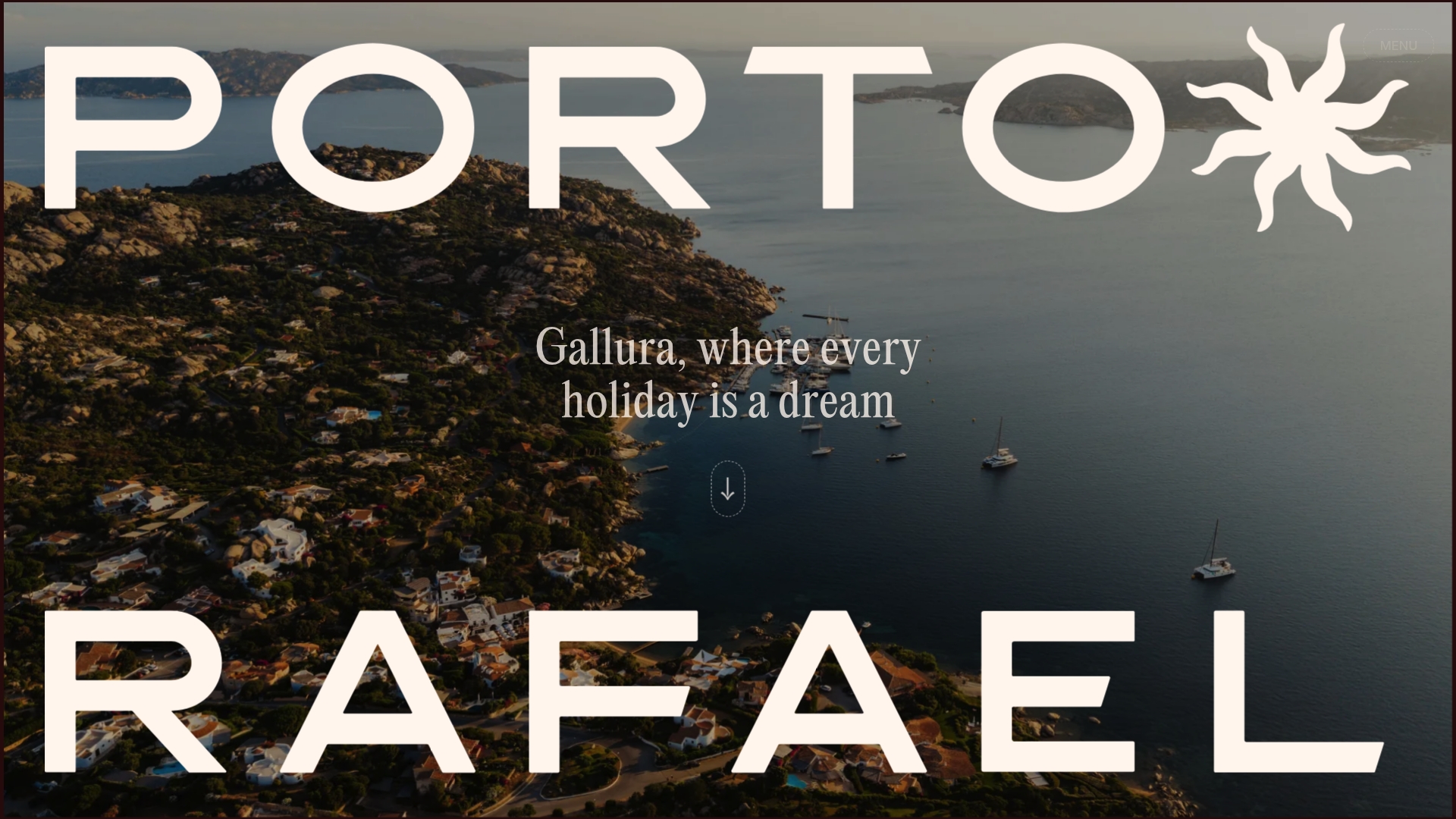
Begin your journey at the boutique hotel in Gallura, where the character of the island is woven into every detail of the stay. Dine at the local gourmet restaurant Solaz, where seasonal Sardinian ingredients are transformed into something quietly extraordinary. And take time to visit the Stazzo heritage sites, the ancient farmsteads of Gallura that embody the very roots of Sardinian hospitality. Porto Rafael is where authentic warmth and considered luxury find their most natural expression.
Frequently asked questions
What makes Sardinian hospitality unique?
Sardinians treat guests like family, rooting their welcome in centuries of tradition, communal values, and genuine warmth rather than scripted service. It is this instinctive generosity, expressed through shared meals and personal connection, that sets it apart from hospitality found elsewhere in the Mediterranean.
Where should travellers go to experience authentic Sardinian hospitality?
Authentic immersion occurs inland at agriturismi, village inns, and family-run establishments, away from the polished coastal resorts. These settings offer direct access to local traditions, home-cooked food, and the kind of personal welcome that cannot be manufactured.
Do Sardinians prefer to speak Italian with visitors?
Most hosts speak Italian and genuinely appreciate when visitors make even a modest effort with the language. As some travellers note, this small gesture of respect dissolves initial reserve and opens the door to far deeper and more memorable connections.
Does Sardinian hospitality contribute to their longevity?
Yes. Strong hospitality traditions foster the social bonds and shared meals that researchers link directly to Sardinia’s remarkable status as a Blue Zone, where exceptional lifespans are the norm rather than the exception.