
TL;DR:
- Sardinian archaeological parks preserve ancient monuments within natural landscapes and serve as open-air museums. They include structures like nuraghi, tombs, and menhirs, reflecting the island's Neolithic and Bronze Age history. These sites embody cultural heritage and local legends, offering immersive experiences for visitors willing to explore rugged terrain.
A Sardinian archaeological park is a protected cultural landscape preserving prehistoric and historic monuments, such as nuraghi, menhirs, and domus de janas, within their natural settings. These designated areas exist to safeguard Sardinia's ancient heritage while making it accessible to visitors. The Pranu Muttedu park in Goni spans 200,000 square metres and shelters roughly 60 menhirs dating to the late Neolithic period (3200–2800 BC). That scale alone illustrates how these parks function as open-air museums, where the land itself is part of the exhibit. Sardinia's prehistoric landmarks are not merely ruins. They are living records of civilisations that shaped the island across millennia.
What is a Sardinian archaeological park, and what monuments does it contain?
Sardinian archaeological parks contain several distinct monument types, each representing a different chapter of the island's prehistoric past. Understanding these types transforms a visit from sightseeing into genuine historical immersion.
Nuraghi: towers of the Bronze Age
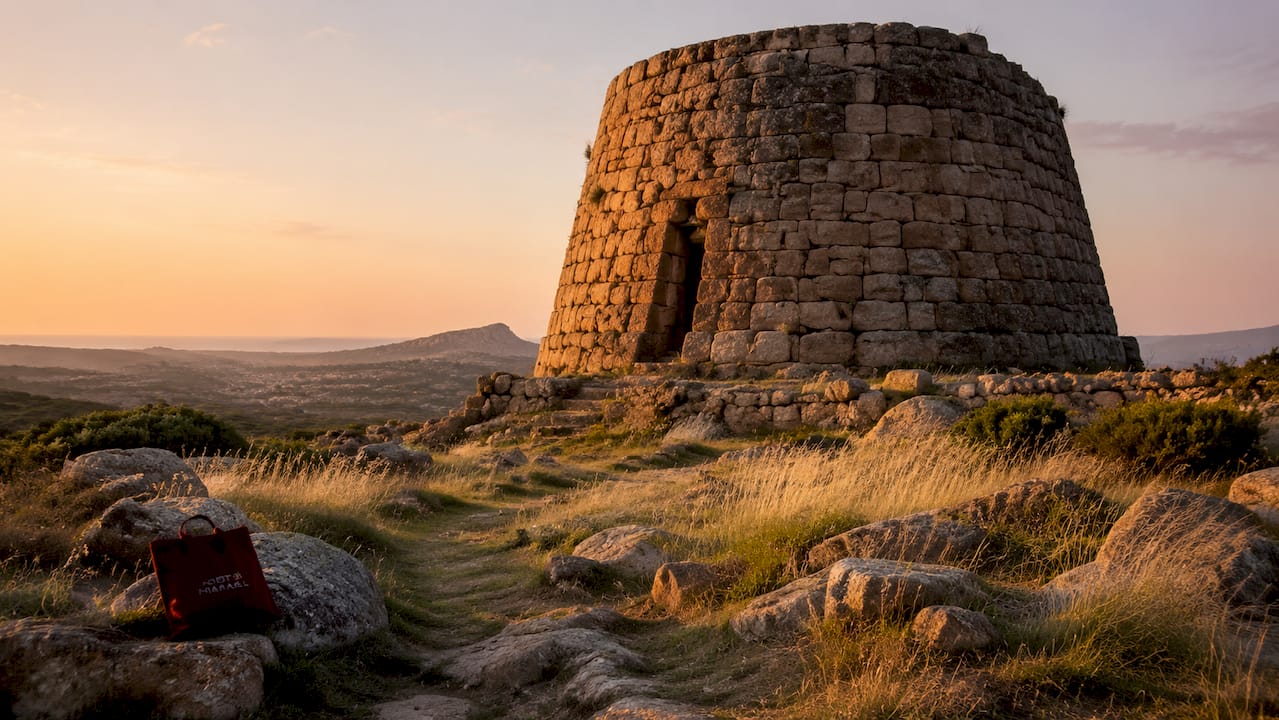
The nuraghe is Sardinia's most iconic structure. More than 7,000 nuraghi were built across the island, making them the defining legacy of the Nuragic civilisation. These truncated stone towers, constructed without mortar, served as fortresses, residences, and symbols of clan power. Many archaeological parks are built around nuragic complexes, where towers cluster with surrounding villages and sacred wells. You can learn more about their architectural significance in this guide to Sardinian nuraghes and Gallura stazzi.
Giants' Tombs and domus de janas
Giants' Tombs like Li Lolghi served as communal burial chambers and visible symbols of territorial power. Traces of ritual meals found near these structures suggest they linked the living with their ancestors through ceremony. Domus de janas, meaning "fairy houses" in Sardinian, are rock-cut tombs carved into cliff faces during the Neolithic period. In july 2025, UNESCO designated 17 domus de janas sites across Sardinia as a collective World Heritage Site. There are approximately 3,500 of these tombs on the island, which shows how deeply this funerary tradition was woven into ancient Sardinian life.
Monument types at a glance
| Monument type | Period | Primary function |
|---|---|---|
| Nuraghe | Bronze Age (1800–900 BC) | Fortress, residence, clan symbol |
| Giants' Tomb | Bronze Age | Communal burial, ancestral ritual |
| Domus de janas | Neolithic (4000–2700 BC) | Rock-cut tomb, funerary rite |
| Menhir | Late Neolithic | Ritual marker, sacred alignment |
| Monte d'Accoddi | Neolithic | Stepped altar, ceremonial platform |

Pro Tip: Visit a park that contains more than one monument type. Pranu Muttedu, for example, combines menhirs, burial complexes, and natural forest, giving you a layered picture of Neolithic life in a single visit.
How do Sardinian parks reflect cultural heritage and local legends?
Sardinian archaeological parks are considered sacred landscapes, integrating physical monuments, spiritual meaning, and natural surroundings into a single, unified experience. This concept sets them apart from conventional heritage sites, where artefacts are separated from their original environment.
Local oral traditions, known as contus de forredda, have grown up around these sites over centuries. These stories describe fairies inhabiting the domus de janas, and spirits moving among the standing stones of Pranu Muttedu at dusk. Far from being mere folklore, these legends preserve a form of cultural memory that archaeologists and anthropologists now take seriously.
"The interplay of archaeology and folklore imbues parks with spiritual meaning, connecting past societies' beliefs with present-day cultural identity. Monuments like Giants' Tombs reveal social stratification and community rituals, enriching the visitor experience far beyond what the stones alone can communicate."
The UNESCO recognition of 17 domus de janas sites in 2025 has amplified this cultural value. International designation draws scholarly attention and conservation funding, but it also validates what local communities have always known: these places carry meaning that extends well beyond their physical dimensions.
The connection between archaeology and living tradition matters for several reasons:
- It preserves intangible heritage alongside physical monuments.
- It encourages local communities to act as custodians of their own history.
- It gives visitors a richer, more emotionally resonant experience.
- It supports ongoing research by keeping oral knowledge alive alongside excavation.
What can visitors expect when exploring Sardinian archaeological parks?
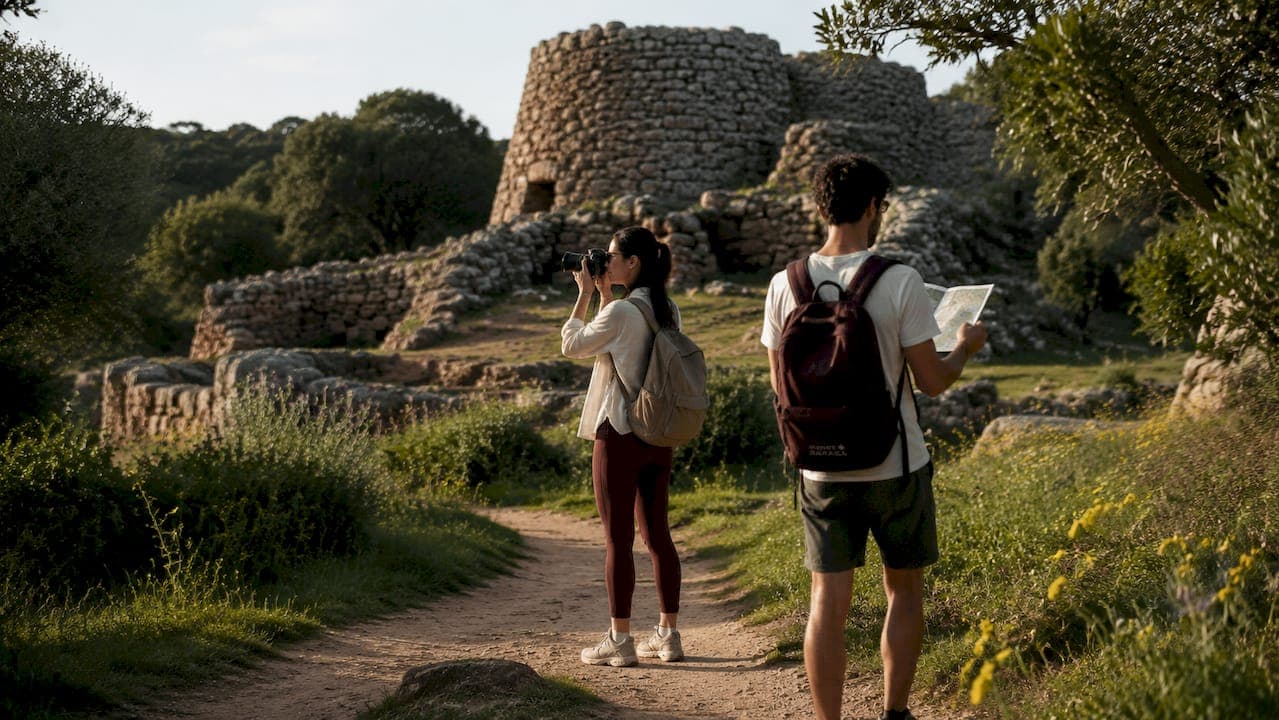
Visiting Sardinian archaeological parks requires preparation. These are not manicured museum gardens. They are often set in rugged, forested, or mountainous terrain, and the paths between monuments can be uneven and demanding.
Visitors should wear sturdy closed-toe shoes due to the rough ground common across most parks. Signage varies considerably from site to site. Some parks offer well-maintained visitor centres and guided tours, while others provide little more than a car park and a map. Checking conditions before you arrive saves considerable frustration.
Time is the most underestimated factor. A full visit with guided interpretation can take 3–4 hours at a single park. Pranu Muttedu alone covers over 200,000 square metres with multiple burial complexes and menhir alignments. Rushing through a site this size means missing the spatial relationships between monuments, which are often as meaningful as the monuments themselves.
Many sites remain active research zones where archaeological interpretation evolves constantly. Access to certain areas may be restricted during excavation seasons, typically spring and autumn. Flexibility is not optional. It is part of visiting responsibly.
Key practical points for any visit:
- Wear closed-toe shoes with ankle support.
- Bring water and sun protection, particularly between june and september.
- Allow at least half a day per major park.
- Stay on marked trails to protect fragile ground surfaces.
- Check the park's website or local tourist office for seasonal access restrictions.
Pro Tip: Morning visits offer cooler temperatures and softer light that makes stone monuments far more photogenic. At Pranu Muttedu, the early light filtering through the forest canopy creates an atmosphere that afternoon visits simply cannot replicate.
Which are the most notable Sardinian archaeological parks?
Sardinia holds a remarkable concentration of prehistoric sites. Several parks stand out for their scale, historical range, or the sheer variety of monuments they contain.
| Park | Location | Key features | Period |
|---|---|---|---|
| Pranu Muttedu | Goni, southern Sardinia | 60+ menhirs, burial complexes, forest setting | Late Neolithic |
| Nora | Pula, south-west Sardinia | Phoenician, Roman, and Punic ruins | 9th century BC onwards |
| Monte d'Accoddi | Sassari, northern Sardinia | Stepped altar platform, unique in the Mediterranean | Neolithic |
| Li Lolghi | Arzachena, Gallura | Giants' Tomb, ritual landscape | Bronze Age |
| Seleni | Ogliastra | Nuragic complex at 978 metres altitude | Bronze Age |
Nora deserves particular attention. Its archaeological park features ruins spanning over 1,500 years of continuous occupation, from Phoenician traders to Roman administrators. That depth of layering in a single coastal site is rare anywhere in the Mediterranean. The park at Arzachena, in the Gallura region, clusters several monument types within a compact area, making it one of the most accessible introductions to Sardinian prehistoric culture. You can plan a visit to Arzachena and nearby sites as part of a Sardinia coastal day trip from the north of the island.
Why Sardinian archaeological parks deserve more than a passing glance
The conventional approach to visiting these parks is to arrive, photograph the most striking monument, and move on. That approach misses almost everything worth knowing.
What strikes me most about Sardinian archaeological parks is how they resist easy interpretation. A nuraghe looks like a tower, but it functioned as a social statement, a defensive structure, and possibly a ceremonial space, all at once. A domus de janas looks like a cave, but it was carved with extraordinary precision to mirror the layout of a domestic dwelling, suggesting that the Neolithic Sardinians imagined the afterlife as a continuation of daily life. These layers of meaning only reveal themselves when you slow down.
The oral traditions matter as much as the stones. Spending time with a local guide who knows the contus de forredda around Pranu Muttedu changes the experience entirely. The legends are not decorative. They are a form of cultural continuity that has kept these sites meaningful for communities long before archaeologists arrived. Visiting without engaging with that tradition is like reading a translation without knowing the original language existed.
My honest recommendation is to visit in april or october. The light is extraordinary, the crowds are thin, and the parks feel genuinely wild. The UNESCO designation of the domus de janas sites will inevitably bring more visitors. Going now, before that wave arrives, means experiencing these places at their most atmospheric.
— Studio
Porto Rafael: a gateway to Sardinia's ancient world
Sardinia's archaeological heritage and its living culture are inseparable. The island's prehistoric landmarks sit within a landscape that still breathes with tradition, flavour, and artistry.
Portorafael, set in the heart of Gallura, places you within reach of sites like Li Lolghi, Arzachena's megalithic monuments, and the wild interior where ancient stones stand in forested silence. After a morning among the ruins, the gourmet cuisine at Solaz offers a return to the present through the finest local ingredients. For those who wish to carry a piece of Sardinian artistry home, Labenoi Atelier by Susanna Colleoni brings the island's creative heritage into a refined boutique setting. Portorafael is not simply a place to stay. It is a base from which Sardinia's timeless world becomes fully yours to explore.
FAQ
What is a Sardinian archaeological park?
A Sardinian archaeological park is a protected cultural landscape preserving prehistoric monuments such as nuraghi, menhirs, and domus de janas within their natural settings. These parks function as open-air heritage sites combining archaeology, ecology, and local tradition.
How old are the monuments found in Sardinian parks?
The oldest monuments, including domus de janas and menhirs, date to the Neolithic period (approximately 4000–2700 BC). Nuraghi belong to the Bronze Age, roughly 1800–900 BC, while sites like Nora contain ruins spanning over 1,500 years of occupation.
Are Sardinian archaeological parks suitable for all visitors?
Most parks involve rugged terrain and uneven paths, so sturdy footwear is necessary. Visitor facilities vary widely between sites, and some areas may be restricted due to active excavation work.
Which Sardinian archaeological park is best for a first visit?
Nora and Arzachena are widely considered the most accessible introductions, offering a range of monument types and reasonable visitor infrastructure. Pranu Muttedu suits those who want a more immersive, atmospheric experience in a forested setting.
What is the significance of the 2025 UNESCO designation?
In july 2025, UNESCO granted World Heritage status to 17 domus de janas sites across Sardinia, recognising their outstanding cultural value. The designation supports conservation funding and raises the international profile of Sardinia's prehistoric heritage.