
TL;DR:
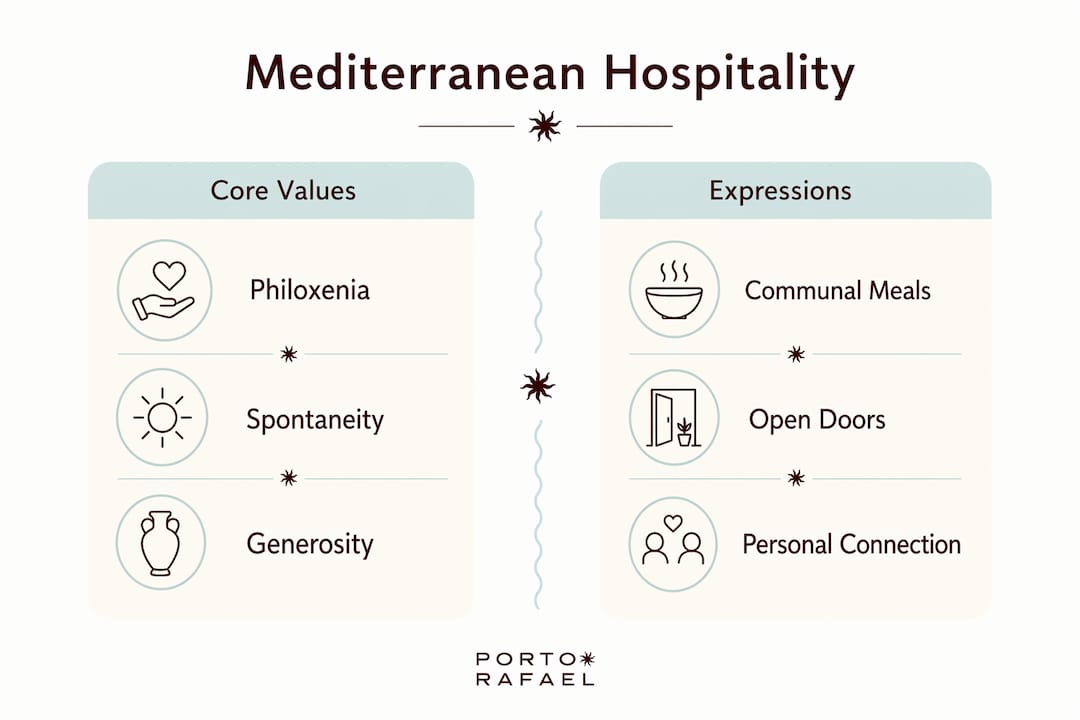
- Mediterranean hospitality is a centuries-old cultural practice rooted in the Greek concept of Philoxenia, emphasizing welcoming strangers as friends. It manifests through communal meals, open-door traditions, and personal connections that prioritize human warmth over scripted service. This authentic hospitality sustains cultural identity, fosters community, and enhances sustainable tourism across the region.
Mediterranean hospitality is defined as the ancient cultural practice of welcoming strangers with the same warmth and generosity reserved for close friends, rooted in the Greek concept of Philoxenia. This ethic is not merely polite behaviour. It is a moral imperative woven into the social fabric of cultures stretching from Greece and Italy to Spain, Turkey, and the islands of Sardinia. Understanding what Mediterranean hospitality means reveals something far richer than a service standard. It reveals a philosophy of human connection that has endured for over three millennia.
What is Philoxenia and why is it central to Mediterranean hospitality?
Philoxenia is the foundational concept of Mediterranean hospitality, mandating that strangers be treated with warmth as friends. The word itself derives from two Greek roots: philos, meaning friend, and xenos, meaning stranger. The combination produces something quietly profound. A stranger is not a threat or an inconvenience. A stranger is a friend not yet known.
This ethic is over 3,000 years old and was once protected by Zeus Xenios, the god who watched over travellers and guests. In ancient Greece, mistreating a guest was not simply rude. It was an offence against the divine order. Hosts who failed in their duty risked divine punishment. Guests who abused their welcome faced the same. This sacred social contract created a culture of mutual respect that shaped Mediterranean societies at their very core.
In modern practice, Philoxenia manifests in ways both grand and quietly ordinary:
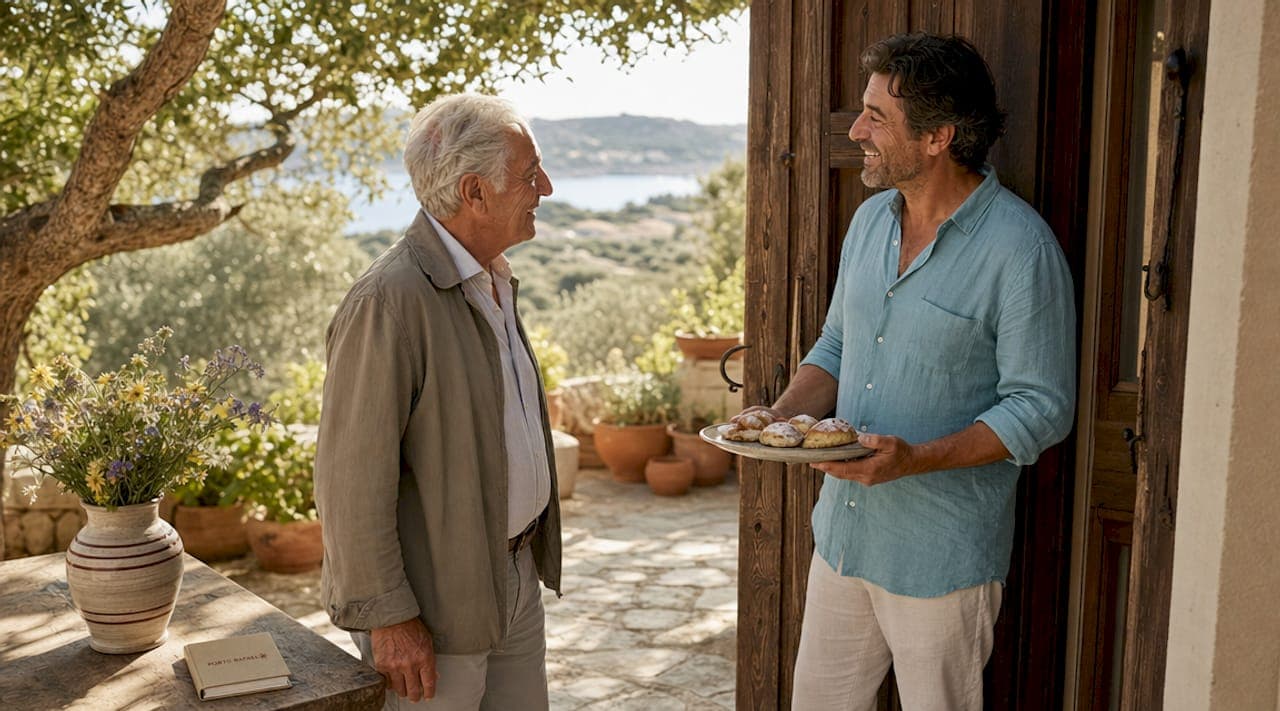
- A Sardinian family inviting a passing traveller to share their evening meal without hesitation
- A Greek taverna owner pulling up an extra chair and refusing to present the bill until the conversation has run its natural course
- A Turkish host offering tea before any transaction or question is raised
- An Italian grandmother pressing a second helping upon a guest who has already said they are full
The host's time and undivided attention are considered the highest gifts in Mediterranean culture, elevating guests to cherished friends rather than paying customers. This is the characteristic that most distinguishes Mediterranean hospitality from any commercial model. The host is not performing a service. The host is honouring a relationship.
Pro Tip: When you are welcomed into a Mediterranean home or local establishment, accept what is offered graciously. Refusing food or gifts is often perceived as rejecting the host's personal investment and affection, a gesture tied to the concept of meraki, the soul and love poured into every offering.
How do communal meals and open-door traditions express Mediterranean hospitality?
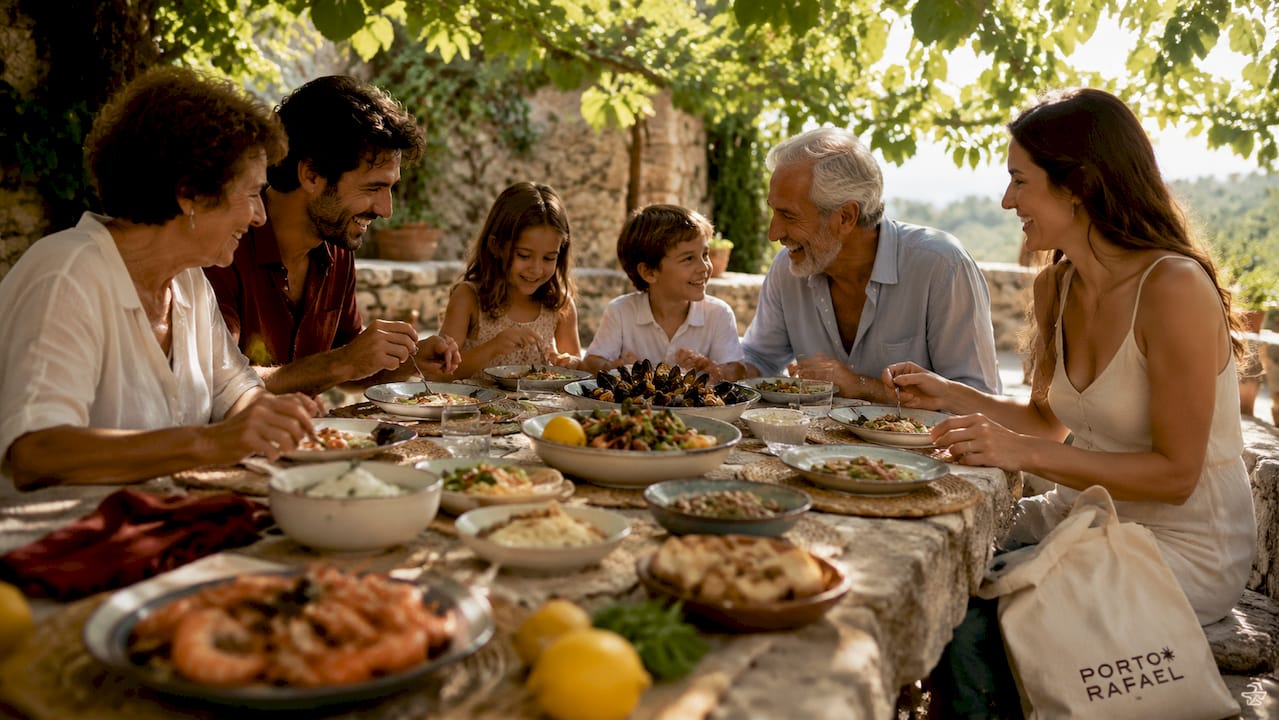
Shared meals are the most visible and deeply felt expression of Mediterranean hospitality. Across the region, the table is not simply where food is consumed. It is where community is built, stories are exchanged, and time is deliberately slowed.
In Greece, the concept of parea describes the particular joy of being together at a table, where the company matters as much as the food. In Spain, sobremesa refers to the cherished time spent lingering after a meal, talking and laughing long after the plates have been cleared. In North Africa and the Levant, the majlis tradition gathers guests in a circle of welcome, where hospitality is expressed through presence and generosity of spirit. These communal dining customs illustrate how a quick meal expands into long, generous social interactions that honour both food and fellowship.
"The table is never too small for one more. In Mediterranean culture, abundance is not measured in portions but in the willingness to share whatever is present."
The open-door tradition is equally telling. In Greek villages, homes have historically remained open to those in need, even through hardship. Local traditions such as the open door have remained alive even through economic crises, symbolising a resilience built on welcome rather than walls. This is not nostalgia. It is a living practice that continues to define how communities relate to one another and to visitors.
Food itself carries meaning in this context. Locally sourced ingredients, seasonal produce, and recipes passed through generations are not simply culinary choices. They are acts of cultural transmission. When a Sardinian host places pane carasau and aged pecorino on the table, they are offering a piece of their heritage. Discovering the true flavours of Sardinia through local dining is, in this sense, an act of receiving hospitality in its most authentic form.
How does Mediterranean hospitality differ from standard luxury or commercial hospitality?
The difference between Mediterranean hospitality and scripted luxury service is not a matter of quality. It is a matter of intention.
| Feature | Mediterranean hospitality | Standard luxury hospitality |
|---|---|---|
| Nature of interaction | Spontaneous, personal, emotionally warm | Scripted, rehearsed, professionally managed |
| Motivation | Moral and cultural duty | Commercial transaction |
| Knowledge of guest | Personal interest in origins and stories | Data-driven guest profiles |
| Generosity | Unconditional, often beyond expectation | Calibrated to service tier |
| Atmosphere | Community and belonging | Comfort and exclusivity |
Mediterranean hospitality intentionally avoids scripted service, favouring spontaneous, sincere interactions that personalise the guest experience. A five-star hotel may know your dietary preferences from a pre-arrival form. A Mediterranean host knows them because they asked, listened, and remembered. The distinction is subtle but transformative.
Hosts prefer to know about a guest's origins and respect personal stories rather than treating service as a mere transaction. This curiosity is genuine, not performative. It reflects the ancient understanding that every guest carries a world worth knowing. The result is an experience that feels less like a service and more like a friendship in its earliest, most generous stage.
Mediterranean hosts also practise what might be called the power of discretion. Comfort and safety are provided without interrogation, allowing guests emotional security and the freedom to share at their own pace. This balance of warmth and respect for privacy creates an environment that luxury service, however polished, rarely replicates.
Pro Tip: When staying in a locally owned Mediterranean property, engage with your host directly. Ask about their recommendations, their family recipes, and the history of the place. You will receive far more than a guidebook can offer, and you will honour the spirit of Philoxenia in return.
What is the significance of Mediterranean hospitality in sustaining culture and tourism?
Mediterranean hospitality is not simply a cultural charm. It is an economic and social force that shapes the future of tourism across the region.
Authentic local experiences create deeper guest satisfaction and are considered foundational to sustainable tourism development. This matters because mass tourism, when stripped of genuine human connection, erodes the very qualities that draw visitors in the first place. The moment a destination becomes indistinguishable from any other resort, it loses its soul.
The table below illustrates how authentic Mediterranean hospitality contributes across key dimensions:
| Dimension | Impact of authentic hospitality |
|---|---|
| Guest satisfaction | Higher emotional connection and return visits |
| Cultural preservation | Traditional skills, recipes, and customs remain alive |
| Local economy | Revenue flows to families and communities, not only corporations |
| Environmental awareness | Local sourcing reduces supply chain distance |
| Community cohesion | Shared values of welcome strengthen social bonds |
The future of Mediterranean tourism depends on hosts maintaining neighbour-like relationships with guests, preserving the soul of hospitality rather than scaling it into anonymity. This is a challenge that every Mediterranean destination faces as visitor numbers grow. The answer, consistently, lies in returning to the principles of Philoxenia. Personal attention, genuine generosity, and the courage to treat every guest as a potential friend.
Sardinia offers a particularly compelling example. The island's local Sardinian restaurants and family-run establishments preserve culinary traditions that stretch back centuries, offering visitors not just a meal but a living encounter with Sardinian identity. This is hospitality as cultural stewardship. It sustains communities, honours heritage, and creates the kind of memories that no luxury amenity can manufacture.
Why Mediterranean hospitality still moves me, after all these years
I have spent considerable time in Mediterranean destinations, from the granite-edged coastlines of Gallura to the whitewashed villages of the Greek islands, and the quality that consistently surprises me is not the beauty of the places. It is the generosity of the people.
What strikes me most is how Mediterranean hospitality is deeply emotional, not commercial, rooted in welcoming strangers as potential gods or cherished guests. That ancient instinct has not been polished away by modernity. You feel it in the way a host leans forward when you speak, in the way a second glass of wine appears before you have thought to ask, in the way a meal stretches into an evening without anyone glancing at a clock.
The conventional wisdom in travel circles is that luxury is the highest form of hospitality. I disagree. The most memorable experiences I have encountered were not in grand hotels with impeccable service. They were in a Sardinian courtyard where a family shared their Sunday lunch with a stranger, or in a Greek fishing village where the taverna owner sat down, uninvited and entirely welcome, to tell us the history of the harbour. That is Philoxenia. That is the real thing.
My advice to any traveller approaching the Mediterranean is this: slow down enough to receive what is being offered. Accept the extra portion. Stay for the conversation. Ask the question that invites a story. The hospitality you encounter is not a performance staged for tourists. It is a practice that has survived three thousand years because it answers something true about what human beings need from one another.
— Studio
Experience authentic Mediterranean hospitality at Portorafael
Portorafael, set within the timeless landscape of Gallura in northern Sardinia, embodies the spirit of Philoxenia in every detail. From the warmth of Hotel La Piazza to the locally sourced menus at Solaz Restaurant and the convivial atmosphere of Rafael's Bar & Lounge, every element of the Portorafael experience is shaped by the Mediterranean tradition of genuine, generous welcome. For those who wish to go deeper, the Sardinian cooking class offers an immersive encounter with the island's culinary heritage, guided by local expertise and the same spirit of open-hearted sharing that defines Mediterranean culture at its finest. Discover what authentic Mediterranean holidays truly feel like, where every guest is welcomed as a friend.
FAQ
What does Mediterranean hospitality mean?
Mediterranean hospitality refers to the cultural ethic of welcoming strangers with unconditional warmth and generosity, rooted in the ancient Greek concept of Philoxenia, which translates as "love of strangers." It treats hospitality as a moral duty rather than a commercial transaction.
What are the main characteristics of Mediterranean hospitality?
The defining characteristics include spontaneous generosity, communal dining, personal interest in guests' stories, the open-door tradition, and a deep sense of emotional warmth that prioritises human connection over scripted service.
How does Mediterranean hospitality differ from luxury hotel service?
Unlike scripted luxury service, Mediterranean hospitality is unplanned, personal, and emotionally authentic. The host's motivation is cultural and moral rather than commercial, and the guest is treated as a cherished friend rather than a paying client.
What is the role of food in Mediterranean hospitality?
Food is the primary language of Mediterranean welcome. Sharing locally sourced, generously portioned meals is how hosts express care, cultural pride, and the spirit of Philoxenia. Refusing food is often interpreted as rejecting the host's affection.
Why is Mediterranean hospitality important for tourism today?
Authentic Mediterranean hospitality creates stronger guest satisfaction, supports local economies, and preserves cultural identity. As mass tourism grows, the personal, human dimension of this tradition is what distinguishes truly memorable destinations from interchangeable ones.