
TL;DR:
Sardinian cuisine is deeply rooted in local, seasonal ingredients and traditional preparation methods.
Dining at agriturismos and family trattorias offers authentic cultural experiences and supports local communities.
Choosing local food experiences enhances understanding of Sardinia’s heritage, health, and sustainable practices.
Sardinia is not simply another Italian island with pasta and pizza on every corner. Its cuisine is a world apart, shaped by centuries of pastoral tradition, coastal abundance, and a fiercely independent spirit. Authentic regional flavours are sourced from local, seasonal ingredients and reflect a heritage that mainland Italy cannot replicate. From the crunch of pane carasau to the warmth of a shared agriturismo table, eating locally here is an act of cultural discovery. This guide will show you how to find those genuine experiences, why they matter for your health and the local community, and how to make every meal in Sardinia truly memorable.
Key Takeaways
| Point | Details |
|---|---|
| Sardinian cuisine’s uniqueness | Local dishes showcase distinct pastoral and coastal flavours with authentic ingredients. |
| Dining locally benefits health | The Blue Zone diet linked to Sardinian meals supports longevity and well-being. |
| Agriturismos deliver authenticity | Eating where food is grown offers a genuine taste and deep cultural connection. |
| Supporting communities | Local dining helps sustain family businesses and preserves Sardinian traditions. |
| Practical experience tips | Book ahead, embrace communal dining, and choose seasonal menus for a true Sardinian meal. |
What makes Sardinian cuisine unique
Sardinian food does not follow the rules you might expect. Forget the rich tomato sauces and fresh pasta of the north. Here, the table tells a different story, one written by shepherds, fishermen, and farmers across thousands of years of isolated island life.
The island’s cuisine balances two distinct worlds: the rugged, earthy interior and the luminous, salt-kissed coast. In the highlands, slow-roasted porceddu (suckling pig) perfumed with myrtle is the centrepiece of celebrations. Along the shoreline, bottarga (cured fish roe) and fresh sea urchin speak of the sea’s generosity. Both traditions share a commitment to quality ingredients and unhurried preparation.
Some of the most iconic elements of traditional Sardinian flavours include:
-
Pane carasau: a paper-thin, twice-baked flatbread that has sustained shepherds for centuries
-
Pecorino sardo: a sharp, aged sheep’s milk cheese with extraordinary depth of flavour
-
Culurgiones: hand-pinched pasta parcels filled with potato, pecorino, and mint, sealed with an intricate wheat-stalk pattern
-
Cannonau wine: a robust red grape variety native to Sardinia, celebrated for its high antioxidant content
-
Porceddu: slow-roasted suckling pig, the jewel of festive Sardinian cooking
This philosophy of sourcing close to home is not a modern trend. It is simply how Sardinia has always eaten. The zero-kilometre approach, using produce grown or raised within the immediate landscape, is woven into the island’s identity.
| Ingredient | Origin | Flavour profile |
|---|---|---|
| Pecorino sardo | Inland farms | Sharp, nutty, aged |
| Cannonau wine | Native vineyards | Bold, fruity, antioxidant-rich |
| Pane carasau | Traditional bakeries | Crisp, light, versatile |
| Culurgiones | Home kitchens | Delicate, herby, comforting |
| Bottarga | Coastal fisheries | Intense, saline, umami |
Perhaps the most remarkable dimension of Sardinian food culture is its connection to longevity. Sardinia is one of the world’s five Blue Zones, regions where people live measurably longer lives. The Blue Zone diet emphasises whole grains, vegetables, and minimal meat, and Sardinia produces ten times more centenarians per capita than the United States. That is not coincidence. It is the cumulative effect of generations eating simply, seasonally, and locally.
The warmth of Sardinian hospitality amplifies every meal. Food here is never just fuel. It is a ritual of connection, generosity, and pride.
Now that you understand Sardinia’s culinary uniqueness, let’s explore how small businesses and agriturismos preserve these traditions.
The role of local businesses: agriturismos and family-run trattorias
If there is one institution that captures the soul of Sardinian dining, it is the agriturismo. These are working farms that open their doors, and their tables, to visitors. Everything served comes from the land surrounding you. The olive oil, the cheese, the cured meats, the wine: all produced on site or sourced from immediate neighbours.
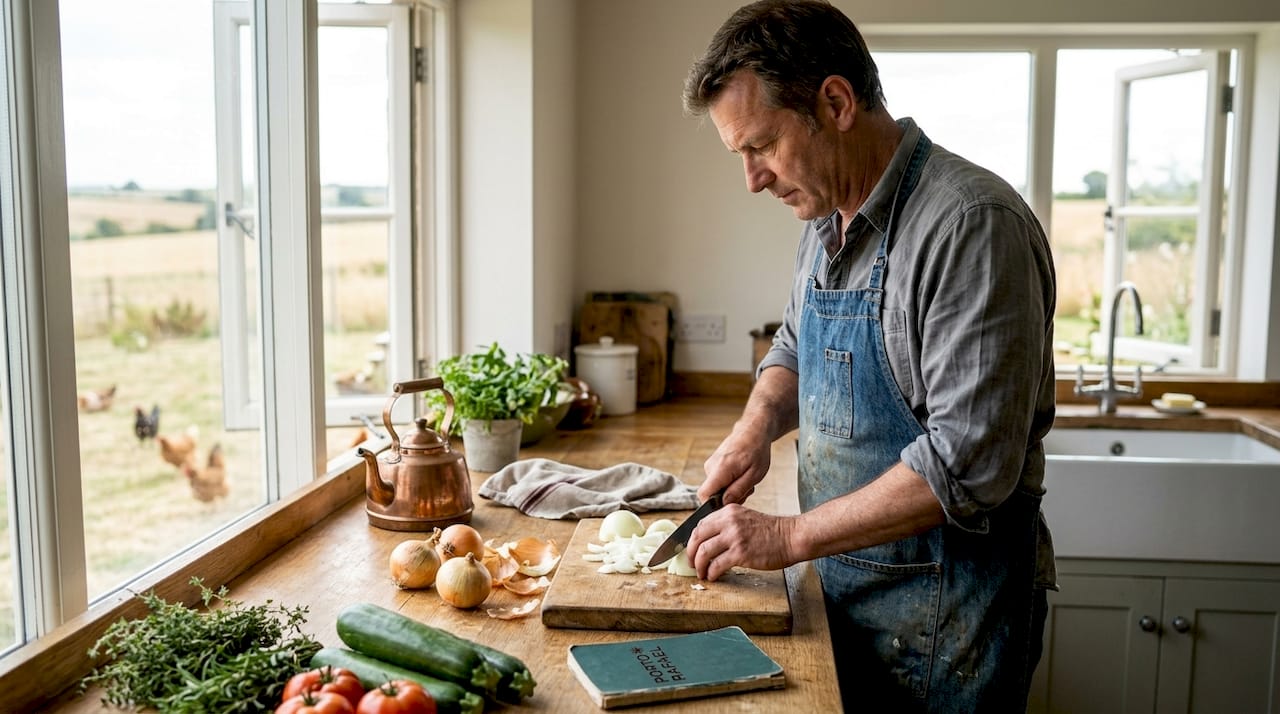
Agriturismos exemplify the zero-kilometre philosophy in its purest form. Booking ahead is essential, as meals are prepared according to what the farm produces that day. Communal tables are the norm, meaning you will likely share a long, leisurely lunch with strangers who leave as friends.
Family-run trattorias occupy a slightly different space. Found in village squares and coastal towns, they offer a more accessible entry point to local cooking without the rural setting. Both venues share an ethos: recipes passed down through generations, ingredients chosen for quality rather than cost, and a genuine pride in Sardinian identity.
Agriturismo vs family-run trattoria: a quick comparison
| Feature | Agriturismo | Family-run trattoria |
|---|---|---|
| Setting | Working farm, rural | Village or coastal town |
| Menu | Fixed, seasonal, farm-produced | Varied but locally sourced |
| Booking | Essential | Recommended |
| Atmosphere | Communal, immersive | Intimate, neighbourhood feel |
| Price | Set menu, great value | À la carte or set options |
To make the most of either experience, consider these steps:
-
Research before you arrive: ask your accommodation for personal recommendations rather than relying on generic review sites
-
Book in advance: agriturismos in particular prepare limited quantities, and turning up unannounced is rarely welcomed
-
Embrace the fixed menu: resist the urge to customise. The chef’s choice reflects what is freshest and most authentic that day
-
Slow down: Sardinian meals unfold over hours. Rushing signals a misunderstanding of the culture
-
Engage with your hosts: questions about ingredients and recipes are always welcomed and often lead to the most memorable conversations
You might also consider a Sardinian cooking class to deepen your understanding before sitting down to eat. Learning to shape culurgiones or prepare pane carasau transforms a meal from passive consumption into active cultural participation.
Pro Tip: At a communal agriturismo table, introduce yourself and ask fellow diners what they ordered first. Local regulars often know which dish the farm does best that season, and their enthusiasm is infectious.
Understanding the institutions preserving Sardinian food, let’s see how eating locally benefits both travellers and communities.
Benefits of dining locally: for travellers and Sardinia
Choosing a family table over a tourist-facing restaurant is one of the most meaningful decisions you can make as a visitor. The rewards extend far beyond the plate.
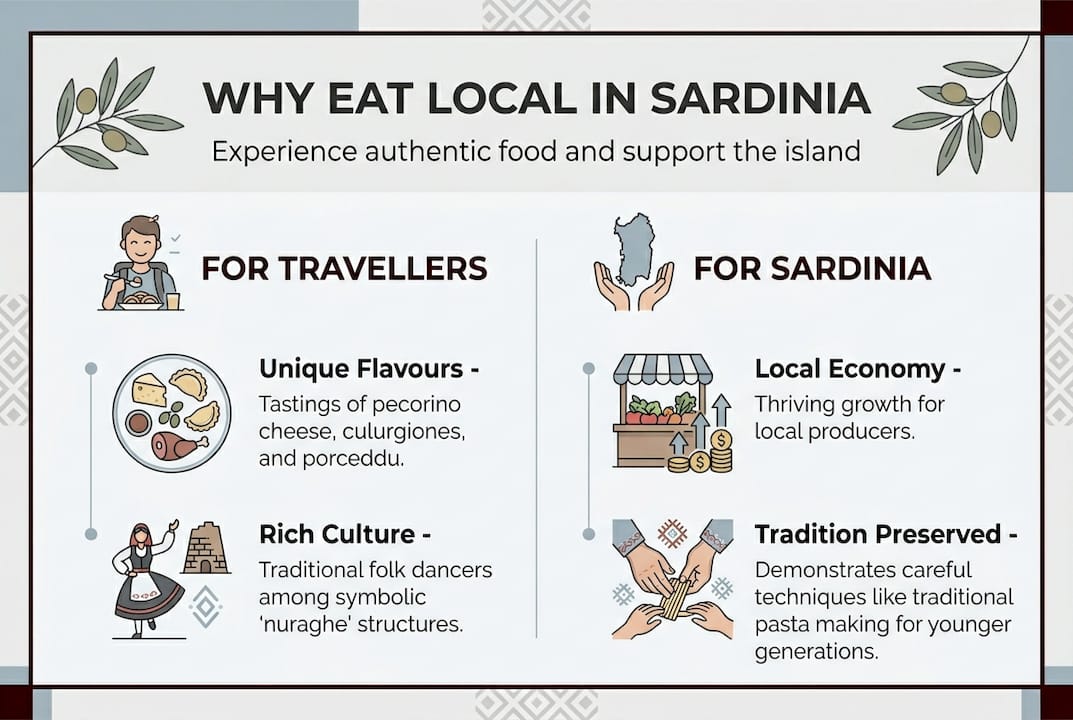
For travellers, local dining offers:
-
Cultural depth: every dish carries a story. Understanding what you are eating and why transforms a meal into a lesson in living history
-
Genuine connection: meeting local hosts and fellow diners creates memories that outlast any photograph
-
Health benefits: the Blue Zone diet centred on whole grains, vegetables, and minimal meat is linked directly to Sardinia’s extraordinary longevity rates
-
Sensory authenticity: flavours produced from local soil and sea taste markedly different from industrially sourced equivalents
-
Sustainability: choosing seasonal, local produce reduces food miles and supports environmentally responsible farming
For Sardinia itself, the impact is equally significant. When you spend your euros at an agriturismo or a village trattoria, that money stays within the community. It pays the shepherd who raised the lamb, the winemaker who tended the Cannonau vines, and the grandmother who shaped the culurgiones by hand that morning.
“The table is where Sardinia tells its truest story. Every ingredient, every recipe, every shared meal is an act of cultural preservation.”
Exploring Sardinian village heritage reveals how deeply food is intertwined with identity. Festivals, harvests, and family milestones are all marked at the table. When visitors participate in this, even briefly, they become part of something timeless.
Pro Tip: When choosing from a menu, look for dishes described with a specific village or producer name. That specificity signals genuine provenance and a kitchen that takes its sourcing seriously.
With clear benefits in mind, discover how to find and enjoy these local meals for maximum impact.
How to find and make the most of local dining in Sardinia
Finding authentic local dining in Sardinia requires a little intention, but the rewards are extraordinary. Tourist-facing restaurants cluster around busy ports and beach resorts. The real gems sit further afield, in village squares, on hillside farms, and along quieter coastal roads.
Here is how to locate them:
-
Ask your hotel or host: personal recommendations from people who live locally are far more reliable than anonymous online reviews
-
Visit local markets: the weekly market in any Sardinian town is a living map of the best producers. Follow those producers to find where they supply
-
Look for handwritten menus: a menu that changes daily and is written by hand signals a kitchen working with whatever arrived fresh that morning
-
Seek out the interior: the rural interior offers earthy, plant-forward flavours rooted in the Blue Zone tradition, away from the coastal tourist trail
-
Use specialist travel resources: planning your Sardinia trip with curated itineraries helps you identify dining destinations before you arrive
Once you have found your venue, a few practical points will enhance the experience:
-
Arrive at the time suggested by your host, not earlier or later
-
Dress neatly. Sardinians take pride in their appearance at the table
-
Accept whatever is offered as a welcome gesture, whether a glass of mirto or a slice of pane carasau with olive oil
-
Avoid asking for substitutions unless you have a genuine dietary need
-
Linger. The meal is not over when the plates are cleared
For those seeking luxury travel tips that incorporate fine local dining, Gallura in particular offers a remarkable range of experiences, from intimate farm tables to refined coastal restaurants. Pairing these meals with authentic festival experiences creates a visit that is genuinely immersive rather than merely scenic.
A fresh perspective: why local dining beats tourist fare every time
There is an uncomfortable truth about tourist restaurants in Sardinia: they are often serving a version of the island’s cuisine designed for expectation rather than reality. The porceddu is there, the pecorino is there, but the soul has been adjusted for speed, volume, and international palates.
What you lose is context. A dish eaten at the farm where the pig was raised, poured over with wine from the vineyard visible through the window, carries a meaning that no city-centre restaurant can replicate. The flavour is almost secondary.
Visitors who choose true Sardinian cuisine at local venues consistently report something surprising: they remember the people more than the food. The farmer who explained why myrtle is essential. The grandmother who insisted on a second helping. These moments are not manufactured. They are the natural result of sitting at a table where the hosts have genuine pride in what they are offering.
Tourist fare fills a plate. Local dining fills a memory.
Experience Sardinian flavours with Porto Rafael
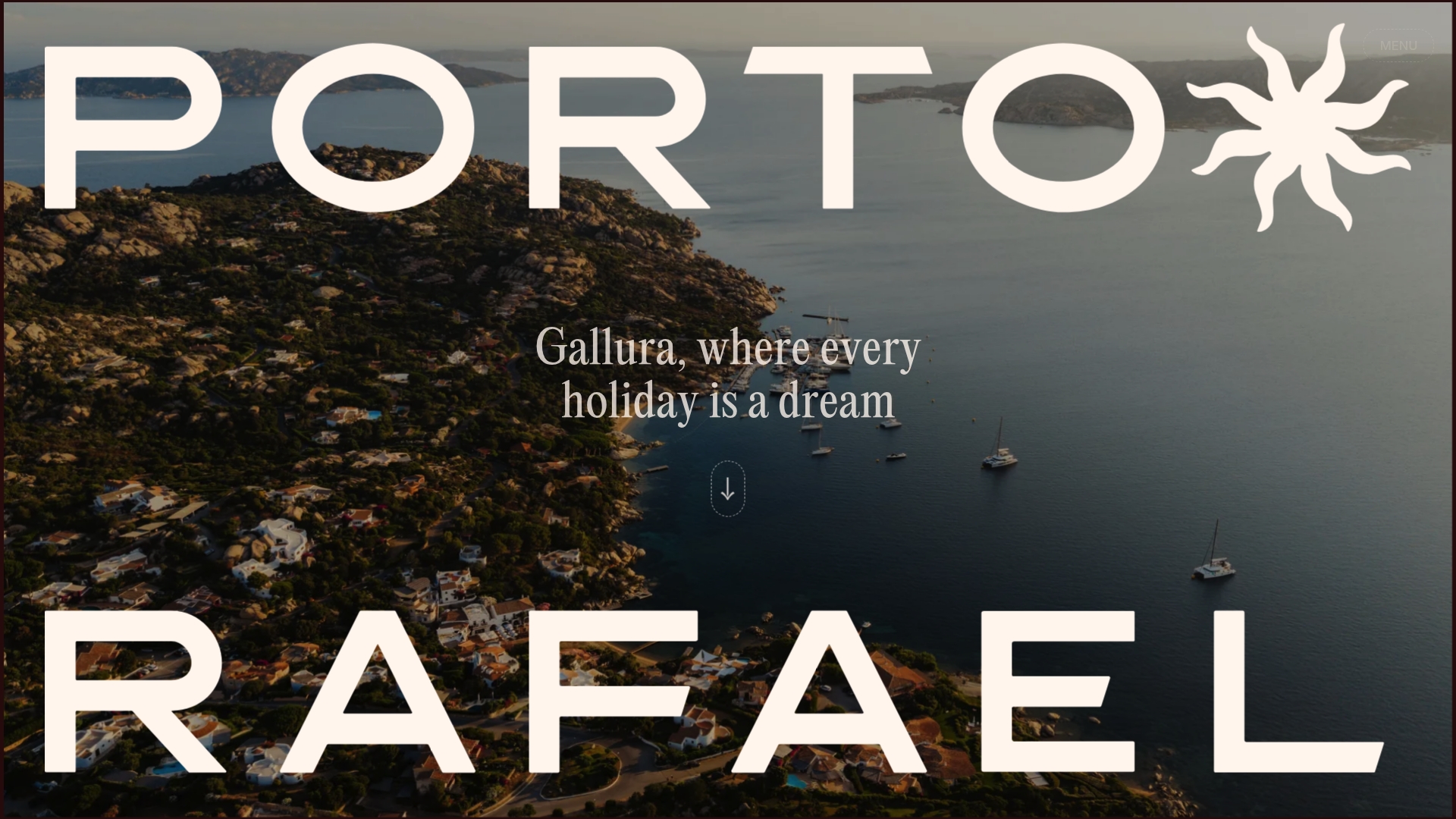
Porto Rafael, nestled in the captivating Gallura region, offers a rare gateway into the authentic flavours and warmth of Sardinian culture. Whether you are drawn by the idea of learning traditional recipes or simply wish to savour the finest local ingredients in an elegant setting, the village has something genuinely special to offer.
Join a Sardinian cooking class and discover the art of shaping culurgiones or preparing pane carasau under expert guidance. Explore the full range of Porto Rafael gastronomy at Solaz Restaurant and Rafael’s Bar & Lounge, where local ingredients are celebrated with elegance. Complete the experience by staying in a beautifully appointed hotel prestige room at Hotel La Piazza, where Sardinian hospitality is woven into every detail.
Frequently asked questions
What are Sardinian agriturismos and why are they recommended?
Agriturismos are working farms that serve meals made entirely from their own produce, offering zero-kilometre cuisine and a genuine sense of community. Booking ahead and embracing communal tables makes the experience truly immersive.
How does the local Sardinian diet contribute to healthy living?
The Blue Zone diet focuses on whole grains, vegetables, and minimal meat, and is directly linked to Sardinia’s remarkable longevity, producing ten times more centenarians per capita than the United States.
What dishes should visitors try when dining locally in Sardinia?
Signature dishes include porceddu, culurgiones, pane carasau, pecorino sardo, and Cannonau wine, each one a living expression of Sardinia’s pastoral and coastal heritage.
Are there etiquette rules for dining in Sardinian local venues?
Communal tables and relaxed schedules are standard at agriturismos, and booking ahead is strongly advised. Arrive on time, dress neatly, and allow the meal to unfold at its own unhurried pace.