
TL;DR:
- A Mediterranean holiday offers a multi-layered experience of scenery, history, and authentic culture, beyond just sun and sand.
- Destinations like Sardinia feature dramatic landscapes, rich heritage, and luxurious accommodations that connect deeply with local traditions.
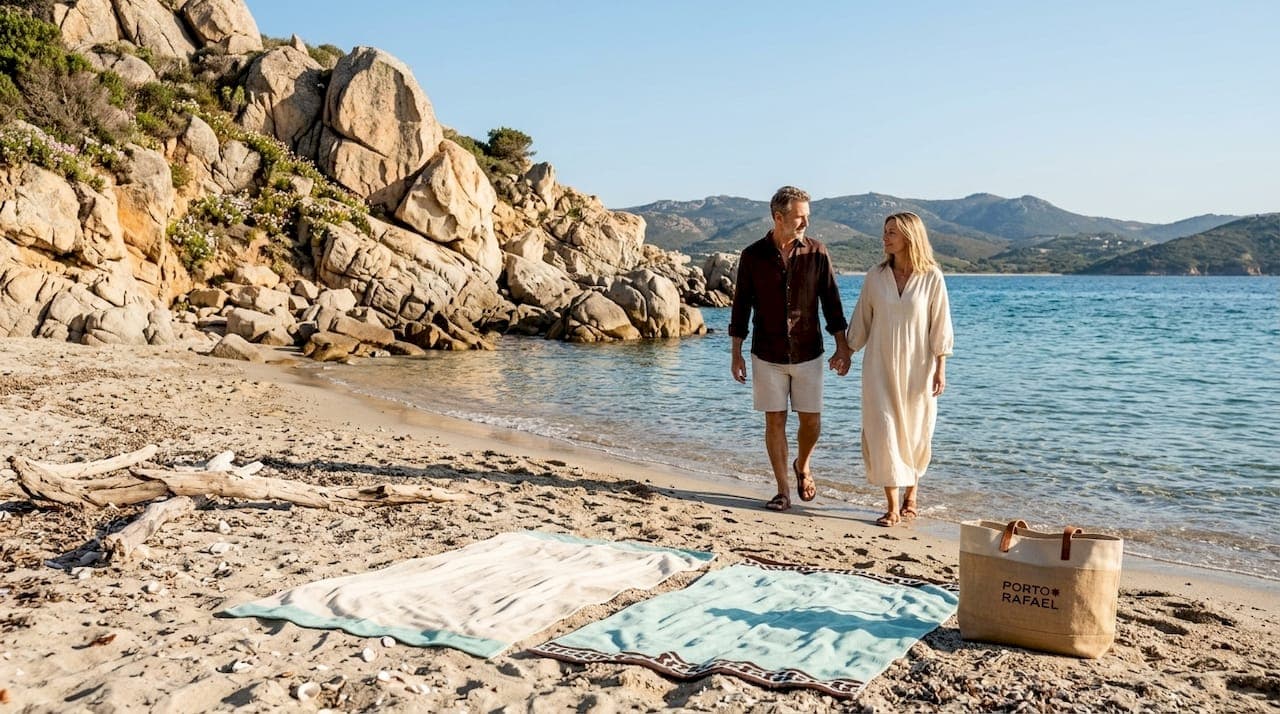
Few travel experiences carry as much romantic weight as a Mediterranean holiday, yet they are so frequently reduced to their simplest ingredients: a sunlit beach, a cold drink, and a sunbed. This reductive image does a profound disservice to one of the world's most layered, culturally textured, and visually extraordinary regions. Mediterranean holidays are commonly celebrated for their sun-soaked scenery, heritage, and upscale accommodation, but the full picture is richer still. This guide moves beyond the postcard version to reveal what truly defines a Mediterranean escape, and why destinations such as Sardinia captivate travellers who seek far more than a tan.
Key Takeaways
| Point | Details |
|---|---|
| Blend of experiences | A true Mediterranean holiday uniquely combines scenery, history, and luxury for a seamless experience. |
| Cultural depth | Immersing yourself in local traditions and sites is key to a memorable Mediterranean escape. |
| Luxury comfort | Upscale accommodation and attentive service set Mediterranean getaways apart from ordinary beach breaks. |
| Culinary delights | Food and drink are at the heart of the Mediterranean lifestyle and travel experience. |
What defines a Mediterranean holiday
A Mediterranean holiday is not simply a coastal getaway. It is a carefully layered experience where landscape, history, and comfort converge in a way that few other regions in the world can replicate. The Mediterranean basin stretches across southern Europe, northern Africa, and the western edges of Asia, encompassing dozens of distinct cultures, each with its own language, cuisine, architecture, and rhythm of life.
What sets this region apart begins, admittedly, with the light. The quality of Mediterranean sunshine, warm and golden rather than harsh, transforms every cove, terrace, and stone street into something worth pausing over. Yet it is when you look beyond the light that the true character of a Mediterranean holiday reveals itself.
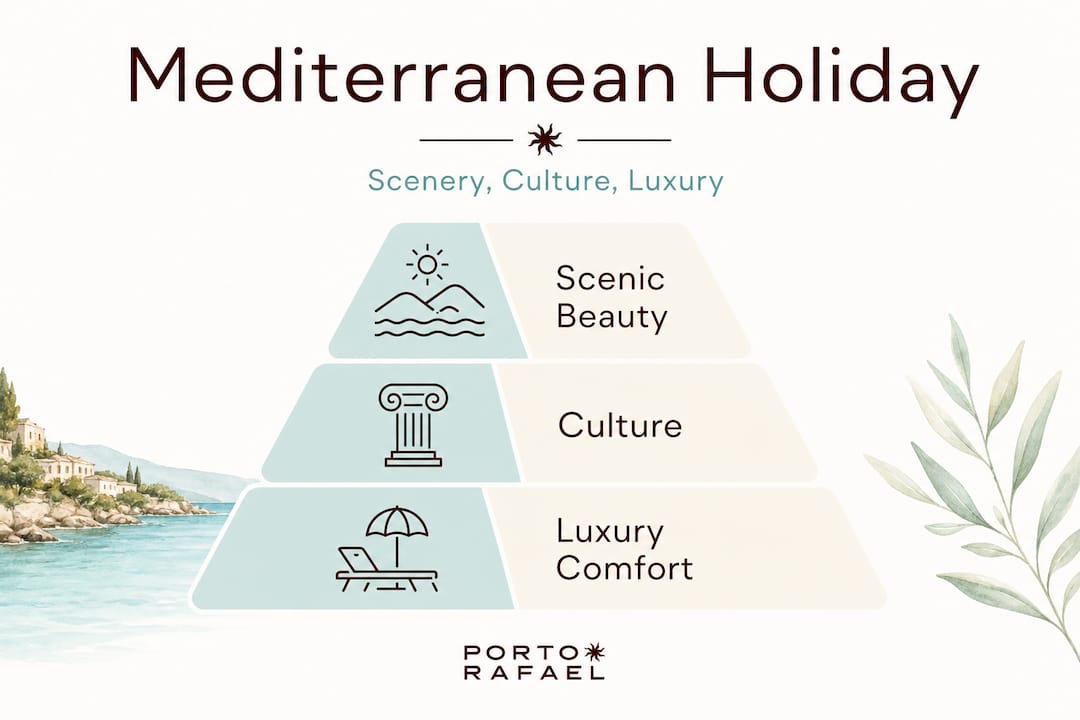
Coastal scenery paired with culture and luxury stays form the defining trio of any authentic Mediterranean experience. Consider what that means in practice:
- Scenery: Turquoise coves, granite headlands, ancient olive groves, and terraced hillsides that have fed civilisations for millennia
- Culture: Living traditions, UNESCO-listed sites, village festivals, and a depth of history that stretches back thousands of years
- Luxury: Intimate boutique hotels, private villas, and resort experiences that celebrate local character rather than erasing it
- Gastronomy: Fresh, market-led cuisine prepared with ingredients grown or caught within miles of your table
- Pace: A deliberately unhurried rhythm, sometimes called the dolce far niente, or the sweetness of doing nothing, that allows genuine restoration
"The Mediterranean is not just a sea. It is a living archive of human civilisation, written in stone, olive oil, and salt."
For travellers drawn to cultural immersion in Sardinia, this multi-layered nature is precisely what makes the island so compelling. Equally, those searching for luxurious Sardinian stays discover that the region's finest accommodations are designed to echo the natural beauty surrounding them rather than compete with it.
Scenic beauty: landscapes and coastlines
No account of the Mediterranean can pass lightly over its scenery, because the landscape is genuinely unlike anything found elsewhere. The region boasts some of Europe's most dramatic coastal formations, from the sun-bleached cliffs of the Amalfi Coast to the wild, wind-sculpted granite shores of northern Sardinia's Gallura region.
Sardinia, in particular, occupies a singular position in the Mediterranean imagination. Its waters, ranging from the palest jade to a deep, saturated cobalt, are consistently ranked among the clearest in the Mediterranean world. The island's beaches include fine white sands, pink coral strands, and sheltered pebble coves, each with its own microclimate and character.
| Destination | Coastline character | Landscape highlights | Best season |
|---|---|---|---|
| Sardinia, Italy | Granite coves, white sands, crystal waters | Gallura highlands, La Maddalena archipelago | June to September |
| Amalfi Coast, Italy | Dramatic cliffs, terraced lemon groves | Positano, Ravello, Capri | May to October |
| Santorini, Greece | Volcanic caldera, dark sand beaches | Oia, Fira, Akrotiri ruins | April to October |
| Côte d'Azur, France | Elegant promenades, rocky inlets | Nice, Antibes, Èze village | May to September |
| Mallorca, Spain | Pine-fringed coves, limestone mountains | Serra de Tramuntana, Palma cathedral | May to October |
What truly elevates Sardinia's scenery is the sense of untouched wildness that persists even in popular areas. The Porto Rafael points of interest in northern Sardinia illustrate this perfectly: rocky promontories reaching into crystalline water, fragrant maquis scrubland rolling down to the shore, and sunsets that turn the Tyrrhenian Sea to burnished copper. This is not scenery manufactured for tourists. It is a landscape that has always been this way, patient and magnificent.
Living heritage: culture and authentic experiences
After marvelling at the scenery, you discover that the Mediterranean's cultural richness runs just as deep as its waters. The region holds more UNESCO World Heritage Sites than any other comparable area on earth, and that density of history means that culture is never far from view, whether you are standing in a Roman amphitheatre or watching a village procession in honour of a patron saint.
Cultural highlights woven into Mediterranean travel include everything from archaeological sites and vernacular architecture to folk music and ancient agricultural practices. To make the most of a culturally immersive day, consider approaching it as follows:
- Begin the morning at a local market. Producers, fishermen, and artisans gather early, and the conversations you have there reveal more about a place than any guidebook.
- Visit a heritage site with a local guide. Context transforms stone ruins into living stories. A knowledgeable guide in Sardinia, for instance, can connect the nuraghi (prehistoric stone towers unique to the island) to wider Bronze Age Mediterranean civilisations.
- Take lunch in a family-run trattoria. Avoid tourist menus and instead ask what is freshest that day. In Sardinia, this might be malloreddus pasta with saffron and sausage, or slow-roasted porceddu suckling pig.
- Explore a historic village in the afternoon heat. When the day grows warm and visitors retreat to pools, the streets of old villages belong to residents again, and the atmosphere becomes genuinely intimate.
- Attend an evening event, festival, or concert if timing allows. Mediterranean communities celebrate publicly and joyfully, and sharing those moments leaves a lasting impression.
Pro Tip: Travelling in shoulder season, May or late September, dramatically increases the authenticity of cultural encounters. Locals are more relaxed, festival calendars are still active, and the quieter streets allow you to genuinely absorb each place at your own pace.
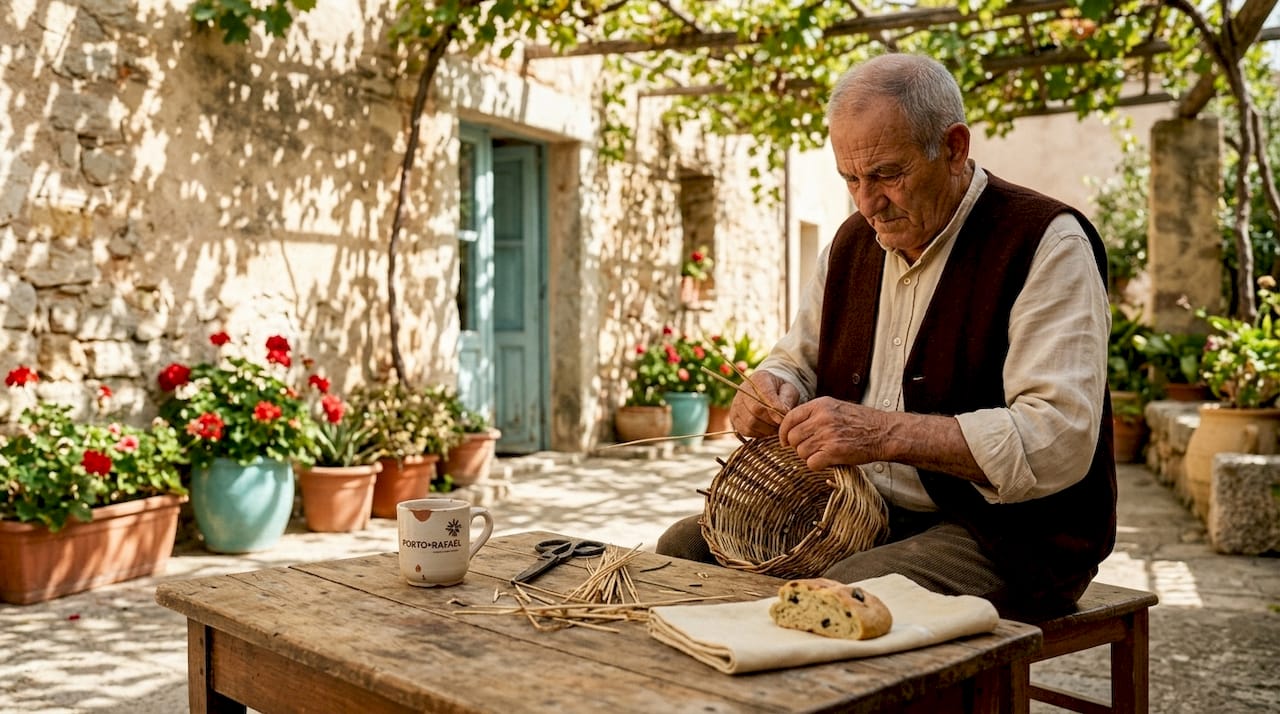
Sardinia's cultural wealth is especially captivating. The island has been shaped by Phoenician, Carthaginian, Roman, Byzantine, Spanish, and Piedmontese influences, each layer still visible in its architecture, dialects, and traditions. Exploring cultural immersion in Sardinia is a journey through thousands of years of layered human story, compressed into a single extraordinary island.
Luxury and comfort: the Mediterranean way
Having absorbed the culture, the question of where and how you rest becomes deeply important. The Mediterranean has long understood that luxury and authenticity need not be in conflict. In fact, the finest Mediterranean accommodations draw their character directly from the landscape and traditions that surround them.
Upscale accommodation forms a central pillar of the Mediterranean holiday experience, and the options are richly varied. Broadly, they fall into three main categories:
| Type | Character | Typical features | Ideal for |
|---|---|---|---|
| Boutique hotel | Intimate, locally styled, owner-managed | Personal service, curated décor, local gastronomy | Couples, cultural travellers |
| Luxury villa | Private, spacious, immersive | Private pool, chef, concierge, garden | Families, groups, privacy seekers |
| Resort | Comprehensive, landscaped, full-service | Spa, multiple restaurants, guided activities | Those seeking all-in ease |
The most memorable Mediterranean luxury, however, is not measured in thread counts or pool temperature alone. It is found in a staff member who remembers your preferred morning coffee. It is the private terrace that faces the exact bay you dreamed of for months. It is the local sommelier who introduces you to a Cannonau wine from a Sardinian hillside vineyard you could walk to from your room.
Must-have features when selecting a luxury Mediterranean stay include:
- Private beach or direct sea access, for unhurried swimming at your own pace
- Onsite fine dining that champions local and seasonal produce
- Personalised concierge service capable of arranging boat hire, cultural tours, and exclusive dining reservations
- Spa and wellness offerings that draw on regional traditions, such as Mediterranean herb treatments or local clay therapies
- Rooms with genuine views, whether overlooking a cove, a garden, or a medieval rooftop
Pro Tip: Reserve exclusive experiences, private boat excursions, chef's table dinners, and guided archaeological tours well in advance. In peak season, the most sought-after experiences at top destinations sell out weeks or months ahead.
For those seeking luxurious Sardinian accommodations or an exclusive Sardinia luxury itinerary, the Gallura region offers some of the island's most refined and intimate options, where the standard of service feels genuinely personal rather than corporate.
Cuisine and culinary adventures
No Mediterranean holiday is complete without surrendering fully to the food. Mediterranean cuisine is not merely sustenance; it is a philosophy, a social ritual, and an expression of place that has evolved over centuries of exchange between cultures, climates, and coastlines.
The foundational culinary and scenic highlights of any well-designed Mediterranean itinerary acknowledge that food is as central as any monument or landscape. The region's food philosophy rests on three interconnected values:
- Freshness: Ingredients are typically sourced daily, whether from the fishing port at dawn or the farm market at sunrise
- Locality: Each microregion has its own ingredients, techniques, and named dishes that simply cannot be reproduced authentically elsewhere
- Sociability: Meals are rarely rushed. They are the occasion around which conversation, wine, and genuine human connection gather
Sardinia's culinary identity is among the most distinct in the Mediterranean world. The island's food reflects its dual nature as both seafaring and pastoral. Along the coast, the focus falls on Sardinian flavours built on the freshest seafood: sea urchins, bottarga (cured mullet roe), grilled dentex, and lobster in the Catalan style. Inland, the focus shifts to aged pecorino cheese, wild boar, and the ancient flatbread known as pane carasau.
Some of the finest culinary encounters in the Mediterranean come from combining both registers:
- Begin with a local aperitivo of sparkling wine and nibbles of salted fish or local charcuterie
- Follow with a pasta course that reflects the specific region of the island you are visiting
- Choose a main course of grilled fish caught that morning, prepared simply with local olive oil and herbs
- Close with fresh fruit, local honey, or a small glass of mirto, the dark Sardinian liqueur made from myrtle berries
Pro Tip: When dining at a fine restaurant, ask the chef or head server which dish best represents the microregion. In Sardinia, this single question often unlocks a conversation that leads to your most memorable meal of the trip.
Exploring Sardinian cuisine traditions reveals a food culture shaped by ancient transhumance routes, Phoenician trading ports, and centuries of pastoral self-sufficiency. The result is a table unlike any other in the Mediterranean.
Why a true Mediterranean holiday is more than sunshine
The prevailing travel industry narrative still leans heavily on the image of an azure sea and a sun lounger. It sells well, and it is not wrong exactly, but it captures perhaps a quarter of what a great Mediterranean holiday actually provides.
There is a deeper truth here that experienced travellers recognise: the memories that endure are rarely the sunsets themselves. They are the evening spent watching the sunset from a clifftop café while a local fisherman explained the names of the islands on the horizon. They are the morning in a Sardinian market, tasting cheese pressed by a woman whose family has used the same technique for five generations. They are the moment in a candlelit dining room when a dish arrived that tasted precisely like the landscape you had been walking through all afternoon.
Luxury, in this fuller sense, is not the absence of discomfort. It is the presence of meaning. An expensive resort that offers no genuine connection to place, people, or tradition delivers comfort, certainly, but not transformation. The Mediterranean's finest destinations understand this instinctively. Sardinia luxury travel at its most rewarding is always an interplay between opulent comfort and raw, lived authenticity.
The contrarian insight for any discerning traveller is this: resist the temptation to fill a Mediterranean holiday with activities. The region rewards slowness. Sit longer at tables. Walk the same coastal path twice, once in the morning and once near dusk. Ask questions you would not normally ask. The Mediterranean does not reveal itself to those who rush.
Experience the Mediterranean in style with Porto Rafael
Porto Rafael, nestled in the Gallura region of northern Sardinia, embodies everything this guide has described. A rare gem set between scented macchia and jewel-bright waters, this boutique village offers a seamless blend of scenic grandeur, cultural warmth, and understated luxury.
At Hotel La Piazza, guests find accommodation that reflects the natural elegance of its surroundings, intimate in scale and deeply attentive in character. For culinary discovery, the Solaz Restaurant brings the very best of Sardinian and Mediterranean gastronomy to a single, inspired table, pairing the freshest local seafood and produce with a setting of quiet magnificence. Beyond the village itself, the beaches, coves, and coastal villages of Porto Rafael invite unhurried exploration by sea and land alike. This is where the Mediterranean, in its truest and most captivating form, awaits you.
Frequently asked questions
What makes a Mediterranean holiday different from other coastal holidays?
A Mediterranean holiday uniquely combines scenic coastlines with rich cultural traditions and luxury hospitality in a single immersive experience, rather than focusing on beach activities alone.
Are Mediterranean holidays suitable for cultural enthusiasts?
Absolutely. They offer countless opportunities to explore historic sites and traditions including UNESCO-listed monuments, traditional villages, and vibrant local festivals, all set against breathtaking coastal scenery.
Can I find luxury experiences during a Mediterranean holiday?
Yes. Boutique resorts, gourmet dining, and personal concierge services are a hallmark of top Mediterranean destinations, particularly in refined coastal locations such as the Gallura region of Sardinia.
Is Mediterranean cuisine a central feature of these holidays?
Mediterranean holidays treat food as a primary experience, with culinary highlights ranging from waterfront seafood restaurants and family-run trattorias to authentic local markets and seasonal tastings.
Which Mediterranean destination best combines scenery, culture, and luxury?
Sardinia, and Porto Rafael in particular, offers scenic views, rich heritage, and luxury accommodation in a setting that feels both timeless and remarkably intimate, making it one of the finest all-round Mediterranean destinations available.