
TL;DR:
- Sardinia's seas appear intensely blue due to water's selective absorption of red and orange wavelengths. Their exceptional clarity results from low nutrients, seagrass filtration, and limited sediment runoff, creating stunning shades from turquoise to deep cobalt. Human activities threaten this clarity, but strict protections and eco-friendly practices help preserve these pristine waters.
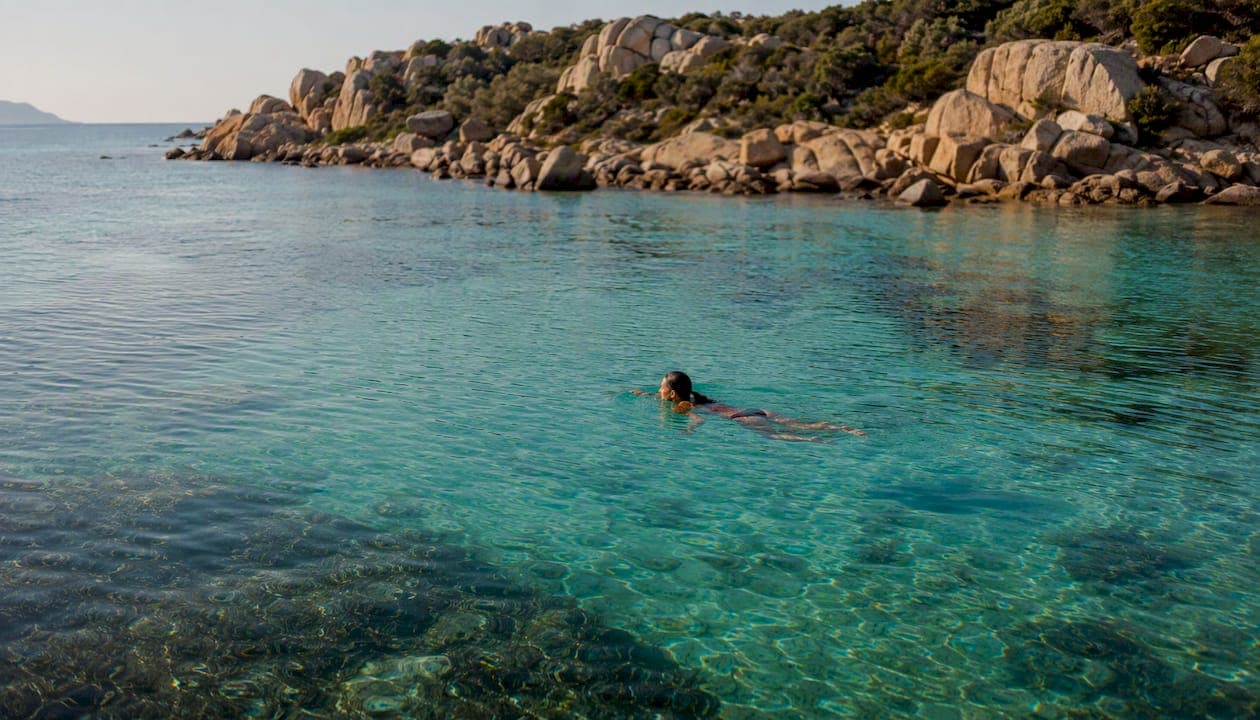
Sardinian coastal waters look intensely blue because water selectively absorbs red and orange wavelengths of light, leaving blue to scatter back to the eye, and Sardinia's seas amplify this effect through exceptional clarity, low nutrient levels, and a pristine seabed. The result is one of the most captivating spectacles in the Mediterranean: a palette that shifts from pale aquamarine in shallow coves to a deep, saturated cobalt offshore.
The main contributors to that extraordinary colour:
- Selective absorption of red and orange light by water molecules
- Low nutrient (oligotrophic) conditions that limit phytoplankton
- Posidonia oceanica seagrass meadows that filter and stabilise the seabed
- Rocky coastlines and scarce rivers that limit sediment runoff
- Shallow, light-coloured sand and limestone seabeds that reflect turquoise
- Depth: shallow water reads turquoise; deep water reads cobalt
- Blue Flag water-quality protections that preserve these conditions
Why does water itself appear blue?
The ocean's blue colour is not simply a mirror of the sky. Water molecules selectively absorb longer wavelengths — reds, oranges, and yellows — while blue and violet wavelengths penetrate furthest and scatter back toward the surface. Even a few metres of depth is enough to strip out most red light; beyond roughly 10 metres, blue dominates entirely.
"Water absorbs colors in the red part of the light spectrum. Like a filter, this leaves behind colors in the blue part of the light spectrum for us to see." — NOAA Ocean Service
Scattering plays a secondary but visible role. Water molecules scatter blue light in all directions, much as the atmosphere scatters blue from sunlight to give us a blue sky. The two effects reinforce each other, though oceanographers at the Woods Hole Oceanographic Institution are clear that the blue is intrinsic to water itself, not merely borrowed from the sky above. Surface reflection modifies the shade you see from a boat or a clifftop, but the deep blue visible beneath the surface is a property of the water column.
Pure water has a faint but measurable blue tint even in a glass; the optical path length simply needs to be long enough for it to become visible. In the open ocean, that path is effectively infinite, which is why the colour intensifies so dramatically with depth.
Why are Sardinia's seas especially clear?
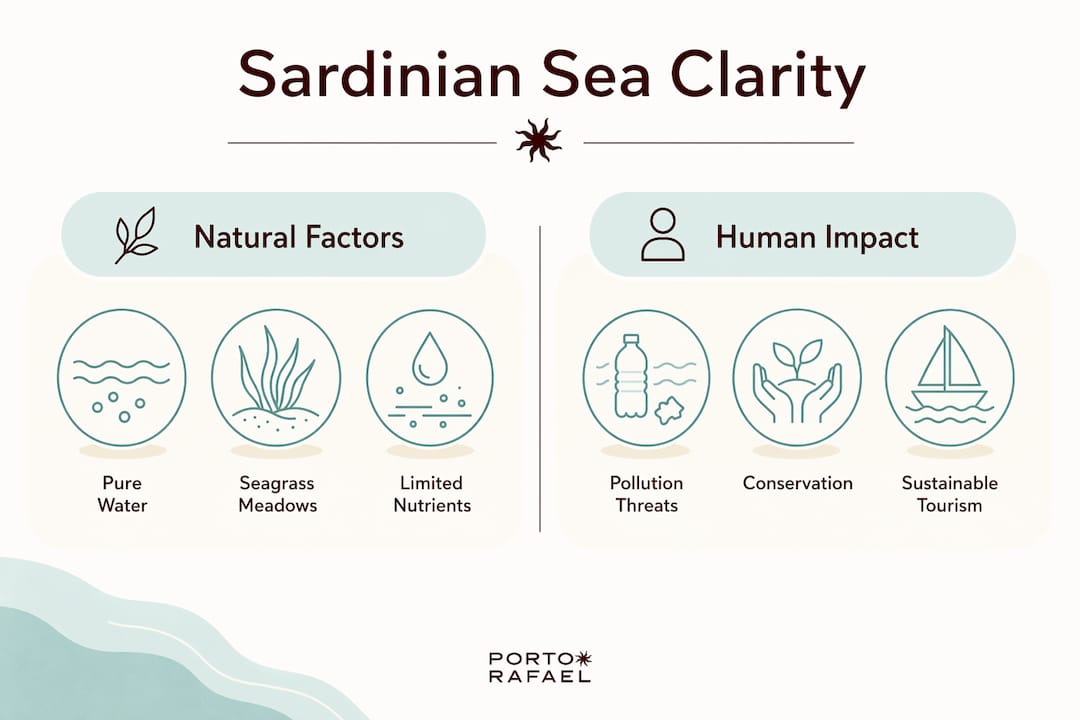
The physics above applies to every ocean, yet Sardinia's waters are notably transparent even by Mediterranean standards. Three interlocking factors explain why.
Oligotrophic conditions. The Mediterranean is a semi-enclosed basin with limited water exchange through the Strait of Gibraltar. That restricted circulation keeps nutrient levels low across the whole basin, and Sardinia sits at the western end of this system with few rivers of its own to add nitrogen or phosphorus. Without those nutrients, phytoplankton and algae cannot bloom in the volumes that cloud water elsewhere. The Foundation for Environmental Education's Blue Flag programme, which monitors water quality rigorously across four years before granting its award, has recognised over sixty Sardinian beaches across seventeen municipalities — a practical, recurring measure of how consistently the island's seas meet the highest quality standards.
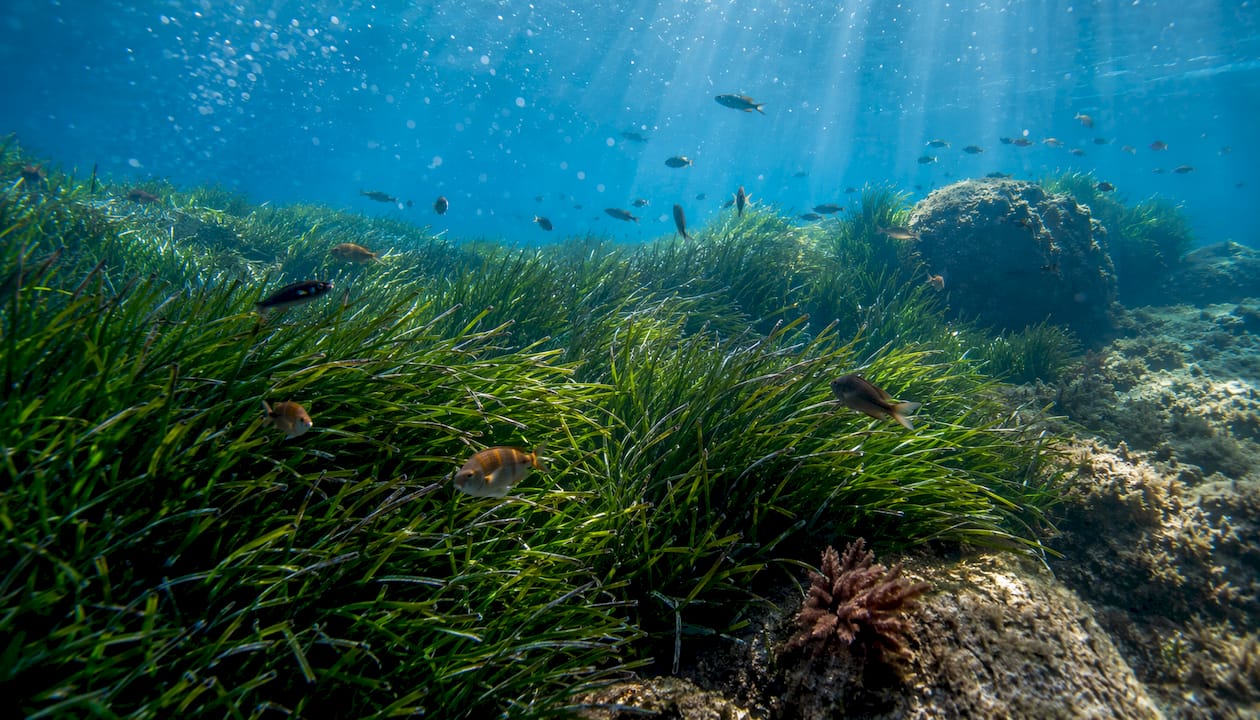
Posidonia oceanica meadows. These ancient seagrass meadows, endemic to the Mediterranean, act as a living filtration system. Their dense root networks trap fine sediments and prevent them from re-entering the water column, while their photosynthetic activity oxygenates the surrounding sea. The presence of healthy Posidonia is itself an ecological signal: the plant cannot survive in polluted or nutrient-rich water, so its abundance around Sardinia's coast confirms the oligotrophic conditions that keep the sea clear. Damage to these meadows correlates directly with increased turbidity and coastal erosion.
Rocky coasts and limited river discharge. Sardinia's jagged coastline and scarce river systems mean very little terrigenous sediment reaches the sea. On mainland coasts, rivers carry clay, silt, and agricultural runoff that scatter light and shift water colour toward green or brown. Around much of Sardinia, that input is minimal, so the water's intrinsic blue remains undiluted.
Key Sardinia-specific factors at a glance:
- Oligotrophic waters: low nitrogen and phosphorus limit algal growth
- Posidonia oceanica: traps sediment, oxygenates water, signals clean conditions
- Scarce rivers: minimal terrigenous sediment input
- Semi-enclosed Mediterranean basin: restricts external nutrient inflow
- Over sixty Blue Flag beaches across seventeen municipalities
Why do you see turquoise, emerald, and deep cobalt?
The colour you observe from a beach or a boat depends on depth, seabed composition, and what is suspended in the water column. Shallow, sandy or limestone-bottomed coves reflect short-wavelength light back upward through only a metre or two of water, producing the bright turquoise and aquamarine that define Sardinia's most photographed bays. The sandy beach types around the island vary considerably, and that variation shows directly in the water's hue.
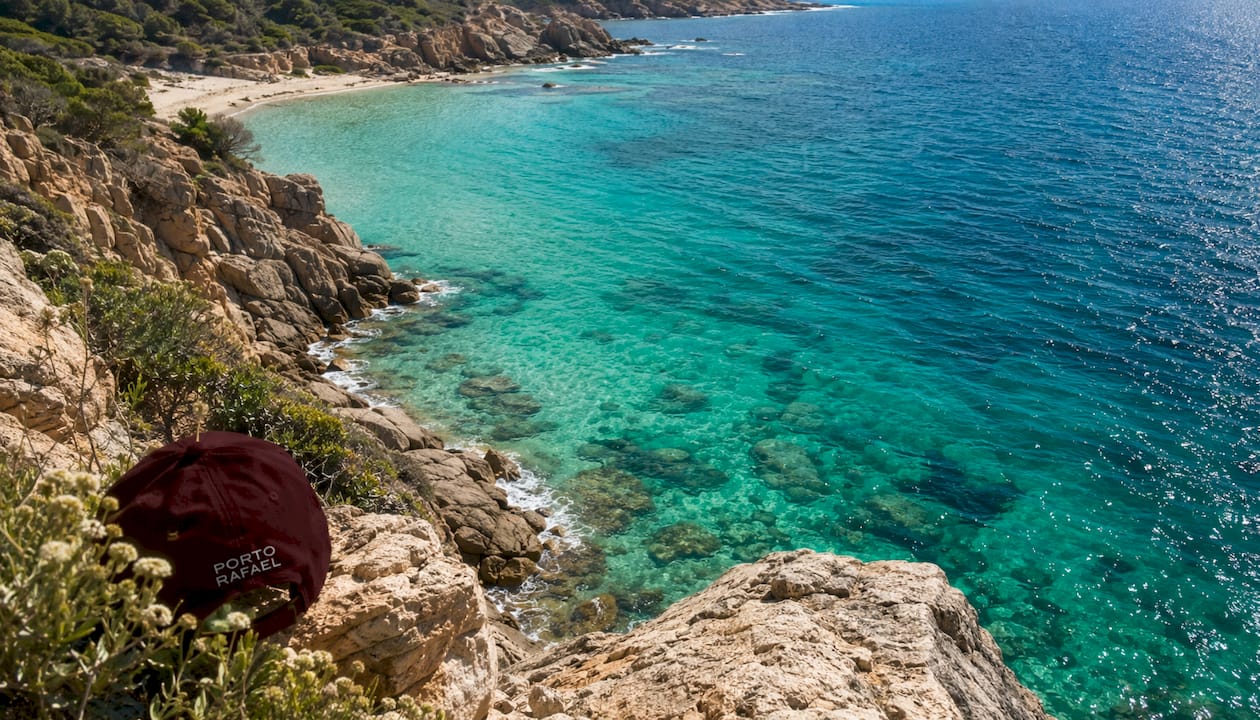
Offshore, where the seabed drops away and sunlight must travel tens of metres before returning, the red and green wavelengths are fully absorbed. Only the deepest blues survive the journey, giving open-water channels their intense cobalt character.
A third shade appears in a handful of locations: karst limestone coasts can harbour submarine freshwater springs that emerge cold and crystal-clear from the bedrock. Where spring water meets the warmer sea, the difference in refractive index creates a visible shimmer or a sudden layering of colour, sometimes a startling pale green-blue against the surrounding deep.
What shifts the colour toward green or brown:
- Phytoplankton blooms: chlorophyll absorbs red and blue, reflecting green
- Fine suspended sediment: scatters all wavelengths, producing a milky or brownish tinge
- Tannins from river runoff: stain coastal water amber or olive
- Boat wake in shallow areas: stirs seabed sediment temporarily into the water column
What threatens Sardinia's clarity and how is it protected?
Human activity can alter water colour within a single season by raising nutrient levels or turbidity. The primary pressures on Sardinian waters are nutrient enrichment from agricultural runoff, physical damage to Posidonia meadows from boat anchors, and coastal development that increases impermeable surfaces and accelerates runoff during rainfall.
The Blue Flag programme's assessment is more stringent than national regulations require, covering water purification, recycling, green spaces, and accessibility alongside water-quality monitoring. Marine protected areas around Sardinia add a further layer of legal protection, restricting certain fishing methods and anchoring in sensitive zones. Posidonia meadows carry specific legal protections under European Union habitats legislation, making deliberate damage a prosecutable offence.
Visitors can contribute meaningfully with a few simple choices:
- Anchor only on sand, never on Posidonia meadows
- Avoid using sunscreens with oxybenzone in shallow reef or seagrass areas
- Take all litter back to shore, including cigarette ends
- Choose operators who follow marine protected area guidelines
Pro Tip: When booking a boat excursion, ask whether the operator uses eco-moorings or GPS-guided anchoring to avoid seagrass. Responsible operators in the Gallura area increasingly offer this as standard.
Seeing Sardinia's blue in person: Porto Rafael
Porto Rafael, on the northern Gallura coast, offers a particularly clear illustration of the science described above. The coves immediately around the village sit over pale granite sand and low-lying rock, producing the shallow turquoise that results when sunlight reflects from a light-coloured seabed through only a metre or two of oligotrophic water. Posidonia meadows are visible from the surface on calm days, their dark ribbons marking the boundary between sandy shallows and deeper blue.
Practical visitor notes:
- For turquoise shallows: the small coves north of the village offer the clearest shallow-water colour in the morning, before any breeze disturbs the surface.
- For deep cobalt views: the headland above the village provides a panoramic vantage point where the sea's colour shifts visibly from pale aquamarine inshore to intense blue at the horizon.
- Seasonal visibility: late spring and early autumn typically offer the greatest transparency, as summer boat traffic is lower and thermoclines have not yet fully stratified the water column.
- Snorkelling: the Posidonia meadows around Porto Rafael support a rich community of sea bream, wrasse, and octopus — the biodiversity that healthy, clear water sustains.
Portorafael's coastal day trips and guided boat excursions are designed with these natural features in mind, taking guests to viewpoints and coves where the full range of Sardinia's ocean hues is visible in a single afternoon.
Why we care about Sardinia's blue seas
The clarity of Sardinia's waters is not incidental to what Portorafael offers — it is the foundation of it. The biodiversity that Posidonia meadows sustain, the light that filters through oligotrophic water to illuminate a sandy cove, the deep cobalt that greets guests from the hotel terrace at dusk: these are not backdrops. They are the reason people travel here, and the reason sustainable hospitality in this corner of Gallura carries a genuine responsibility. Protecting water quality is, in the most direct sense, protecting the experience that makes Porto Rafael worth visiting.
Experience Porto Rafael's waters for yourself
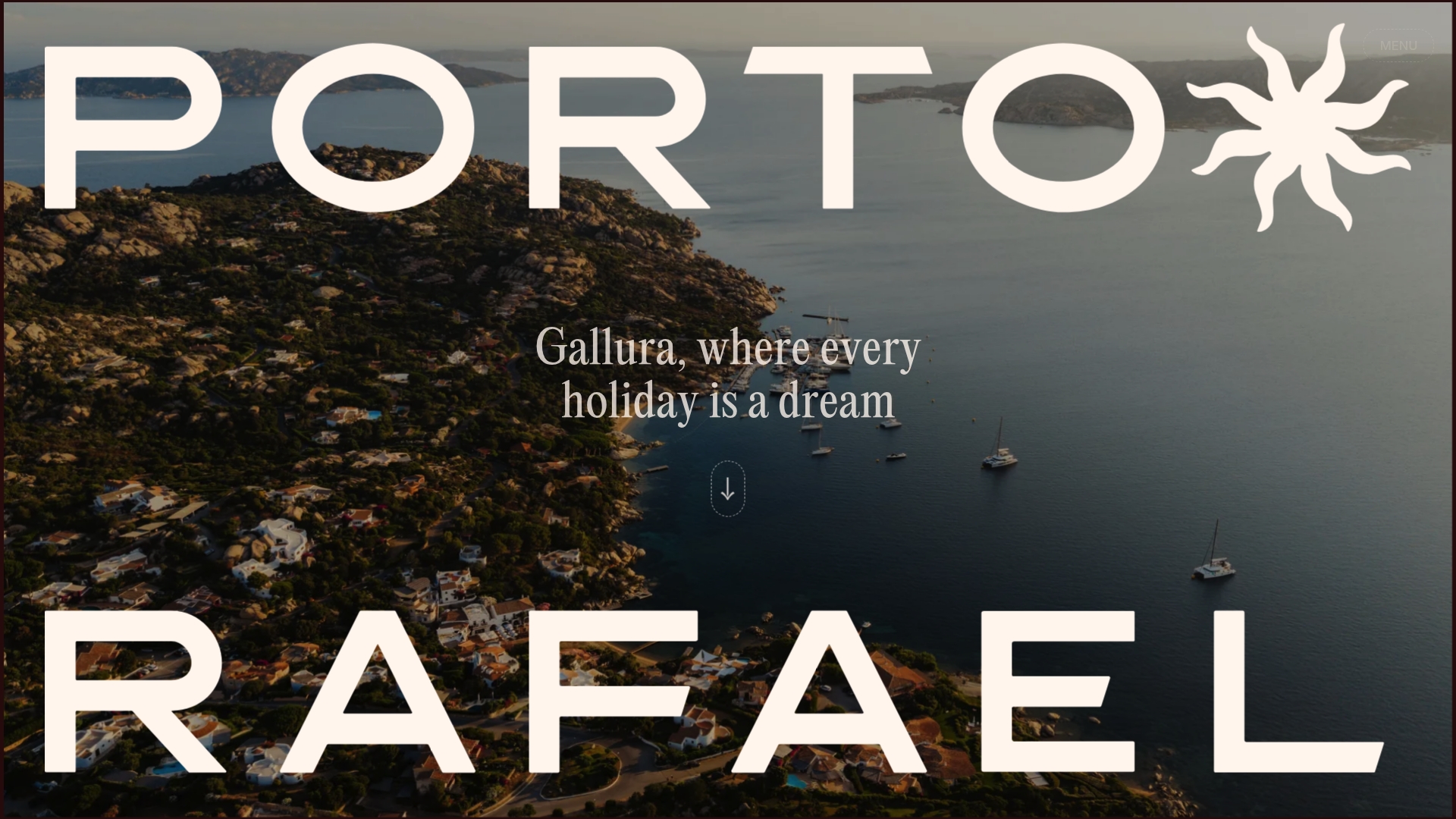
The science is compelling, but the colour of Sardinia's sea is something you absorb rather than read about. At Porto Rafael, the waters described above are visible from the village itself: pale turquoise in the sheltered coves, shifting to deep blue at the open horizon. Portorafael's guided bike tours of Gallura take you along coastal paths where the sea appears in every shade the science predicts, and an evening at the Solaz restaurant ends the day with local Gallura cuisine and an uninterrupted view across the water. Check availability and plan your visit at portorafael.it.
Authoritative sources and further reading
The science and environmental context in this article draw on a small set of genuinely authoritative sources. For the optical physics of water colour, the Woods Hole Oceanographic Institution and Britannica offer clear, peer-reviewed explanations. The Foundation for Environmental Education publishes annual Blue Flag data that serves as a practical water-quality benchmark. For the ecology of Posidonia oceanica, MDPI's open-access journals carry peer-reviewed studies on seagrass function and coastal clarity. Mediterranean nutrient dynamics are covered in depth by Frontiers, and the role of suspended sediment in turbidity is documented across ScienceDirect research syntheses.
For visitors planning a trip, Portorafael's own blog expands on how crystal-clear waters define Sardinia's luxury travel and offers practical guidance on beachfront luxury stays that put these extraordinary waters at the centre of the experience.