
TL;DR:
- Sardinia offers beaches rivaling the Caribbean alongside rich cultural and natural heritage.
- The main islands feature diverse landscapes, from protected marine parks to historic nuraghi sites.
- Visiting in shoulder seasons and exploring smaller villages enhances authentic and sustainable experiences.
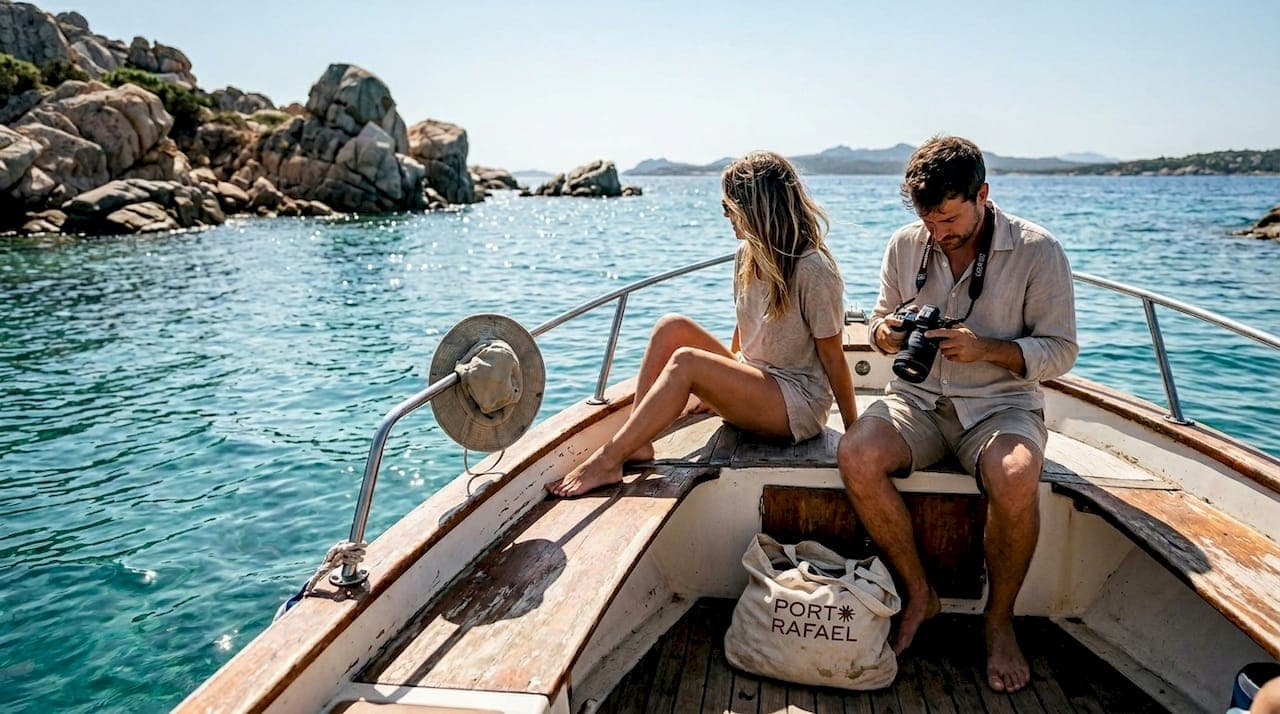
Few destinations in the Mediterranean can claim what Sardinia does so effortlessly: beaches rivalling the Caribbean alongside ancient stone towers, wild national parks, and some of Europe's most refined coastal villages. Yet for all its splendour, Sardinia remains refreshingly unhurried, drawing travellers who seek something richer than a standard sun-and-sea holiday. Its islands, scattered like jewels across the Tyrrhenian and Mediterranean seas, each carry their own character, their own silence, their own story. Whether you are drawn by the call of turquoise coves, the scent of myrtle on a mountain trail, or the clinking of Cannonau wine at a candlelit table, Sardinia's islands offer an experience that quietly exceeds every expectation.
Key Takeaways
| Point | Details |
|---|---|
| Islands for every traveller | Sardinia’s main islands each offer a unique blend of nature, history, and style. |
| World-class beaches and parks | The islands have pristine beaches and protected parks rivaling top Caribbean destinations. |
| Rich culture and authenticity | Travellers can experience ancient nuraghi, vibrant festivals, and unique cuisine unlike mainland Italy. |
| Luxury and adventure intertwined | Sardinian islands deliver both upscale leisure and off-the-beaten-path escapades. |
| Timing and planning matter | Off-season visits, boat tours, and local insights make for the best island experiences. |
Discovering Sardinia's main islands
Sardinia's offshore islands form a constellation of distinct worlds, each shaped by geology, history, and the particular rhythm of local life. Sardinia's main islands include the La Maddalena Archipelago (comprising La Maddalena, Caprera, Spargi, Budelli, Santa Maria, Razzoli, and Santo Stefano), Asinara National Park in the north-west, the dramatic limestone mass of Tavolara, and the southern islands of San Pietro and Sant'Antioco. Together, they represent an astonishing range of landscapes and atmospheres.
The La Maddalena Archipelago guide reveals an area of protected marine beauty, where granite-sculpted shores meet water of an almost implausible clarity. Caprera carries the legacy of Giuseppe Garibaldi, whose home is now a museum. Asinara, once a maximum-security prison, is today a pristine national park where albino donkeys roam freely. Tavolara rises from the sea like a fortress, offering superb diving and a famously tiny kingdom. San Pietro and Sant'Antioco, in the south-west, blend Ligurian-influenced architecture with Phoenician ruins and a deeply local pace of life.
| Island | Key sights | Access | Vibe |
|---|---|---|---|
| La Maddalena | Pink beaches, marine park | Ferry from Palau | Glamorous, relaxed |
| Asinara | Ex-prison, albino donkeys | Boat from Stintino | Wild, remote |
| Tavolara | Limestone cliffs, diving | Boat from Olbia coast | Dramatic, intimate |
| San Pietro | Carloforte village, tuna | Ferry from Calasetta | Authentic, charming |
| Sant'Antioco | Phoenician ruins, lagoon | Road bridge | Historic, tranquil |
Key activities across these islands include:
- Snorkelling and diving in the La Maddalena marine reserve
- Wildlife spotting on Asinara's protected trails
- Exploring scenic beaches and hikes on Tavolara and Caprera
- Tasting Carloforte's distinctive tuna cuisine on San Pietro
- Visiting Phoenician and Roman ruins on Sant'Antioco
A hired car or private boat is essential for reaching the smaller islands and unlocking their quieter corners.
Natural beauty beyond imagination
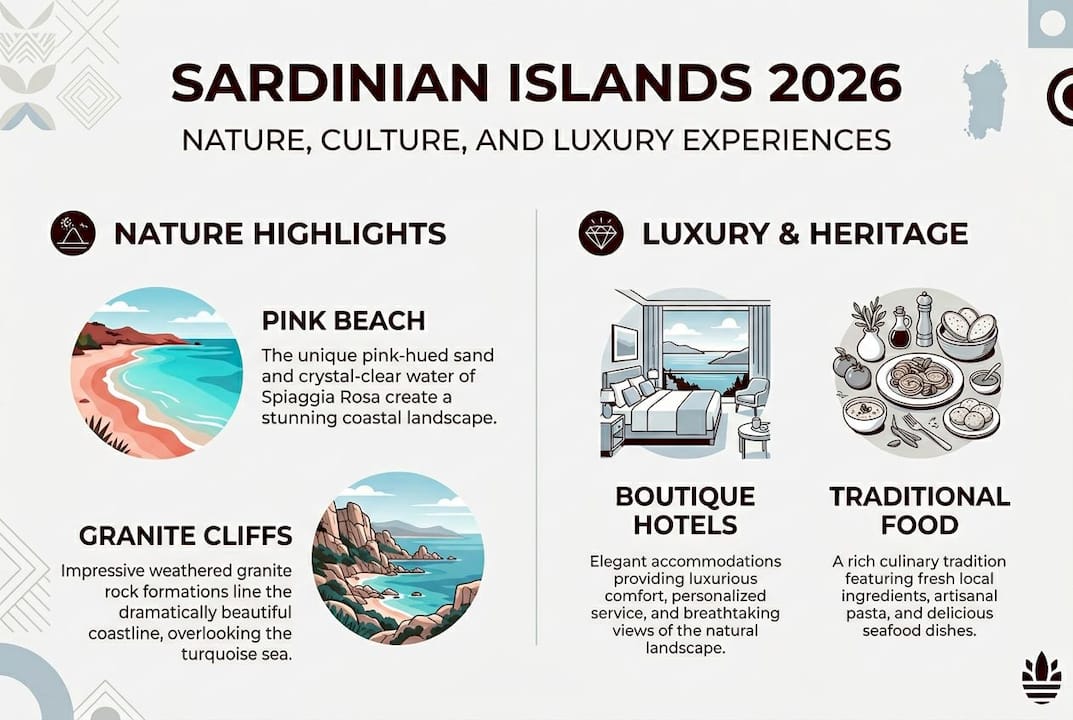
Once you've chosen an island to explore, prepare to be astonished by the sheer diversity of its landscapes. Sardinia's pristine beaches are among the most celebrated in Europe, from the famous pink sands of Budelli (a colour produced by fragments of coral and shell) to the turquoise shallows of Cala Corsara on Spargi. These are not merely pretty shores; they are ecosystems of rare fragility, many protected by strict access rules.
Sardinia stretches over 1,800 km of coastline and is home to more than 7,000 nuraghi, the ancient megalithic towers that pepper the landscape like sentinels from another age.
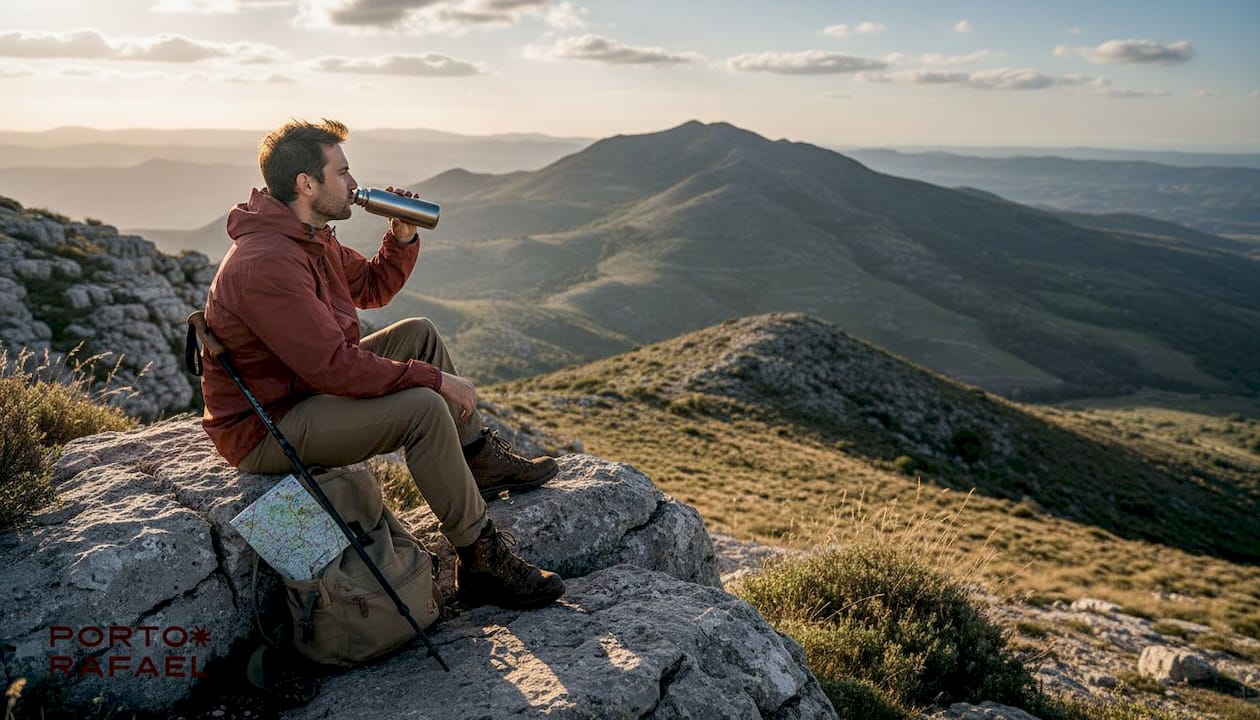
Beyond the coast, the interior reveals a different grandeur. The Gennargentu massif, Sardinia's highest mountain range, shelters golden eagles and mouflons within its protected national parks. Asinara's north-western tip offers windswept trails where the only sounds are birdsong and the distant sea.
| Top natural site | Best activity | Notable wildlife |
|---|---|---|
| Budelli (La Maddalena) | Photography, swimming | Posidonia meadows |
| Asinara National Park | Hiking, cycling | Albino donkeys, osprey |
| Gennargentu | Trekking, wildlife watching | Mouflon, golden eagle |
| Cala Corsara (Spargi) | Snorkelling, diving | Grouper, sea bream |
Knowing how to find secret beaches makes a genuine difference to your experience. Many of the most breathtaking coves are accessible only by sea, invisible from any road. Visiting outside peak season transforms the experience further, offering solitude where summer brings crowds.
Pro Tip: Hire a small boat in May or September to reach the coves of the La Maddalena Archipelago without the summer queues. The water is still warm, the light is golden, and the beaches are yours alone.
Immerse yourself in Sardinian heritage
Spectacular as the natural world is, Sardinia's culture is equally captivating. The island's history stretches back to the Nuragic civilisation, a Bronze Age culture that left behind more than 7,000 megalithic towers across the landscape.
Su Nuraxi di Barumini, a UNESCO-listed Nuragic site, stands as one of the most remarkable prehistoric complexes in the Mediterranean world.
Sardinia's community and tradition run deep, shaped by centuries of relative isolation and a fierce pride in local identity. The Sardinian language, Sardo, remains alive in villages and festivals. Key cultural experiences to seek out:
- Visit Su Nuraxi di Barumini and the island's many lesser-known nuraghi
- Attend the Sartiglia carnival in Oristano or the Sant'Efisio procession in Cagliari
- Explore local Sardinian festivals celebrating music, costume, and ancient ritual
- Taste local Sardinian food: pane carasau, culurgiones, roasted suckling pig, and aged pecorino
- Discover Cannonau wine, a deep red grape variety linked by researchers to the longevity of Sardinia's famous Blue Zone communities
Food in Sardinia is not merely sustenance; it is a form of cultural memory. Dishes are rooted in pastoral and coastal traditions, with ingredients sourced from the land and sea with minimal intervention. Attending a cooking class or a village festival offers an intimacy with Sardinian life that no museum can replicate.
Pro Tip: Time your visit to coincide with a local sagra (food festival) for a genuine taste of Sardinian hospitality. These events are often free, deeply local, and utterly memorable.
Luxury and leisure: experiences for the discerning traveller
Alongside culture and nature, the Sardinian islands have refined the art of upscale leisure. The Costa Smeralda, developed in the 1960s by the Aga Khan, remains one of Europe's most glamorous coastlines, centred on the chic harbour village of Porto Cervo. Here, luxury resorts, spas, and yachting define the rhythm of summer, with superyachts moored alongside boutique hotels and Michelin-starred restaurants.
Yet the luxury offer extends well beyond Costa Smeralda. The Colonna Resort amenities in Porto Cervo exemplify the island's capacity for world-class hospitality, blending contemporary design with Sardinian materials and flavours. Wellness travel is growing rapidly, with spa retreats and thermal experiences drawing visitors seeking restoration alongside beauty.
Sardinia's record tourism figures tell their own story: 4.5 million arrivals and 18.9 million presences in 2024, a rise of 15%, with projections of 21.8 million presences in 2025. Foreign visitors account for 56% of arrivals, confirming Sardinia's international appeal.
High-end experiences worth planning:
- Private yacht charters through the La Maddalena Archipelago
- Sunset aperitivo at a cliffside bar in Gallura
- Wine tasting at an estate producing Cannonau and Vermentino
- Spa and wellness retreats in boutique coastal hotels
- Guided tours of local artisan markets and ceramic workshops
For those seeking luxury travel tips or simply looking to understand what unmatched luxury truly means in a Sardinian context, the answer lies in the seamless blend of nature, culture, and refined comfort.
Practical tips for an unforgettable island adventure
To turn inspiration into reality, keep these practical pointers in mind. Access to Sardinia's offshore islands is primarily by boat from Palau or Stintino, with tours and private charters available throughout the season. Weather plays a significant role: the mistral wind can close routes to certain islands without warning, so flexibility is essential.
- Hire a car on arrival. Public transport is limited outside major towns; a car unlocks the interior and smaller coastal roads.
- Book boat tours in advance. Popular routes to La Maddalena and Asinara fill quickly in summer; Maddalena Archipelago regulations limit daily visitor numbers to protect the marine environment.
- Respect protected sites. Budelli's pink beach is viewing-only; landing is prohibited to preserve the fragile ecosystem.
- Plan for shoulder seasons. Spring and autumn offer the best balance of warmth, accessibility, and authenticity. Off-season travel rewards those willing to venture beyond July and August.
- Learn a few words of Sardo or Italian. In smaller villages, a greeting in the local tongue opens doors that remain closed to the purely transactional traveller.
- Consult specialists when planning luxury escapes. Bespoke itineraries, private guides, and advance restaurant bookings make a tangible difference to the quality of the experience.
Pro Tip: October is an exceptional month to visit. Visitor numbers drop sharply, yet the sea remains warm enough for swimming, and local festivals and harvests bring the island's interior to life.
What most guides miss about Sardinia's hidden islands
Most travel writing about Sardinia gravitates towards two poles: the glittering yachts of Costa Smeralda or the rugged wilderness of Gennargentu. Both are real. Both are worth your time. But the island's truest character lives in the space between them, and that is precisely what balancing luxury with authenticity requires.
The contrast between glamour and wild authenticity is not a flaw in Sardinia's identity; it is its greatest gift. A morning spent snorkelling a deserted cove and an evening at a candlelit restaurant in Porto Rafael are not contradictions. They are two notes in the same song.
What most guides miss is the value of slowness. Sardinia rewards those who linger: who sit long enough at a village bar to hear the dialect, who walk a nuraghi path without a schedule, who let a meal stretch into the evening. Mass tourism growth raises genuine sustainability questions, and the most thoughtful travellers are already choosing smaller villages, independent restaurants, and off-season visits as a conscious act of respect. This is not sacrifice. It is, in fact, how you find the Sardinia that stays with you long after you have returned home.
Indulge in Sardinia's finest: experiences from Porto Rafael
Porto Rafael, nestled in the heart of Gallura on Sardinia's northern coast, offers a rare and refined base from which to experience everything this extraordinary island has to offer.
Whether you choose to rest in the elegant surroundings of Prestige rooms at Hotel La Piazza, explore the Gallura hills on Gallura cycling tours, or savour the finest seasonal produce through local gastronomy experiences at Solaz Restaurant, Porto Rafael places the very best of Sardinia within effortless reach. This is a village where luxury feels natural, where the pace is set by the sea, and where every detail has been crafted for those who appreciate the exceptional. Your Sardinian adventure begins here.
Frequently asked questions
What are the main Sardinian islands travellers should visit?
The most celebrated are La Maddalena Archipelago, Asinara, Tavolara, San Pietro, and Sant'Antioco, each offering entirely distinct landscapes, histories, and atmospheres.
Is it easy to travel between Sardinian islands?
Most islands are reachable by ferry or boat tour from Palau or Stintino, though wind conditions and marine protection rules can affect access to certain routes on any given day.
What is special about Sardinian island cuisine?
Sardinian food draws on pastoral and coastal traditions quite unlike mainland Italy, featuring dishes such as culurgiones pasta, pane carasau flatbread, and Cannonau wine, a grape variety associated with the island's remarkable longevity statistics.
When is the best time to visit Sardinian islands?
Spring and autumn are ideal: October alone saw 44% growth in visitor numbers, reflecting a growing preference for quieter, more authentic travel outside the peak summer months.
Are Sardinian islands suitable for luxury travel?
Absolutely. From Costa Smeralda's luxury resorts and Porto Cervo's superyacht marina to the intimate elegance of Porto Rafael, Sardinia offers world-class hospitality in one of Europe's most beautiful settings.