

TL;DR:
- Sustainability in luxury tourism emphasizes managing impacts to promote environmental and social regeneration. Travelers increasingly prioritize verified sustainability, encouraging brands to adopt regenerative practices and transparency. Off-peak travel and thorough vetting prevent greenwashing and enhance genuine eco-friendly experiences.
Sustainability in luxury tourism is the active commitment to managing environmental, social, and economic impacts so that travel becomes regenerative rather than merely extractive. The role of sustainability in luxury tourism has shifted from a niche selling point to a baseline expectation, driven by a generation of discerning travellers who demand more than beautiful rooms and fine dining. Brands such as Soneva, Six Senses, and properties certified by the Global Sustainable Tourism Council (GSTC) are redefining what it means to travel well. A Booking.com report surveying 260,000 travellers across 35 markets found that 85% of Canadian travellers now prioritise sustainable travel, up from 42% in 2016. That doubling in a decade signals a structural change in demand, not a passing trend.
How sustainability shapes the luxury tourism experience today
Luxury is shifting from excess to intentionality, with the most forward-thinking properties now focused on regenerative travel that restores ecosystems and local heritage rather than simply offsetting carbon. This is not a cosmetic adjustment. It changes how resorts are built, staffed, fed, and powered.
Renewable energy and closed-loop systems
Luxury resorts investing in closed-loop systems such as onsite food production and renewable energy gain both operational independence and measurable sustainability credentials. Soneva Fushi in the Maldives, for instance, generates solar power on-site and composts organic waste into garden fertiliser. The result is a property that produces less, wastes less, and depends less on fragile supply chains. For travellers, this translates into a stay that feels genuinely connected to its natural setting rather than imposed upon it.

AI and technology in resource management
AI technology helps luxury hotels optimise resource use and reduce food waste, delivering both environmental and financial benefits. A kitchen that uses predictive software to order only what it will use generates less landfill and lower costs. That saving can be reinvested into local sourcing or staff wages. Technology, in this context, is not a gimmick. It is the infrastructure that makes ambitious sustainability targets achievable at scale.
Regenerative practices and cultural restoration
Regenerative luxury travel actively restores ecosystems and local economies, going beyond carbon offsetting to create lasting positive impacts. Six Senses properties routinely fund coral reef restoration, seed local food forests, and employ artisans to preserve traditional crafts. These programmes do not simply reduce harm. They leave a destination measurably better than they found it. For the traveller, participation in these efforts adds a layer of meaning that no amount of thread count can replicate.
Off-peak travel as a sustainability tool
Avoiding peak season travel eases stress on destinations and infrastructure, often yielding greater sustainability returns than carbon credits alone. Quieter seasons also deliver a superior guest experience: fewer crowds, more attentive service, and a more authentic encounter with local life. The logic is elegant. What is good for the destination is also good for the guest.
Pro Tip: Book your luxury stay in the shoulder season, typically one month before or after peak. You reduce environmental pressure, pay lower rates, and often receive more personalised attention from staff.
How do you tell genuine sustainability from greenwashing?
Greenwashing in luxury tourism is the practice of marketing environmental credentials that are superficial, unverified, or actively misleading. It is widespread. A property can install a single solar panel, print menus on recycled paper, and call itself eco-friendly. Discerning travellers need a sharper lens.
The most reliable framework is the triple bottom line, which evaluates environmental health, social equity, and economic viability together. A property that reduces its carbon footprint while paying poverty wages to local staff has not achieved genuine sustainability. All three dimensions must be addressed with transparency.
How to vet a property before booking
- Check for recognised certifications. GSTC criteria, LEED, and Green Globe are third-party verified standards that go beyond self-reported claims. Ask the property which certification it holds and when it was last audited.
- Ask where the food comes from. Properties with genuine commitments to sustainable food sourcing can name their suppliers. Vague answers about "local ingredients" without specifics are a warning sign.
- Look at the workforce. A truly sustainable luxury property employs people from the surrounding community, pays fair wages, and invests in staff development. Ask what percentage of staff are local hires.
- Request a sustainability report. Credible properties publish annual reports with measurable targets and honest assessments of progress. If no report exists, the commitment is likely cosmetic.
- Examine the supply chain for food and hospitality services. Guides such as the 2026 Operator Guide on sustainability in food services outline what genuine operational sustainability looks like, and you can use those benchmarks to question a property directly.
Pro Tip: Search the property name alongside "GSTC" or "Green Globe" in a search engine before booking. Certified properties appear in official registries. If the only results are the hotel's own website, treat the eco-claims with caution.
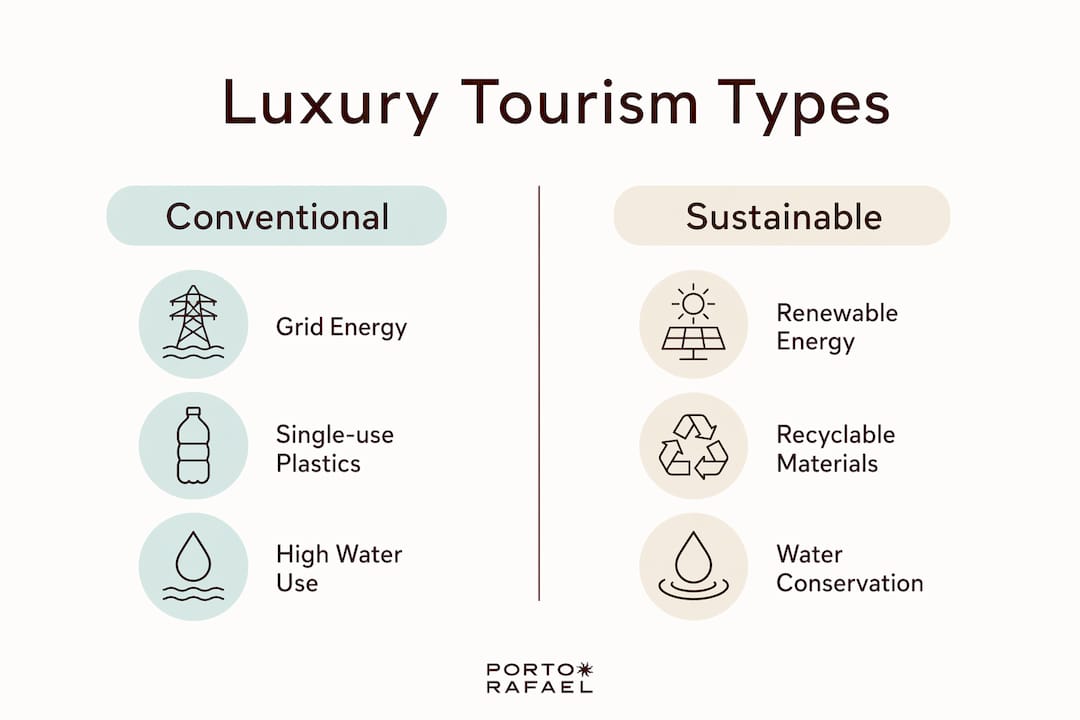
Sustainable vs. conventional luxury: what changes for the guest?
Conventional luxury is defined by abundance: the largest suite, the most elaborate menu, the most extravagant amenity. Sustainable luxury is defined by intention. The difference shows up in every detail of the guest experience.
The 2025 Virtuoso Global Luxury Traveller Report found that one third of affluent travellers are willing to pay a premium for verified sustainable experiences that benefit local economies and environments. That willingness reflects a genuine shift in what luxury means to this audience. Exclusivity alone no longer justifies the price.
| Experience element | Conventional luxury property | Sustainable luxury property |
|---|---|---|
| Energy source | Grid electricity, often fossil fuel | On-site solar, wind, or hydro |
| Food sourcing | International suppliers, imported produce | Local farms, on-site gardens, seasonal menus |
| Staff composition | Mixed, often international management | Majority local hires, community investment |
| Waste management | Standard municipal disposal | Composting, recycling, zero-waste targets |
| Guest activities | Passive consumption (spa, pool, bar) | Nature restoration, cultural immersion, local craft |
| Transparency | Marketing language, no third-party audit | Published sustainability reports, certified credentials |
| Environmental footprint | High, often untracked | Measured, reported, actively reduced |
The table above shows that sustainable luxury does not mean less comfort. It means comfort delivered with accountability. Travellers who understand the economic and cultural impact of luxury tourism consistently report higher satisfaction at properties where their spending visibly benefits the surrounding community.
Practical steps for choosing sustainable luxury travel
Choosing genuinely eco-friendly luxury accommodations requires more than reading a hotel's website. The questions you ask before booking determine the quality of the experience and the integrity of your investment.
Key questions to ask before you book
- Does the property use renewable energy on-site, and what percentage of its power comes from those sources?
- Is the food menu built around seasonal, locally sourced ingredients, and can the kitchen name its primary suppliers?
- Does the property offer electric vehicle charging facilities or partnerships with low-emission transport providers?
- What community programmes does the property fund, and how many local people does it employ?
- Has the property published a sustainability report in the past two years with measurable targets?
- Does it hold a recognised certification from GSTC, LEED, or Green Globe?
77% of luxury travel advisors report that clients increasingly choose off-peak travel to minimise environmental pressure, with 52% citing the avoidance of overcrowding as the most impactful sustainability factor. This data confirms that the most effective sustainability choices are often the simplest ones. Timing your visit thoughtfully costs nothing and delivers measurable benefits to the destination.
Travellers who want a deeper understanding of eco-friendly accommodation criteria will find that the fundamentals are consistent across destinations: local sourcing, renewable energy, community employment, and transparent reporting. These four pillars separate genuine commitment from marketing gloss. The role of nature in luxury escapes is also worth understanding, as properties that integrate their natural setting rather than dominate it tend to deliver both stronger sustainability outcomes and more memorable stays.
Why regeneration, not just reduction, defines the future of luxury travel
The industry conversation has moved on from sustainability as damage limitation. The properties setting the standard today are not asking how to do less harm. They are asking how to leave a place better than they found it. That shift from reduction to restoration is the most significant development in luxury hospitality in a generation.
What strikes me most, having watched this space evolve, is how often travellers underestimate their own influence. The demand signal from a single booking at a certified, regenerative property sends a clear message to the wider market. When transparency around where guests' money goes becomes a standard expectation rather than a pleasant surprise, the entire industry moves. The luxury traveller is not a passive participant in this story. They are the most powerful force shaping it.
The uncomfortable truth is that most properties claiming sustainability credentials are still in the early stages. Carbon offsetting, recycled amenity bottles, and a composting bin do not constitute a regenerative model. True regeneration requires investment in local ecosystems, genuine community partnership, and the willingness to publish honest data even when the numbers are unflattering. Travellers who ask hard questions and reward transparency with their bookings are the ones accelerating that change. The insider's guide to luxury travel makes clear that the most satisfying stays are invariably those where the guest's presence contributes something lasting to the place they have chosen to visit.
— Studio
Eco-conscious luxury at Hotel La Piazza, Porto Rafael
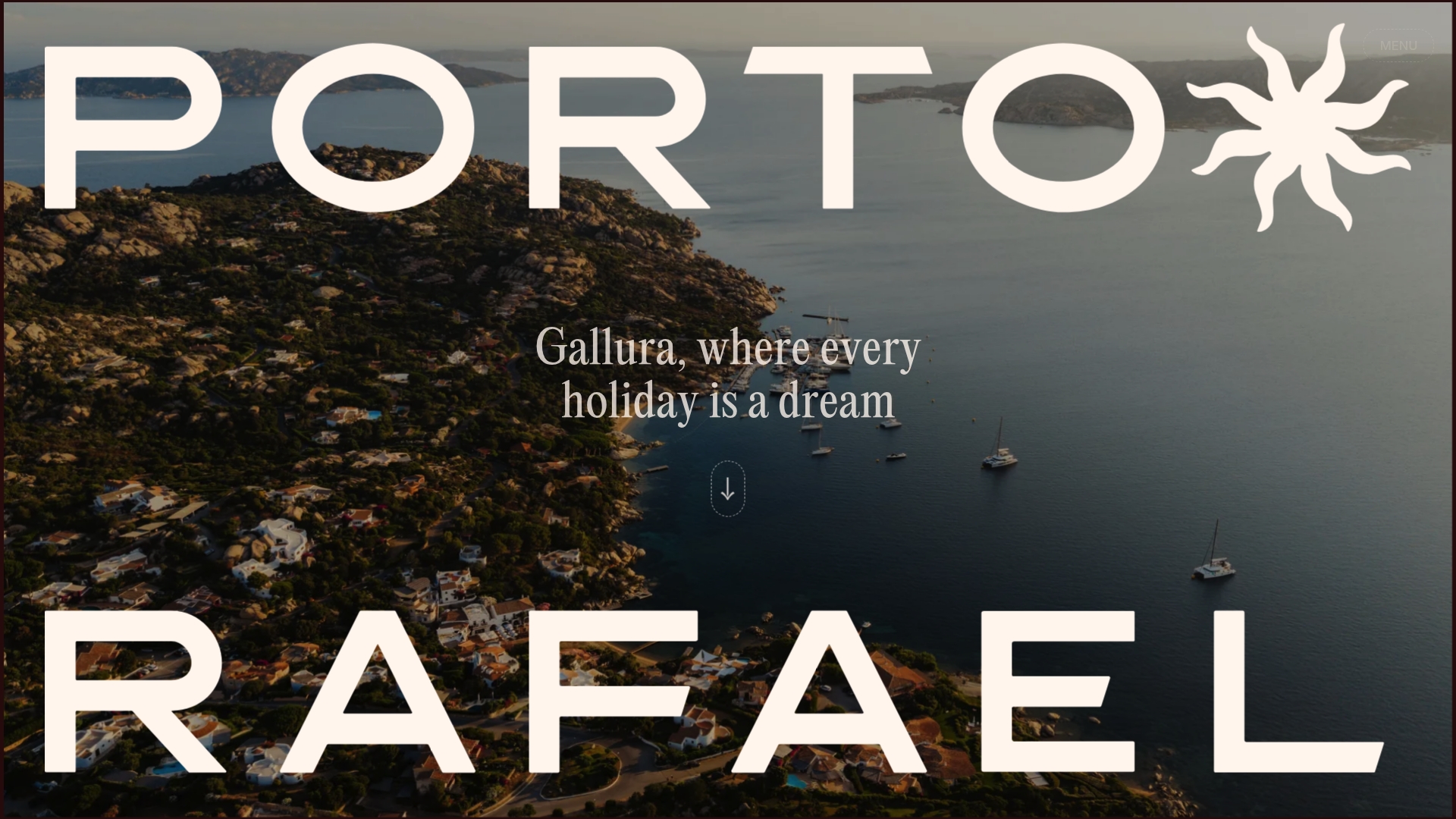
Portorafael, the boutique village of Porto Rafael in Gallura, Sardinia, offers a rare model of luxury that is inseparable from its natural and cultural setting. Hotel La Piazza is woven into the rhythms of the Gallura coast, drawing on local produce, artisan traditions, and the extraordinary clarity of the surrounding sea.
The Charme rooms at Hotel La Piazza reflect a considered approach to hospitality, where comfort and a sense of place reinforce each other. Guests can deepen their connection to the region through a Sardinian cooking class built around seasonal, locally sourced ingredients, or explore the Gallura countryside on a guided bike excursion that leaves the landscape undisturbed. At Portorafael, the beauty of the destination is not a backdrop. It is the experience itself.
FAQ
What is the role of sustainability in luxury tourism?
Sustainability in luxury tourism is the commitment to managing environmental, social, and economic impacts so that travel restores rather than depletes destinations. Leading brands such as Soneva and Six Senses demonstrate that regenerative practices and exceptional guest experiences are fully compatible.
How can travellers identify genuine eco-friendly luxury accommodations?
Travellers should look for third-party certifications from bodies such as GSTC, LEED, or Green Globe, and request published sustainability reports with measurable targets. Properties that can name their local suppliers and demonstrate community employment are the most credible.
Does sustainable luxury travel cost more?
The 2025 Virtuoso Global Luxury Traveller Report found that one third of affluent travellers are willing to pay a premium for verified sustainable experiences. Many sustainable properties are competitively priced, particularly when booked in the shoulder season.
What is greenwashing in luxury tourism?
Greenwashing is the practice of marketing superficial or unverified environmental credentials to appear more sustainable than a property actually is. Common signs include vague claims about "eco-friendly" practices with no certification, no published data, and no evidence of community investment.
Why is off-peak travel considered a sustainability strategy?
Off-peak travel reduces pressure on destination infrastructure, supports local economies during quieter periods, and often delivers a more authentic guest experience. Industry data from 2026 shows that 52% of luxury travel advisors cite avoiding overcrowding as the single most impactful sustainability factor their clients can act on.