
TL;DR:
- Sardinia's cultural landscape blends prehistoric monuments, pastoral traditions, and a strong island identity. The Nuragic towers and ancient sites reveal a living civilization that has persisted through millennia. Coastal and interior regions embody contrasting influences, shaping the island's deep cultural resilience and diversity.
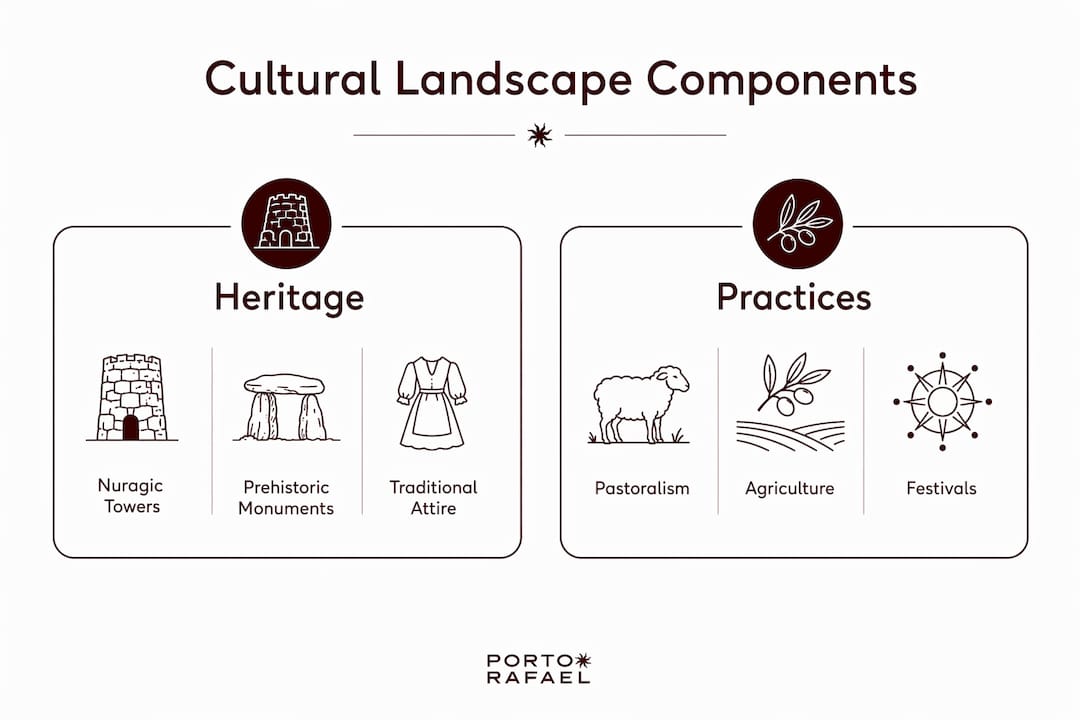
Sardinia's cultural landscape is defined as the living integration of prehistoric monuments, pastoral traditions, linguistic heritage, and contrasting coastal and interior environments that together shape a singular island identity. Few places in Europe carry this depth of layered meaning across their physical terrain. The Nuragic towers, the agrosilvopastoral communities of the interior, the filigree jewellery worn at festivals, and the ancient Sardinian language all speak to what influences Sardinian culture at its core. Understanding these elements reveals not a museum piece but a living, breathing civilisation that has resisted erasure across millennia.
What defines Sardinian cultural landscape and its core components?
Sardinia's cultural landscape, in the formal sense used by UNESCO and heritage scholars, describes a territory where human activity and natural environment have shaped each other over centuries. The island qualifies as one of Europe's richest examples of this concept. Three forces define it above all others: the weight of prehistoric civilisation, the endurance of rural and pastoral life, and the geographic tension between coast and interior.
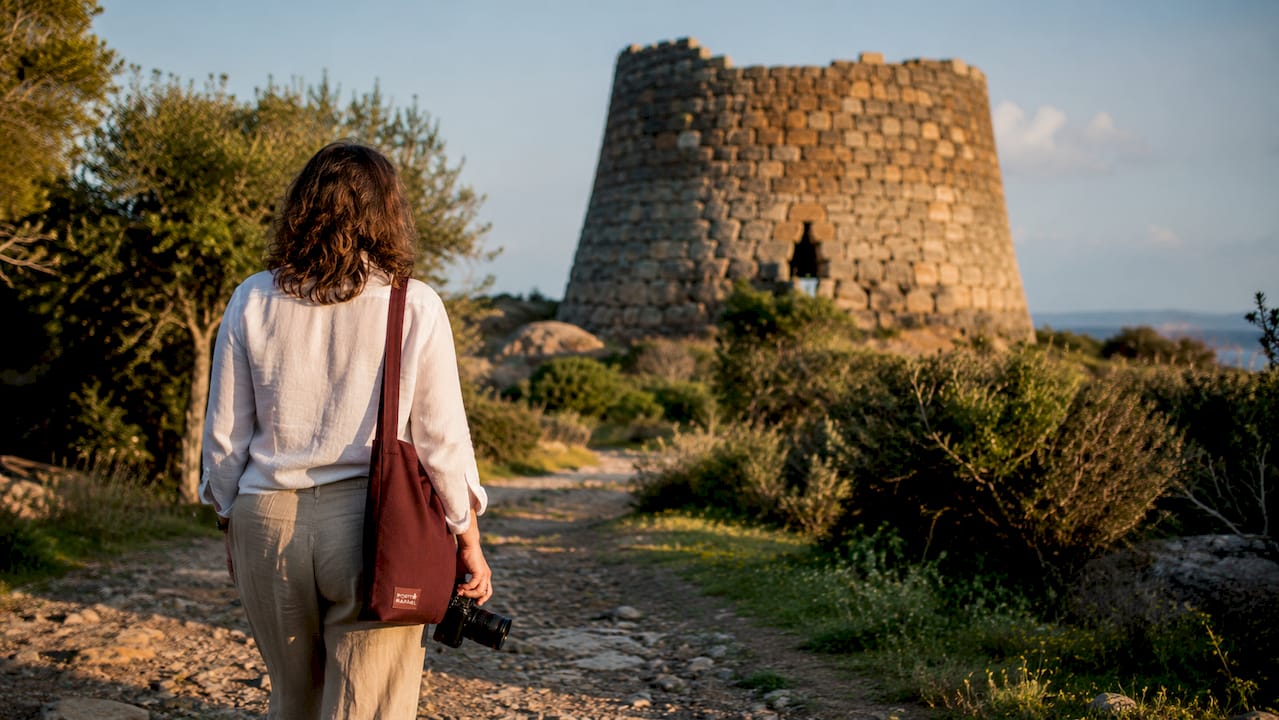
Sardinia's landscape actively shapes history, settlement patterns, mentality, and cultural resilience rather than serving as passive backdrop. That distinction matters. The land does not merely frame Sardinian life; it directs it. Layers of Phoenician, Roman, and Aragonese domination left their marks, yet Sardinian identity endured without cultural erasure, producing a hybrid character of fierce local pride and quiet self-reliance. This resilience is the thread connecting every element of Sardinian cultural heritage.
How do Sardinia's Nuragic monuments shape its cultural landscape?
Sardinia hosts over 7,000 Nuragic megalithic towers built mainly between 1700 and 700 BC, making it one of the densest megalithic landscapes in the entire Mediterranean. That density is not accidental. The nuraghi were never scattered randomly; they were placed with deliberate intent across ridgelines, valleys, and coastal promontories to assert territorial control and mark sacred ground.
These towers rarely stand alone. Nuragic sites cluster together as a tower, sacred well, and giants' tomb, forming a ritual and territorial network that scholars describe as a "stone map" of social organisation. Each component served a distinct purpose: the tower for defence and authority, the sacred well for water ritual and divination, the giants' tomb for communal burial and ancestral memory. Reading a Nuragic site as a cluster rather than an isolated ruin transforms the experience entirely.
Key features of this prehistoric legacy include:
- Distribution across the island: Nuraghi appear in every Sardinian province, from the Barbagia highlands to the Campidano plain, confirming island-wide social complexity.
- Architectural sophistication: The corbelled stone construction of nuraghi required no mortar, yet many structures have stood for three millennia.
- Sacred wells: Sites such as Santa Cristina near Paulilatino demonstrate precise astronomical alignment, with sunlight entering the shaft at specific solstice moments.
- Giants' tombs: These elongated megalithic burial monuments, known in Sardinian as tumbas de zigantes, served entire communities and reinforced collective identity.
- Cultural continuity: Local communities have maintained oral traditions, place names, and seasonal rituals tied to Nuragic sites long after the civilisation itself faded.
Visiting these sites through the lens of Sardinian architecture and Nuraghes reveals how deeply the prehistoric past is woven into the physical fabric of the island.
Pro Tip: When visiting a Nuragic site, look for the sacred well and giants' tomb nearby rather than focusing solely on the tower. The full cluster tells a far richer story than any single structure.
What role do traditional agricultural and pastoral practices play?
Sardinia's interior qualifies as one of Europe's last agrosilvopastoral strongholds, where farming, forestry, and herding have coexisted in the same landscape for generations. This is not heritage preserved in amber; it is heritage still being practised. A 2026 study of the Mandrolisai area measured 52.6% to 65.7% of land use as continuously maintained since the post-war period across 2,363 ha and 417 ha respectively. That figure signals a living historic rural landscape, not a reconstructed one.
The traditional vineyard training method known as gobelet, or alberello in Italian, defines the visual character of Sardinian wine country. Vines are trained low and free-standing without wire support, a technique adapted to the island's dry summers and strong winds. This method produces the old-vine Cannonau and Vermentino grapes that have made Sardinian wine internationally recognised.
| Landscape element | Region | Cultural significance |
|---|---|---|
| Gobelet vineyards | Mandrolisai, Ogliastra | Preserves pre-industrial viticulture and old-vine genetics |
| Transhumance routes | Barbagia to coastal plains | Shaped road networks and settlement patterns |
| Dry-stone walls (muristenes) | Island-wide | Defined field boundaries and pastoral territories |
| Cork oak woodlands | Gallura, Barbagia | Sustained cork harvesting economy for centuries |
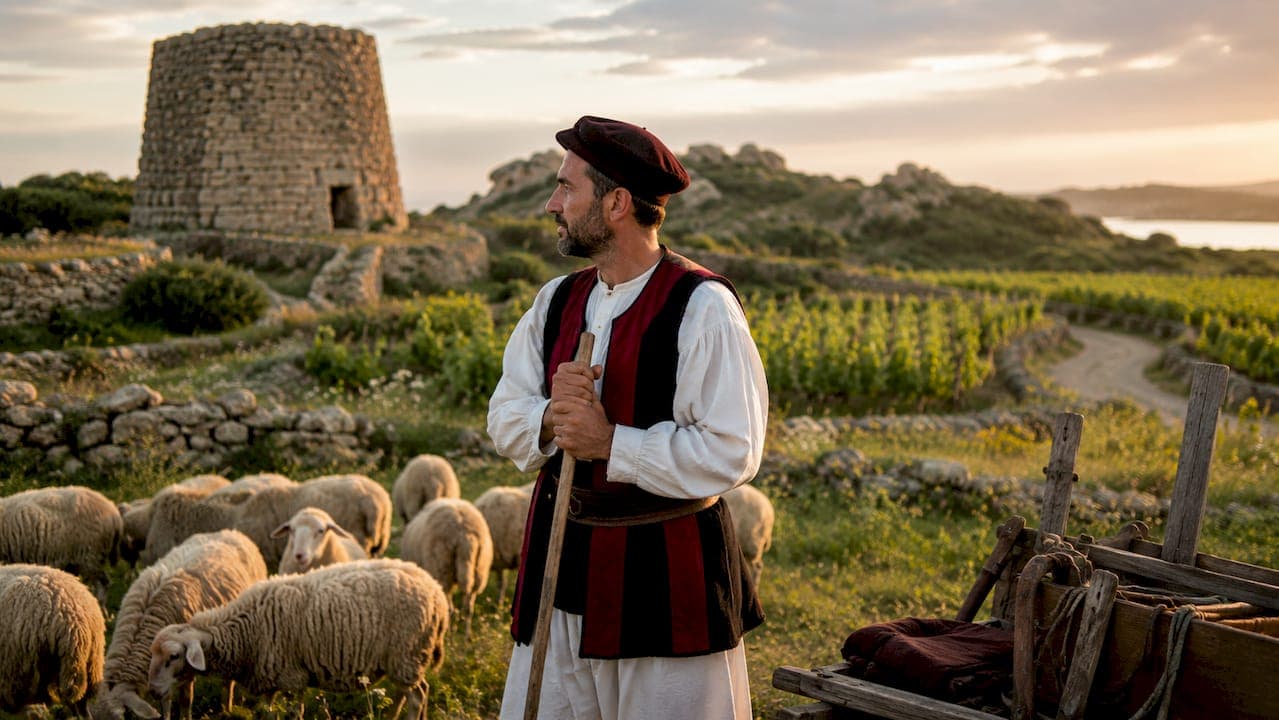
Pastoralism shaped not only the land but also the social structure of interior communities. Shepherding families followed seasonal transhumance routes between highland summer pastures and lowland winter grazing, creating a mobile culture that valued self-sufficiency above all. Depopulation of rural villages now threatens this living tradition, making its documentation and celebration more urgent than ever.
Pro Tip: Seek out local markets in interior towns such as Tonara or Aritzo in autumn. These are the places where pastoral and agricultural traditions remain most visible and least staged for visitors.
How does Sardinia's geographic divide influence its cultural identity?
The fundamental cultural axis in Sardinia runs between the cosmopolitan coast and the pastoral interior. This divide shapes architecture, social attitudes, and tradition in ways that visitors who stay only at the beach rarely perceive. Understanding it is the key to grasping authentic Sardinian culture.
The coast has always been open to the world. Phoenician traders, Genoese merchants, and Catalan administrators all left their marks on coastal towns such as Cagliari, Alghero, and Olbia. This exposure produced a more outward-looking, commercially minded culture comfortable with exchange and adaptation. The Gallura region, for instance, developed its own distinct dialect and granite-built stazzi farmsteads that reflect both isolation and a particular pastoral pride.
The interior tells a different story. Communities in the Barbagia, Ogliastra, and Gennargentu highlands developed a deep wariness of external authority born from centuries of foreign rule. This wariness produced:
- Tight community bonds: Village identity (campanilismo) remains fierce, with each community maintaining distinct costumes, dialects, and festivals.
- Distinct architecture: Interior villages use narrow streets and inward-facing buildings as a form of collective defence, a physical expression of social caution.
- Oral legal codes: The Barbagia maintained its own unwritten codes of conduct, known as sa vitta, governing disputes and obligations outside formal state law.
- Festival distinctiveness: Each village's patron saint festival (sagra) is a unique expression of local identity, not a generic regional event.
This geographic and cultural duality explains why Sardinia resists easy characterisation. The island holds both the cosmopolitan and the deeply traditional within the same coastline, and the tension between them is generative rather than divisive.
What are the key elements of Sardinian language, craftsmanship, and traditional attire?
The Sardinian language, known as Sardu, is Italy's largest ethnolinguistic minority. Yet only 10–13% of Sardinia's young population retains active or passive competence in the language today, despite around one million people having some degree of capability. That decline represents a genuine loss of cultural memory, since the language carries vocabulary, proverbs, and place names that encode centuries of lived experience.
Traditional craftsmanship fills some of the space that language is vacating. Filigree jewellery incorporates ancient symbols linked to the Tanit goddess and the mythological domus de janas (fairy houses), connecting wearers to a prehistoric past through silver and gold thread. These pieces are not decorative accessories; they are social signals and cultural memory repositories. A woman wearing a traditional orbace wool costume at a village festival is performing an act of cultural continuity as much as celebration.
The connection between craft and geography is equally telling:
- Asphodel fibre baskets: Produced almost exclusively in Flussio and surrounding interior villages, where the plant grows abundantly. Local artisans use asphodel fibres and dwarf palm in ways tied directly to Sardinia's micro-geographies.
- Carpet weaving: The town of Mogoro specialises in geometric-patterned carpets using techniques passed through female lineages for generations.
- Ceramic traditions: Oristano province produces distinctive black ceramics using reduction firing methods unchanged since antiquity.
- Coral jewellery: Coastal communities, particularly around Alghero, have worked Mediterranean red coral into jewellery for centuries, reflecting the sea's role in coastal cultural identity.
Pro Tip: When purchasing Sardinian crafts, look for the ISOLA quality mark issued by the Sardinian regional authority. It certifies authentic handmade production and directly supports artisan communities.
How do festivals, cuisine, and natural landscapes contribute to Sardinian culture?
Sardinian festivals and food traditions are deeply connected to pastoral and agricultural lifestyles, emphasising local ingredients, community bonds, and historical continuity. The calendar of celebrations reflects the island's rhythms of sowing, harvesting, and herding rather than abstract religious dates alone.
The most significant cultural expressions through festivals, food, and nature include:
- The Sartiglia of Oristano: A spectacular equestrian tournament held in february, rooted in medieval Iberian traditions. Masked riders attempt to spear a star-shaped target at full gallop, combining acrobatic skill with ritual symbolism.
- Autumnal food festivals: Towns across the interior celebrate the chestnut, saffron, and new wine harvests in october and november, drawing communities together around the agricultural cycle.
- Cannonau and Vermentino cuisine pairings: Sardinian gastronomy pairs aged sheep's cheese (pecorino sardo), cured meats (salumi), and flatbreads (pane carasau) with indigenous grape varieties in combinations refined over centuries. Exploring Sardinian cuisine and its traditions reveals how deeply food and landscape are intertwined.
- The Maddalena Archipelago: This protected marine national park off the Gallura coast forms part of cultural identity as much as natural heritage, shaping the seafaring traditions and environmental values of northern Sardinian communities.
- Cave systems and sacred springs: Sites such as the Grotta di Nettuno near Alghero and the thermal springs of Sardara carry mythological significance that predates recorded history, embedding the natural world within spiritual life.
- The importance of Sardinian nature: The island's diverse ecosystems, from granite moorland to posidonia seagrass meadows, are not merely scenic. They underpin the pastoral economy, the artisan material culture, and the community festivals that define Sardinian cultural identity.
The appreciation of nature as a cultural value, rather than simply a tourist attraction, fosters the sustainable land use practices that have kept Sardinia's historic rural landscapes intact across generations.
Why the interior is where Sardinian culture truly reveals itself
Most visitors arrive at the coast and leave from the coast, which means they experience Sardinia's most internationally legible face: the turquoise water, the granite boulders, the excellent wine. That face is genuine. But it is not the whole picture, and I think the conventional wisdom that "Sardinia is about the sea" does a quiet disservice to the island's depth.
The inland communities of the Barbagia and Ogliastra are where the cultural landscape becomes most legible. You can see the relationship between terrain and tradition in immediate, physical ways: the narrow village streets built for defence, the shepherd's hut still in use on a hillside, the artisan working asphodel fibre in a doorway because the plant grows on the slope behind her house. These are not performances for visitors. They are the continuation of a way of life that the coast has largely traded for tourism.
Experienced travellers note that genuine Sardinian culture is best appreciated inland, where communities remain more insulated from mass tourism and retain authentic lifestyles. I would add that the coast and interior are best understood together, as two poles of the same identity. The coastal villages of Gallura, including Porto Rafael, carry their own distinct heritage in the granite stazzi farmsteads and the Gallurese dialect. They are not simply beach resorts with a cultural veneer. The culture is present; you simply need to know where to look and how to listen.
— Studio
Taste Sardinian heritage at Portorafael
Sardinia's cultural landscape comes alive most vividly at the table. The island's pastoral and agricultural traditions have produced a cuisine of extraordinary character, where every ingredient carries the weight of geography and history.
Portorafael, set in the Gallura region of northern Sardinia, places this culinary heritage at the centre of its offering. The gastronomy at Porto Rafael brings together gourmet dining, handcrafted cocktails, and artisan gelato in a setting that reflects the natural beauty and cultural refinement of the area. The Solaz Restaurant celebrates local Sardinian ingredients with a contemporary sensibility, while Rafael's Bar & Lounge offers the perfect setting to savour the flavours of the island at leisure. For visitors seeking to experience Sardinian cultural identity through its finest expressions, Portorafael offers a genuinely immersive starting point.
FAQ
What is the Sardinian cultural landscape defined by?
Sardinia's cultural landscape is defined by the integration of Nuragic prehistoric monuments, enduring pastoral and agricultural practices, linguistic heritage, and the geographic contrast between the cosmopolitan coast and the self-reliant interior. These elements have shaped each other across millennia to produce a singular living culture.
How many nuraghi exist in Sardinia?
Sardinia hosts over 7,000 Nuragic megalithic tower structures, built mainly between 1700 and 700 BC, making it one of the densest megalithic landscapes in the Mediterranean.
What is the status of the Sardinian language today?
Only 10–13% of Sardinia's young population retains active or passive competence in the Sardinian language today, despite it being Italy's largest ethnolinguistic minority with around one million people having some degree of capability.
How does Sardinian craftsmanship reflect the island's cultural identity?
Sardinian crafts such as filigree jewellery, asphodel fibre baskets, and carpet weaving are tied directly to local geography and ancient symbolism, serving as expressions of cultural belonging and preserving prehistoric motifs through generations of artisan practice.
What makes Sardinian festivals significant to its cultural heritage?
Sardinian festivals are rooted in pastoral and agricultural cycles rather than abstract tradition alone, connecting communities to seasonal rhythms, local ingredients, and historical continuity in ways that distinguish them from generic regional celebrations.