
TL;DR:
- Tranquility tourism focuses on deliberate silence and natural environments to promote deep mental and physical restoration. It differs from wellness retreats by offering unstructured, sensory-minimal experiences that prioritize ecological preservation. Starting with short, low-stimulation trips helps beginners experience calm and attention recovery.
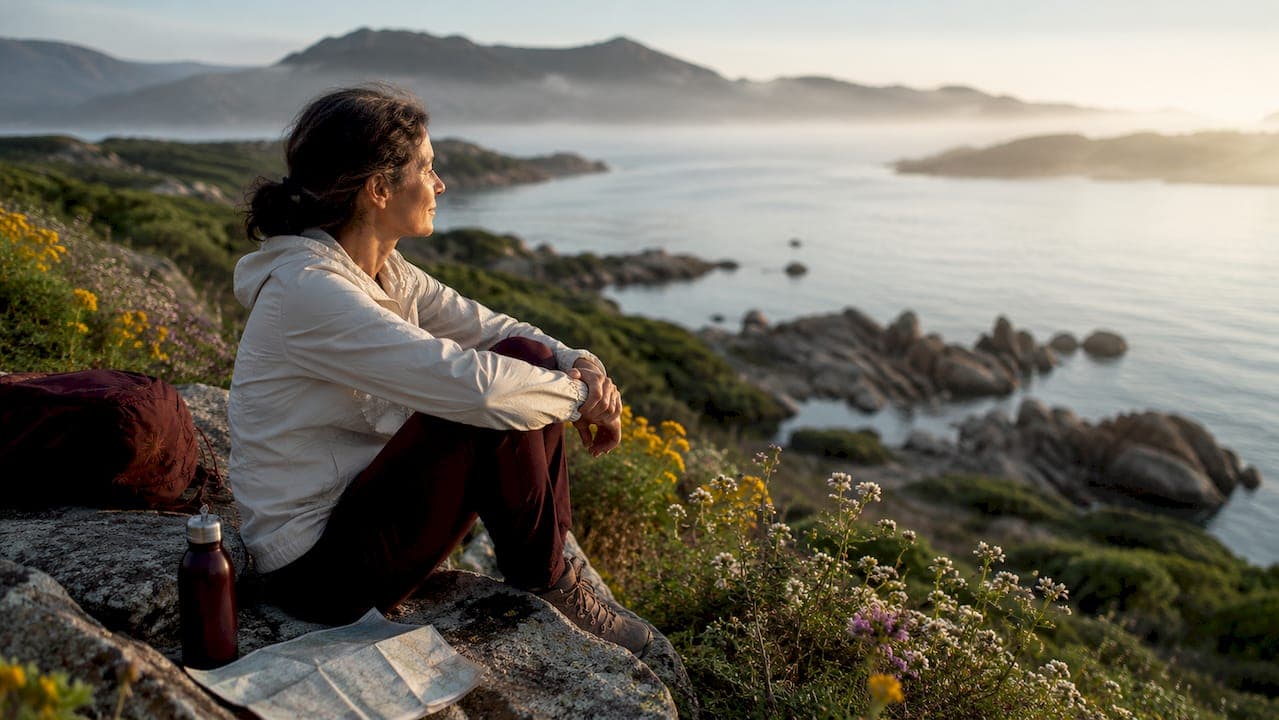
Tranquility tourism is defined as a form of travel centred on intentional silence, sensory minimalism, and the deliberate absence of stimulation, designed to produce deep mental and physical restoration. Unlike conventional tourism, which layers experience upon experience, tranquility tourism treats stillness as the destination itself. Its core components are nature immersion, mental recovery, and conscious disconnection from the noise of modern life. According to Hilton's 2026 industry research, 56% of leisure travellers now prioritise rest and recharging above all other travel motivations. That figure signals a profound shift in what people expect from a holiday.
What is tranquility tourism and how does it differ from wellness travel?
Tranquility tourism is the practice of choosing destinations, itineraries, and accommodation specifically to minimise sensory input and maximise restorative quiet. The industry term most closely associated with this approach is silent tourism, though related concepts such as "calmcations" and "absence tourism" describe overlapping experiences. Understanding where these ideas converge and diverge helps you choose the right kind of trip.

The clearest distinction lies in structure. Wellness retreats, such as those offered by Ananda in the Himalayas or Kamalaya in Thailand, are built around scheduled programmes: yoga at dawn, guided meditation, nutritional consultations. Tranquility tourism, by contrast, offers no agenda. As wellness travel experts note, a concept called hushpitality has emerged specifically to describe hospitality where intentional silence is the core product, not a backdrop to structured activities.
Quiet travel, another related term, overlaps significantly with tranquility tourism but places less emphasis on ecological sensitivity. Quiet travel redefines luxury as space, silence, and simplicity rather than excess. Tranquility tourism goes a step further by embedding environmental stewardship into the experience, treating the preservation of natural soundscapes as inseparable from the traveller's wellbeing.
| Travel type | Core focus | Structure | Ecological emphasis |
|---|---|---|---|
| Tranquility tourism | Sensory minimalism and silence | Unstructured | High |
| Wellness retreat | Health programmes and activities | Highly structured | Moderate |
| Quiet travel | Calm environments and slow pace | Loosely structured | Low to moderate |
| Calmcation | Rest and digital detox | Unstructured | Low |
| Relaxation tourism | General rest and comfort | Flexible | Low |
Pro Tip: If you find structured wellness programmes energising rather than restoring, tranquility tourism is likely the better fit. The absence of a schedule is not a flaw in the design. It is the design.
What are the main benefits of tranquility tourism?
The benefits of tranquility tourism are measurable, not merely philosophical. Research confirms that even short immersions in quiet natural environments produce significant physiological and psychological change.
- Improved sleep quality. Even 2–3 day stays in low-stimulation natural environments significantly improve sleep quality and reduce cortisol levels. Reduced cortisol means the body's stress response genuinely resets, not just pauses.
- Restored attention. Sensory overload depletes directed attention, the cognitive resource you use to focus deliberately. Quiet natural settings allow this capacity to recover through what psychologists call Attention Restoration Theory, developed by Rachel and Stephen Kaplan at the University of Michigan.
- Mental clarity and creativity. Removing constant input creates the conditions for original thought. Many writers, composers, and designers deliberately seek silence before beginning major creative work.
- Emotional regulation. Unstructured time in calm surroundings allows the nervous system to shift from a reactive state to a reflective one, improving emotional resilience over time.
- Environmental connection. Silent tourism promotes deep nature immersion that heightens ecological awareness and often strengthens a traveller's long-term commitment to sustainable choices.
Calmcations, which prioritise deliberate disengagement through unstructured time and digital detox, share these benefits. The difference is that tranquility tourism situates these outcomes within a specific ecological and sensory framework, making the environment itself the therapeutic agent.
Explore how relaxation-focused travel fits within this broader picture of restorative tourism.
How do sustainability and low-impact practices support tranquility tourism?
Tranquility tourism originates from a fusion of conservation science and tourism marketing, built on the principle that human activity must be managed carefully to preserve the very qualities that make a destination restorative. Silence is a finite resource. Once a destination becomes crowded or commercially overdeveloped, its therapeutic value disappears.
Responsible tranquility tourism destinations use four core management tools:
- Visitor caps. Limiting the number of guests at any one time preserves the acoustic and visual calm that defines the experience. Destinations such as Bhutan have long used daily visitor fees to control footfall and protect fragile environments.
- Zoning closures. Sustainability frameworks designate specific areas as off-limits during sensitive ecological periods, protecting wildlife habitats and maintaining natural soundscapes.
- Digital booking systems. Timed entry and pre-booked access prevent spontaneous overcrowding, allowing destinations to manage density without physical barriers.
- Low-impact accommodation. Properties built with minimal ecological disruption, using local materials and renewable energy, reduce the sensory and environmental footprint of each stay. Eco-friendly accommodation is not simply a marketing term here. It is a structural requirement for genuine tranquility tourism.
These measures carry a financial implication. Premium pricing for tranquility tourism accommodation often reflects the cost of visitor caps and low-density occupancy controls rather than simply luxury finishes. Paying more for fewer neighbours is not an indulgence. It is the mechanism that keeps the silence intact.
Pro Tip: When evaluating a destination, ask directly how many guests the property accommodates at peak season. A genuinely tranquil destination will answer that question with pride, not evasion.
How to plan a quiet vacation: practical guidance for first-time tranquility travellers
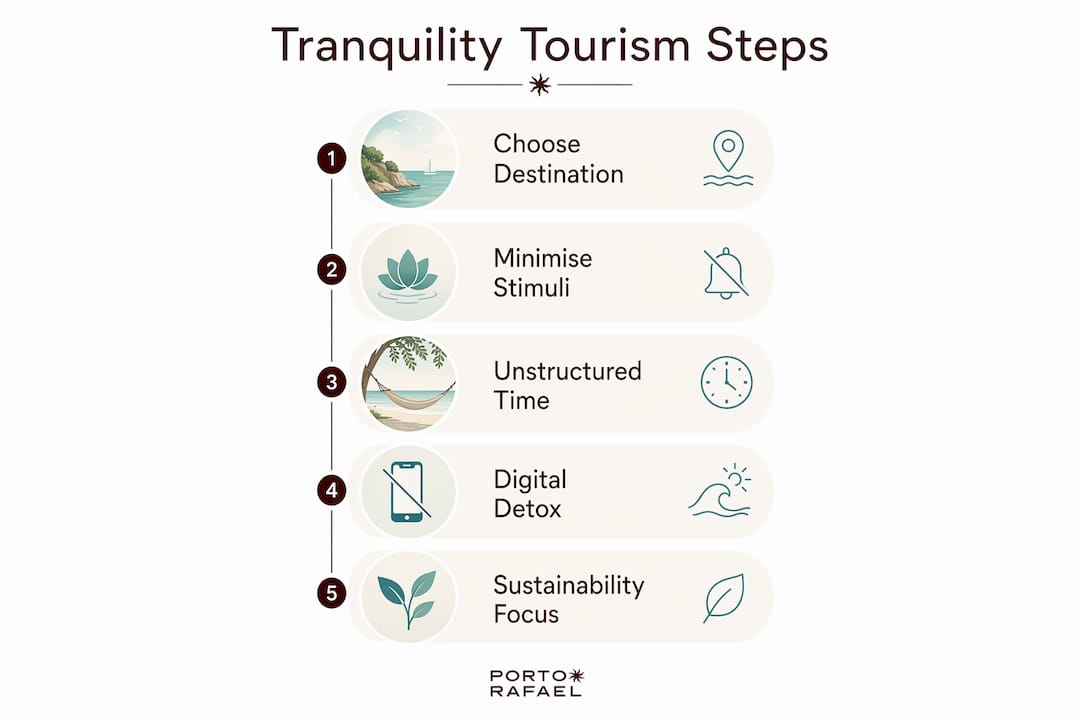
Planning a tranquility tourism trip requires a different mindset from conventional holiday planning. The goal is not to fill a calendar but to empty one.
- Start gradually. Progressive exposure to low-stimulation environments is recommended for newcomers. A 2–3 night stay in a quiet rural or coastal setting is a more effective introduction than a two-week silent retreat. Your nervous system needs time to adjust to the absence of noise.
- Choose lesser-known destinations. Overtouristed locations cannot deliver genuine tranquility regardless of their natural beauty. Seek out villages, coves, and landscapes that have not yet appeared on mainstream travel lists.
- Build a slow itinerary. Leave entire mornings unplanned. Resist the urge to schedule activities for every afternoon. The restorative value of tranquility tourism accumulates in unscheduled hours.
- Commit to a digital detox. Designate specific windows for checking messages, or disconnect entirely. Constant connectivity is the primary obstacle to sensory minimalism, even in the most beautiful surroundings.
- Select accommodation deliberately. Look for properties that describe their offering in terms of quiet, space, and natural setting rather than amenities and entertainment. Boutique hospitality providers, particularly those in rural or coastal locations, often align most naturally with tranquility tourism values.
- Pack for simplicity. Bring a journal, a physical book, and comfortable walking shoes. Leave behind anything that requires a screen or a schedule.
Budget for a premium. Quiet spaces cost more to maintain than busy ones, and that cost is passed on honestly by the best providers. Consider it an investment in the quality of your restoration rather than an inflated room rate.
Pro Tip: Tell your accommodation in advance that you are travelling for tranquility rather than activity. The best properties will adjust their welcome, their recommendations, and even their communication style accordingly.
Why tranquility tourism is more than doing nothing
The most persistent misconception about tranquility tourism is that it is simply idleness rebranded. Having spent considerable time observing how travellers respond to genuinely quiet environments, I find the opposite to be true. Stillness is not passive. It is one of the most demanding things a modern person can practise.
The demand for quiet travel is growing precisely because sensory overload has become the default condition of contemporary life. Social media, open-plan offices, constant notifications, and the relentless acceleration of urban environments have created a generation of travellers who are not merely tired. They are overstimulated at a neurological level. Tranquility tourism addresses that specific condition, not general fatigue.
What surprises most first-time tranquility travellers is how disorienting genuine silence feels at the outset. The first day is often restless. The second day begins to settle. By the third day, something shifts. Attention sharpens. Appetite returns. Conversations become more considered. This arc is not coincidental. It reflects the nervous system completing a process it rarely gets to finish.
The creative and professional benefits are equally underestimated. Some of the most productive thinking I have witnessed happens not in boardrooms or workshops but in the hours after a long, quiet walk along an empty coastline. Tranquility tourism does not remove you from your life. It returns you to it with greater clarity.
The challenge is sustaining that clarity after returning home. The most effective approach is to treat the quiet habits formed during travel as worth protecting: morning walks without headphones, meals without screens, evenings without scheduled entertainment. Tranquility tourism works best when it is not a one-off escape but the beginning of a different relationship with stillness.
— Studio
Experience tranquility tourism at Portorafael in Gallura, Sardinia
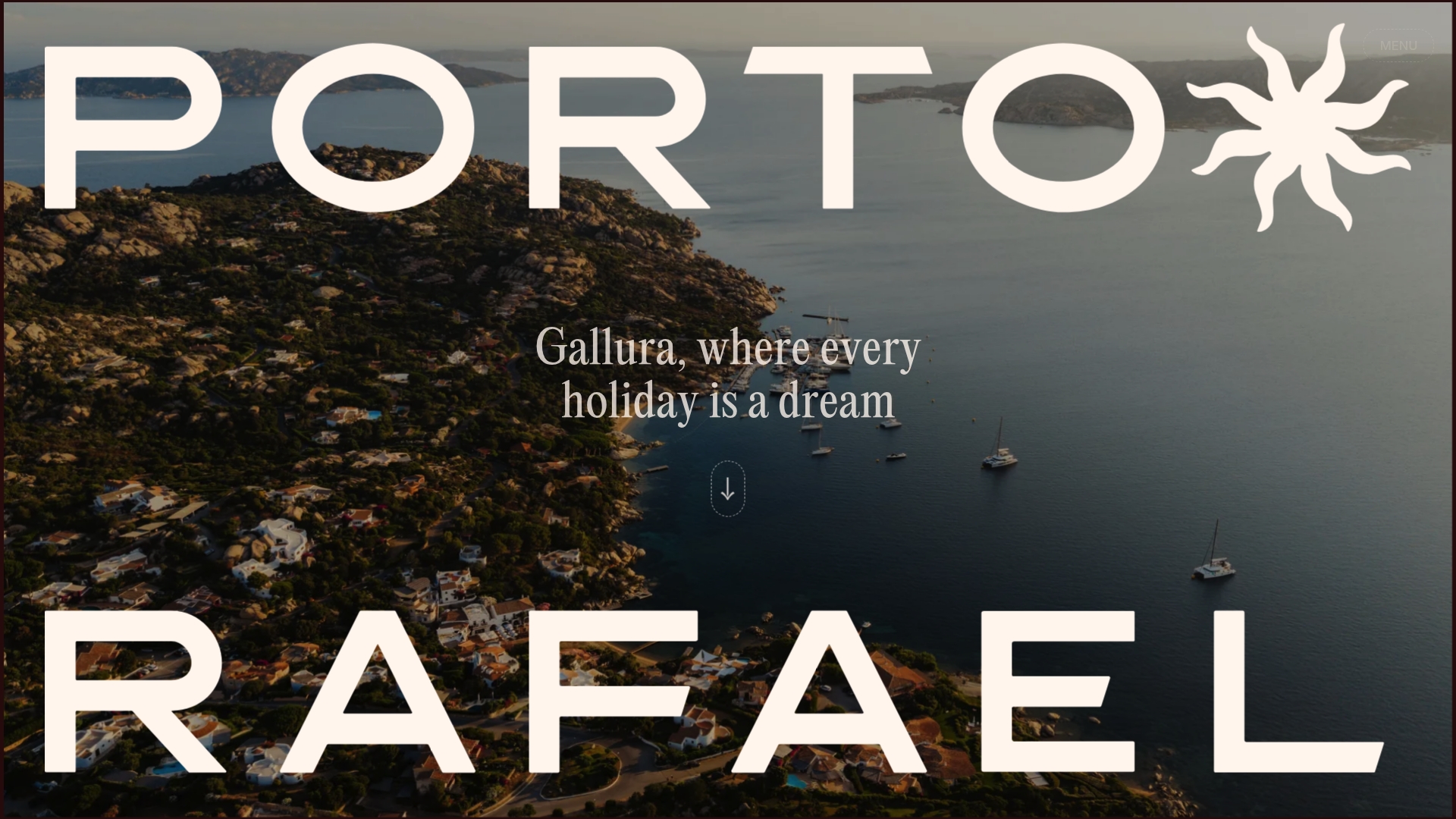
Porto Rafael is a rare gem on the northern coast of Sardinia, where the Gallura region offers some of the most captivating quiet travel destinations in the Mediterranean. Portorafael embodies the values of tranquility tourism with genuine conviction: crystal-clear waters, unhurried rhythms, and a landscape that invites reflection rather than performance.
For those drawn to nature-based tranquility tourism, the Gallura by bike experience offers a slow, immersive way to move through the region's timeless scenery without noise or crowds. Those seeking cultural depth alongside quietude will find the Stazzo heritage a profound encounter with Sardinia's pastoral history, set within landscapes of extraordinary stillness. Portorafael's Hotel La Piazza and Solaz Restaurant complete the experience with the kind of personalised, unhurried hospitality that makes silence feel like a welcome rather than an absence.
FAQ
What is the tranquility travel definition in simple terms?
Tranquility tourism is travel designed around intentional silence, sensory minimalism, and unstructured time in natural or low-stimulation environments. The goal is deep mental and physical restoration rather than activity or entertainment.
How does tranquility tourism differ from a wellness retreat?
Wellness retreats offer structured programmes such as yoga, spa treatments, and nutritional guidance. Tranquility tourism, sometimes called hushpitality, treats silence itself as the core product, with no fixed schedule or required activities.
What are the main benefits of tranquility tourism?
Short stays in quiet natural settings improve sleep quality, reduce cortisol, restore attention, and support emotional regulation. These effects are measurable within 2–3 days of low-stimulation immersion.
Why does tranquility tourism often cost more than standard travel?
Premium pricing reflects visitor caps and low-density occupancy controls that preserve the quiet environment. Fewer guests per property means higher costs per stay, not simply luxury positioning.
What are the best quiet travel destinations for beginners?
Coastal villages, rural retreats, and lesser-known island destinations such as Porto Rafael in Sardinia offer an accessible introduction. Starting with a 2–3 night stay in a low-stimulation natural setting is the most effective approach for first-time tranquility travellers.