
TL;DR:
- A Mediterranean escape emphasizes coastal culture, sensory experiences, and a relaxed pace of life across diverse regions. Travelers should focus on deep, authentic connections by exploring inland areas, dining locally, and visiting fewer, more meaningful destinations to avoid crowds. Planning ahead and choosing the right time, particularly shoulder seasons, enhances the quality of the experience and allows genuine immersion.
A Mediterranean escape is defined as an intentional travel experience centred on coastal culture, sensory engagement, and a deliberately unhurried pace of life across one of the world's most storied shorelines. Spanning 22 countries and 46,000 km of coastline, the Mediterranean offers an extraordinary range of destinations, from the sun-bleached villages of Sardinia to the walled cities of Dalmatia. This guide draws on 2026 seasonal data and expert insight from travel specialists to help you choose the right destination, time your visit wisely, and experience the region with genuine depth. Whether you are drawn by food, history, or the pull of warm turquoise water, the Mediterranean rewards those who plan with purpose.
What is a Mediterranean escape, and what defines it?
A Mediterranean escape is more than a beach holiday. Victor Sanz of TUMI describes it as a state of mind: a form of travel that takes in sights, smells, tastes, and textures with full attention. That definition separates a true Mediterranean getaway from a standard sun-and-sand package.
The region's appeal lies in its layered identity. You can spend a morning at a Roman ruin, eat grilled fish at a harbour-side table by noon, and watch the sun drop behind a limestone headland by evening. That rhythm, unhurried and sensory, is the defining quality of Mediterranean holidays. The French Riviera, the Amalfi Coast, the Balearic Islands, and Sardinia each offer this quality in their own register, from glamour to raw natural beauty.
Travel specialists consistently note that Mediterranean vacations attract an unusually diverse audience: food lovers, history enthusiasts, beach seekers, and active travellers all find itineraries tailored to their interests. That breadth is precisely what makes the concept so enduring.
Which destinations best exemplify a Mediterranean escape?
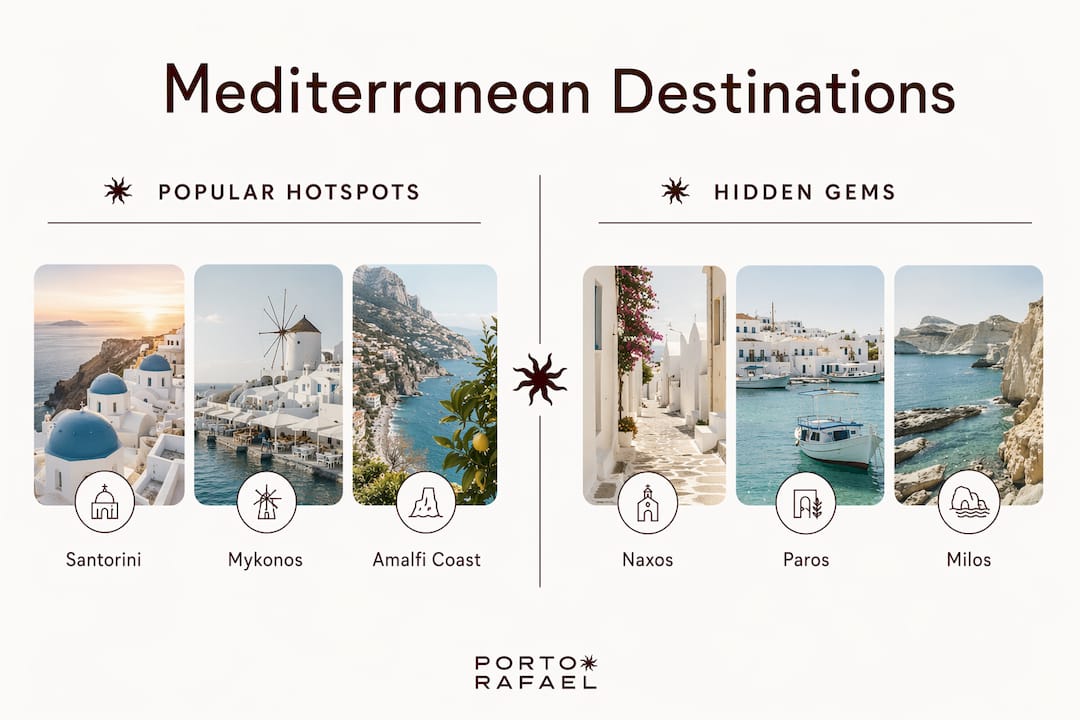
The most celebrated destinations, Santorini, Mykonos, and the Amalfi Coast, are genuinely beautiful. They are also genuinely crowded. Famous beaches represent only 2% of the Mediterranean's total coastline, yet they absorb the vast majority of summer visitors. That imbalance creates an opportunity for travellers willing to look slightly further.
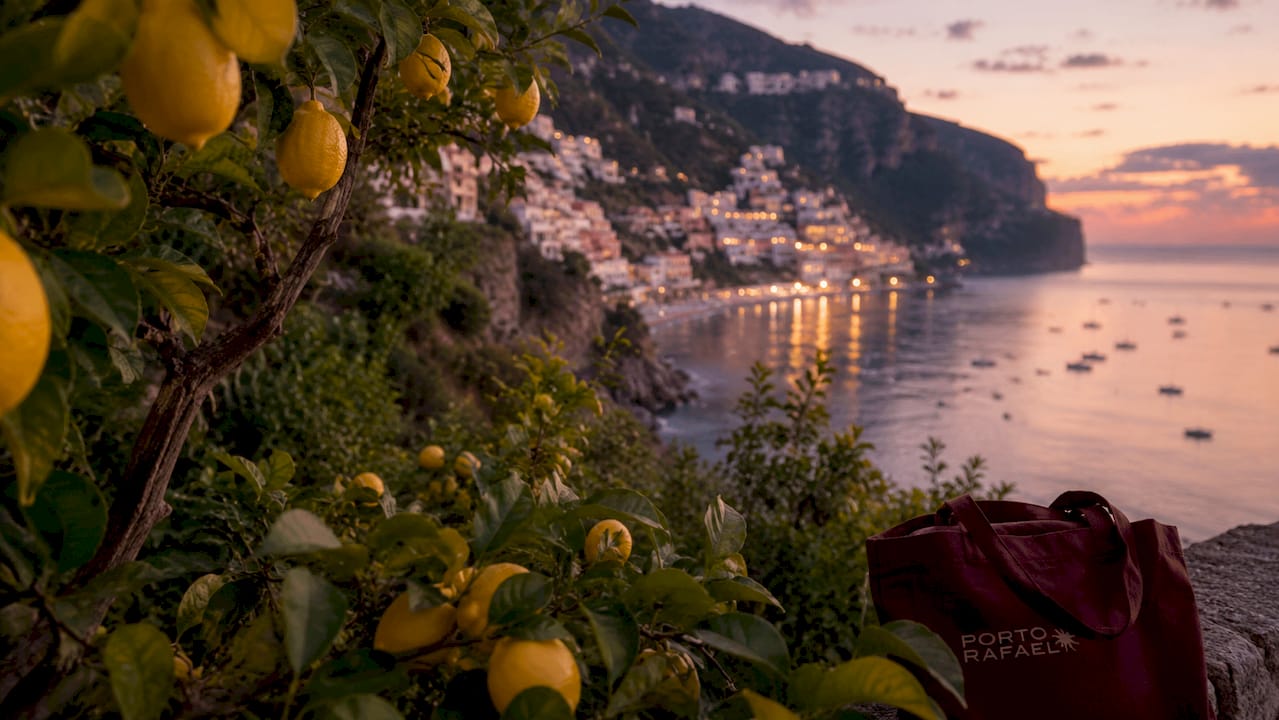
Destinations such as Naxos, Paros, and Milos offer the same combination of beaches, local food, and cultural texture that draws people to the Cyclades, but without the queues. Sardinia, particularly the Gallura coast in the north, delivers crystalline water and granite landscapes that rival anything in the western Mediterranean, with a fraction of the footfall found on more marketed shores.
Island scale matters enormously when choosing your base. The table below outlines how different destinations suit different travel styles.
| Destination | Best for | Scale | Key character |
|---|---|---|---|
| Mallorca | Beach lovers, families | Large | Resort variety, accessible |
| Crete | History, food, walking | Large | Diverse, requires a car |
| Sicily | Culture, archaeology | Large | Urban and rural depth |
| Naxos | Couples, slow travel | Medium | Authentic villages, beaches |
| Milos | Scenery, photography | Small | Dramatic geology, quiet |
| Sardinia (Gallura) | Luxury, nature, cuisine | Large | Wild coastline, refined dining |
| Dubrovnik coast | History, sailing | Varied | Walled cities, island hopping |
Island selection critically shapes your travel style. Larger islands such as Crete and Sicily reward those who hire a car and spend a week exploring. Smaller islands like Milos suit compact, walking-accessible stays where the entire experience unfolds within a few square kilometres.
- Families tend to favour Mallorca and Crete for their infrastructure and beach variety.
- Couples seeking quiet and character gravitate toward Naxos, Paros, or the Gallura coast.
- Active travellers find Sicily and the Dalmatian coast ideal for combining culture with outdoor pursuits.
- Food-focused travellers are drawn to Sicily, Sardinia, and the Amalfi Coast for their distinct regional cuisines.
When is the ideal time to plan a Mediterranean escape?
Timing defines the quality of a Mediterranean holiday as much as destination choice does. The 2026 summer season is forecast to be the busiest in a decade. That means July and August will bring inflated prices, congested beaches, and fully booked ferries across the most popular routes.
Shoulder seasons offer a compelling alternative. Late May through mid-June and mid-September through October deliver warm sea temperatures, mild air, and noticeably fewer visitors. The sea retains summer warmth well into October across the central and western Mediterranean, making autumn swims entirely practical.
Pros of travelling in high season (July–August):
- Maximum sunshine hours and guaranteed warmth
- Full range of restaurants, bars, and activities open
- Vibrant atmosphere in resort towns and coastal villages
Cons of travelling in high season:
- Peak prices for flights, accommodation, and car hire
- Crowded beaches, particularly at famous spots
- Advance booking required months ahead
Pros of shoulder season travel (May–June and September–October):
- Mild temperatures and warm sea, particularly in September
- Significantly lower costs across most categories
- Authentic local atmosphere with fewer tourists present
Pro Tip: If you are set on summer 2026, book accommodation and car hire by february at the latest. The most desirable coastal properties in Sardinia, the Cyclades, and the Balearics sell out well before the season opens.
For sailing holidays in particular, late May and early June offer reliable winds, uncrowded anchorages, and the pleasure of arriving at a harbour village before the season reaches full pitch.
How to create a culturally immersive Mediterranean escape
The richest Mediterranean travel experiences combine coastal relaxation with deliberate cultural engagement. Splitting time between coastal towns and inland excursions consistently produces more memorable trips than staying in a single resort. Pairing the Athens Riviera with a few days on Syros, or combining Sardinia's beaches with a drive through the Barbagia highlands, adds dimension that a purely coastal itinerary cannot replicate.
Effortless movement and local rhythm are hallmarks of a true Mediterranean escape. That means embracing late dining, long lunches, and the afternoon pause that structures daily life across the region. It means choosing a table at a family-run trattoria over a hotel restaurant, and lingering over a glass of local wine rather than moving on to the next sight.
Here is a practical framework for building cultural depth into your trip:
- Choose a base with character. A village or small town rather than a resort complex gives you access to local markets, neighbourhood bars, and the rhythms of everyday life.
- Eat where locals eat. Ask your accommodation host for recommendations rather than consulting aggregator apps. The best Sardinian restaurants, for instance, are often unmarked from the road.
- Plan at least one inland day. Every coastal Mediterranean region has an interior worth exploring. Sicily's Baroque hill towns, Sardinia's nuraghe sites, and Crete's Minoan ruins all reward a half-day detour.
- Use ferries where possible. Island-hopping by ferry is slower than flying but reveals the sea as the Mediterranean's true connective tissue. The crossing from Civitavecchia to Olbia, for example, arrives at dawn with the Gallura granite coast glowing in early light.
- Learn three phrases in the local language. A greeting, a thank you, and a request for the bill. The warmth this generates in return is disproportionate to the effort.
Pro Tip: Hire a car on larger islands like Sardinia and Sicily. The most captivating coves, villages, and viewpoints are invariably 20 minutes from the nearest bus stop, and the freedom to stop wherever the light is right transforms the entire experience.
Understanding Mediterranean hospitality as a cultural practice, rather than a service transaction, changes how you interact with every place you visit. Hosts across the region take genuine pride in sharing their food, their stories, and their landscape.
How to plan the logistics of a successful Mediterranean escape
Practical planning is what separates a good Mediterranean holiday from a great one. Given that 2026 summer demand is at a decade high, early action on key logistics is not optional.
The table below outlines the main planning decisions and recommended approaches.
| Planning element | Recommendation | Notes |
|---|---|---|
| Accommodation | Book 4–6 months ahead for peak season | Boutique properties fill fastest |
| Car hire | Reserve with a major supplier before arrival | Essential on Sardinia, Crete, Sicily |
| Ferries | Book routes in advance for July–August | Overnight crossings save a hotel night |
| Flights | Mid-week departures are typically cheaper | Avoid Friday and Sunday peaks |
| Budget | Allow 20–30% more than baseline estimate | Peak season premiums are significant |
- Accommodation type shapes the entire experience. A boutique property in a village offers more cultural contact than a large resort. For coastal accommodation in Sardinia, proximity to the water and access to local dining are the two factors worth prioritising above all others.
- Splitting your stay between two or three locations adds variety without adding stress, provided you allow at least three nights in each place. Rushing between destinations every day defeats the purpose of a Mediterranean escape entirely.
- Budget alternatives to expensive hotspots are plentiful. The Mediterranean sailing destinations around the Dalmatian coast and the Greek islands offer extraordinary value compared with the French Riviera or Amalfi, particularly for groups.
Relaxation tourism as a travel philosophy aligns naturally with the Mediterranean approach: fewer destinations, more time in each, and a willingness to let the day unfold without a rigid schedule.
What I have learned from years of Mediterranean travel
The single most common mistake I observe in Mediterranean travel planning is the attempt to see too much. A two-week itinerary that covers five countries sounds impressive. It produces exhaustion, not memories. The Mediterranean rewards depth over breadth every time.
The second lesson is about crowd avoidance. The crowd-to-landscape ratio at famous beaches is genuinely poor in July and August. The solution is not to avoid the Mediterranean in summer but to choose differently within it. A cove 15 minutes by boat from a famous beach is often entirely empty. A village 10 kilometres inland from a resort strip feels like a different century.
I have also come to believe that the best Mediterranean experiences are almost always unplanned. The fish market you stumble into at 7am. The elderly man who insists on showing you the view from his terrace. The restaurant with no menu where the owner simply brings what was caught that morning. These moments cannot be booked. They can only be made possible by slowing down enough to notice them.
My honest recommendation: choose one region, go deep, and return to the same place over several years. The Mediterranean reveals itself slowly, and the travellers who know it best are those who have been going back to the same harbour for a decade.
— Studio
Discover Porto Rafael: a rare gem on the Gallura coast
For those seeking a Mediterranean escape that combines natural beauty with refined hospitality, Porto Rafael in Gallura, Sardinia, is a destination of rare character. The boutique village sits above one of the most captivating stretches of the northern Sardinian coast, where granite headlands meet water of an almost improbable clarity.
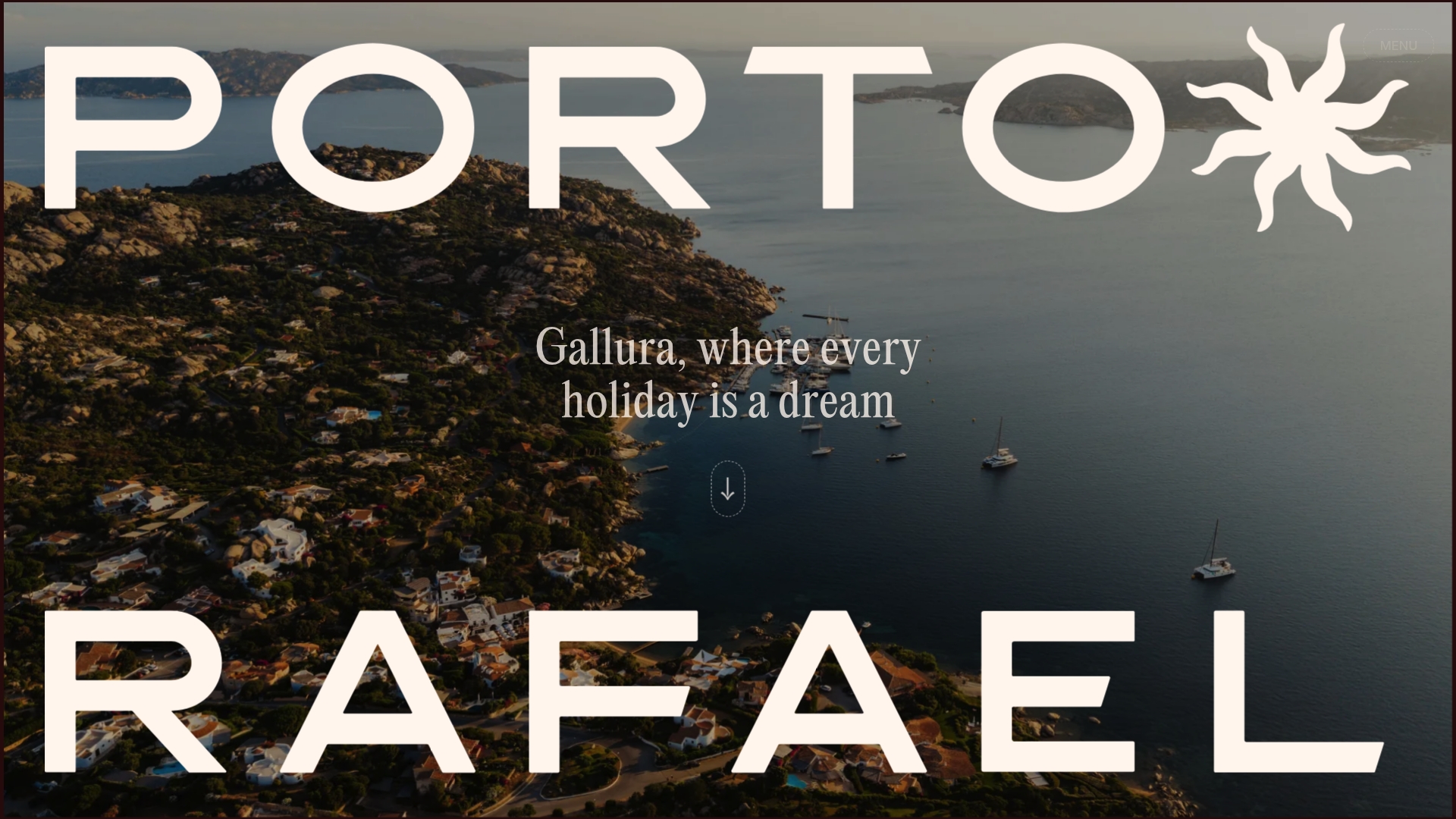
Portorafael brings together Hotel La Piazza, an adults-only boutique retreat, with the gourmet cuisine of Solaz Restaurant and the relaxed elegance of Rafael's Lounge Bar. The gastronomy at Porto Rafael draws on the finest local Sardinian ingredients, served with the unhurried warmth that defines Sardinian hospitality. For travellers who want the Mediterranean at its most authentic and most beautiful, Porto Rafael is the place to begin.
FAQ
What is a Mediterranean escape in simple terms?
A Mediterranean escape is a travel experience defined by coastal culture, sensory engagement, and a relaxed pace of life across the Mediterranean region. It prioritises emotional connection with place over a checklist of sights.
Which are the best Mediterranean destinations for avoiding crowds?
Naxos, Paros, Milos, and the Gallura coast of Sardinia offer outstanding beaches and culture with significantly fewer visitors than Santorini, Mykonos, or the Amalfi Coast. Famous beaches represent only 2% of the Mediterranean's 46,000 km coastline, leaving vast stretches of quieter shore.
When is the best time to visit the Mediterranean in 2026?
Late May through mid-June and mid-September through October offer the best balance of warm weather, warm sea, and manageable crowds. July and August are the busiest and most expensive months, with 2026 forecast as the peak summer in a decade.
How do I make a Mediterranean holiday more culturally immersive?
Combine coastal stays with at least one inland excursion, eat at locally recommended restaurants rather than tourist-facing venues, use ferries between islands, and embrace the local rhythm of late dining and long afternoons. These choices consistently produce richer, more memorable trips.
Is a Mediterranean cruise a good way to experience the region?
A Mediterranean cruise experience offers breadth and convenience but limits depth at each port. Travellers seeking genuine cultural immersion typically find that a land-based stay of at least three nights per location delivers a far more authentic connection with each destination.